
The Hatch Act is the federal government’s attempt to answer a deceptively simple question: How do you run a democracy when the people who administer the government also have political opinions, political friends, and political ambitions?
Congress’s answer, first enacted in 1939, was not “ban politics.” It was “build guardrails.” The Hatch Act limits certain political activities by many government employees so the machinery of government is not turned into a campaign apparatus and so public services do not feel like partisan favors.
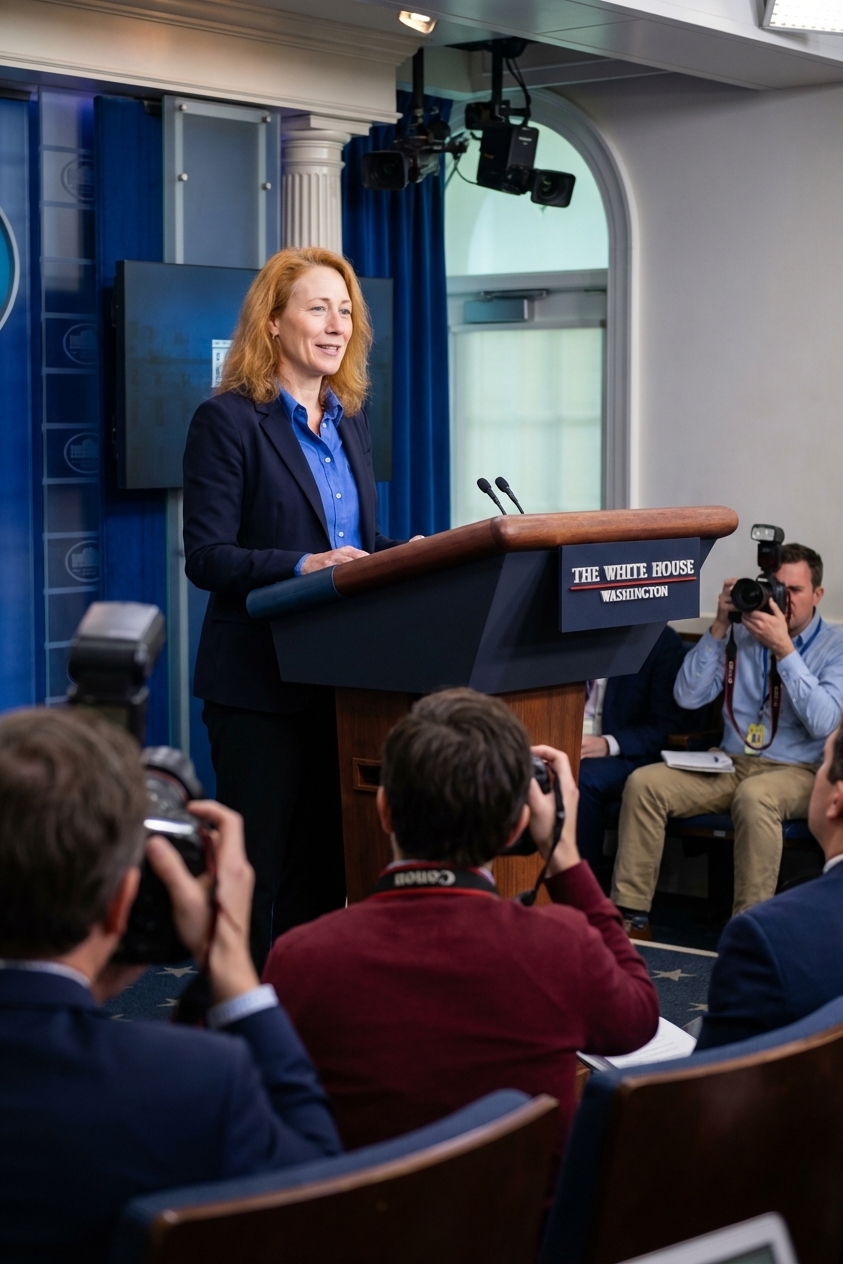
It is also why you keep seeing it in the news. When high-level officials speak from the White House podium, travel on government resources, or post from official accounts or on official devices, the law’s central worry comes alive: is the state being used to help a party, a candidate, or an election outcome?
Join the Discussion
What the Hatch Act tries to prevent
The Hatch Act is not a general speech code. It is a civil service integrity law that regulates political activity in relation to official authority, time, place, and government resources.
Its purpose is to keep federal programs from becoming political leverage and to protect employees from political pressure. In plain terms, it targets three classic problems:
- Government power used as campaign fuel. Federal authority, budgets, investigations, and publicity carry enormous weight. The Act tries to keep those tools from being used for electoral advantage.
- Coerced politics inside the workplace. If your boss can hint that promotions or assignments depend on your campaign activity, the merit-based civil service becomes a patronage system.
- Public trust. Citizens should be able to interact with government agencies without feeling they are entering a partisan arena.
The premise is old-fashioned, in the best sense: a government of laws needs administrators who can carry out the laws regardless of who won the last election.
Who the Hatch Act applies to
The Hatch Act generally applies to civilian employees in the executive branch, including many political appointees, and also reaches certain state and local employees whose work is tied to federally funded programs. It does not apply to everyone in government, and the first step in any Hatch Act debate is a jurisdiction question: who is covered, and under which set of rules?
Federal civilian employees
Most civilian federal employees in executive agencies are covered. U.S. Postal Service employees are also covered.
Political appointees
Being Senate-confirmed or being a visible spokesperson does not automatically place someone outside the Act. Many high-ranking officials are covered, although the rules and the enforcement pathways can differ depending on the position.
Who is not covered
The President and Vice President are not covered by the Hatch Act. Many employees in the legislative and judicial branches are also outside its scope, though they may be subject to other ethics rules and workplace policies.
Uniformed service members
The Hatch Act is not the main legal framework for active-duty military. The military is governed by Department of Defense regulations and the Uniform Code of Military Justice, which have their own restrictions on political activity.
State and local employees tied to federal funds
Some state and local employees are covered if their principal employment is connected with activities financed in whole or in part by federal loans or grants.
Here the modern rule matters. After the Hatch Act Modernization Act of 2012, the most common, high-impact restriction is candidacy: many covered state and local employees may run for partisan office unless their salary is paid entirely (100 percent) by federal loans or grants, in which case partisan candidacy is generally barred. Because coverage and funding streams can be fact-specific, state and local employees often need agency counsel or OSC guidance to translate the statute into a yes or no answer.
What federal workers can do and cannot
The Hatch Act draws a line between personal political participation, which is broadly allowed, and using official authority or official resources to affect elections, which is not.
Generally allowed
Most covered federal employees may, on their own time and away from the workplace:
- Register and vote as they choose.
- Express opinions about candidates and issues in a personal capacity.
- Attend political events like rallies, meetings, or fundraisers (with important caveats for certain employees).
- Volunteer for campaigns, such as making calls or knocking doors, as long as it is not done while on duty or using government resources.
- Display political signs at home and have bumper stickers on personal vehicles (subject to rules about parking on federal property in certain situations).
Generally prohibited
Covered federal employees generally may not:
- Use official authority or influence to interfere with or affect an election. This is one of the Hatch Act’s core prohibitions.
- Engage in political activity while on duty, in a federal building, while wearing an official uniform, or while using a government vehicle.
- Solicit or receive political contributions in many contexts, especially in the workplace or while acting in an official capacity.
- Be a candidate in a partisan election. For most federal civilian employees, running for partisan political office is prohibited, with limited exceptions (including certain localities and specific categories under the regulations). State and local employees follow a different candidacy standard tied to federal funding, described above.
The law is less about what you believe and more about what you do with the power and platforms that come with your job.

Less restricted and further restricted
Not all covered employees are treated the same. The regulations divide many federal employees into two broad groups.
Less restricted
Most federal employees are “less restricted.” They can take part in a wide range of partisan political activities on their own time, such as volunteering for a campaign or attending partisan events, so long as they do not do it:
- while on duty
- in a federal workplace
- using government equipment or systems
- using official titles or authority
Further restricted
Some employees face additional limits because their jobs sit closer to sensitive nerve centers where independence from partisan politics is especially critical. “Further restricted” status is agency-specific under OSC regulations, and the safest approach is to confirm category before acting.
Canonical examples include employees in certain law enforcement and national security components, such as the FBI, CIA, NSA, and some DOJ and intelligence-related offices. These employees are generally prohibited from taking an active role in partisan political management or partisan political campaigns, even on their own time. That can include things like:
- organizing partisan events
- serving as an officer of a partisan political party
- certain public endorsements that cross the line into campaign activity
Two people can post the same message on the same day and have very different legal exposure depending on whether they are further restricted. This is why Hatch Act coverage is often misunderstood in public debates.
What counts as political activity
In Hatch Act terms, “political activity” is activity directed toward the success or failure of a political party, candidate for partisan political office, or partisan political group.
That definition is why the details matter. Criticizing a policy can be ordinary governance. Urging voters to defeat a named candidate is campaign activity.
Common tripwires
- Social media. Posting, reposting, liking, or sharing content that explicitly supports or opposes a partisan candidate or party while on duty, in the workplace, or using government devices can trigger violations. Context matters, and “quick interactions” can still count as political activity.
- Official accounts and official signals. Statements from official government accounts, or made in settings that signal official authority, are treated differently than personal speech. Even off duty, leaning on an official title or presenting a message as government speech can create problems.
- Government travel and events. Mixing official travel with campaign events raises questions about whether public resources supported partisan activity.
- Fundraising. Soliciting political contributions is heavily regulated and is a frequent basis for enforcement actions.
This is where the Hatch Act feels less like a civics lesson and more like an operational compliance law: time, place, equipment, and job status can determine legality.
On duty and in the workplace
Modern work arrangements have not changed the basic logic. “On duty” is not only a physical location, and “the workplace” is not only a federal building.
- Remote and hybrid work. If you are on the clock, you are on duty even if you are at home.
- Government devices and systems. Using a government phone, laptop, network, email, or collaboration tools for partisan political activity is a common and avoidable problem.
- Backdrops and cues. A video call with agency insignia, a government office behind you, or an official account amplifying a message can turn personal expression into something that looks like official action.
These are the details that make Hatch Act questions feel nitpicky, but they are also the details the law was built to capture: the difference between politics as citizenship and politics as government power.
Quick examples
Social media, same message, different facts
- Generally allowed: At home, off duty, on a personal phone, a less restricted employee posts, “I’m voting for Candidate X.”
- Generally prohibited: During work hours, using a government laptop or on a work chat, the same employee posts, “Donate to Candidate X and vote on Tuesday.”
Events
- Generally allowed: Attend a rally on personal time, as a spectator, without fundraising or official trappings.
- Generally prohibited: Help run the event, solicit contributions, or attend in a way that uses your official title or suggests agency endorsement. Further restricted employees may be barred from taking active campaign roles even off duty.
Enforcement
The Hatch Act is enforced primarily through the U.S. Office of Special Counsel (OSC), an independent investigative and prosecutorial agency. OSC receives complaints, investigates, and can seek disciplinary action.
For most federal employees, OSC prosecutes Hatch Act cases before the Merit Systems Protection Board (MSPB), which acts like an administrative court for civil service disputes.
What OSC can do
- issue advisory opinions that explain what is allowed
- investigate alleged violations
- negotiate settlements
- bring disciplinary cases before the MSPB
White House officials
Hatch Act enforcement can look different for very senior officials, particularly some presidential appointees whose discipline ultimately runs through the President. OSC can investigate, issue findings, and recommend discipline or refer matters, but the practical consequences can depend on internal executive branch action rather than a conventional MSPB removal case. In other words, coverage can exist even when the enforcement mechanism is politically mediated.
Penalties
The Hatch Act has teeth, but the bite varies by employee and by circumstance.
Federal employees
Potential penalties can include:
- removal from federal service
- suspension
- reduction in grade
- debarment from federal employment for a period of time
- reprimand
In the classic framework, removal is the default statutory penalty, though administrative outcomes can involve lesser discipline depending on facts, precedent, and settlement.
State and local employees covered by the Act
For covered state and local employees, consequences can include being required to resign from the covered position or the employing agency risking the loss of a portion of federal funding tied to the employee’s program.
Even when discipline is modest, Hatch Act findings can carry reputational weight. The law is designed to keep public trust intact, and public trust is often the first casualty when the facts suggest government resources were used for campaign purposes.
Notable White House controversies
Hatch Act disputes become headline news when the alleged conduct involves the White House, because the optics are exactly what the law was meant to deter: partisan messaging that appears to be delivered through the state itself.
Several high-profile controversies in recent administrations have centered on allegations that officials used official events, official communications channels, or official roles to promote partisan electoral outcomes.
Kellyanne Conway
During the Trump administration, OSC publicly stated that it found repeated Hatch Act violations by senior counselor Kellyanne Conway based on media appearances and social media activity that, in OSC’s view, crossed from policy advocacy into campaign advocacy while acting in an official capacity. The case became a modern example of the enforcement gap at the highest levels: OSC can make findings and recommend discipline, but the President controls employment decisions for many top advisors.
2020 political season
OSC issued a number of advisory reminders and findings during the 2020 election cycle involving senior officials and political messaging, including concerns about official travel and official communications channels. These controversies helped cement the public perception that the Hatch Act is frequently invoked but unevenly enforced when the alleged violations involve the executive branch’s inner circle.
Later administrations
Hatch Act allegations did not disappear with a new administration. Complaints and OSC reviews have continued to arise around public statements and the boundary between governance messaging and campaign messaging. That continuity is the point: the Hatch Act is not designed for one party. It is designed for the problem of power.
If you want the constitutional framing, this is it: the United States rejects a formal party state, meaning a government that treats the ruling party’s electoral fortunes as an extension of state administration. The Hatch Act is one of the tools that tries to keep that rejection meaningful in day-to-day governance.
Is it constitutional
Restrictions on political activity by government employees naturally raise First Amendment questions. Federal employees do not surrender free speech when they take a job, but the government has more latitude to regulate political activity in its own workforce than it does to regulate the general public.
Courts have generally upheld civil service restrictions aimed at preserving the integrity and neutrality of public administration. Landmark Supreme Court decisions include United Public Workers v. Mitchell (1947) and United States Civil Service Commission v. National Association of Letter Carriers (1973). The justification is not that political speech is unimportant, but that the government has a strong interest in ensuring that public power is not converted into partisan advantage and that employees can do their jobs without political coercion.
Practical scenarios
Can a federal employee donate
In most cases, yes, as a private citizen and not through the workplace. The biggest danger is mixing donation activity with official status, official email, or solicitation of others.
Can a federal employee post about a candidate
Often yes on personal time, but not while on duty, not in the workplace, and not using government equipment. Further restricted employees may face additional limits on partisan campaign activity even off duty, and any employee can create risk by using an official title or an official account in a way that makes the message look like government speech.
Can a federal employee wear campaign gear
Not at work, not while on duty, and not in federal buildings in a way that becomes political activity in the workplace. Outside work, it can be permitted depending on employee category and context.
Can a federal employee attend a rally
Many can attend on their own time. But participation can become problematic if it turns into active campaign management, if fundraising is involved, or if the employee is further restricted.
Because enforcement often turns on context, OSC advisory opinions are the best real-world guide. They translate broad principles into specific yes, no, and it depends answers.
Why it keeps showing up
The Hatch Act is easy to invoke and hard to litigate in public. A clip goes viral, someone says “Hatch Act,” and suddenly everyone is arguing about whether a sentence was political, whether an account was official, or whether the speaker was on duty.
But underneath the headlines is a permanent institutional question. The Constitution separates powers and limits the government, but it does not, by itself, prevent the executive branch from behaving like a campaign organization. The Hatch Act is one of the statutes that tries to do that work.
In a polarized era, you can treat the Hatch Act as a partisan weapon. Or you can treat it as a reminder of what neutral administration is supposed to look like. The second reading is the one that keeps the republic functional when the election signs come down.