
You can lock your front door. You can shred your mail. You can refuse to answer questions.
But your phone can still leave a trail.
Depending on your settings and the services you use, location-related data can be created when you open a map, allow an app to check your whereabouts, or turn on features that rely on where you are. In some situations, those points can add up to something the Fourth Amendment’s authors never had to imagine: a record of where you were. Not just once. Sometimes, enough of it can start to look like a running log.
Now the Supreme Court is staring at a modern question with an old constitutional hook. When police use a geofence warrant to identify everyone near a crime scene, is that smart police work or an unreasonable search?
Join the Discussion
What it does
Geofencing, in law enforcement terms, starts with a simple idea. Instead of beginning with a suspect and then looking for evidence, police start with a place and a time and ask: who was there?
Technically, investigators draw a virtual boundary around an area connected to a crime. Then they seek a warrant, not to search a home or office, but to require a technology company to search its own data to identify any of its millions of users who were within that digital fence during the relevant window.
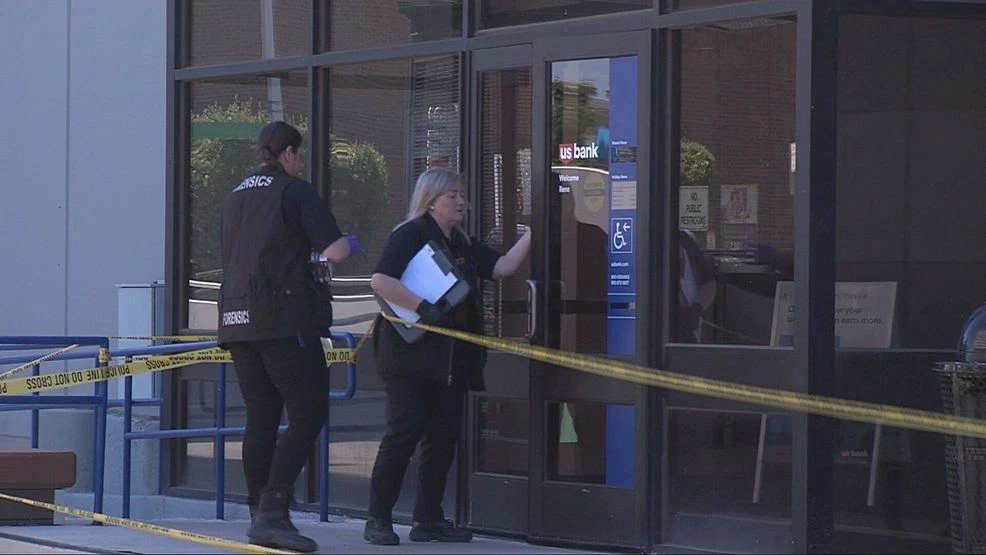
In one Virginia case that has helped propel this issue toward the justices, a robber in Midlothian displayed a gun and escaped with $195,000. Police used geofencing to tap into Google’s databases to try to identify devices that were near the bank at the time.
This is not a warrant aimed at a named person. It is a warrant that can prompt a company to sift through data tied to many people, including people who are not suspected of anything at all.
Why the Fourth matters
The Fourth Amendment prohibits “unreasonable searches and seizures” and demands that warrants be backed by probable cause, approved by a neutral magistrate, and particularly describe what is being searched and what is being seized.
And there is a basic requirement that is easy to say and hard to apply in the digital age: the search should be aimed at obtaining specific evidence of a crime.
Geofence warrants stress-test all of that at once.
- Probable cause: Police may have strong reasons to believe the robber was at the bank, but do they have probable cause to collect information about everyone else who happened to be nearby?
- Particularity: A geofence is a boundary, not a person. It describes a space. The “things” being sought are not pre-identified items, but identities and location points investigators hope will lead to a suspect.
- Specific evidence: Supporters may argue the search is tethered to a specific crime scene and time window. Critics argue the first step can still pull in many uninvolved people before any individualized suspicion exists, which can make the search feel less like collecting evidence and more like finding a person.
- Reasonableness: Even with judicial approval, a method can still be constitutionally excessive if its sweep is too broad for the investigative need.
This is why the case matters beyond any single robbery. It forces the Court to decide what “unreasonable” means when the search looks less like kicking down a door and more like querying a database.
Location is a story
If your location were a single dot, maybe this debate would be smaller. But location is narrative. Enough points can reveal your routines, your relationships, your medical appointments, your worship habits, your political meetings, and the places you go when you do not want anyone watching.
That is part of the constitutional discomfort. The Fourth Amendment was written for “persons, houses, papers, and effects.” Phones did not exist. Global positioning satellites did not exist. Corporate location warehouses definitely did not exist.
Yet the principle is familiar: the government should not be able to rummage through private life without a tightly justified reason. The new fight is about what counts as rummaging when the “papers” are digital and stored by someone else.
The real question
Strip away the buzzwords and the dispute becomes almost timeless.
Can the government lawfully demand a list of everyone who was in a certain area, simply because a crime occurred there?
In the physical world, we have an instinctive reaction to that question. Imagine police photocopying every hotel guest register, every diner receipt, and every pedestrian’s ID because a robbery happened on that block. That is not how warrants are supposed to work in a system that distrusts general searches.
Geofencing can risk resurrecting the logic of the general warrant in a new, low-friction form. Critics and privacy advocates warn that the search can happen without the kind of visibility that comes with physical searches, and that bystanders might never learn their data was part of an initial sweep.
The Court has to decide whether the Constitution treats this as a normal warrant with modern features, or as something fundamentally different: a digital dragnet dressed up as a targeted search.
Ingenious or Orwellian
Even the basic framing of geofence warrants forces an uncomfortable concession: the technique can be effective and still be constitutionally troubling.
The question the Supreme Court is now confronting is whether geofencing is “ingenuous, Orwellian, or both.” And, ultimately, whether it is constitutional.
What could change
Most people will never be suspected of a bank robbery. That is not the point. The point is that a tool built for rare events may not stay rare.
If the Court blesses broad geofence warrants, the practice could expand because it can look like a shortcut around the hardest part of policing: identifying a suspect before you search.
If the Court restricts them, a new constitutional standard could emerge, one that may shape how warrants work for situations like:
- protests and large public gatherings
- churches, clinics, and other sensitive locations
- cases where the “scene” is an entire neighborhood or a long route, not a single address
- requests not just for where a device was, but where it traveled next
Privacy advocates also argue there is a second-order effect to consider. If location data becomes easier to obtain in bulk, it could be easier to combine with other data, like video footage, license plate readers, and purchase histories. Each dataset alone might feel tolerable. Together, they could start to look like continuous surveillance.
The tension
We say the Fourth Amendment is about privacy, but its text is about restraint. It is about forcing the government to be specific. It is about making a judge ask hard questions before the search, not apologizing after.
Critics argue geofencing pushes in the opposite direction. In their view, it can ask for permission to search first and sort out suspicion later.
The Supreme Court’s decision will not just settle a niche dispute about a new investigative tactic. It will signal whether the Fourth Amendment still insists on individualized suspicion in the age of location trails, or whether being nearby is enough to put your data within reach.
That is why this case matters. Not because most of us have something to hide, but because all of us have somewhere to go.