
There is a specific kind of power in American government that does not look like censorship at first glance.
It does not confiscate printing presses. It does not ban a book. It does not even need to win a defamation case in court.
It simply reminds a speaker: your permission to operate can be questioned.
That is why a coalition of former Federal Communications Commission leaders from both parties is now asking a federal appeals court in Washington to force the FCC to do something that sounds boring but is actually momentous: take a vote. Specifically, vote on whether to repeal the FCC’s “News Distortion Policy,” a rule dating back to 1949 that the petitioners argue has been revived as a modern pressure tool against broadcasters.
Join the Discussion
What the policy is
The FCC’s News Distortion Policy is an enforcement concept aimed at broadcast television and radio. Its premise is narrow on paper: a broadcaster should not deliberately distort a fact-based report about a major news event.
It is also narrow in jurisdiction. The FCC regulates broadcast licensees, not cable networks and not online publishers. So the policy is not a general “truth commission” for the American press. It is a rule that sits inside a licensing system.
The FCC’s own public description draws an important line: “Expressions of opinion or errors stemming from mistakes are not actionable.” That sentence matters, because it reads like a safeguard. The fight now is over whether that safeguard holds up in practice when the person controlling the agency agenda is also a political appointee.
Why former leaders want a vote
A bipartisan group of former FCC chairs, commissioners, and senior staff filed a petition in November 2025 asking the agency to repeal the policy. Their argument is not subtle: a tool framed as “punishing distortion” can be repurposed into policing disfavored viewpoints, particularly during election seasons or wartime controversies.
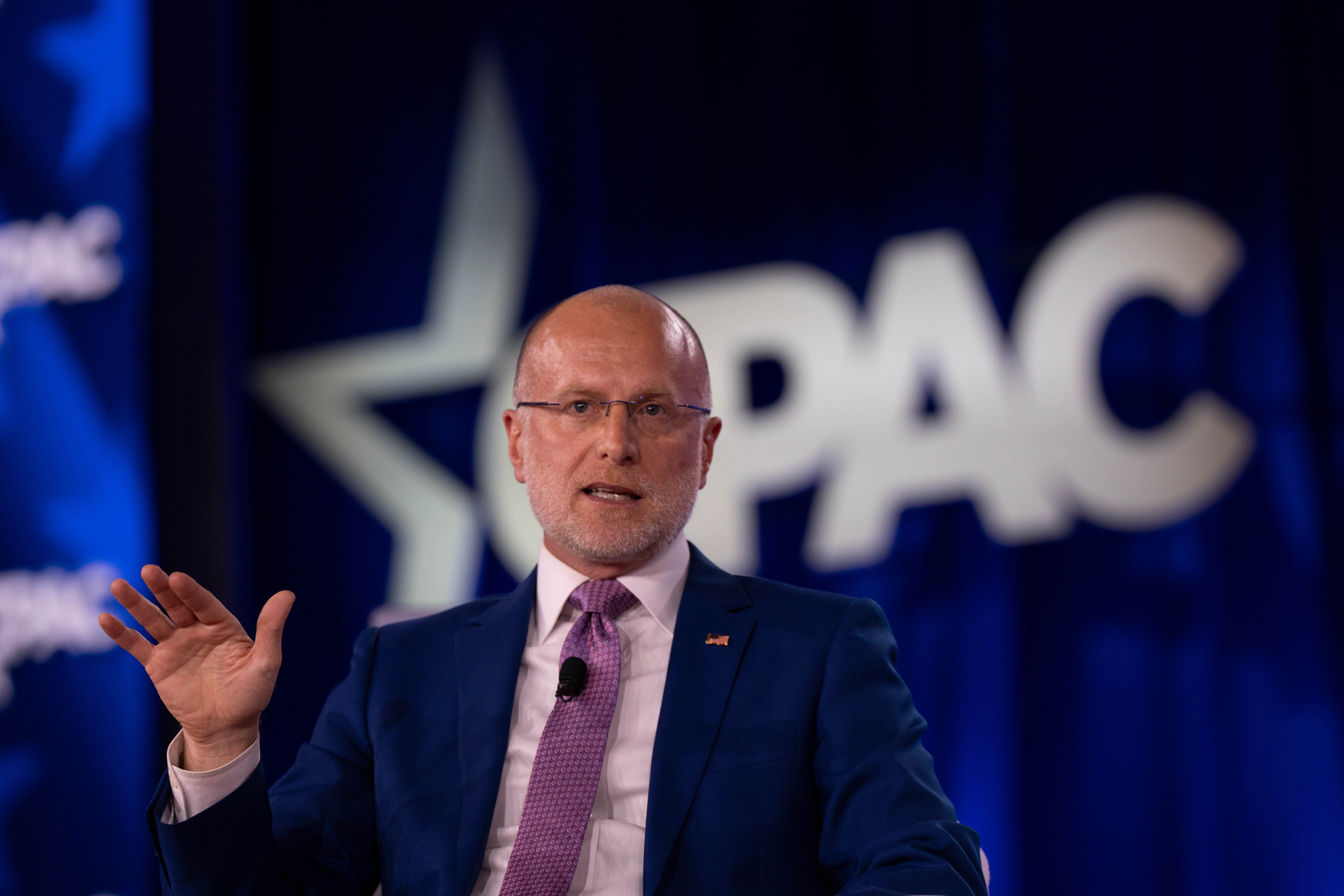
They argue that current FCC Chair Brendan Carr has revived a rule that historically was used sparingly and has instead turned it into a political threat hanging over licensees. But there is a procedural problem that is easy to miss. The chair controls what reaches the commission for a vote. If the chair refuses to schedule the item, the other commissioners cannot simply force a decision.
So the former officials have turned to the U.S. Court of Appeals for the District of Columbia Circuit seeking a writ of mandamus, an extraordinary order that would compel the agency to act. The aim is to force an FCC response and a commission vote, putting each commissioner on the record and creating a clear path to judicial review.
Even if the court granted mandamus, it would not decide the policy’s fate. It would require action, not dictate the outcome.
“Distortion” is not self-defining
Here is the constitutional discomfort: even if everyone agrees that knowingly falsifying news is bad, the legal system still has to decide who gets to define the boundary between falsification, interpretation, editing, emphasis, and error.
In ordinary life, we resolve that with conversation, competition, and credibility. Viewers change the channel. Journalists respond. Critics dissect the segment. Rival outlets debunk it. The remedy for bad speech, in the classic First Amendment tradition, is more speech.
But in broadcasting, government holds a different lever: the license. The petitioners’ worry is not merely punishment after the fact. It is that the combination of a vague standard and a licensing relationship can make routine editorial decisions feel like they carry regulatory risk, especially if enforcement threats are used as leverage.
The warning from unlikely allies
The list of former officials pushing for repeal is ideologically diverse. It includes former Republican FCC chairs Dennis Patrick and Alfred Sikes, Republican commissioners Andrew Barrett and Rachelle Chong, former Democratic FCC commissioner Ervin Duggan, and four additional former senior leaders at the agency. The petitioners also include the Radio Television Digital News Association.
Mark Fowler, a Republican who chaired the FCC in the 1980s, put the fear in blunt terms: “The News Distortion Policy is a loaded gun that Chairman Carr is using to threaten broadcasters.” He added: “Until it is repealed, we will not have a free press.”
Tom Wheeler, a Democratic former chair, warned of the predictable next step: “As long as the News Distortion Policy remains, the FCC Chair could continue to misuse it to police perceived media bias, discourage broadcasters from covering controversial stories, and punish outlets that air content the Trump administration dislikes.”
And former Republican commissioner Rachelle Chong offered the kind of sentence that signals institutional alarm: “When unlikely allies share an opinion, that opinion eclipses partisanship and ideology.”
What Carr is accused of doing
The concern is not hypothetical. Carr has been criticized for invoking or threatening to invoke the policy against broadcasters in disputes that critics say look less like classic fabrication and more like politics, editorial judgment, or satire.
Among the flashpoints cited by critics are threats involving ABC after the network aired Jimmy Kimmel making a joke related to conservative activist Charlie Kirk’s killing, and threats directed at CBS connected to controversy over an edited 60 Minutes interview with then-presidential candidate Kamala Harris, a matter that also became the subject of litigation by President Donald Trump.
In another episode, Carr drew criticism after he appeared to threaten the broadcast licenses of stations that aired critical coverage of Trump’s war in Iran, though he later denied this was intentional.
Even within Republican circles, Carr’s approach has triggered backlash. Senator Ted Cruz compared Carr to a “mafioso” after the Kimmel-related threat. When members of the chair’s own party are using organized-crime metaphors, it is a clue that the tool is being experienced as coercive, not merely regulatory.
The procedural fight matters
It is tempting to treat this as a policy debate the FCC can settle internally. But the former officials have chosen a court because the internal structure creates a bottleneck: without chair action, the commission never has to commit itself.
That matters for accountability. A vote forces three commissioners to take a formal position on the record. It also creates final agency action that can be appealed in court. Without a vote or denial, challengers can be stuck in procedural limbo.
Attorney Andrew Jay Schwartzman, working with former FCC nominee Gigi Sohn and advocacy groups Protect Democracy and TechFreedom, has been candid about the strategy. Even a loss at the FCC would be progress because it would open a path to judicial review. “That would be OK with us, because we can then appeal that denial,” Schwartzman said. “The problem here is that Brendan Carr is sitting on the petition.”
The First Amendment issue
The former officials argue that modern First Amendment doctrine has made this kind of policy even harder to defend, not easier.
In recent Supreme Court opinions touching on speech regulation and the structure of speech markets, the Court has signaled skepticism toward government efforts to “balance” speech by manipulating what people are allowed to hear. In the former officials’ filing, they point to language from the Supreme Court’s NetChoice decisions where a plurality said there is no legitimate government interest, and therefore no permissible application under the First Amendment, in “correct[ing] the mix of speech” to “better balance the speech market.”
If that principle holds, then a licensing agency that threatens enforcement because it believes a broadcaster’s coverage “distorts” reality may be doing exactly what the First Amendment forbids: substituting a regulator’s sense of proper narrative balance for the public’s right to judge competing accounts.
Who decides what “distortion” is?
This is the question at the heart of the story, and it is one the Constitution forces us to ask out loud.
Option 1: The government decides
Under this model, the FCC becomes the umpire of factual integrity in broadcast journalism. It sounds appealing until you remember that umpires are appointed, and that “distortion” is a word with elastic edges. Even if you trust one chair, you are handing the next chair a loaded definition.
Option 2: The broadcaster decides
This is closer to a traditional press freedom model: editorial judgment is protected, errors are corrected through reputation and competition, and truly fraudulent conduct is addressed through existing law and professional standards. The weakness is that it can feel unsatisfying when the public believes an outlet is misleading, because it offers fewer immediate levers.
Option 3: Courts decide, case by case
Courts already decide defamation, fraud, and other truth-adjacent disputes, but they do so under procedural safeguards: evidence, discovery, cross-examination, and neutral adjudication. The constitutional appeal here is due process. The weakness is speed. Courts are not built to referee the news cycle in real time.
The News Distortion Policy tries to split the difference, using a regulator with licensing power to police “deliberate” factual distortion. The petitioners’ warning is that this hybrid becomes dangerous when enforcement discretion is paired with threats, because it can turn a regulator’s interpretation into a lever over newsrooms.
What happens next
For the D.C. Circuit to grant mandamus, it would need to conclude that the FCC has a duty to act, that the delay is egregious, and that there is no adequate alternative remedy. The petitioners have emphasized urgency, pointing to the looming midterm elections and arguing that “this abuse of regulatory power to shape voter perception and control information the electorate has access to is a particularly urgent matter.”
If the court orders a vote, repeal is not guaranteed. Democratic Commissioner Anna Gomez has criticized the policy as “vague and ineffective.” Carr opposes repeal. And Republican Commissioner Olivia Trusty has defended the concept, writing that the policy “reflects a simple principle: a station cannot truly serve its community if it knowingly distorts the news about important events.”
But a vote would at least answer the threshold question the petitioners are demanding: whether the FCC will keep a policy on the books that they believe can be weaponized.
A lesson in a footnote
The First Amendment does not promise us comfortable news. It does not promise consensus. It does not promise that every broadcast will be wise, fair, or even competent.
What it promises, at minimum, is that the government cannot convert its administrative powers into a shadow editor.
The News Distortion Policy sits right on that border. In theory, it targets intentional falsification. In the petitioners’ view, it risks becoming a government-issued warning: cover this differently, or face regulatory consequences.
And once that warning is tied to a broadcast license, the only question that matters is not what is true.
It is who gets to decide what counts as “distortion.”