
The House Oversight Committee’s investigation into the Jeffrey Epstein scandal has taken a dramatic and potentially historic turn.
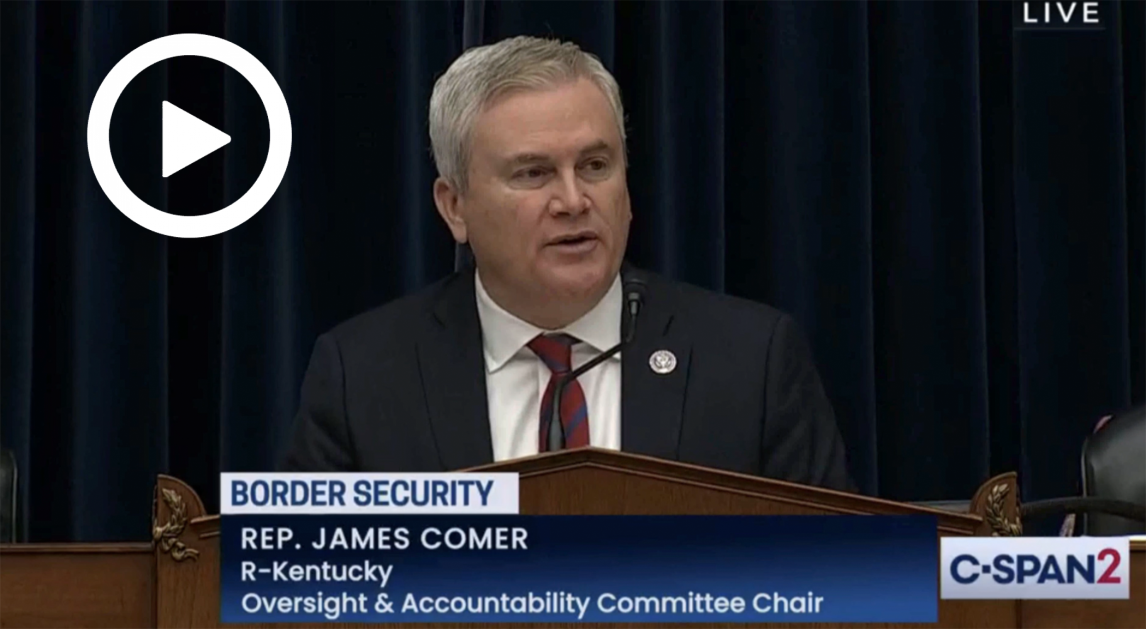
Chairman James Comer (R-KY) has issued a blunt ultimatum to former President Bill Clinton and former Secretary of State Hillary Clinton: show up in person next month, or face contempt of Congress.
This escalation marks a significant ramping up of the committee’s probe, moving from administrative officials to the highest tier of the Democratic political dynasty. It also sets the stage for a constitutional showdown over the power of Congress to compel testimony from a former commander-in-chief regarding his private associations.
The Clinton Subpoena Showdown
- What’s Happening: House Oversight Chairman James Comer has set new deposition dates for Bill and Hillary Clinton: January 13 and 14, 2026.
- The Threat: In a letter to their attorneys, Comer warned that failure to appear will result in immediate contempt of Congress proceedings.
- The Reason: The committee is probing the federal government’s handling of the Jeffrey Epstein case. Comer argues the Clintons had a unique “personal relationship” with Epstein and Ghislaine Maxwell that necessitates in-person questioning.
- The Defense: The Clintons’ legal team sought to provide written testimony or avoid appearing, citing precedents set for other witnesses. Comer rejected this, calling the comparison “baseless.”
- The Constitutional Issue: A test of the Congressional Subpoena Power against a former President and high-ranking official, raising questions about the scope of legislative oversight into personal conduct vs. official government business.
“Immediate Contempt Proceedings”
The standoff intensified Monday evening when Chairman Comer sent a letter rejecting the Clintons’ scheduling conflicts and refusal to appear.
While the Clintons’ legal team cited a funeral as the reason for missing a previous date, Comer was unmoved by their failure to offer alternatives. He unilaterally set the new schedule: January 13 for the former President and January 14 for the former Secretary of State.
“If your clients do not comply with these new dates, the Committee will move immediately to contempt proceedings.” — Rep. James Comer
Contempt of Congress is not an idle threat, though it is difficult to enforce. If the House votes to hold a witness in contempt, the referral is sent to the Department of Justice for prosecution—a scenario that would be unprecedented for a former U.S. President.
“Not Similarly Situated”
The core of the legal dispute lies in fair treatment. The Clintons’ lawyers argued they should be treated like other witnesses in the probe, some of whom were allowed to submit written statements or skip depositions due to health issues or lack of relevant information.
Comer flatly rejected this argument. In his letter, he distinguished the Clintons from other officials, asserting that their specific ties to the disgraced financier make their testimony essential.
“President Clinton and Secretary Clinton had a personal relationship with Jeffrey Epstein and Ghislaine Maxwell,”
Comer wrote, arguing this places them in a different category than administrative figures. To date, only former Trump-era officials Bill Barr and Alex Acosta have testified in person.

The Epstein Connection and Political Warfare
The investigation aims to uncover potential mishandling of the Epstein sex-trafficking case by federal agencies. However, critics argue the focus on the Clintons suggests a political motive to tarnish Democratic icons by linking them to Epstein’s crimes.
Documents released by the committee confirm that Bill Clinton, along with President Donald Trump and other elites, socialized with Epstein. Both presidents wrote entries in a book for Epstein’s 50th birthday.
However, neither of the Clintons has been implicated in any criminal wrongdoing related to Epstein’s trafficking ring. Their team argues that their social interactions ended years before Epstein’s 2019 arrest.

A Test of Oversight Power
This confrontation highlights the broad, sometimes jagged, scope of Congressional Oversight.
The Supreme Court has ruled that Congress has the power to investigate, but only in aid of a “valid legislative purpose.” It is not a law enforcement agency.
Comer’s challenge will be to demonstrate that questioning a former President about his personal social circle from decades ago serves the purpose of writing new laws or overseeing the Justice Department. If he cannot, the Clintons may challenge the subpoena in court, arguing it is a vehicle for political exposure rather than legislative inquiry.
As January approaches, Washington faces the spectacle of a former President potentially being dragged before a hostile committee—or being branded a criminal for refusing to go.