
There is a particular kind of national anxiety that settles in when someone armed rushes a room full of public officials and journalists. It is not just fear of violence. It is the realization that our civic life depends on fragile rituals: public events, open access, a free press standing close enough to power to ask uncomfortable questions.
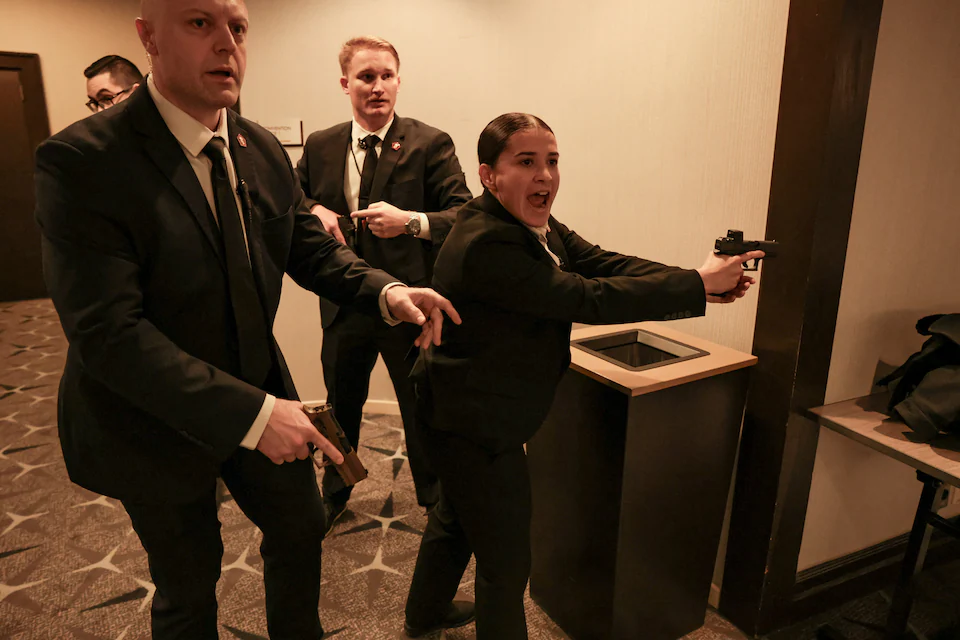
When an armed man rushed the White House Correspondents’ Association event, the immediate questions were practical. How did he get that close? How fast was he stopped? Who was in danger? But the deeper question is constitutional.
Not “what does the Constitution say about this one incident,” as if there is a clause titled When Someone Loses Their Mind at a Public Event. The real question is what we expect the Constitution to do for us when adrenaline spikes: to protect us, to restrain us, and to keep us from turning panic into permanent policy.
Join the Discussion
Security power is real, and it is not unlimited
In moments like this, we tend to talk as if “security” is a single force with a single job: stop the threat. Constitutionally, it is more complicated. The government has broad authority to protect high-level officials and secure designated events. That authority is strongest at the moment of danger, when the goal is to prevent harm rather than build a court-ready narrative.
But even in urgent circumstances, constitutional limits do not vanish. The Fourth Amendment still frames the boundary between reasonable protective action and unreasonable seizure. The First Amendment still protects journalists and attendees from being treated as suspects simply because they are in the room. And the Fifth Amendment still insists that government power ultimately answers to law, not to fear.
That tension is the heart of American constitutionalism: we empower the state to act quickly in emergencies, then we demand that it justify what it did once the emergency passes.
The press is not the problem the moment becomes an excuse to solve
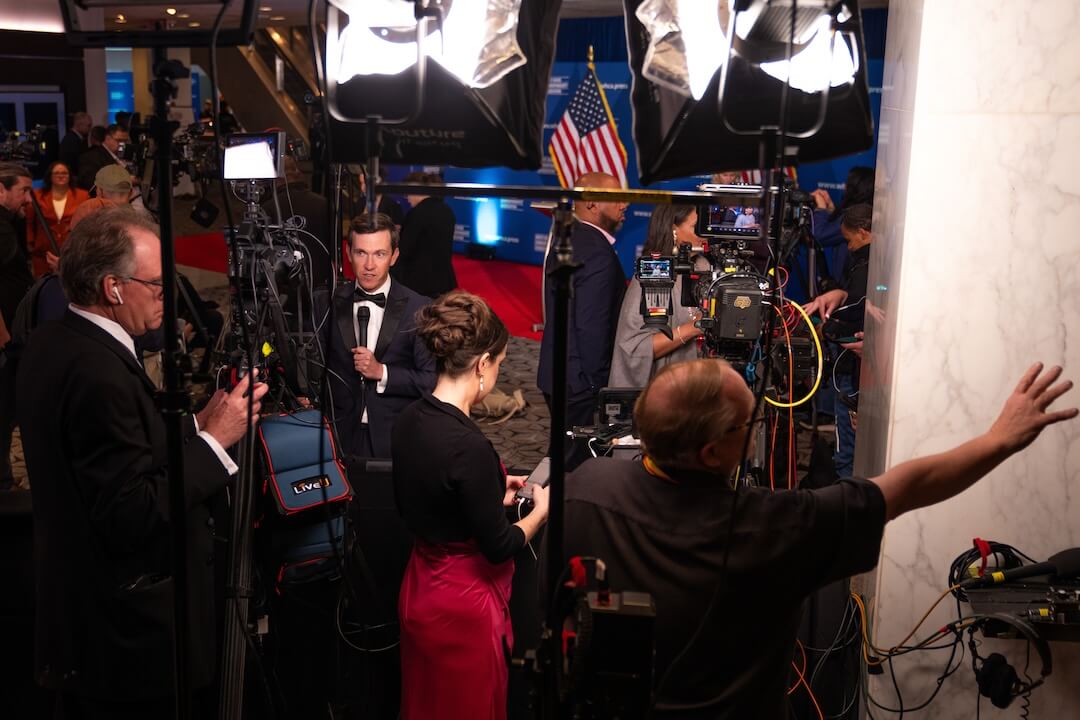
The WHCA event is symbolic for a reason. It is one of the few civic stages where the press and political power occupy the same physical space, face to face, without the usual layers of separation. That proximity is not a luxury. It is part of how a republic stays informed.
After an incident like this, there is always a temptation to convert a security failure into a new normal: more barriers, fewer questions, fewer cameras, fewer people. And it can happen in small, seemingly reasonable steps. One credentialing change here. One “temporary” perimeter there. One new restriction that never fully rolls back.
Constitutionally, the danger is not that the government protects an event. It is that it uses protection as a pretext to narrow access in ways that punish speech, association, or scrutiny. The First Amendment does not guarantee a seat at a private dinner, but it does stand as a warning sign when the state tries to control who may observe, who may ask, and who may document.
The “armed” fact triggers law, but it does not decide morality
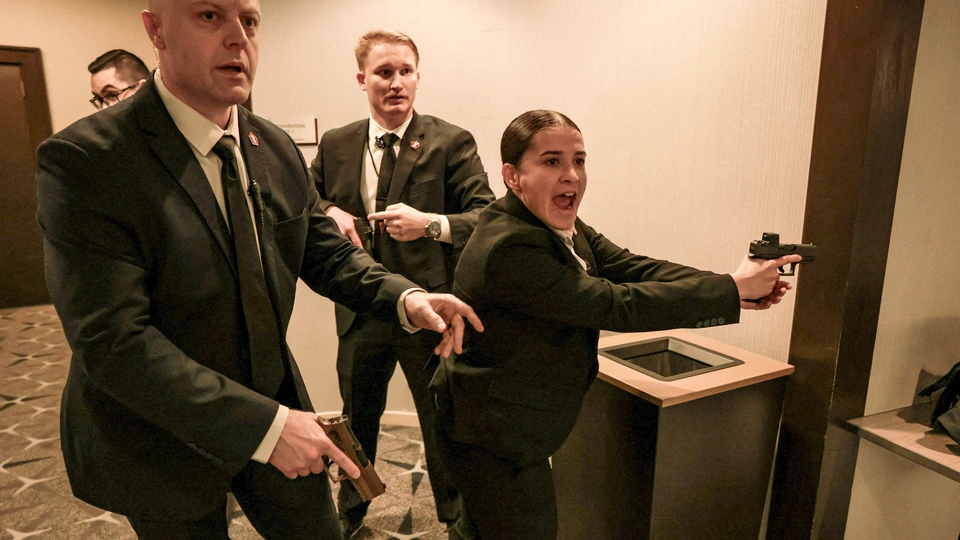
In the public conversation, the word armed does heavy lifting. It should. Weapons escalate risk. They compress the time officials have to interpret intent. They change what is reasonable for protective agents to do in the moment.
But civic reasoning requires two thoughts at once:
- Protective action can be justified immediately because the danger is immediate.
- Accountability must follow because power used under pressure is still power.
Those are not contradictory. That is the constitutional design. We do not require perfect calm before officials act. We require legal process after they do.
Due process is what we owe people we are afraid of
If someone rushes an event while armed, the instinct is to skip to conclusions: motive, ideology, label, tribe. But due process is specifically built to resist that human reflex. It is the discipline of not turning suspicion into certainty just because the story feels legible.
Due process has two dimensions that matter here:
- Procedural due process: clear charges, access to counsel, fair hearings, transparent evidence.
- Substantive limits: the government may not punish someone simply for who they are, what they believe, or what others fear they might do.
In moments of public shock, Americans sometimes treat due process as a technicality. It is the opposite. It is a civic promise: that we will not build policy out of vengeance, and we will not confuse prevention with punishment.
The constitutional question we rarely ask: what comes next?
The incident itself is the flashpoint. The real constitutional story is the aftermath. Every crisis generates proposals that sound like common sense and function like ratchets. Once turned, they are difficult to reverse.
Here are the kinds of “next steps” citizens should watch with a constitutional eye:
- Credentialing changes that quietly exclude disfavored outlets or independent journalists.
- Surveillance expansion without specific suspicion, clear limits, or meaningful oversight.
- Broad new criminal categories written so loosely they can be used against protest or press activity.
- Event access restrictions that treat proximity to government as a privilege granted only to the compliant.
None of these are automatically unconstitutional. But each can become unconstitutional in application, especially when implemented under the emotional cover of “safety.” The First and Fourth Amendments are often eroded not by dramatic announcements, but by administrative habits that become permanent.
A republic is measured by its worst minute
It is easy to praise constitutional rights during calm. The harder test is whether we still believe in them when we are afraid, angry, or embarrassed that security failed.
In a free society, the state must be capable of stopping an immediate threat. In a constitutional society, the state must also be capable of explaining itself afterward, narrowing its response to what is necessary, and resisting the temptation to treat the public as a permanent risk.
That is the quiet work of constitutional citizenship: insisting that public safety and civil liberty are not rivals, and refusing to let a moment of panic become a long-term rewrite of public life.
The question is not whether we can secure a room. We can. The question is whether we can secure a room without slowly turning the country into a place where only the powerful and the approved get to enter.