
Twelve months. Twelve constitutional explosions. Some made headlines for a week. Others are still burning through the courts.
This isn’t your civics teacher’s review of separation of powers. This is the year the Constitution stopped being a dusty document and became the most fought-over rulebook in America—with judges, presidents, states, and Congress all claiming they knew what it really meant.
We ranked them by sheer constitutional audacity, litigation firepower, and how many people suddenly started Googling amendments they didn’t know existed.
#12: Minnesota’s Childcare Freeze – Collective Punishment or Fraud Cleanup?
The Trump administration froze childcare subsidy payments to Minnesota providers in November. Fraud investigations were underway. But lawful providers lost funding alongside suspected fraudsters.
For three weeks, parents couldn’t pay for childcare. Providers couldn’t make payroll. The freeze ended partially after massive backlash, but the constitutional questions lingered: Where’s the due process? Where’s the individualized determination? Can the feds punish an entire state’s providers because some might be criminals?
The administration called it responsible stewardship. Critics called it political retaliation against a blue state. Nobody called it boring.
Constitutional flashpoint: Due process, equal protection, and federal-state program administration.
Why it matters: Federal funding as a political weapon doesn’t require a law change—just a bureaucratic decision.
#11: Federal Funding Shutoffs Without Warning
Schools, nonprofits, and state programs reported sudden federal funding terminations throughout 2025. No hearings. No comment periods. Just… off.
The lawsuits piled up fast. Education funding freezes hit hardest—parents and teachers mobilized within days. The constitutional argument wasn’t that anyone had a right to federal money. It was that taking away existing funding requires fair procedures.
Administrative law geeks saw it coming. Everyone else learned that “procedural due process” isn’t just law school jargon—it’s the difference between a policy change and chaos.
Constitutional flashpoint: Due process as a speed limit on executive power.
Why it matters: If process doesn’t matter, every funding stream is one signature away from disappearing.

#10: Can States Sue Federal Agents? Illinois Says Yes
The Justice Department sued Illinois in October over a state law that let people sue federal immigration agents and restricted enforcement in state courthouses. The feds invoked the Supremacy Clause: federal law wins.
Illinois fired back: we’re not blocking federal enforcement, we’re protecting residents from unlawful federal actions. Twenty-two states filed friend-of-the-court briefs. Eleven backed Illinois. Eleven backed DOJ.
The case boiled down to a question with no clean answer: Can states create accountability for federal agents operating in their territory, or does that destroy federal supremacy?
Constitutional flashpoint: Supremacy Clause versus state sovereignty.
Why it matters: If states can’t create consequences for federal overreach, what checks federal power on the ground?
#9: Congress vs. the Executive Branch – Subpoena Showdown, Round 47
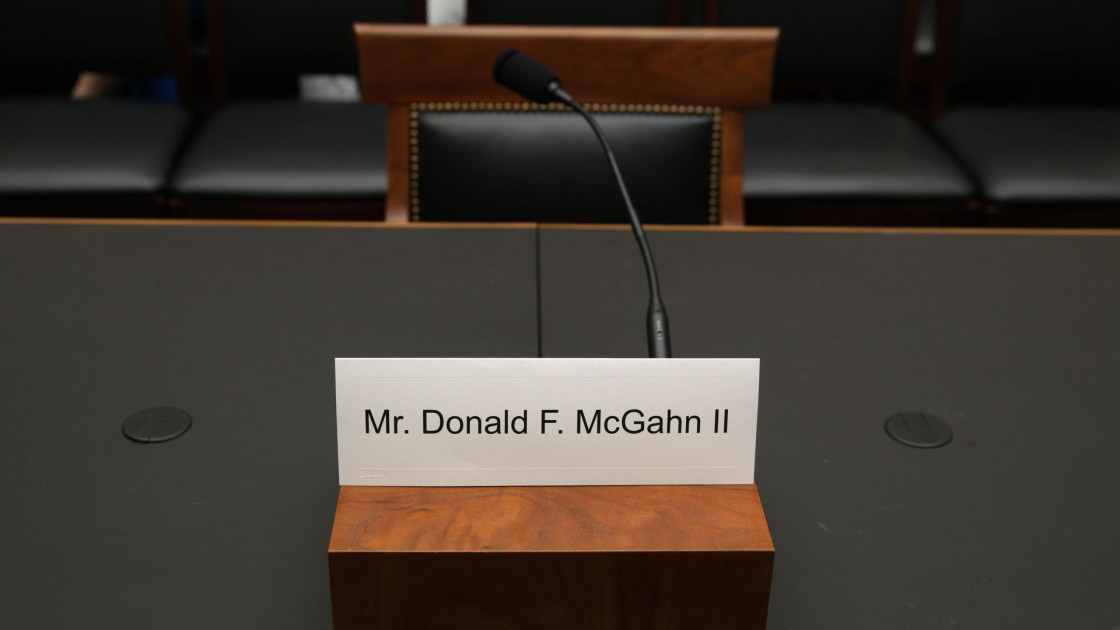
Congressional contempt proceedings exploded in 2025. Trump-world figures fought subpoenas through appellate courts. Executive privilege claims multiplied. Congress debated dusting off “inherent contempt”—literally arresting witnesses and holding them in the Capitol.
The Constitution gives Congress investigative power. It gives the executive some confidentiality. Neither is absolute. Both sides claimed the Framers would be furious at the other.
The real question cut deeper: Does Congress have any enforcement mechanism if the executive just says no?
Constitutional flashpoint: Separation of powers and the limits of congressional oversight.
Why it matters: A subpoena without enforcement is a strongly worded suggestion.
#8: Planned Parenthood Funding Cuts
An appeals court cleared the Trump administration to halt Medicaid funding to Planned Parenthood in twenty-two states in September. Clinics started closing within weeks.
The constitutional machinery was simple: Congress controls spending. Administrations implement those decisions. Courts defer unless the law is violated. The court found no violation.
The practical result: federal spending authority as a policy weapon, fully legal under current doctrine. No ban required. No constitutional amendment needed. Just turn off the money.
Constitutional flashpoint: Congress’s spending power as a back-door ban.
Why it matters: You can shut down almost anything without making it illegal—just defund it.
#7: Deporting Speech? The Activist Case
A British anti-disinformation activist—a legal U.S. resident—faced detention and deportation in March after criticizing administration policies. A federal judge blocked it, finding First Amendment speech concerns plus Fifth Amendment due process violations.
The timing was suspicious. The targeting was obvious. The stated rationale didn’t hold up. The judge said that created a constitutional problem even in immigration context, where executive power is normally massive.
The case asked a question with uncomfortable answers: Can immigration enforcement be weaponized against protected speech?
Constitutional flashpoint: First Amendment versus executive immigration authority.
Why it matters: If the government can deport you for your opinions, the First Amendment has a citizenship requirement.
#6: TPS Rollback Blocked
A judge blocked the Trump administration from ending Temporary Protected Status for South Sudanese immigrants in November. The ruling cited procedural violations and evidence of discriminatory intent. Deportations for 2,500 people halted temporarily.
The administration argued TPS decisions are unreviewable executive calls on foreign policy. The judge found the termination ignored current conditions and relied on pretextual reasoning.
TPS has existed since 1990. The constitutional fight isn’t about the statute—it’s about how much deference courts owe the executive on immigration, and whether equal protection limits those decisions.
Constitutional flashpoint: Executive immigration authority versus equal protection and procedural fairness.
Why it matters: “Temporary” status that people have held for years creates constitutional questions when it ends suddenly.

#5: Emergency Powers at the Border
The southern border national emergency declaration in January unlocked sixty-one separate emergency authorities. Funding got reprogrammed. Military forces deployed. Congress’s power of the purse collided with decades of statutory delegations to the executive.
No court struck down the emergency itself. But litigation over specific funding transfers and military activities continued all year. The constitutional question wasn’t whether emergency powers exist—it’s whether this qualified as an emergency.
The Brennan Center had been warning about emergency authority creep for years. 2025 made it impossible to ignore.
Constitutional flashpoint: Separation of powers and the elastic definition of “emergency.”
Why it matters: If everything’s an emergency, nothing is—but the president still gets the power.
#4: NPR and PBS Funding Cuts – Can You Defund the Press?
NPR and PBS faced funding cuts amid viewpoint discrimination claims. The First Amendment question exploded: Can government pull funds because it dislikes perceived bias?
The administration framed it as taxpayer relief from propaganda. Critics called it authoritarian retaliation against press freedom. Both sides had constitutional arguments. Neither had clean Supreme Court precedent.
The fight revealed how government funding creates constitutional leverage. The feds don’t have to censor you directly. They can just stop paying.
Constitutional flashpoint: First Amendment versus government funding conditions.
Why it matters: Freedom of the press gets complicated when the press gets government checks.
#3: The Injunction Wars – Can One Judge Stop a President?
Trump’s birthright citizenship executive order triggered nationwide injunctions in four states within hours. The administration appealed, arguing single district judges have no authority to freeze federal policy coast-to-coast—only in their own jurisdictions.
By spring, the Supreme Court faced a question bigger than immigration: Can nationwide injunctions survive?
Lower courts had been issuing them for years against presidents of both parties. Critics called them judicial overreach. Supporters called them the only remedy that works when federal policy is, well, nationwide.
The fight wasn’t really about injunctions. It was about whether courts can stop presidents quickly, or whether presidents get to implement policy while litigation drags on for years.
Constitutional flashpoint: Article III remedies and the scope of judicial power.
Why it matters: If courts can only stop policies in their own districts, presidential orders become unblockable in practice.
#2: Habeas Corpus Suspension – The Clause That Stopped Being History
“The privilege of the writ of habeas corpus shall not be suspended, unless when in cases of rebellion or invasion the public safety may require it.”
Senior administration advisers explored suspending habeas corpus for undocumented immigrants in detention. The proposal never became policy. But the conversation alone made habeas corpus Google’s top constitutional search term in April.
Legal experts lined up to explain why it would trigger immediate litigation and almost certainly lose. The Suspension Clause has only been invoked during the Civil War and briefly after 9/11 for enemy combatants. Immigration detention doesn’t qualify as rebellion or invasion under any mainstream reading.
The proposal died. The question lived: If habeas corpus—the right to challenge detention in court—can become a talking point, what constitutional protection is actually safe?
Constitutional flashpoint: Suspension Clause and the floor of due process rights.
Why it matters: Habeas corpus is the right that protects all other rights. Lose it, and detention becomes whatever the government says it is.

#1: The Third Term Talk -When Guardrails Become Punchlines
Trump and allies floated third-term scenarios throughout 2025. Some dismissed it as trolling. Constitutional scholars took it seriously enough to publish formal analyses.
The Twenty-Second Amendment is clear: no person shall be “elected to the office of the President more than twice.” But the conversations kept coming. Could someone serve as VP then ascend? Do non-consecutive terms create loopholes? Could the amendment itself be unconstitutional?
Legal consensus held firm—the amendment means what it says. But consensus doesn’t matter if enough people ask “could it happen?” When constitutional limits become debate topics instead of boundaries, the limit already moved.
The third-term talk didn’t violate the Constitution. It did something arguably worse: it normalized the question. And in constitutional law, the questions you’re willing to ask shape the answers you’ll accept.
Constitutional flashpoint: Twenty-Second Amendment and the distinction between legal limits and political norms.
Why it matters: Constitutional guardrails only work if people treat them as guardrails, not suggestions.
The Pattern Nobody Wants to See
Twelve constitutional crises in one year. Some resolved. Some still burning. All of them faster, louder, and closer to breaking points than anyone expected.
The Framers designed friction into the system. Separation of powers creates conflict. Federalism ensures disagreement. The Bill of Rights constrains everything.
But the machinery was built for a slower pace—legislative sessions, court terms, electoral cycles that gave breathing room. 2025 compressed constitutional questions that used to take years into news cycles measured in hours.
The system still works. But it’s working at a speed the Framers never imagined, under pressure they never anticipated, with stakes they probably feared.
Whether it holds is the constitutional question for 2026.