
Confirmation hearings are not trials, and they are not job interviews in the normal sense. They are something more constitutionally revealing: a stress test for power. Who gets to ask questions. Who has to answer them. Which promises are treated as binding, and which are treated as theater.
Editor’s note: This piece is an analysis of how confirmation hearings typically function, using a DHS secretary nomination as the reference point. It is not a claim about the exact tone or specifics of any one hearing unless separately sourced. Accordingly, the discussion below is framed in general terms rather than as a blow by blow account of a particular exchange. Committee referral and hearing details should be confirmed against official Senate records.
For a Homeland Security nominee, the power questions are especially concrete: immigration enforcement, border operations, emergency management, intelligence sharing and coordination, cybersecurity, and the daily reality of a department that touches civil liberties through policy, screening, detention, and data systems that shape how people move, travel, and get flagged.
What, exactly, is the constitutional boundary between democratic accountability and executive independence when the job involves enforcement and civil rights constraints?
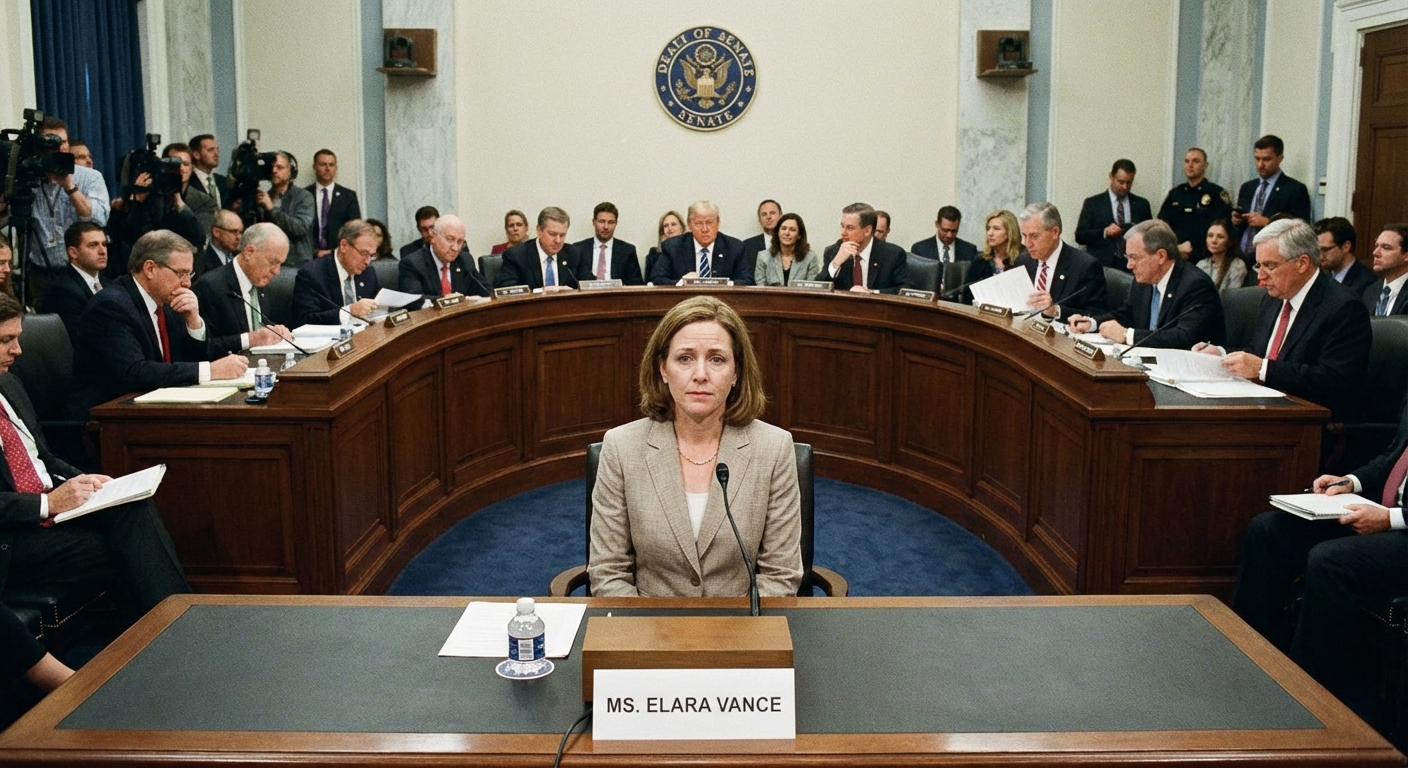
What happens in the room
Homeland Security confirmation coverage tends to revolve around a few recurring beats, regardless of nominee.
- Refusals to pre-commit. When asked how they would handle specific categories of disputes, nominees often frame answers around process, fact patterns, and consultation with career officials rather than concrete outcomes.
- A public-safety posture. DHS nominees repeatedly return to enforcement, operational control, risk management, and mission focus, positioning themselves as leaders who intend to use the full scope of the department’s lawful authority.
- Sharp exchanges over oversight. Senators often treat vagueness as a red flag. Nominees often treat certain hypotheticals and demands for pledges as improper, or at least unrealistic, for an executive official operating under statutes, ongoing litigation, and constraints imposed by courts.
If you only watch the most heated clips, it looks like personality conflict. If you watch the structure of the questioning, it looks like something else: the Senate attempting to turn a confirmation hearing into a set of constraints on future executive decisions.
What is really at stake
Most of the drama compresses into three institutional fights: the limits of advice and consent, the size of executive discretion, and what oversight can realistically do after the votes are counted.
1) Advice and consent is not supervision
The Senate’s confirmation power is real, but it is also limited. Article II gives the Senate a gatekeeping role: it can approve or reject the President’s nominees. What it cannot do is directly run the executive branch.
That is why nominees, especially for enforcement-heavy portfolios like DHS, often resist demands to promise specific future actions. If the Senate can effectively extract binding commitments on particular operational decisions, it begins to resemble an executive steering committee rather than a confirming body.
Nominees for executive departments are expected to promise fidelity to the Constitution, respect for statutes, and fair process. The line nominees try to hold is between those commitments and anything that could be described as prejudgment, favoritism, or political direction in an individual matter.
2) The hearing is a proxy fight over discretion
Discretion is the engine of the modern executive branch. Congress writes broad statutes. Agencies interpret, prioritize, and enforce them. Courts review the legality at the edges, often slowly and case by case.
So when senators ask variations of “Will you do X?” they are often really asking: How wide is the zone of discretion you believe DHS has?
In a DHS context, that zone shows up in choices that sound technical but are deeply political: how to write and revise enforcement priority guidance, how to allocate personnel and detention capacity, what standards trigger heightened screening, how to balance removal operations with humanitarian processing, and how aggressive to be in rulemaking and internal guidance.
3) Oversight is real, but it works differently than people think
Congress has meaningful tools after confirmation: appropriations, authorizing legislation, hearings, subpoenas, inspector general structures, and in extreme cases impeachment. Appropriations in particular can steer DHS through budget levels and riders, even when authorizing law stays the same. But oversight is structural, not personal. It regulates an office, not a mood.
That matters because hearings can create a misleading expectation: that if a nominee will not verbally commit, the nominee must be planning misconduct. More often, refusal is about guarding institutional boundaries, preserving flexibility for future facts, or avoiding statements that collide with litigation posture and statutory limits.
Enforcement and civil liberties
When a nominee is headed for an enforcement-heavy role, constitutional anxieties concentrate around familiar pressure points. For DHS, these concerns are not abstract. They live in policies, systems, and operational tempo.
- Due process. How aggressively can the department pursue enforcement while still honoring notice, fair procedures, and meaningful review?
- Equal protection and viewpoint neutrality. Will enforcement feel evenhanded, or will communities experience it as selective and punitive?
- Federalism. Where does federal authority end and state authority begin when national priorities collide with local governance?
- First and Fourth Amendment spillover. Border search practices, watchlisting, data retention, and screening protocols can reshape speech environments and privacy expectations even when those are not the stated targets.
The Constitution does not just restrain government at dramatic moments. It restrains government in the administrative grind. That is why these hearings draw intense attention even when no law changes in the room.
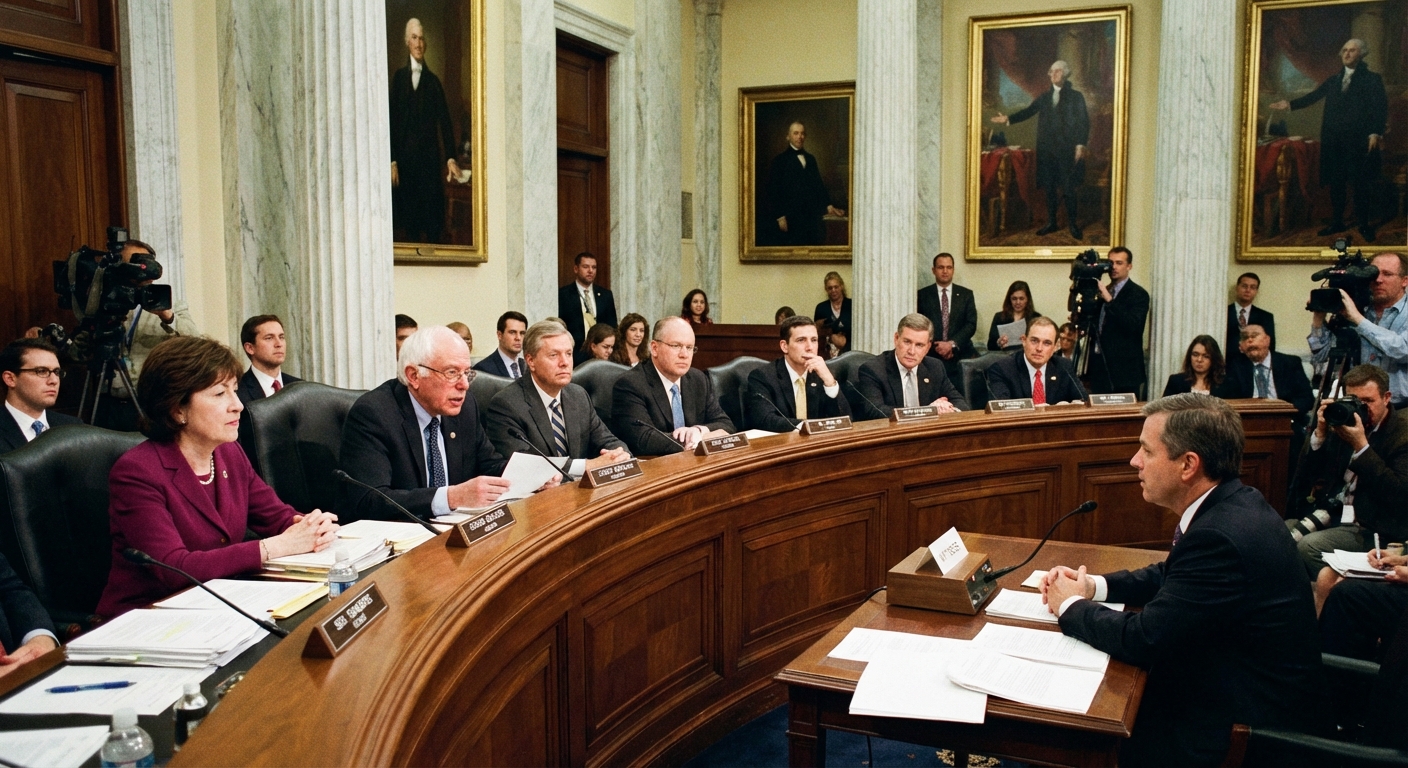
What the exchanges reveal
It is information and it is theater
Confirmation hearings still build a record of how a nominee understands the law, and they can surface real competence gaps. They are also a messaging stage designed for moments that travel. Senators ask questions that will clip well. Nominees often aim to answer in ways that will hold up under future scrutiny: litigation, inspector general review, oversight letters, and the headline cycle.
The result is a predictable collision: senators want yes or no; nominees want context and caveats. That gap is not a personality problem. It is an incentives problem.
Legitimacy is often the real fight
When a nominee senses that the deeper dispute is whether the department itself should act expansively, the nominee may treat the hearing as a referendum on legitimacy. In that posture, conceding too much sounds like admitting the office should be weaker. Senators who disagree treat resistance as evidence the nominee will not be accountable.
Some answers cannot be public
DHS sits close to classified and sensitive operational detail, from threat streams to vulnerabilities in infrastructure and cyber systems. That reality shapes the hearing. Some of the most candid conversations happen in closed briefings, and some of the most frustrating public non-answers are really about not putting operational specifics into the record.
Three takeaways
1) Watch what they refuse to say, and why
A refusal to answer can mean evasion. It can also mean a nominee is trying to avoid prejudging future decisions or binding the executive branch to legislative demands that are not law.
The better question is not “Why won’t they answer?” but “What constitutional or institutional boundary are they claiming?”
2) The key lines are about authority
The most revealing moments in confirmation hearings often come when a nominee defines limits. What statutes empower DHS. What the Constitution forbids. What belongs to Congress rather than to an agency, and what belongs to the courts rather than to political bargaining.
3) Accountability is slower than the clip cycle
Confirmation is one checkpoint, not the checkpoint. The real accountability trail is paper and practice: regulations, enforcement priorities, operational memos, procurement choices, budget decisions, litigation positions, inspector general reports, and how the department behaves when courts say no.
The question left open
A Homeland Security confirmation hearing leaves the public with an unresolved tension that never really goes away:
We want energetic enforcement, and we want restrained government.
The Constitution is built to hold both desires at once, but it does not do it automatically. It does it through friction: Senate confirmation, congressional oversight, judicial review, and ultimately elections.
Combative moments are easy to dismiss as political noise. But sometimes the noise is the point. It is the sound of separated powers doing what they were designed to do: push against each other hard enough that no single actor gets to define the limits of government alone.