
A federal judge gave the Trump administration 24 hours to send $4 billion to 42 million hungry Americans. The administration’s response wasn’t to comply – it was to race to the Supreme Court for permission to ignore him.
By 9:30 PM Friday, the Supreme Court granted that permission. The temporary block means the very people who depend on food assistance will continue receiving only 65% of what they’re owed – or in some states, nothing at all – while the government shutdown drags into its second month.
“People have gone without for too long,” District Judge Jack McConnell said Thursday before issuing his order. By Friday night, the highest court in America decided they’d have to wait a little longer.
The First Time in 60 Years
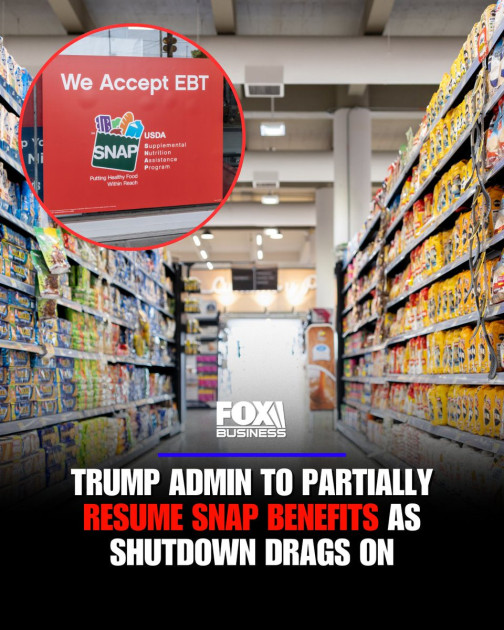
The Supplemental Nutrition Assistance Program has operated continuously since its creation six decades ago. Through recessions, budget battles, and previous government shutdowns, SNAP payments have always gone out on time.
Until November 1, 2025. That’s when the Trump administration allowed the program’s funding to lapse – the first interruption in SNAP’s entire history.
The administration didn’t just stop payments. It created a two-tier system where some Americans got 65% of their benefits while others got nothing, depending on which state they lived in. Judge McConnell called this exactly what it was: a failure to address “a known funding distribution problem that could cause SNAP payments to be delayed for weeks or months in some states.”
When A Judge Says 24 Hours And Means It
McConnell wasn’t playing games. His Thursday order gave the Department of Agriculture exactly one day to restore full funding for November.
The evidence before him was stark: food pantries overwhelmed, families skipping meals, a crisis manufactured by administrative choice rather than constitutional necessity.
“The evidence shows that people will go hungry, food pantries will be overburdened, and needless suffering will occur,” he said. “That’s what irreparable harm here means.”

By Friday, the USDA was actually moving to comply. Deputy Undersecretary Patrick Penn sent letters to regional directors saying the department was “working towards implementing November 2025 full benefit issuances” and would “complete the processes necessary to make funds available.”
Then the administration’s lawyers stepped in.
The Emergency Appeal To Stop Feeding People
The Trump administration didn’t just appeal McConnell’s order – it filed an emergency petition demanding the Supreme Court block it immediately.
The justification? Transferring $4 billion to feed Americans would cause “imminent, irreparable harms” to the government.
Read that again. The administration argued that feeding 42 million people would irreparably harm the United States government.
A federal appeals court rejected this argument Friday afternoon. So the administration went higher, asking the Supreme Court to intervene by 9:30 PM the same evening.
The Supreme Court said yes.
What “Separation of Powers” Actually Means In This Context
The Department of Justice accused Judge McConnell of “making a mockery of the separation of powers” by ordering the executive branch to fund a program Congress had authorized and appropriated money for.
This argument flips constitutional law on its head. The separation of powers doesn’t give the president authority to simply stop executing laws he finds inconvenient during a budget standoff. It means each branch has distinct roles – and the executive branch’s role is to faithfully execute the laws Congress passes.
SNAP isn’t a discretionary program the president can turn on and off like a light switch. It’s a legal entitlement created by statute.
When Congress authorized it and appropriated funds for it, the executive branch’s constitutional duty became clear: distribute those benefits.
The Trump administration is arguing that a government shutdown – a failure of Congress and the White House to agree on appropriations – somehow grants the president authority to unilaterally rewrite which obligations get met and which Americans get left behind.
The Arithmetic of Hunger
The numbers tell the story the legal arguments obscure. The SNAP program owes roughly $9 billion for November. The administration decided to pay $5.85 billion – exactly 65% of what’s legally required.
Where did that percentage come from? Not from any statute. Not from any constitutional principle. From an administrative decision that some obligations matter more than others, and feeding low-income Americans falls into the “less important” category.
For the 42 million Americans who depend on SNAP – many of them children, elderly, or disabled – that 35% shortfall isn’t an accounting problem. It’s meals they won’t eat. It’s a choice between medicine and food, rent and groceries.
“It’s likely that SNAP recipients are hungry as we sit here,” Judge McConnell observed Thursday. By Friday night, the Supreme Court had ensured they’d stay hungry a while longer.
When The President Says The Quiet Part Out Loud
Trump didn’t hide his strategy. He announced publicly that SNAP benefits would only resume when “radical left Democrats” agree to open the government on his terms.
This is hostage-taking dressed up as governance. It transforms a legal obligation to feed Americans into a bargaining chip in a political standoff. And it reveals exactly why Judge McConnell’s order was necessary – the administration wasn’t experiencing an inability to pay benefits, it was choosing not to as a negotiating tactic.
That’s not executive power. That’s executive abuse.
What New York’s Attorney General Got Right
Letitia James called the Supreme Court’s decision “a tragedy for the millions of Americans who rely on SNAP to feed their families.” Then she added something more pointed: “It is disgraceful that the Trump administration chose to fight this in court instead of fulfilling its responsibility to the American people.”
This is the pattern that matters. The administration had time and resources to file emergency appeals through multiple levels of the federal judiciary in a single day. It had lawyers working into Friday night to craft arguments for the Supreme Court.
What it apparently didn’t have was the ability to simply follow the law and send out the benefits as Judge McConnell ordered. The USDA was ready – Penn’s letter confirmed they were processing the payments. The political appointees stopped them.
The Constitutional Question Nobody’s Asking
Here’s what’s missing from the legal arguments: What happens when the separation of powers doctrine gets weaponized to justify not performing constitutional duties?
The Trump administration argues that forcing it to fund SNAP violates the president’s authority over the executive branch.
But the Constitution also requires that appropriated funds be spent as Congress directs. It mandates that the president “take Care that the Laws be faithfully executed.”
When those principles conflict, which one wins? According to the Supreme Court’s temporary order, executive discretion trumps legal obligation – at least for now.
That’s not a minor procedural point. It’s a fundamental question about whether statutory entitlements mean anything when a president decides to treat them as optional.
What “Temporary” Actually Means For Hungry Families
The Supreme Court’s block is temporary while it considers the administration’s full appeal. That could take days, weeks, or longer. For families who’ve already gone without full benefits for a week, each additional day multiplies the harm.
Food pantries are already overwhelmed. The Jewish Federation of Greater Philadelphia held an emergency food distribution Friday – a private charity scrambling to fill the gap left by government failure. Volunteers packed groceries while lawyers argued about separation of powers.
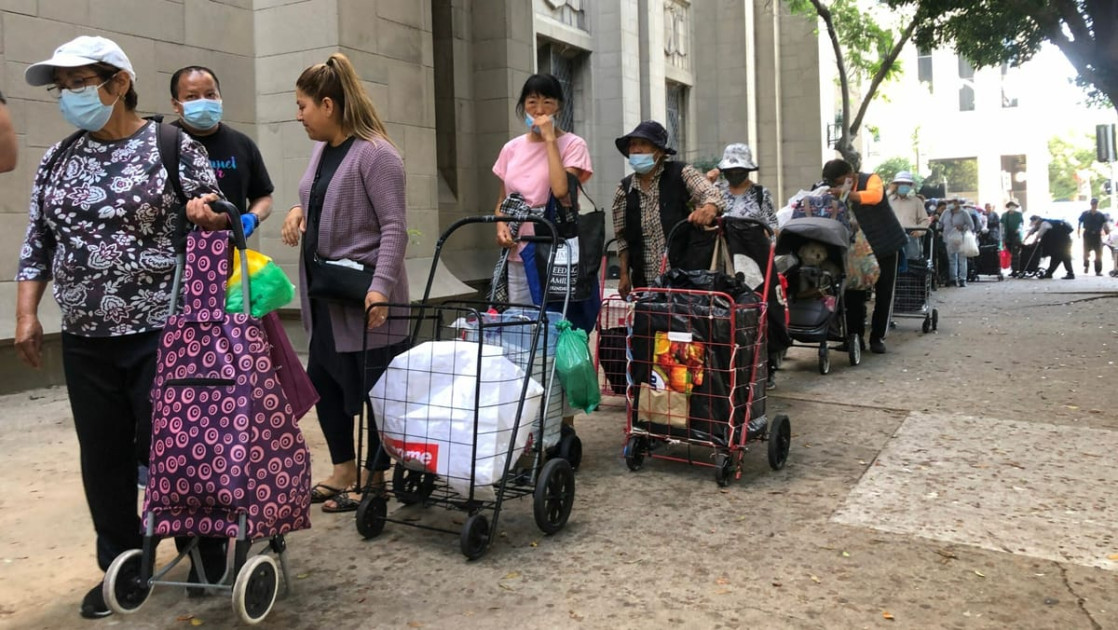
This is the real-world translation of constitutional theory. While judges debate whether ordering benefit payments violates executive authority, actual people go hungry. The “irreparable harm” the administration claimed isn’t abstract – it’s children missing meals.
The Shutdown That Didn’t Have To Touch SNAP
Previous government shutdowns haven’t interrupted SNAP payments. The program has continued operating because its funding was treated as mandatory rather than discretionary.
What changed? Not the law. Not the Constitution. Just the willingness of an administration to use the most vulnerable Americans as leverage in a political fight.
Trump framed this explicitly: benefits resume when Democrats cave. That’s not governance constrained by a constitutional crisis. That’s governance by hostage-taking, with 42 million Americans – including millions of children – held as the hostages.
What Happens Next Determines What Presidential Power Means
The Supreme Court will eventually rule on whether Judge McConnell’s order stands. That decision will answer whether a president facing a budget impasse can simply stop funding programs he finds inconvenient, or whether statutory obligations constrain executive discretion even during shutdowns.
The temporary block suggests which way the wind is blowing. A Court that spent the last four years expanding executive authority under the “major questions doctrine” now faces a test of whether that authority includes the power to stop feeding Americans as a negotiating tactic.
If it does, the separation of powers has become something the Framers never intended – a shield protecting presidential power rather than a constraint limiting it. The Constitution becomes a document that protects the government from the people, rather than the other way around.
And 42 million Americans will have learned that when it matters most, their legal entitlements are only as secure as a president’s political calculations allow.