
The Speaker of the House, Mike Johnson, stood not in the halls of Congress this week, but in a classic Nashville honky-tonk. He was there to sell the President’s “big, beautiful bill” not with complex budget charts, but with a simple, powerful, and politically brilliant promise to the bartenders and servers: no more federal taxes on your tips.
This is the new ground on which the battle for the 2026 midterms is being fought. It is a story about the immense power of the federal government’s taxing authority and how a single, easily understood tax cut can become the centerpiece of a fierce national debate over a massive and deeply consequential piece of legislation.

A Simple Promise
The provision at the heart of Speaker Johnson’s tour is a politically potent one. The new law completely eliminates federal income taxes on both tipped wages and overtime pay. For the millions of Americans in the service and trade industries, this is not an abstract economic theory; it is a direct and tangible increase in their take-home pay.
As one bartender told the Speaker, the change would make his life “easier,” giving him a chance to travel and worry less about money. The Nashville Palace’s manager put it even more simply: “Everybody’s a little more happy when they make a little more money.” This is the powerful, ground-level appeal of the new law.
A Tale of Two Narratives
This single provision has now become the focal point for two completely contradictory narratives about the entire “megabill.”
- The Republican Narrative: Speaker Johnson and President Trump are framing this as the “largest working-class tax cuts in American history.” Their message is simple: Republicans put more money in your pocket, and, as Johnson argued, the “Democrats voted against the prosperity and security of the American people.”
- The Democratic Narrative: Democrats, like Senator Mark Warner, argue this is a “scam.” They contend that this popular, targeted tax cut is a “sweetener” designed to distract from the bill’s much larger, and more damaging, provisions: historic cuts to social safety nets like Medicaid and food stamps, and massive tax breaks that disproportionately benefit corporations and the wealthy.
The Constitutional Power to Tax
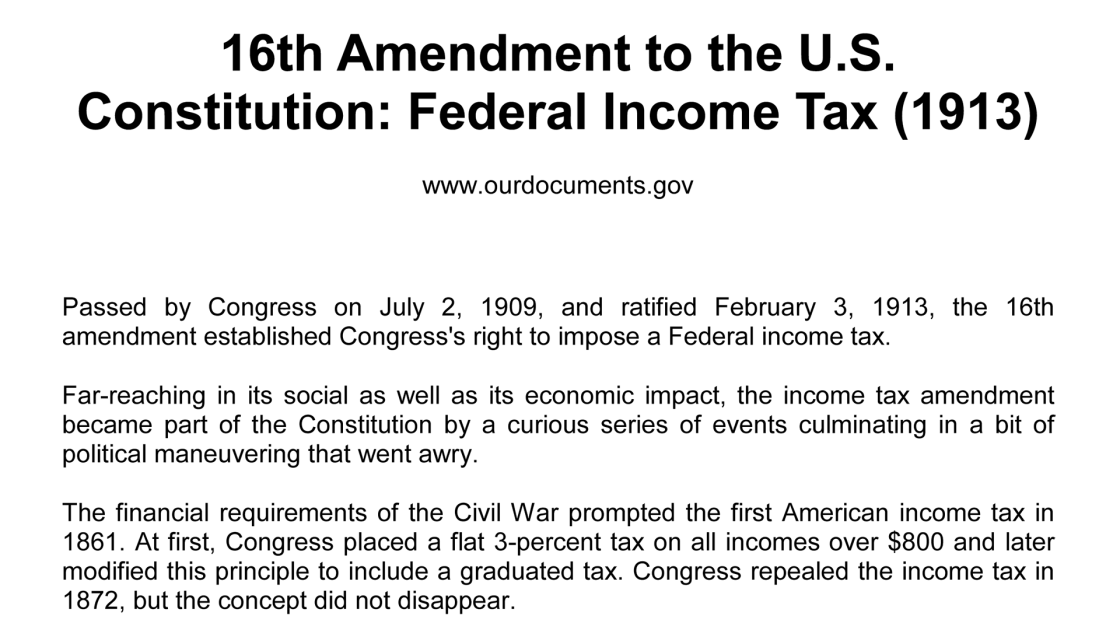
This entire debate is an exercise of one of the most powerful and far-reaching authorities granted to the federal government: the power to tax income. This power is not in the original Constitution; it was granted to Congress by the 16th Amendment in 1913.
The “no tax on tips” provision is a significant policy choice. It shows Congress using its immense constitutional power to single out a specific type of income for special, tax-free status. This is a potent tool of social and economic engineering, and it is now at the center of the political war for the hearts and minds of working-class voters.

The battle over this one provision is a perfect microcosm of our modern political debates. It demonstrates the power of a simple, tangible benefit in the face of complex, long-term consequences. The Republicans now have a clear and easily understood message to take to a key demographic. The Democrats are left with the much more difficult task of explaining that this popular tax cut is merely one piece of a much larger, and in their view, more damaging, legislative puzzle. The 2026 midterms may very well hinge on which of these two stories the American people choose to believe.