
Is your American citizenship a permanent, unassailable right, or is it a privilege the government can revoke if it decides you are no longer worthy? This is not a theoretical question. This week, the President of the United States declared he was giving “serious consideration to taking away” the U.S. citizenship of a private citizen and political critic, Rosie O’Donnell.
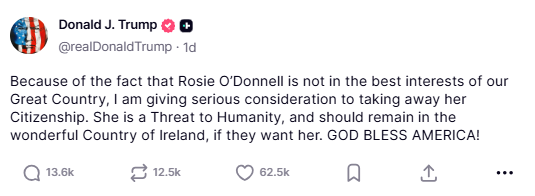
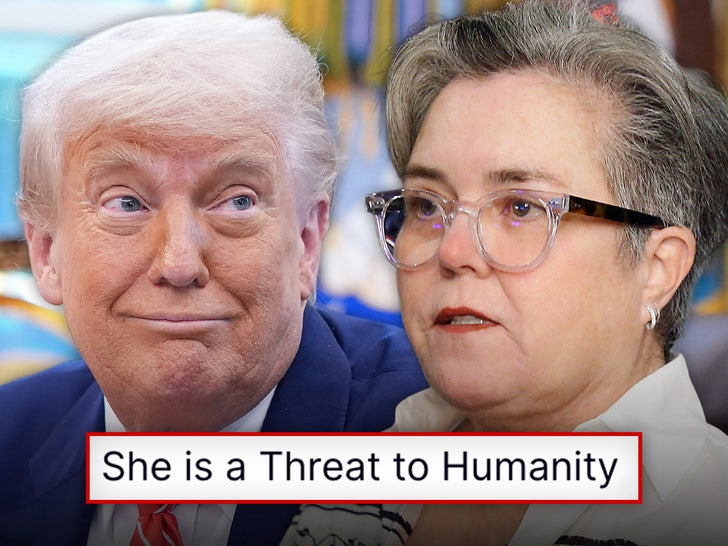
The long-running feud between Donald Trump and Rosie O’Donnell is well-documented tabloid fodder. But the President’s threat elevates their dispute from a personal spat to a profound constitutional crisis. The casual suggestion that a president can strip a natural-born American of their citizenship forces every one of us to ask:
When can U.S. citizenship be taken away, and who has the power to do it? The answer lies at the very heart of what it means to be an American.
The Unbreakable Promise of the Fourteenth Amendment
To understand the gravity of this issue, we must first look to the text of the Constitution itself. The Citizenship Clause of the Fourteenth Amendment is one of the most powerful and unambiguous sentences in our entire legal framework. It reads:
“All persons born or naturalized in the United States, and subject to the jurisdiction thereof, are citizens of the United States and of the State wherein they reside.”
Ratified in 1868 in the wake of the Civil War, this amendment was specifically designed to be a permanent, unbreakable promise. Its purpose was to overturn the Supreme Court’s infamous Dred Scott decision – which denied citizenship to Black Americans – and to ensure that the citizenship of those born on U.S. soil could never again be questioned or stripped away by a hostile government.
It establishes that for the native-born, citizenship is not a gift from the state; it is a constitutional right from birth.
Can Your Citizenship Be Revoked? A Supreme Court Precedent
The question of whether the government can involuntarily revoke citizenship has been settled by the Supreme Court. In the landmark 1967 case Afroyim v. Rusk, the Court ruled that a U.S. citizen “has a constitutional right to remain a citizen… unless he voluntarily relinquishes that citizenship.”
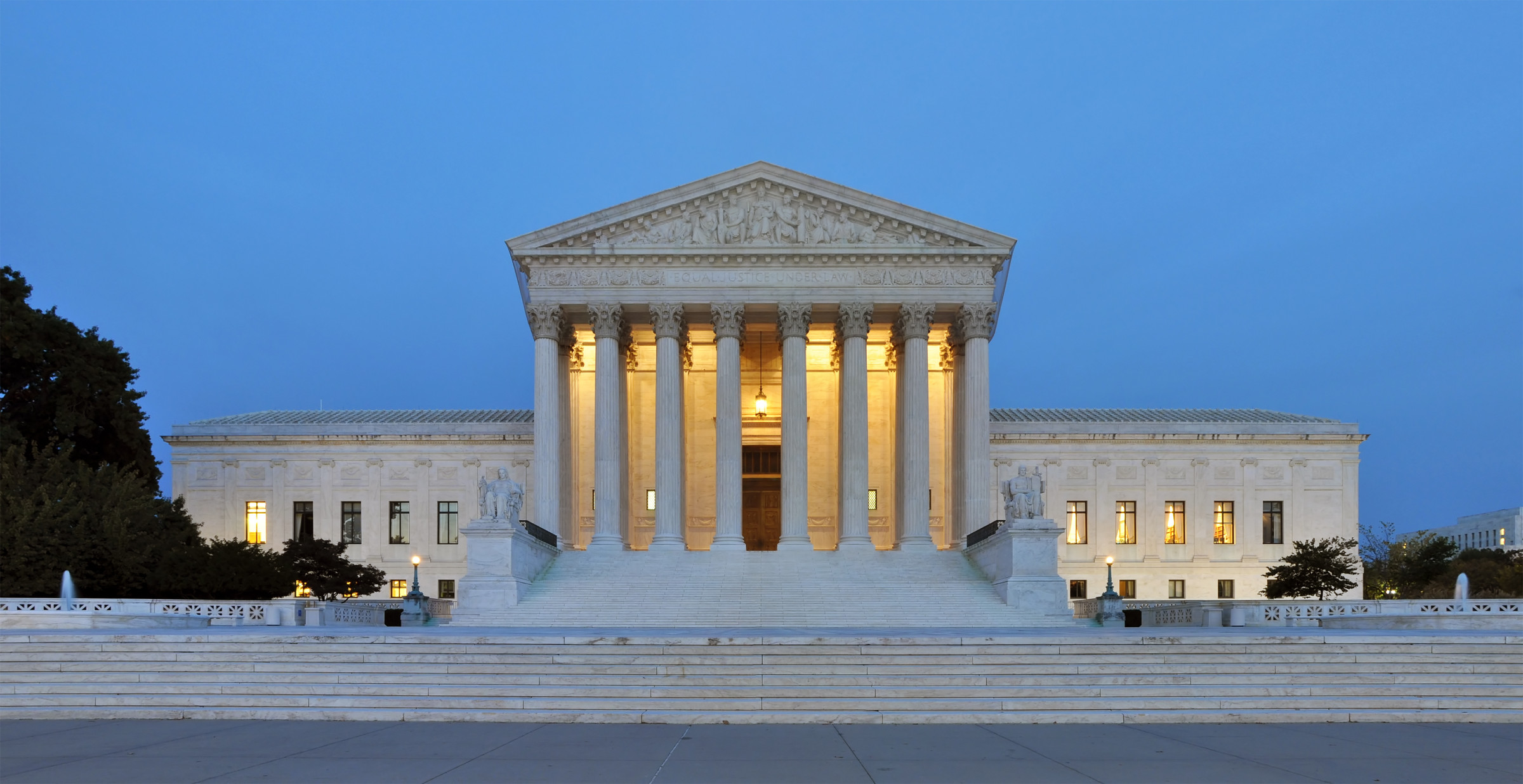
This is a critical precedent. The government cannot simply take your citizenship away. A citizen must demonstrate a clear intent to give it up. The law provides for extremely narrow and specific actions through which one can lose citizenship, such as committing treason, serving in a foreign military engaged in hostilities against the U.S., or going through the formal process of renouncing citizenship before a U.S. official.
Simply moving to another country, as O’Donnell has, or being a vocal critic of the President, does not even approach this high bar.
The idea that a President could revoke a natural-born citizen’s status because he deems them a “Threat to Humanity” or not in the “best interests of our Great Country” has no basis in constitutional law.
A Threat Against a Citizen, A Test for the Republic
While the President’s threat against Rosie O’Donnell is legally empty, it is profoundly dangerous from a constitutional perspective. It reveals a worldview where citizenship is not an immutable right, but a conditional privilege granted by the state and contingent on political loyalty.
This is more than just an attack on a political opponent. It is an attack on the foundational principles of a free society. The right to dissent, to criticize the government, and to speak freely without fear of retribution is the essence of American liberty. To threaten a critic with the loss of their very citizenship is an attempt to use the power of the state to intimidate and silence opposition. It is a tactic of authoritarian regimes, not a constitutional republic.
The feud between a president and a comedian is ultimately trivial. The principles at stake are not. The promise of the Fourteenth Amendment is that your citizenship is not conditional.
It cannot be revoked because you criticize the powerful, because you move to another country, or because a president declares you an enemy.
It is the bedrock upon which all other rights as an American stand. Defending that principle is a duty for every citizen, because a government that believes it can “un-citizen” one critic can eventually threaten anyone.