
“Advice and consent” is one of those constitutional phrases that sounds like a polite formality, like the Senate is gently nodding along while the President runs the executive branch.
In practice, it is one of the Senate’s sharpest tools. It is the mechanism that decides who becomes a Supreme Court justice, who runs cabinet agencies, who serves as ambassador, and whether the United States will be legally bound by major treaties. It also gets mixed up, constantly, with impeachment, even though impeachment lives in a different clause and works on a different logic.
Here is what the Constitution requires, what the Senate has built on top of it, and why “advice and consent” often turns into delay, leverage, or outright veto.
Join the Discussion
Where the phrase comes from
The Constitution uses “advice and consent” in two places:
- Appointments (Article II, Section 2, Clause 2): the President nominates, and the Senate provides advice and consent for appointments of principal officers, ambassadors, federal judges, and other officers Congress places under this process.
- Treaties (Article II, Section 2, Clause 2): the President makes treaties, but only with the advice and consent of the Senate, requiring a two-thirds vote of senators present.
Notice what the clause does not do. It does not spell out hearings, committees, timelines, or even a promise that the Senate must vote. The Constitution sets the gate. The Senate designs the hallway leading up to it.
Advice and consent for nominations
For nominees, “advice and consent” usually means a sequence of steps that has become tradition, rule, and political habit. It applies to Supreme Court justices, lower federal judges, cabinet secretaries, deputy secretaries, U.S. attorneys, U.S. marshals, and a long list of other Senate-confirmed positions.
Step 1: Nomination
The President sends a nomination to the Senate. That nomination is then referred to the committee with jurisdiction. Judges go to the Senate Judiciary Committee. Most cabinet nominees go to the committee that oversees their department’s policy area, like Armed Services for Defense, Finance for Treasury, and HELP (Health, Education, Labor, and Pensions) for Health and Human Services (with Finance handling major health programs and tax issues).
Step 2: Paperwork, ethics, and background
Before a public hearing happens, a modern nomination often moves through an invisible but decisive stage:
- Financial disclosures and ethics agreements
- Background investigations that often include FBI checks
- Committee questionnaires, sometimes hundreds of pages
- Meetings with senators, especially from the nominee’s home state for judges
This is where nominations can stall quietly. The delay can be logistical, but it can also be strategic.
Step 3: Committee hearing
Committees decide whether to hold a hearing and when. Hearings are where the public sees “advice” most clearly: senators question nominees, interest groups mobilize, and the nomination becomes a test of philosophy as much as competence.
For high-profile judicial nominees, especially Supreme Court nominees, hearings can shape the political narrative for weeks, even if the final votes were always likely.
Step 4: Committee vote (or no vote)
Committees can report a nomination to the full Senate favorably, unfavorably, or without recommendation. They can also refuse to report it at all. A nomination that never leaves committee can die there without the full Senate taking a recorded position.
This is one reason “the Senate didn’t confirm” can mean more than one thing. Sometimes it means the Senate voted no. Sometimes it means the Senate never voted at all.
Step 5: Scheduling and leader power
Even after committee, the nomination has to reach the floor. The Senate’s agenda is controlled largely by the majority leader, and scheduling choices are a major form of leverage. If the leader does not bring a nomination up, it can sit for weeks or months.
Individual senators can also slow the process using customs like “holds,” which are not a constitutional requirement but a Senate practice that signals intent to object to quick consideration.
Step 6: Debate and cloture
If there is opposition, the Senate may need to invoke cloture to end debate and move toward a final vote. Historically this was where the filibuster could block confirmations. Over time, the Senate changed its precedents using the so-called nuclear option, lowering the threshold so that most nominations, including Supreme Court nominees, can now advance and be confirmed by a simple majority.
The important point for civics is this: the Constitution says “consent,” but the Senate’s rules determine how hard consent is to obtain in practice.
Step 7: Final confirmation vote
Most nominations require a simple majority of those voting. If confirmed, the President commissions the officer, and the officer is sworn in.
What counts as a “failed nomination”
A nomination can fail in multiple ways:
- Rejected on the floor: the Senate votes no.
- Withdrawn by the President: often when confirmation is unlikely.
- Returned to the President: if the Senate adjourns or ends a session without acting, nominations can be returned under Senate rules unless carried over by agreement.
- Never scheduled: stalled in committee or on the calendar.
That last category is the one people often miss. The Constitution does not force the Senate to give a nominee a hearing, and it does not force a vote by any deadline. The Senate’s power includes the power to do nothing.
Judicial nominations
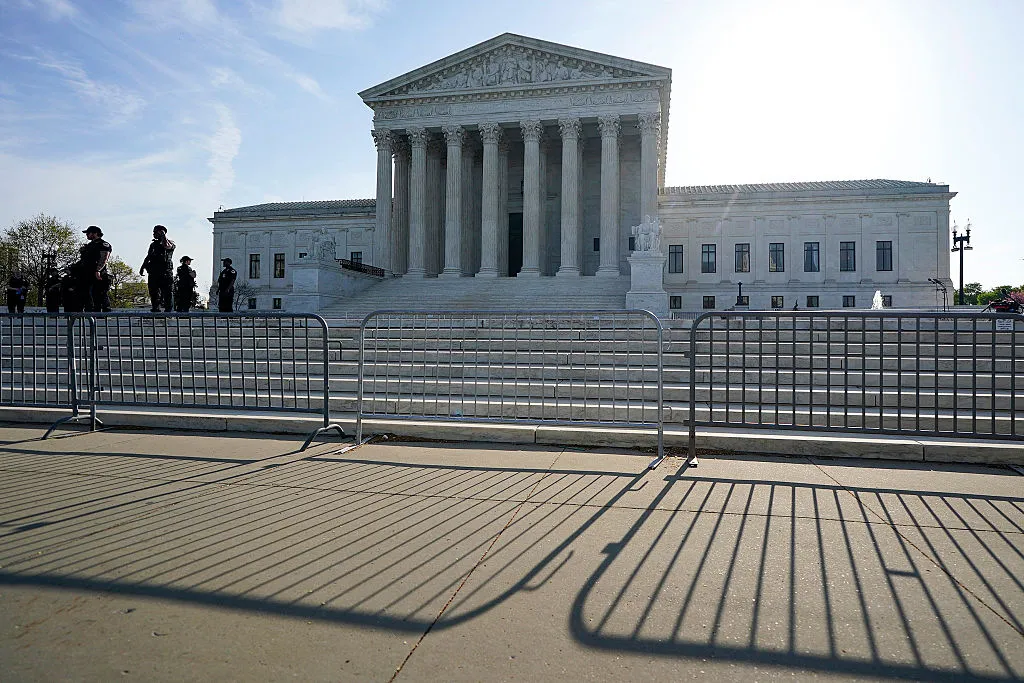
All confirmations can be partisan, but judicial nominations are uniquely durable. A cabinet secretary serves at the President’s pleasure. A federal judge can serve for life under Article III.
That changes the incentives. Senators treat judicial confirmations less like staffing decisions and more like constitutional bets.
Advice before the nomination
“Advice” is not only what happens after the White House sends paperwork to the Senate. In many administrations, it also means consultation beforehand. Presidents and their lawyers sometimes talk with senators, especially home-state senators for judges, to test whether a nominee will be acceptable or instantly blocked.
Blue slips
For lower court judges, one tradition looms large: the blue slip. For district and circuit nominees, senators from the nominee’s home state are asked whether they approve moving forward. How much weight the committee gives a negative or unreturned blue slip has varied widely over time and by chair, but the effect is consistent: it gives home-state senators a way to influence, slow, or block nominees.
Supreme Court nominations
Supreme Court nominations compress the entire advice and consent drama into a national event: an intense hearing, wall-to-wall media scrutiny, and an up-or-down vote that can shift constitutional law for decades.
The process is not only about qualifications. It is about interpretive philosophy, legitimacy, and the Court’s future role in disputes that voters feel immediately, like abortion, guns, administrative power, and voting rules.
Advice and consent for treaties
Treaties are where the phrase “advice and consent” is most literal, and most misunderstood.
Under Article II, the President negotiates and signs a treaty, but the treaty does not become binding for the United States unless the Senate gives consent by a two-thirds vote of senators present, and the President then ratifies it (followed by the exchange or deposit of instruments of ratification).
Why treaties require two-thirds
The supermajority requirement reflects a structural choice: treaties can reshape national commitments and sometimes touch subjects normally handled by domestic law. The Framers placed that power in a shared space between the President and Senate, and they made it hard to do.
Committee role
Treaties are typically referred to the Senate Foreign Relations Committee. The committee can:
- Hold hearings with administration officials and outside experts
- Report the treaty to the full Senate
- Delay it indefinitely
- Recommend changes through conditions attached to consent
Conditions on consent
The Senate often consents to a treaty only with conditions. These come in a few common forms:
- Reservations: the U.S. agrees to the treaty but excludes or modifies a specific provision’s legal effect for the United States.
- Understandings: interpretive statements about what the U.S. believes the treaty language means.
- Declarations: policy statements, including whether the treaty is self-executing or requires implementing legislation.
This is “advice” in action. The Senate is not just voting yes or no. It is often rewriting the practical impact of the agreement the President negotiated.
Why some big deals are not treaties
You will sometimes see presidents use “executive agreements” or “congressional-executive agreements” instead of Article II treaties. The reason is usually arithmetic. Two-thirds of senators present is a very high bar.
That does not mean executive agreements are fake. It means they rest on different legal foundations, like statutory authority or the President’s independent constitutional powers. Depending on that legal basis, they can also be easier for later presidents or Congress to alter, even though treaties themselves can also be changed or abandoned through withdrawal.
What a failed treaty looks like
Treaties can fail the same way nominations do: by an explicit rejection vote or by quiet burial. A treaty can sit in the Senate for years without a final vote. It is one of the clearest examples of how the Senate can exercise power through inaction.
Delay and workarounds
People often ask why a President cannot simply fill positions when a crisis hits, or why a court seat stays empty for so long. The answer is that the Constitution created shared power, and the Senate’s internal rules decide how quickly that shared power moves. But there are a few narrow workarounds that matter in real life.
What slows nominations
- Committee bottlenecks: hearings and votes take time, and chairs control calendars.
- Information disputes: ethics disclosures, documents, unanswered questionnaires.
- Holds and objections: a signal that quick consent will be denied.
- Floor time scarcity: even after modern rule changes, the Senate has limited time and many priorities.
- Election-year politics: the closer the Senate gets to an election, the more every confirmation becomes a message to voters.
Recess appointments
The Constitution also gives presidents a bypass: the Recess Appointments Clause (Article II, Section 2, Clause 3) allows the President to temporarily fill vacancies that “may happen during the Recess of the Senate.” Those appointees can serve without confirmation, but only until the end of the Senate’s next session.
In modern practice, recess appointments are harder to use because the Senate can hold brief pro forma sessions every few days to prevent the chamber from being considered in “the recess” for constitutional purposes. This is why a President facing delays often cannot just recess-appoint an entire government into existence.
Acting officials
Another common workaround is the use of acting leaders under statutes like the Federal Vacancies Reform Act and, for certain agencies, agency-specific succession laws. Acting officials can keep the lights on, but they are usually time-limited and politically contentious, and they do not solve the underlying confirmation fight.
What slows treaties
- Two-thirds threshold: the math alone can make consent unrealistic.
- Foreign policy bargaining: senators may demand conditions, funding, or parallel commitments.
- Domestic implementation questions: especially if legislation would be required.
“Advice and consent” is sometimes described as a check on presidential power. But it also acts as a bargaining chip. The Senate can trade consent for policy commitments, information, or changes to an agreement. That is not a glitch in the system. It is a feature of the design: shared responsibility, enforced by friction.
Impeachment is separate
This is the confusion to clear up plainly: the Senate’s role in impeachment is not part of the advice and consent clause.
Impeachment comes from a separate set of constitutional provisions:
- Article I, Section 2, Clause 5: the House has the sole power of impeachment.
- Article I, Section 3, Clauses 6 and 7: the Senate has the sole power to try impeachments, and conviction requires a two-thirds vote of senators present.
What the Senate is doing in a trial
In an impeachment trial, the Senate is not confirming someone into office. It is deciding whether to remove an officer who is already in office. That is why the Senate acts more like a court than a committee.
The two-thirds requirement here is about legitimacy and stability. Removing a president, judge, or other civil officer is an extraordinary act, and the Constitution requires a broad consensus to do it.
Why they sound similar anyway
They both involve the Senate. They both sometimes use the same public vocabulary of “high-stakes constitutional accountability.” They both can end with a two-thirds threshold in certain contexts. But they come from different clauses, serve different purposes, and have different outcomes.
Advice and consent decides who gets power and what international commitments become binding. Impeachment decides whether an officer keeps power after alleged misconduct.
What to watch
If you want to understand advice and consent as it appears in the news, watch for three signals.
- Committee posture: Is the chair scheduling a hearing? Are members demanding documents? Is the nomination or treaty even moving?
- Leader scheduling: Is the majority leader committing floor time, or letting the clock run?
- Vote math: For nominations, a simple majority usually wins. For treaties and impeachment convictions, two-thirds of those present is a different universe.
“Advice and consent” is not just a line in Article II. It is a continuous negotiation between branches, shaped by Senate rules, calendar constraints, and political incentives. The Constitution built the checkpoint. The modern Senate decides whether the gate swings open, stays shut, or never gets approached at all.