
The Supreme Court, the First Amendment, and the Coming War Over Internet Speech
In a cryptic, unsigned order from its “shadow docket,” the Supreme Court has refused to block a sweeping new Mississippi law designed to police social media to protect children.
But in a stunning twist, Justice Brett Kavanaugh sent a powerful and contradictory signal in a separate opinion, declaring that the very law the Court just allowed to take effect is “likely unconstitutional.”
This is not a simple legal ruling; it is a complex and high-stakes chess move. The Supreme Court’s action is a procedural pause, not a final verdict.
But it plunges the nation into a period of deep uncertainty and sets the stage for a monumental constitutional battle over the future of free speech on the internet.
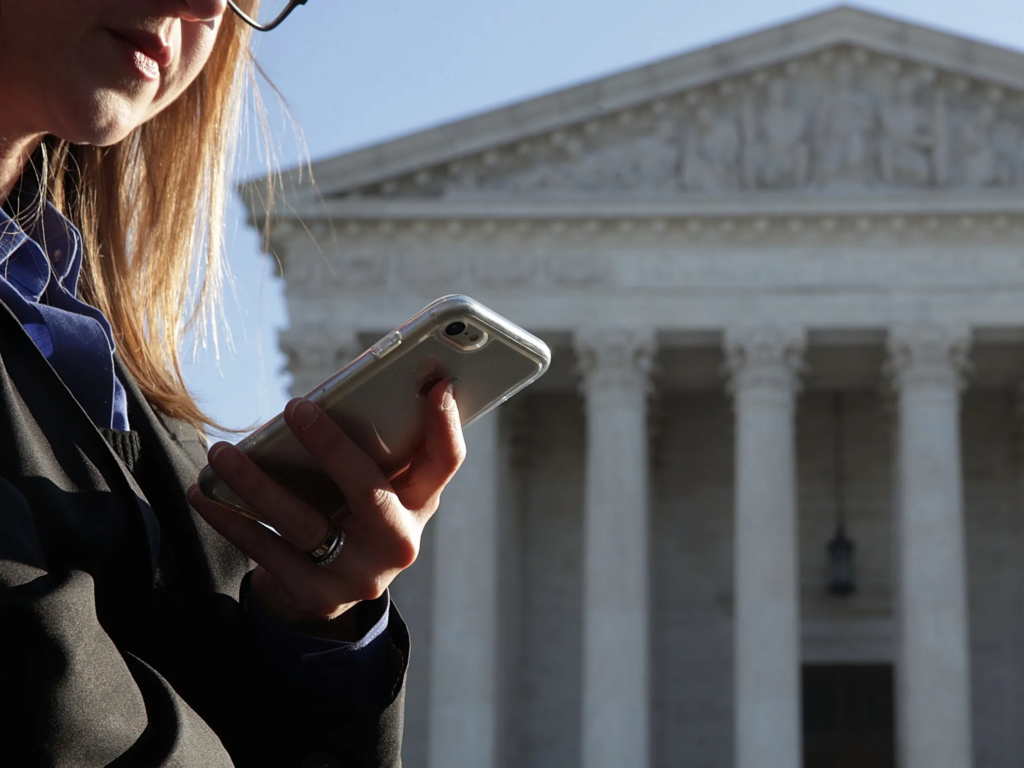
A State’s Duty vs. a Digital Universe
The law at the center of this storm is Mississippi’s “Walker Montgomery Protecting Children Online Act.” It requires social media sites to obtain parental consent for minors and to implement age verification systems to protect them from harmful material. The state argues this is a common-sense exercise of its fundamental duty to protect children.
The tech industry, represented by the trade group NetChoice, argues that the law is a direct assault on the First Amendment. They contend that it unconstitutionally chills the “fully protected expression” of both minors and adults, and that the age verification requirements would force adult users to surrender their privacy simply to browse the internet.
A federal district court initially agreed with the tech industry and blocked the law, but the U.S. Court of Appeals for the 5th Circuit lifted that block, allowing the law to take effect.
The Ghost of Precedent: The First Amendment and the Internet
This legal battle is a direct test of a landmark Supreme Court precedent. In the 1997 case Reno v. ACLU, the Court ruled that speech on the internet is entitled to the highest level of First Amendment protection, equivalent to the print press.
The Court struck down a federal law aimed at protecting minors from indecent material online, finding that it was not “narrowly tailored” and that it would unconstitutionally suppress a large amount of speech that is perfectly legal for adults.
Mississippi’s new law appears to be in direct tension with this precedent. To create a “safe” online space for children, it imposes burdens – like age verification and data collection – on all users, including adults.
This is the classic constitutional problem of “burning the house to roast the pig,” a tactic the Supreme Court has historically viewed with extreme skepticism.
The “Shadow Docket” and Kavanaugh’s Signal
The Supreme Court’s decision to deny emergency relief was made on its controversial “shadow docket,” meaning it came without the full briefing and oral arguments of a regular case. A denial of an emergency request is not a ruling on the merits. It is a procedural decision.
The most important part of this story, therefore, is Justice Kavanaugh’s concurrence. By writing separately to state that the law is “likely unconstitutional” but that he was voting to deny relief for procedural reasons, he sent an unmistakable flare signal to the lower courts.
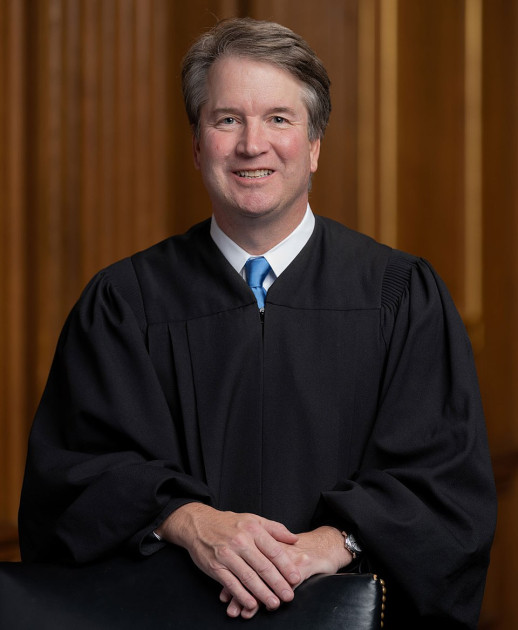
He is telegraphing that the 5th Circuit’s decision to let the law take effect is on exceptionally shaky ground. It is a clear indication that when this case inevitably returns to the Supreme Court on its regular docket for a full hearing, there are likely at least five votes to strike the law down.
The Court’s action is not a victory for Mississippi, but a temporary, procedural punt in a massive constitutional battle. This case represents a fundamental clash between two important goals: protecting children from the real dangers of the internet and protecting the free and open nature of that same internet.
Justice Kavanaugh’s note strongly suggests the Court is leaning toward the latter, but the final verdict on how to balance these two principles in the digital age has yet to be written.