
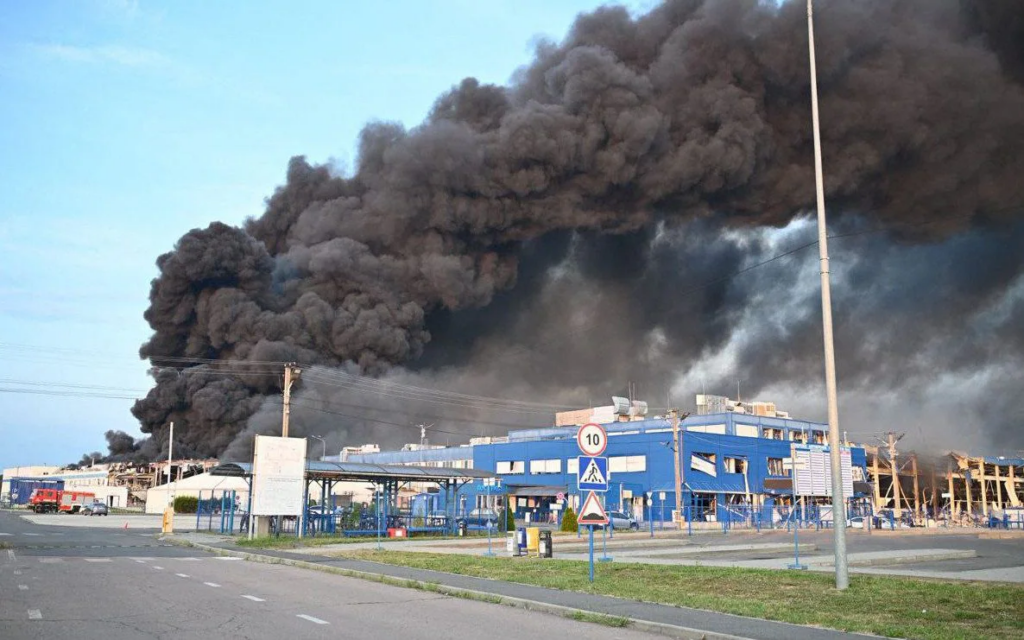
Days ago, it was handshakes and talk of a “path to peace” in Alaska. Today, it is fire and smoke rising from the wreckage of an American-owned factory in western Ukraine.
In a brazen and violent rebuke to President Trump’s personal diplomacy, Russia has unleashed one of the largest aerial assaults of the war.
This move not only shatters the fragile optimism of the recent summit but also forces a profound constitutional and strategic crisis for the United States, directly testing the President’s power as Commander-in-Chief.
At a Glance: The Post-Summit Escalation
- What’s Happening: Days after a peace summit with President Trump, Russia has launched one of the war’s largest aerial attacks on Ukraine, firing over 600 drones and missiles.
- The Key Target: The attack included a cruise missile strike on a major American-owned electronics factory (Flex Ltd) in western Ukraine, far from the front lines.
- The Reaction: Ukrainian President Zelenskyy called it proof that Russia is not serious about peace and is engaging in “terror.”
- The Diplomatic Fallout: The attack is a direct and violent challenge to President Trump’s personal diplomatic efforts to end the war.
- The Constitutional Issue: The incident stress-tests the President’s Commander-in-Chief powers and highlights the constitutional division of war powers between the President and Congress.
A Barrage of Fire, A Factory in Ruins
The scale of the overnight Russian assault was immense, primarily targeting cities in western Ukraine that have been relatively safe for much of the war.
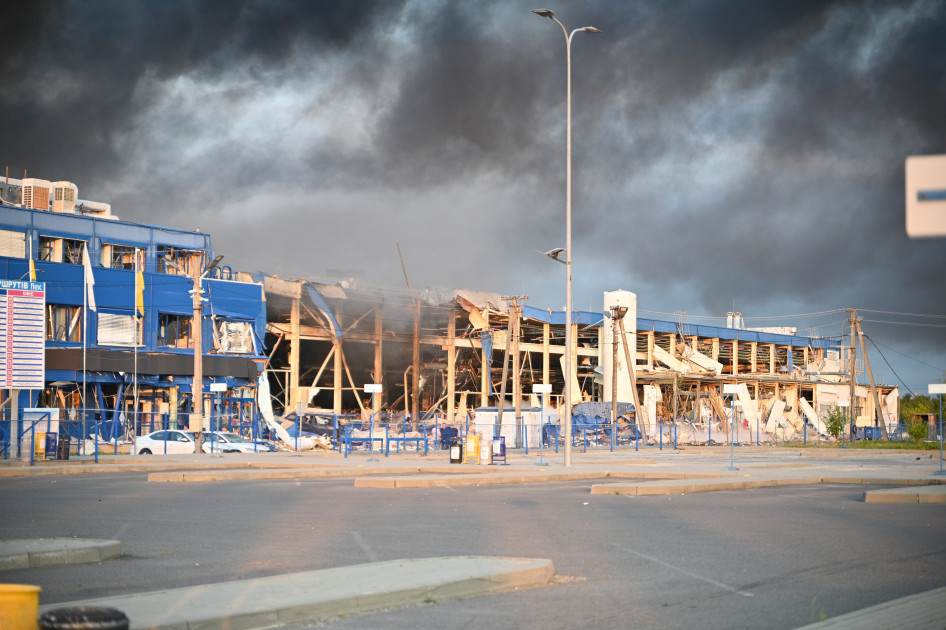
The most provocative strike hit an American business – a large electronics manufacturing plant owned by the Texas-based company Flex Ltd in the city of Mukachevo. Video from the scene showed a massive fire engulfing the facility.
Ukrainian President Volodymyr Zelenskyy reacted with fury and disbelief.
“Russia wasted several cruise missiles against an American business. [It was] a regular civilian enterprise producing domestic utilities, such as coffee machines. And that too became a target for Russia. Very telling.” – Ukrainian President Volodymyr Zelenskyy
A Direct Rebuke to Presidential Diplomacy
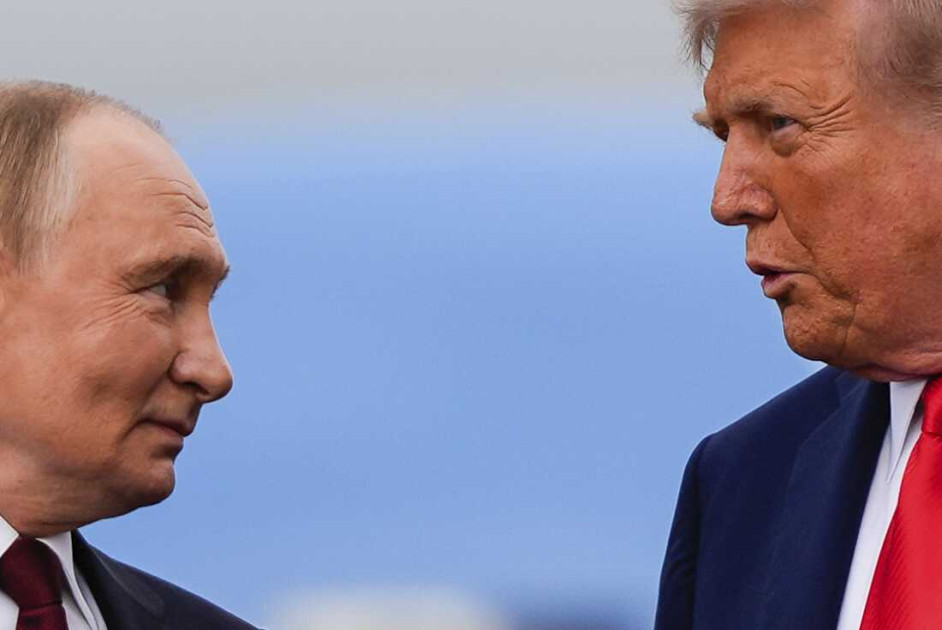
The timing of this attack is impossible to ignore. It comes just days after the high-profile summit in Anchorage between President Trump and Vladimir Putin.
That meeting ended with vague promises of a “path to peace.” This massive aerial assault is being interpreted globally as Moscow’s true response.
The attack sends a clear and brutal message: any path to peace will be dictated by Russia’s actions on the battlefield, not by handshakes at a diplomatic summit. It is a direct challenge to the credibility of President Trump’s personal, leader-to-leader style of foreign policy.
“This attack is a message written in missile fire. It’s a clear signal from Moscow that any path to peace will be dictated by Russia’s actions on the battlefield, not by handshakes at a summit.”
The Commander-in-Chief’s Dilemma
The strike on an American-owned factory, a significant U.S. investment in Ukraine, places President Trump in a difficult constitutional position.
Under Article II of the Constitution, the President is the Commander-in-Chief, giving him the primary responsibility for responding to acts of aggression that affect U.S. citizens and interests, even when they occur abroad.
However, Article I gives Congress – and only Congress – the power to formally declare war. An attack on a major U.S. business is a significant escalation that pushes the nation closer to direct involvement. How the President chooses to respond could trigger a major separation of powers debate with Congress over the nation’s war powers.
The Fragile Promise of ‘Security Guarantees’
This attack will also dramatically complicate the already fraught negotiations over “security guarantees” for Ukraine.
President Zelenskyy has been pushing his U.S. and European allies for a binding, NATO “Article 5-style” mutual defense pledge. This latest attack will only harden his resolve and make anything less seem worthless.
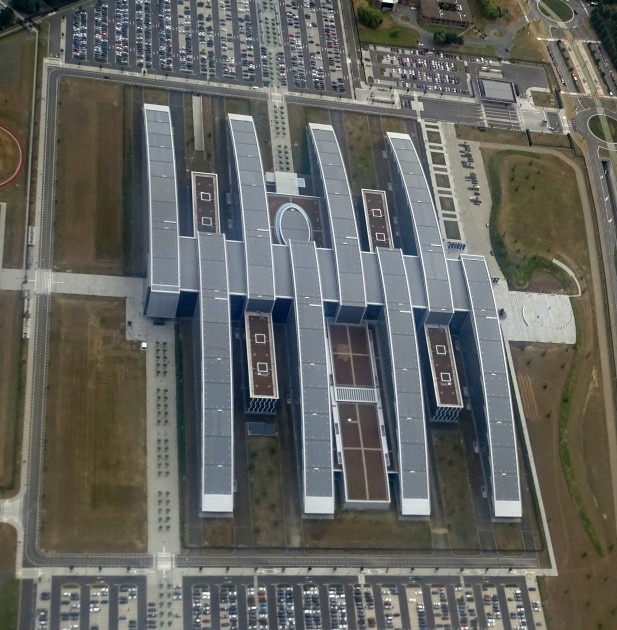
The U.S. has been hesitant to offer such a guarantee, and Russia has already declared the idea of any European peacekeepers “absolutely unacceptable.” It is a reminder that any formal security guarantee would be a treaty, requiring the consent of two-thirds of the U.S. Senate – a massive, and likely insurmountable, constitutional hurdle.
A Crossroads of Power and Peace
The optimistic photo-ops of the Alaska summit have been violently replaced by the grim reality of a smoldering American factory.
This act of aggression has shattered the diplomatic momentum and presents President Trump with a critical choice. He can double down on his personal diplomacy, or he can respond with the kind of force and economic pressure that members of Congress from both parties are now demanding.
His decision will not only define the future of the war in Ukraine but will also serve as a powerful statement about the nature of American power and the credibility of the U.S. presidency on the world stage.