
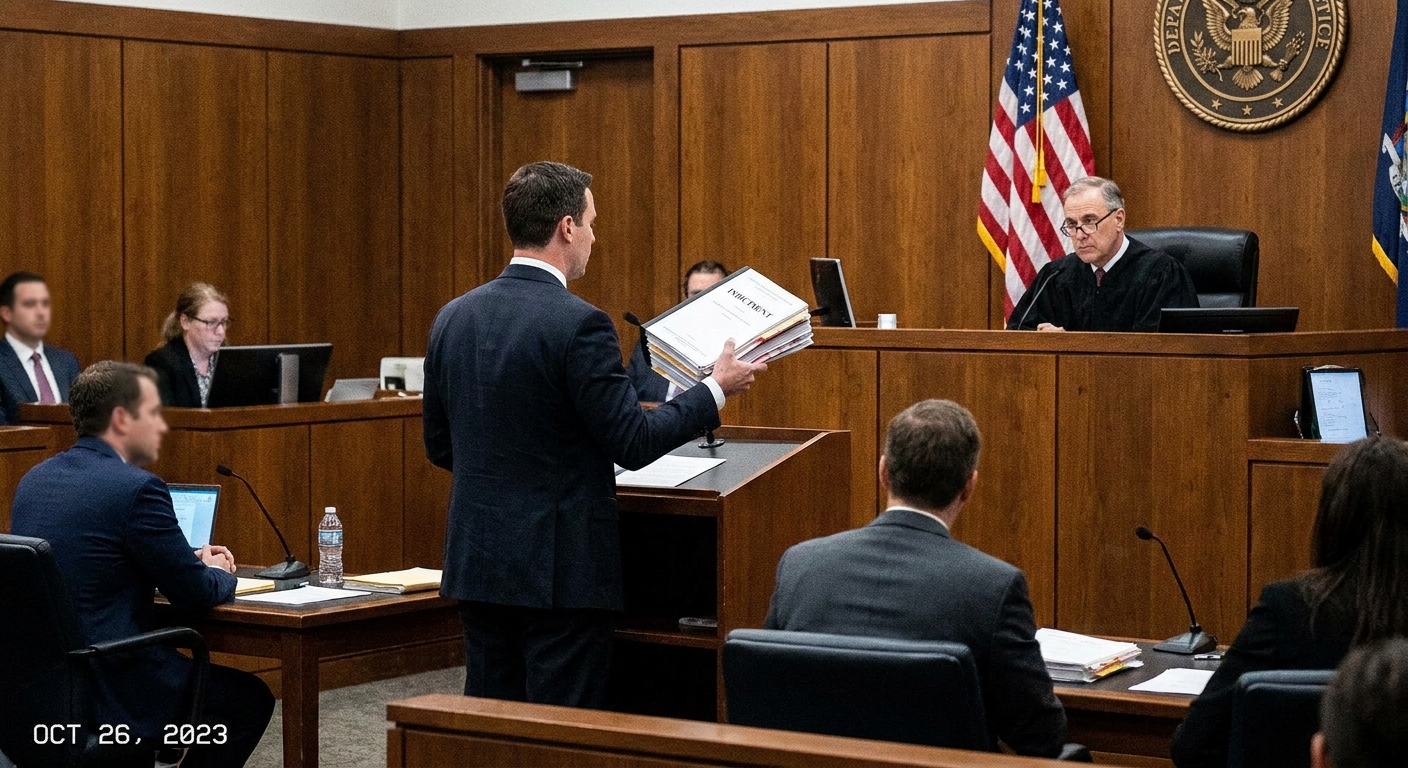
You have probably heard someone say “They got hit with RICO” the way people say “They got indicted.” Like it is a single charge that automatically means the case is enormous, the defendants are doomed, and the government has receipts for every dirty detail.
But “RICO” is not a vibe. It is a statute. And a RICO charge has a specific meaning: the government is alleging that someone participated in (or conspired to participate in) an enterprise through a pattern of racketeering activity, meaning repeated criminal acts listed in the law.
That sounds technical because it is. RICO was built to translate a big-picture story, an organization doing crime as a business model, into a set of elements a jury can find beyond a reasonable doubt.
Join the Discussion
What RICO stands for
RICO stands for the Racketeer Influenced and Corrupt Organizations Act, passed by Congress in 1970 as part of the Organized Crime Control Act. The law is codified primarily at 18 U.S.C. §§ 1961 to 1968.
Two points matter right away.
- RICO is broader than the mafia. It can apply to street gangs, white-collar networks, public corruption, and business organizations.
- RICO is both criminal and civil. Prosecutors can bring criminal RICO counts, and private plaintiffs can bring civil RICO lawsuits in certain circumstances.
What a RICO charge alleges
Most headlines use “RICO charge” as shorthand for one of two federal crimes:
- Substantive RICO under 18 U.S.C. § 1962 (especially § 1962(c)), and
- RICO conspiracy under 18 U.S.C. § 1962(d).
The basic idea
At a high level, a criminal RICO case argues that:
- There is an enterprise (an organization or group associated together).
- The defendant conducted or participated in the enterprise’s affairs (or agreed to).
- The participation happened through a pattern of crimes called racketeering activity.
- The enterprise affected interstate or foreign commerce (a constitutional hook tied to Congress’s Commerce Clause power).
That is why RICO is so attractive to prosecutors. It lets them tell a jury: “Do not look at this as isolated incidents. Look at the operating system.”
Key terms in plain English
1) Enterprise
An enterprise can be a traditional legal entity like a corporation, partnership, or union. But it can also be an association-in-fact, a group of people connected for a common purpose, even without formal paperwork.
The Supreme Court has explained that an association-in-fact enterprise needs a purpose, relationships among the people involved, and enough longevity to pursue the purpose.
2) Pattern of racketeering activity
A pattern is not “a lot of wrongdoing.” Under the statute, it generally requires at least two predicate acts of racketeering activity within 10 years of each other (excluding any period of imprisonment). Courts also look for relationship and continuity, meaning the acts are connected and suggest ongoing or repeated criminal conduct.
That last part is crucial. Two acts alone are not automatically a “pattern” in the everyday sense. The government typically must show this is not a one-off episode.
3) Racketeering activity (predicate acts)
RICO does not turn every crime into racketeering. It uses a list. “Racketeering activity” includes specific offenses such as (among others):
- Bribery and extortion (including under the Hobbs Act)
- Mail fraud and wire fraud
- Money laundering
- Obstruction of justice and witness tampering
- Drug trafficking offenses
- Gambling offenses
- Certain state-law crimes (such as murder, kidnapping, robbery, and arson) when they are chargeable under state law and punishable by more than one year, as the statute specifies
In practice, mail and wire fraud often do a lot of work in white-collar RICO theories, while drug trafficking, violence, and extortion are more common in gang and organized crime cases.
4) Participation in the enterprise’s affairs
Federal courts often describe this as the operation or management test, associated with Reves v. Ernst & Young (1993). The point is that RICO is not supposed to sweep in everyone who is merely adjacent to wrongdoing. Prosecutors typically must show the defendant had some role in directing the enterprise’s affairs, even if small.
RICO conspiracy and why cases sprawl
If substantive RICO is about what you did, RICO conspiracy is about what you agreed to join.
In general, the government must prove an agreement to participate in the enterprise’s affairs through a pattern of racketeering activity. Many courts describe that idea as proving the defendant agreed that someone in the conspiracy would commit at least two racketeering acts in furtherance of the enterprise. The exact phrasing can vary across circuits, but the fight is usually about the same thing: was there a real agreement to join the criminal project?
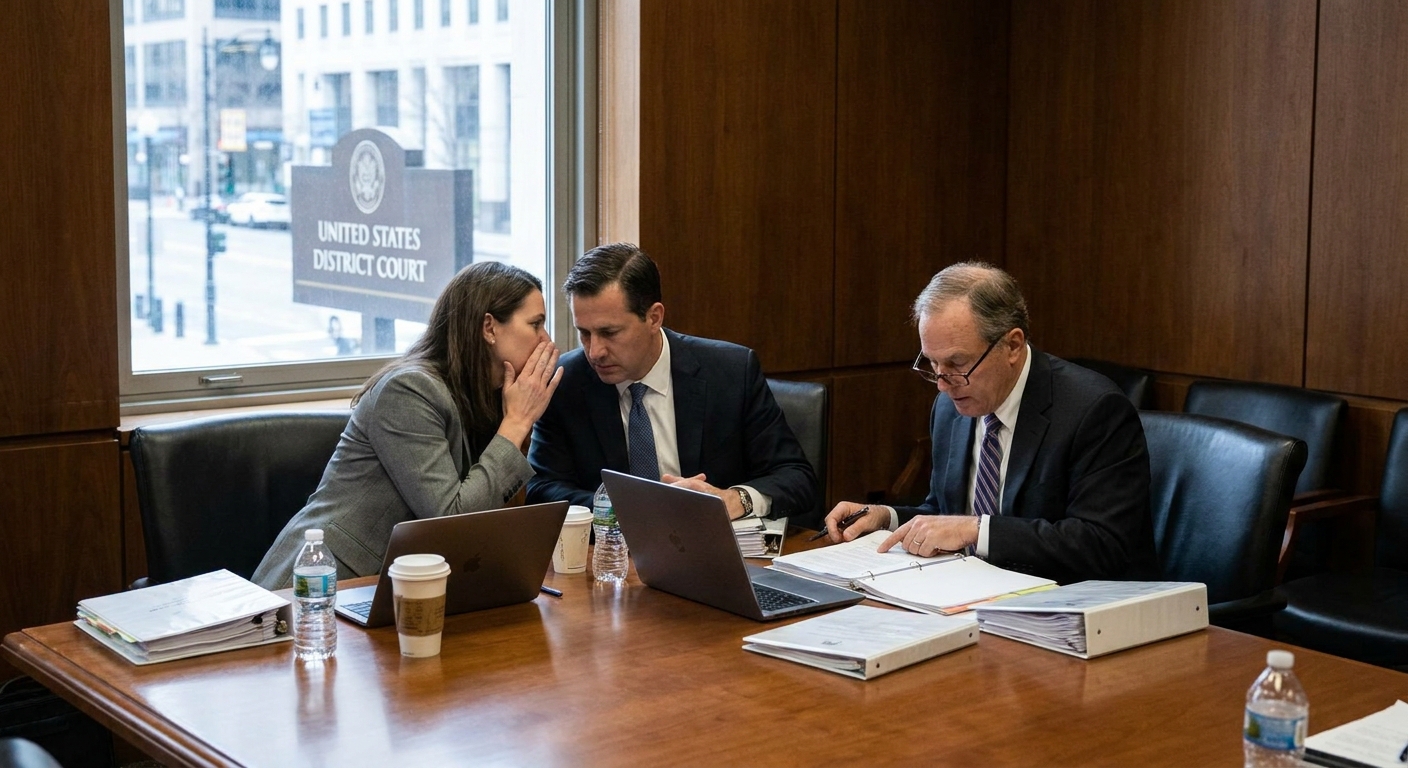
This is one reason RICO cases can feel sprawling. Conspiracy theories can connect:
- leaders and organizers,
- people who carried out specific acts, and
- people alleged to have knowingly helped the enterprise function.
That does not mean RICO conspiracy is effortless for prosecutors. But it does mean the agreement can become the central battleground.
What makes RICO different
Prosecutors can always charge multiple crimes: fraud counts, bribery counts, drug counts, and so on. RICO adds two distinctive features.
1) The law treats the organization as the story
RICO is designed to show an enterprise using a pattern of crimes to operate, protect itself, expand, and generate money or power.
2) The penalties can be severe
Criminal RICO is punishable by up to 20 years per count, or life if the underlying racketeering activity carries a life maximum. It can also trigger forfeiture of certain property tied to the enterprise. Civil RICO can include treble damages (triple the proven damages) plus attorney’s fees for a successful plaintiff. Those remedies are part of why RICO has remained controversial, powerful, and frequently litigated.
The constitutional why
RICO is a federal law, which means it has to rest on Congress’s enumerated powers. The statute’s commerce requirement, that the enterprise affect interstate or foreign commerce, is the legal bridge to Congress’s authority under the Commerce Clause.
RICO prosecutions also raise familiar constitutional questions that show up in high-stakes criminal cases generally:
- Due process challenges, including arguments that the statute is too vague as applied in a given case.
- First Amendment issues when alleged racketeering involves expressive activity, political organizing, or association. Courts generally require proof of criminal predicate acts, not mere membership or unpopular speech.
- Sixth Amendment rights to counsel and confrontation in complex, document-heavy, multi-defendant trials.
- Eighth Amendment proportionality debates in extreme forfeiture or sentencing outcomes.
RICO’s breadth is not primarily a constitutional accident. It is a legislative choice to treat coordinated criminality as a distinct threat to the rule of law.
Supreme Court cases that shaped RICO
RICO’s language is broad, and the Supreme Court has repeatedly been asked to decide how broad is too broad. A few decisions are especially important for understanding why RICO reaches beyond stereotypical “racketeering.”
Sedima v. Imrex Co. (1985)
The Court rejected attempts to narrow civil RICO by adding requirements not found in the text. The result was a signal that RICO could be used more widely, including in business contexts.
H.J. Inc. v. Northwestern Bell Telephone Co. (1989)
The Court explained that a “pattern” involves relationship and continuity, not just counting predicate acts. That continuity concept, open-ended or closed-ended, has shaped how lower courts evaluate whether a case is truly RICO-shaped.
Reves v. Ernst & Young (1993)
The Court articulated the operation or management framework used to evaluate whether a defendant participated in the conduct of an enterprise’s affairs, rather than merely being associated with people who did.
National Organization for Women v. Scheidler (1994 and later)
The Court addressed whether certain protest-related conduct could fit RICO through extortion theories. The case is a reminder that RICO fights often turn on the predicate act definitions, not just on the word “enterprise.”
Boyle v. United States (2009)
The Court clarified what is required for an association-in-fact enterprise, rejecting the idea that it must have a formal hierarchy or fixed structure. Purpose, relationships, and longevity can be enough.
State RICO laws
Many states have their own RICO statutes, sometimes called “Little RICO” laws. They often resemble the federal model but can differ in important ways:
- the list of predicate acts may be different,
- the required connection to commerce may be defined differently,
- procedural rules and sentencing ranges can vary, and
- some states use RICO aggressively in public corruption and complex fraud cases.
So when you see a headline about a “RICO charge,” one of the first questions should be: federal or state? The acronym travels, but the elements and penalties may not match exactly.
Common misconceptions
Misconception: RICO means organized crime
RICO can involve organized crime, but the statute does not require a mafia-style organization. The “enterprise” can be a business, a government-related network, or an informal group.
Misconception: RICO means any bad act can be a predicate
No. Predicate acts must come from the statute’s definitions. A prosecutor cannot invent predicates because the conduct feels corrupt.
Misconception: RICO is a shortcut around proving each crime
RICO often requires more proof, not less: an enterprise, a pattern, and qualifying predicates, all tied together. The case may be more coherent as a narrative, but legally it can be more demanding.
Misconception: A RICO case is automatically airtight
RICO cases can be strong, but they are also vulnerable to element-by-element attacks: Was there really an enterprise? Are the acts related? Is there continuity? Do the alleged predicates actually meet the legal definitions? Those are not rhetorical questions in litigation. They are the case.
What to look for in an indictment
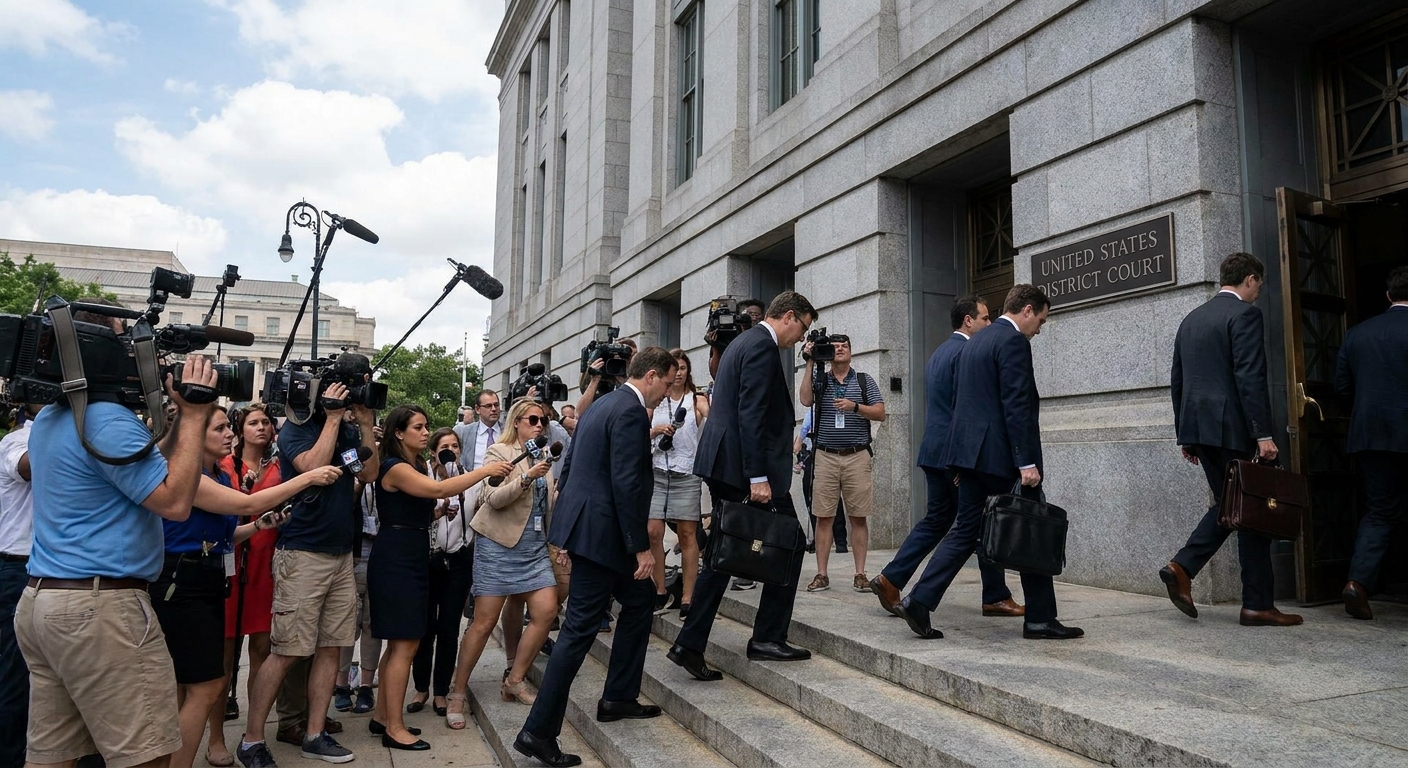
If you are reading an indictment or trying to make sense of reporting about a RICO case, look for these building blocks:
- Enterprise section: How is the enterprise defined? Who is in it, and what is its purpose?
- Racketeering acts: A numbered list of predicate acts with dates, places, and statutes.
- Pattern theory: Language explaining how the acts relate and why they show continuity.
- Overt acts (sometimes): Some conspiracy charges list them even when not legally required, to tell the story.
- Forfeiture allegations: Property or money the government seeks to seize if there is a conviction.
Why RICO keeps showing up
RICO was built for criminal organizations, but its real modern utility is structural: it allows prosecutors to charge a system rather than isolated offenders.
In an era of:
- distributed online coordination,
- multi-state financial transactions,
- complex contracting and lobbying ecosystems, and
- fast-moving networks that blur the line between business and enterprise,
RICO becomes a tool for converting complexity into a single charge that a jury can understand. That can be a feature. It can also be a risk, because broad tools can be overused if courts do not police the boundaries carefully.
Bottom line
A RICO charge means the government is not just alleging crimes. It is alleging organized criminal conduct in the legal sense: an enterprise operating through a pattern of specified predicate acts.
If you want one sentence that captures the legal theory, it is this: RICO is how prosecutors charge the architecture of wrongdoing.
And once you see it that way, the next questions are inevitable and worth asking: What is the enterprise? What are the predicates? Where is the pattern? And does the evidence actually tie the defendant to the enterprise’s affairs, not just to the noise around it?