
Presidents nominate. The Senate confirms. That is the civics class version of appointments in the federal government.
Then real life happens. Senators go home. Agencies keep running. Courts still hear cases. And the Constitution quietly hands the president a temporary workaround: the recess appointment.
This power sits in one sentence of Article II, and it has fueled two centuries of procedural brinkmanship. Used sparingly, it is a continuity tool. Used aggressively, it is a way to pressure the Senate to engage.
What is a recess appointment?
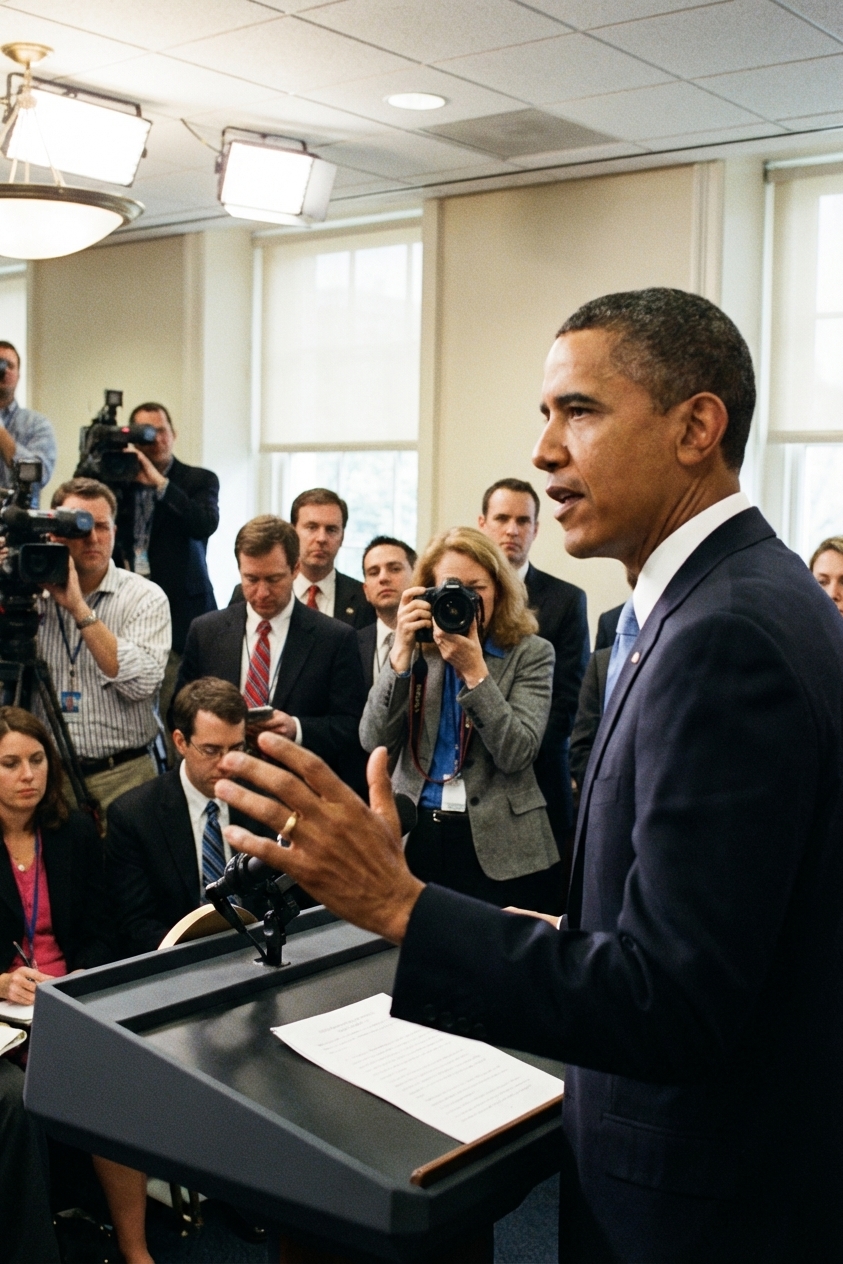
A recess appointment is a temporary appointment a president can make without immediate Senate confirmation when the Senate is not available to provide advice and consent.
It applies to offices that normally require Senate confirmation (PAS positions), not to ordinary federal hiring.
The authority comes from the Recess Appointments Clause in Article II, Section 2, Clause 3:
“The President shall have Power to fill up all Vacancies that may happen during the Recess of the Senate, by granting Commissions which shall expire at the End of their next Session.”
Two parts of that sentence do most of the work:
- “fill up all Vacancies”: the president can place someone into an office that otherwise requires confirmation.
- “expire at the End of their next Session”: it is temporary. The commission ends when the Senate finishes its next session, unless the Senate confirms the nominee through the normal process.
Why it exists
The recess appointment power is a product of 18th century logistics. Early Congresses were not in session year-round. Travel was slow. Communication was slower. If an office became vacant and the Senate was gone for months, the government could stall.
The clause is a continuity valve. It assumes a vacancy can be urgent, and the Senate’s absence can be practical rather than strategic.
Modern politics changed the incentives. Today, the Senate can be absent on purpose, and presidents can invoke “continuity” in moments that look a lot like institutional conflict.
What counts as a recess?
This question sounds technical until you realize it decides who gets to run a federal agency tomorrow morning.
There are two kinds of breaks in the Senate’s calendar:
- Intersession recess: the break between formal sessions of Congress.
- Intrasession recess: a break within a session, such as an extended holiday adjournment.
For much of American history, presidents used recess appointments in both contexts. The controversy is not whether breaks exist. It is whether a particular break is long enough, real enough, and constitutionally meaningful enough to trigger the clause.
What “vacancies that may happen” means
The phrase “Vacancies that may happen during the Recess” has been argued two different ways for generations:
- Narrow reading: only vacancies that arise during the recess can be filled.
- Broad reading: vacancies that exist during the recess can be filled, even if they opened earlier.
Executive practice largely followed the broad reading because it makes the power usable. If a post becomes vacant two days before a recess starts, the narrow reading would treat that vacancy as untouchable for months. That is not how presidents historically behaved.
How it has been used
Recess appointments are not a modern invention. Presidents of both parties used them for centuries, including for:
- Cabinet and executive branch roles when confirmation was delayed or uncertain.
- Independent agencies that rely on multi-member boards, where vacancies can stop the agency from acting.
- Federal judges, especially in earlier eras, when Senate schedules made confirmation slower.
Two anchor examples show the range:
- Dwight Eisenhower used recess appointments to put Earl Warren, William Brennan, and Potter Stewart on the Supreme Court before later confirmation.
- Barack Obama used recess appointments in 2012 for the National Labor Relations Board during a period of pro forma sessions, which sparked the Supreme Court fight discussed below.
What changed over time is not the existence of the tool but the political environment around it. As confirmation fights intensified, recess appointments became less like an emergency generator and more like a high-stakes procedural move.

The case that set limits: Noel Canning
In 2012, President Barack Obama made several recess appointments to the National Labor Relations Board (NLRB) during a period when the Senate was holding brief pro forma sessions. The administration treated the Senate as functionally unavailable. The Senate insisted it was in session because it said it was in session.
The dispute reached the Supreme Court as NLRB v. Noel Canning (2014). The Court ruled unanimously that the specific NLRB recess appointments at issue were invalid, though the justices differed on reasoning.
What the Court said is allowed
- The clause can apply to intersession and intrasession recesses.
- It can cover vacancies that arise during a recess and vacancies that continue into a recess.
What the Court said is not allowed
- Courts give great weight to the Senate’s own determination of when it is in session, so long as it retains the capacity to transact Senate business under its rules.
- Pro forma sessions count as sessions if the Senate can transact business, even if it typically does not.
- Very short breaks are not “the recess” in the constitutional sense. The Court treated 3 days as definitively too short, and suggested that 4 to 9 days are presumptively too short except in extraordinary circumstances.
The practical effect was a major constraint. Not a total ban, but a clear message: recess appointments remain constitutional, yet they operate inside a calendar the Senate can often shape.
Pro forma sessions
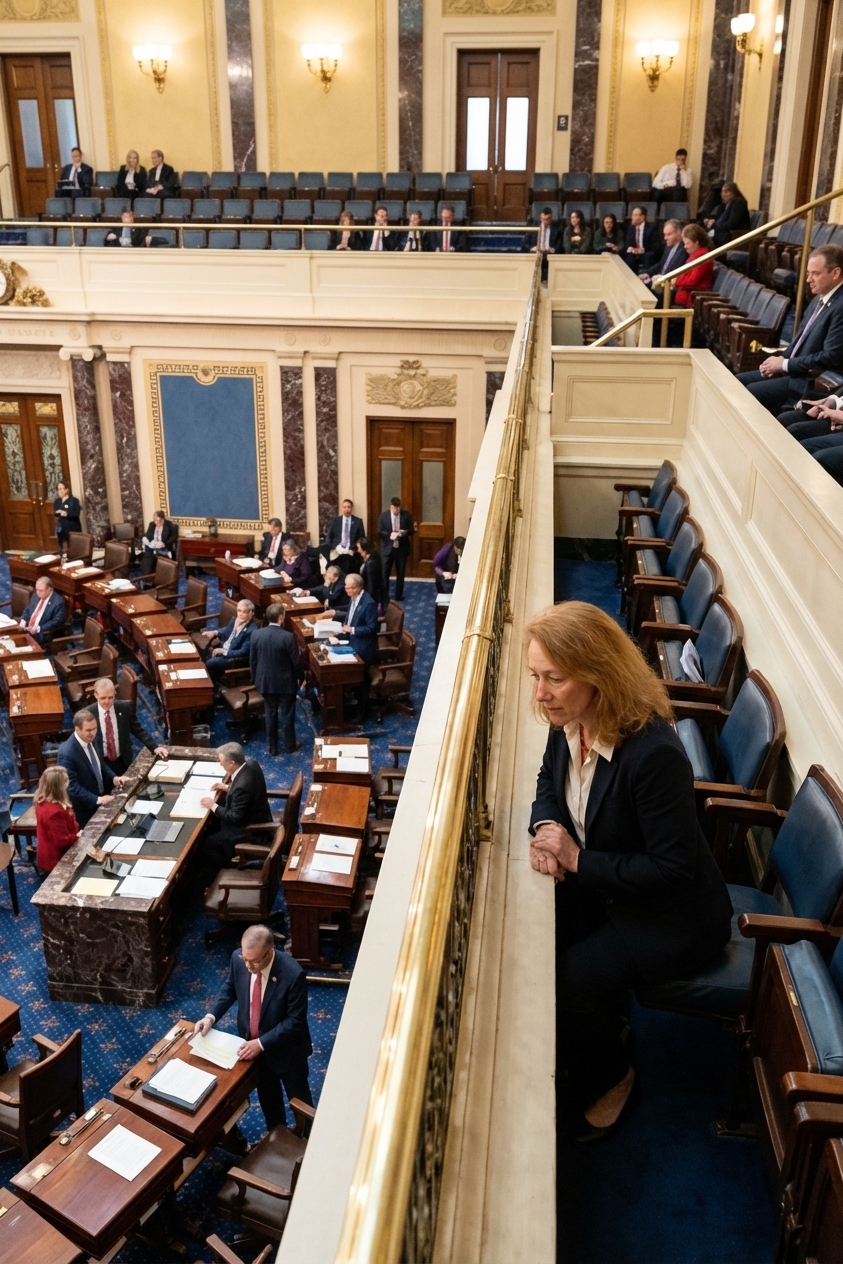
A pro forma session is a brief meeting, sometimes lasting minutes, often with little or no legislative business. The point is not productivity. The point is to avoid creating a recess long enough to trigger the recess appointment power.
These sessions were used before 2014, but after Noel Canning they became a common and effective tactic because the Court signaled that a pro forma session still counts if the Senate can do business.
How long is long enough?
After NLRB v. Noel Canning, the rough map looks like this:
- 3 days: far too short for recess appointments.
- 4 to 9 days: presumptively too short, except in extraordinary circumstances.
- 10 days or more: potentially long enough, depending on whether the Senate is truly in recess and not holding pro forma sessions that preserve its ability to act.
This is not a bright-line statute. It is a constitutional power filtered through Supreme Court reasoning that leans heavily on historical practice and on whether the Senate is actually capable of acting.
How long the job lasts
A recess appointment does not permanently fill the office. It buys time.
The commission lasts until the end of the Senate’s next session. In practice, that can be close to two years depending on timing.
Here is the basic timeline logic:
- If a president makes a recess appointment late in Year 1, the Senate returns for the rest of that session, then meets again in Year 2. The commission can last until the end of that next session.
- If the appointment happens early in a break that spans a session boundary, the clock can run longer.
To keep the person in office beyond the commission, the president must secure Senate confirmation, often by submitting or resubmitting the nomination through the normal process.
Real-world constraints
Even when a recess appointment is constitutionally available, a few practical limits shape how attractive it is.
Pay limits
Federal law can restrict pay for some recess appointees. Under 5 U.S.C. § 5503, if the vacancy existed while the Senate was in session, the recess appointee may be barred from being paid unless an exception applies (for example, if a nomination was pending, or the Senate rejected the nominee within a narrow window, or the vacancy arose within a certain period before the recess). That makes recess appointments less useful as an all-purpose workaround.
Acting officials
There is also a separate, heavily used workaround: acting officials under the Federal Vacancies Reform Act (FVRA). When the recess appointment path is blocked by pro forma sessions or timing, administrations often lean on FVRA acting service to keep a seat filled temporarily, with its own rules and limits.
Why it matters now
The recess appointment clause lives at the intersection of three things Americans argue about constantly:
- Separation of powers: who controls staffing of the executive branch?
- Senate delay: when delays are strategic rather than deliberative.
- Government capacity: whether agencies and courts can function with long vacancies.
In modern practice, recess appointments have become far less common than they once were, in large part because the Senate can prevent long recesses with pro forma sessions and because Noel Canning narrowed the usable calendar.
When confirmations are smooth, recess appointments are mostly invisible. When confirmations break down, the clause becomes tempting again precisely because it looks like a constitutional escape hatch.
Key takeaways
- Recess appointments temporarily fill Senate-confirmed offices when the Senate is unavailable.
- After Noel Canning, breaks under 10 days are usually too short, and pro forma sessions often block the power.
- The commission expires at the end of the Senate’s next session, so it can last many months but not forever.
- Statutes matter too, including pay restrictions (5 U.S.C. § 5503) and the modern reliance on acting officials under the FVRA.
The bigger lesson
The Recess Appointments Clause is a reminder that the Constitution is not only about rights. It is also about operations.
It assumes the government must keep moving even when one branch is absent. It also assumes the branches will compete, and that each will use procedure to protect its power. The Supreme Court’s approach in NLRB v. Noel Canning did not eliminate recess appointments. It made them what they were probably always meant to be: an exception, not a substitute for confirmation.
And as long as the Senate can prevent a true recess, the clause remains both potent and increasingly hard to trigger. That tension is not a bug in the system. It is the system.