
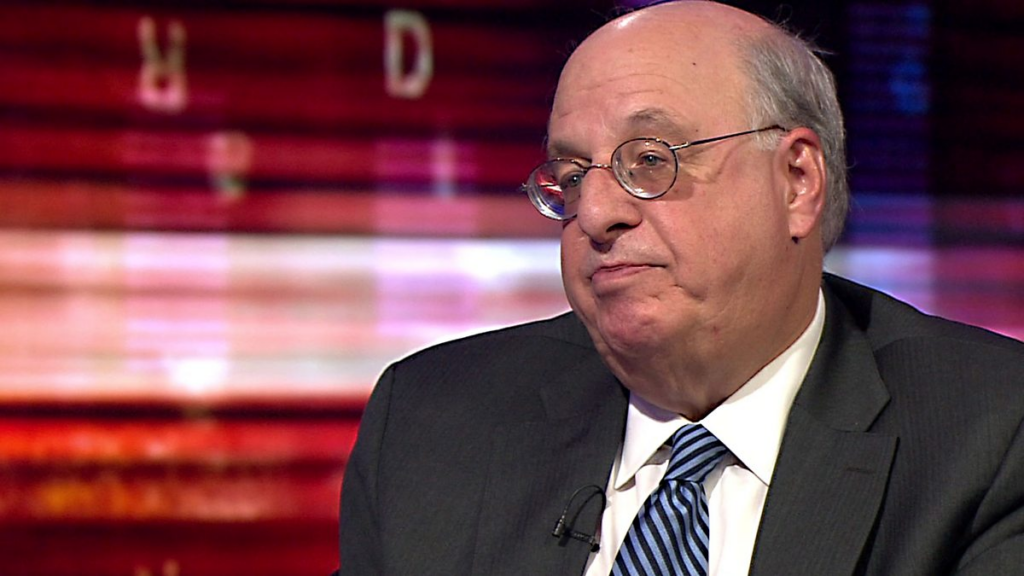
Mark Wolf spent 40 years on the federal bench. He had a lifetime appointment – the kind of job security that exists nowhere else in American life. He could have served until he died, drawing his salary, wielding his power, secure in the knowledge that no president could touch him.
Sunday, he walked away from all of it. Not because of scandal, not because of health, not because he was ready to retire. Because he decided that speaking freely about what he sees happening to the rule of law matters more than keeping the job he’d “looked forward to serving for the rest of his life.”
“Silence, for me, is now intolerable,” Wolf wrote in The Atlantic. He’s talking about President Trump using “the law for partisan purposes, targeting his adversaries while sparing his friends and donors from investigation, prosecution, and possible punishment.”
A Reagan appointee just gave up lifetime tenure to sound the alarm about a Republican president. That’s not a political statement. It’s a constitutional crisis statement.
What A Lifetime Appointment Actually Means
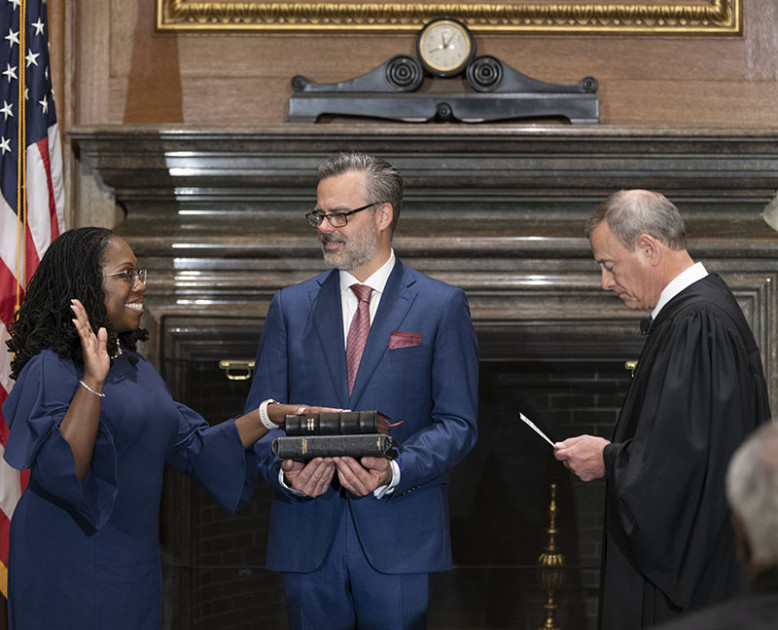
Federal judges appointed under Article III of the Constitution serve “during good behavior” – which in practice means for life, unless they commit impeachable offenses. This isn’t a perk; it’s a structural protection.
The Framers understood that judges need independence from political pressure. If presidents could fire judges who ruled against them, or if judges had to worry about reappointment, the judiciary couldn’t serve as a check on executive power. Lifetime tenure means judges answer only to the law, not to whoever’s currently president.
Wolf had that protection. He’d taken senior status in 2013 – a kind of semi-retirement where judges carry reduced caseloads but remain on the bench. His successor was appointed and confirmed years ago. He had no professional reason to leave.
But lifetime appointments come with constraints. Federal judges operate under a code of conduct that sharply limits what they can say publicly about political matters. They can’t campaign, can’t endorse candidates, can’t speak freely about sitting presidents or pending policies.

Wolf decided those constraints had become more costly than the job was worth. When staying silent requires tolerating what he sees as an “assault on the rule of law,” the price of the appointment became too high.
The Watergate Generation’s Constitutional Alarm
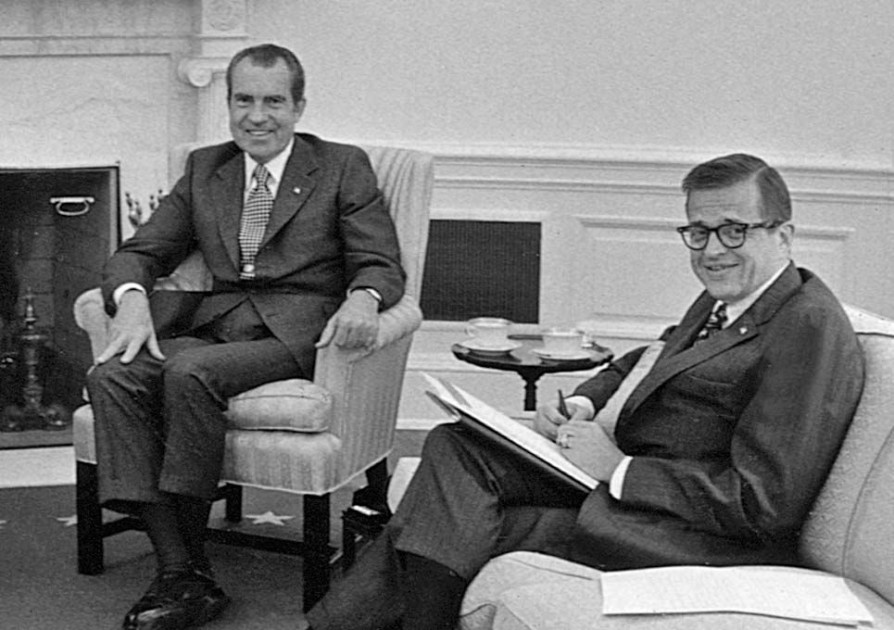
Wolf began his Justice Department career in 1974 – right after Watergate forced Richard Nixon to resign rather than face impeachment for using government power to punish political enemies and obstruct investigations.
He served under Gerald Ford’s Attorney General Edward Levi, who rebuilt the Justice Department’s credibility by establishing that law enforcement decisions must be made “in a nonpartisan way,” independent of political considerations. That principle – that the DOJ investigates and prosecutes based on evidence and law, not presidential preferences – became foundational to how Wolf understood his role.
“I decided all of my cases based on the facts and the law, without regard to politics, popularity, or my personal preferences,” Wolf wrote. “That is how justice is supposed to be administered – equally for everyone, without fear or favor. This is the opposite of what is happening now.”
This isn’t a progressive activist speaking. It’s a Reagan appointee who’s spent 50 years in the justice system saying the current administration has abandoned the post-Watergate reforms that made political weaponization of law enforcement unacceptable.
When someone from that generation – someone who witnessed what happens when presidents corrupt the justice system – walks away from a lifetime appointment to warn about it happening again, that’s not partisan noise. It’s an alarm from someone who’s seen this movie before.
What “Using Law for Partisan Purposes” Actually Looks Like
Wolf’s accusation is specific: Trump is “targeting his adversaries while sparing his friends and donors from investigation, prosecution, and possible punishment.”
This isn’t about disagreeing with Trump’s policies or judicial philosophy. It’s about the foundational principle that law enforcement must operate independently from political considerations. Presidents can’t direct investigations toward enemies or away from allies. That’s the line between rule of law and authoritarianism.
The White House response to Wolf’s resignation confirms rather than refutes his concern. Spokeswoman Abigail Jackson said judges who “want to inject their own personal agenda into the law have no place on the bench.”
But Wolf isn’t on the bench anymore – he resigned specifically so he could speak freely without violating judicial ethics. And his “personal agenda” is that law should be applied equally regardless of political connections. If that’s considered agenda-driven, the term has lost all meaning.

Jackson’s statement that the administration has won “over 20 Supreme Court victories” misses Wolf’s point entirely. Winning legal cases isn’t the same as operating a justice system without political interference. Wolf isn’t complaining about losing cases – he’s complaining about how decisions get made about who gets investigated and prosecuted in the first place.
The Judges Who Can’t Speak – And The One Who Can Now
Wolf told The New York Times he hopes to be “a spokesperson for embattled judges who, consistent with the code of conduct, feel they cannot speak candidly to the American people.”
This reveals something important: Wolf isn’t alone in his concerns. He’s just the one willing to pay the price to say them out loud.
Federal judges across the country are watching the same things Wolf is watching. Some of them share his concerns. But the code of conduct prevents them from speaking publicly about political matters, and lifetime appointments only provide independence if you’re willing to stay silent about what you see.
Wolf chose voice over security. That decision suggests he believes the threat is serious enough to warrant giving up everything he worked for.

The White House’s response – that judges who want to complain should “at least have the decency to resign before doing so” – accidentally validates Wolf’s choice. He did exactly what they’re demanding: resigned first, then spoke. And their reaction is still to attack him for speaking at all.
That tells you everything about whether they believe judges should have independence to observe and report on threats to the rule of law.
What Makes This Different From Normal Judicial Retirement
Federal judges resign or retire regularly. They take senior status, step down for health reasons, leave for other opportunities. None of that generates headlines because it’s routine.
Wolf’s resignation isn’t routine. He’s walking away specifically to speak out about a sitting president from his own party – the president whose party originally appointed him. And he’s doing it while explicitly saying he could no longer tolerate the restraints on what judges can say publicly.
This is the judicial equivalent of a resignation in protest. It’s a public declaration that remaining in the system requires complicity with something he finds intolerable.
That happens occasionally in executive branch positions – political appointees resign rather than implement policies they consider illegal or immoral. It almost never happens with lifetime-appointed federal judges, because they have the independence to rule however they want without fear of removal.
Wolf isn’t resigning because someone told him to rule a certain way – he’s resigning because watching the system be corrupted from outside the courtroom while being unable to speak about it became unbearable.
The Post-Watergate Reforms That Are Crumbling
Wolf’s entire career has been shaped by the post-Watergate understanding that DOJ must operate independently from political control. That principle wasn’t just bureaucratic reform – it was a constitutional restoration after Nixon proved what happens when presidents control prosecutorial decisions.
The reforms established norms: Presidents don’t discuss ongoing investigations. Attorneys General don’t take direction about specific cases. Prosecution decisions happen based on evidence, not political advantage. These weren’t laws – they were institutional practices that both parties honored because Watergate taught that abandoning them leads to authoritarian abuse.
Wolf is arguing those norms are collapsing. Not through some gradual erosion, but through deliberate dismantling by an administration that sees DOJ as a tool for rewarding friends and punishing enemies.
The White House response doesn’t deny this. It argues that winning court cases proves legality.
But Wolf isn’t talking about whether specific actions survive judicial review – he’s talking about whether the system for deciding who gets investigated operates on legal or political grounds.
That distinction matters. An administration can pursue legally defensible policies while still corrupting the machinery of justice by choosing targets based on loyalty rather than evidence.
Why A Reagan Appointee’s Voice Matters
If a judge appointed by a Democratic president resigned to criticize Trump, the response would be predictable: partisan opposition, politically motivated, never liked the president anyway.
Wolf eliminates that response. Reagan appointed him in 1985 – during the conservative legal movement’s formative years. He’s not a liberal activist in judicial robes.
He’s precisely the kind of judge Republicans spent decades trying to get on the bench: committed to law over politics, independent from partisan pressure, focused on applying precedent rather than making policy.
And he’s walking away because he believes the rule of law is being dismantled by a Republican president.
That should terrify everyone, regardless of party. If judges committed to conservative jurisprudence are resigning in protest over threats to judicial independence, the problem isn’t ideological disagreement – it’s institutional collapse.
The White House dismissing Wolf as someone with a “personal agenda” suggests they don’t understand – or don’t care – about the difference between political opposition and constitutional alarm.
What “Embattled Judges” Tells Us About The Federal Bench
Wolf’s statement that he hopes to speak for “embattled judges” who can’t speak publicly reveals there’s a crisis brewing in the federal judiciary that most Americans don’t see.
Judges are “embattled” when they face pressure to rule certain ways, threats for ruling “wrong,” or systematic attacks on their independence. That’s not normal friction between branches – it’s a breakdown of the constitutional separation of powers.
Federal judges have been facing this from multiple directions: presidents attacking them by name when they rule unfavorably, legislative threats to pack courts or strip jurisdiction, social media mobs targeting them for unpopular decisions, and – according to Wolf – an administration that treats law enforcement as a political weapon.
The judges who are still on the bench can’t respond publicly without violating ethics rules. They have to remain silent while the system they’re trying to protect gets undermined from outside.

Wolf’s resignation creates a voice for that silence. He’s saying what sitting judges can’t: that threats to judicial independence aren’t hypothetical concerns from law school classes, they’re real and accelerating pressures that make it difficult to maintain the rule of law.
The 50-Year Perspective That Matters
Wolf has spent over 50 years in the federal justice system – as a prosecutor, as a judge, through multiple administrations from both parties. That perspective lets him distinguish between normal political conflict and genuine constitutional crisis.
He’s seen presidents he disagreed with. He’s ruled against administrations from both parties. He’s weathered criticism and controversy. None of that drove him to resign.
What changed? According to Wolf, the current administration isn’t just pursuing policies he dislikes – it’s “using the law for partisan purposes” in ways that fundamentally threaten the system’s integrity.
Someone with 50 years of institutional memory doesn’t use language like “assault on the rule of law” lightly. He’s not comparing Trump to every other president and finding minor differences. He’s identifying something categorically different – a level of corruption in the justice system he hasn’t seen since the Watergate era he started his career trying to reform.
That long-term perspective is exactly why his voice matters. He’s not reacting to one controversial decision or one news cycle. He’s observing a pattern over years and concluding it’s so dangerous that giving up lifetime tenure is worth it to speak out.
What Happens When Warnings Come From Inside
The most disturbing aspect of Wolf’s resignation isn’t what he’s saying – it’s that he’s saying it at all.
Federal judges don’t resign to criticize presidents. They don’t give up lifetime appointments to sound alarms. They have the ultimate job security specifically so they can weather political storms without needing to speak out publicly.
When one does – when the restraints on public speech become more costly than the job itself – it suggests the threat has escalated beyond what the constitutional structure can handle internally.
Wolf isn’t some outside critic lobbing partisan attacks. He’s an insider with five decades of experience saying the system is failing in ways that require him to sacrifice his career to warn about. That’s not the behavior of someone seeking attention or settling scores. It’s the behavior of someone who believes silence would make him complicit in something intolerable.
The White House’s response – attacking him for speaking and suggesting other judges who disagree should also resign – proves his point. The administration isn’t defending its commitment to rule of law or explaining why Wolf’s concerns are misplaced. It’s attacking the messenger and suggesting judicial independence means keeping your mouth shut.
The Constitutional Question Wolf’s Resignation Poses
The Constitution provides lifetime judicial appointments to protect judicial independence. But it doesn’t provide mechanisms for judges to sound alarms when other branches threaten the rule of law without violating ethics rules.
Wolf found the only option available: resign the protection to gain a voice. That’s a constitutional design flaw – judges shouldn’t have to choose between institutional role and civic duty when they witness threats to the system itself.
His resignation reveals a gap in our constitutional architecture. The Framers anticipated judges would need protection from political pressure. They didn’t anticipate a scenario where that protection would silence judges who witness systematic corruption of the justice system from the executive branch.
What happens when the people best positioned to see institutional breakdown can’t warn about it without sacrificing their positions? Wolf chose to sacrifice his.
How many others are watching the same things but staying silent because they’re not willing to give up lifetime appointments?

That’s the question his resignation forces: Is the rule of law being protected by the judges still on the bench, or is it only being defended by the ones willing to walk away?
What Comes After The Alarm
Wolf’s resignation is a warning, not a solution. He’s raised an alarm that sitting judges can’t – but now what?
The administration has responded by attacking him and suggesting other concerned judges should also quit. That’s not a defense against his accusations; it’s a dare to keep challenging them.
Congress could investigate his concerns, hold hearings on whether DOJ is operating independently from political pressure, examine whether investigations and prosecutions are being made on legal or political grounds. That’s their constitutional role as a check on executive power.
Or they could ignore a Reagan appointee’s constitutional alarm because it’s politically inconvenient to acknowledge. That choice will determine whether Wolf gave up his lifetime appointment for something that matters or just for attention.

Either way, his resignation has created a record. When someone with 50 years in the system walks away from lifetime tenure to warn about threats to the rule of law, that becomes part of history. Future accounts of this era will have to grapple with why he thought the alarm was worth the sacrifice.
And current officials will have to grapple with whether they took that alarm seriously – or whether they dismissed it because acknowledging the threat would require doing something about it.