
Qualified immunity is one of those legal phrases that sounds like a technical footnote until you realize it can decide whether a person ever gets their day in court.
It comes up most often in lawsuits against police officers, but it applies more broadly to many government officials. When qualified immunity applies, a judge can dismiss a civil rights lawsuit without awarding damages, even when the alleged conduct looks unconstitutional, if the violated rule was not “clearly established” at the time. And after later Supreme Court decisions, courts sometimes decide only the “clearly established” issue without ruling on whether a constitutional violation occurred.

The plain-language definition
Qualified immunity is a judge-made doctrine that shields many government officials from personal liability for money damages under federal civil rights law, unless the plaintiff can show that the official violated a constitutional or statutory right that was clearly established at the time of the conduct. It is also intended to protect officials, in many cases, from the burdens of litigation itself.
In practice, it usually works like this:
- A person alleges a constitutional violation such as excessive force under the Fourth Amendment.
- They sue under a federal statute that allows civil rights damages suits, usually 42 U.S.C. § 1983.
- The defendant raises qualified immunity, asking the judge to throw the case out early.
- The judge asks whether existing precedent made it clear to a reasonable official that this specific conduct was unlawful.
One procedural note: how this plays out can vary by stage of the case and by circuit. Some cases are tested on the pleadings (a motion to dismiss). Others turn on a factual record at summary judgment. The burden-shifting details and the amount of fact development required can differ depending on posture.
Qualified immunity does not mean an officer “did nothing wrong.” It means the officer cannot be held liable for damages in that lawsuit unless the law was already clear enough.
Where it comes from
The key statute is 42 U.S.C. § 1983, born out of Reconstruction. Congress passed it as part of the Civil Rights Act of 1871, sometimes called the Ku Klux Klan Act.
The point was straightforward: if state and local officials violate federal rights, the victim should be able to sue them in federal court. The statute creates a cause of action against any person who, acting “under color” of state law, deprives someone of rights secured by the Constitution and federal law.
What § 1983 does not say is also important: it does not mention qualified immunity. The modern doctrine was largely developed by the Supreme Court decades later as it tried to define what defenses officials could raise in these lawsuits.

How it became modern
Qualified immunity existed in earlier forms, but its modern shape comes from Harlow v. Fitzgerald (1982).
Before Harlow, immunity analysis could turn on an official’s subjective good faith. That required probing intent, which often meant extensive discovery and trials just to decide immunity. The Court in Harlow changed that.
In Harlow, the Court adopted an objective standard: officials are protected unless their conduct violated clearly established law. The justification was partly functional. The Court worried that fear of personal liability would over-deter officials and that litigation itself would distract government from its work.
The result was a doctrine designed to be resolved early, often before a jury ever hears the facts.
The clearly established standard
This is the phrase that drives most of the controversy.
A right is “clearly established” when existing precedent made the unlawfulness of the official’s conduct apparent to a reasonable official. Courts generally look for controlling case law, usually from the Supreme Court or the relevant federal circuit, with sufficiently similar facts.
What it often means in practice
- General principles may be too broad. “Excessive force is unconstitutional” is true, but a court may demand a prior case involving similar circumstances.
- Fact matching can become the whole game. Plaintiffs can lose because no earlier published case had the same combination of details.
- Novel misconduct can be protected. The first time a particular unconstitutional tactic appears, officials may be immune because the case law has not caught up yet.
A quick, simplified illustration: imagine an officer uses a Taser on a handcuffed person who is sitting on the ground and not resisting. If prior cases clearly established that Tasering a handcuffed, nonresisting person is unlawful, qualified immunity is less likely. If the closest prior cases involve someone who was handcuffed but still actively kicking, or someone who was nonresisting but not yet restrained, a court might treat the difference as enough to say the law was not clearly established.
The Supreme Court has repeatedly emphasized that clearly established law should not be defined at a “high level of generality.” That guidance pushes lower courts toward narrow comparisons.
The two-step question
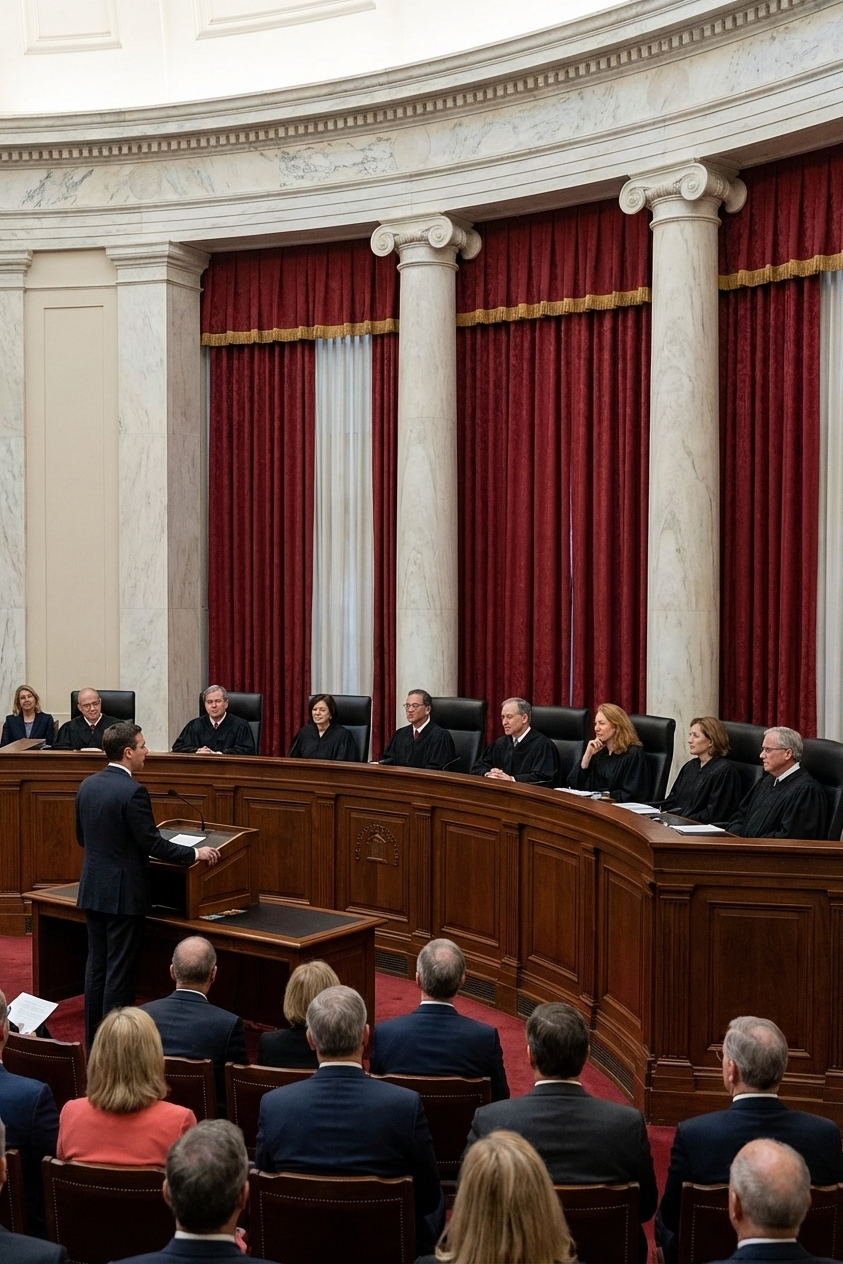
Courts often frame qualified immunity with two questions:
- Did the official violate a constitutional right?
- Was that right clearly established at the time?
In Saucier v. Katz (2001), the Supreme Court required courts to decide the questions in that order, which helped constitutional law develop because judges had to say whether conduct was unconstitutional even if immunity ultimately applied.
In Pearson v. Callahan (2009), the Court made that sequencing optional. Now courts can skip the constitutional question and decide cases solely on “clearly established” grounds.
Critics argue this is a quiet but major pivot. If courts frequently skip the first question, fewer published decisions clearly establish the law for the future. In their view, that can slow the development of clear constitutional rules in the areas where misconduct disputes are most common.
What it is and is not
It is
- A defense to damages liability in many federal civil rights suits.
- A tool to end cases early before discovery and trial.
- Broadly available to many state and local officials, not only police.
It is not
- Absolute immunity. Some officials, like judges and prosecutors, can have absolute immunity for core functions. Qualified immunity is a different and usually narrower protection.
- A bar to all accountability. Officials can still face internal discipline, criminal prosecution in rare cases, or injunctive relief in some suits. But damages are the central remedy for many victims, and qualified immunity targets that remedy.
- A constitutional requirement. It is a doctrine created and shaped by courts interpreting § 1983 and related policy concerns.
Two related distinctions
Two quick clarifications help place qualified immunity in the broader civil rights landscape.
Individual officials vs. cities
Qualified immunity is primarily about individual-capacity damages claims against officials. Cities and counties do not get qualified immunity, but plaintiffs suing a municipality face a different hurdle under Monell: they generally must show the violation was caused by an official policy, practice, or custom, not just a single employee’s mistake.
State officials vs. federal officials
For state and local officials, qualified immunity most often arises in § 1983 cases. For federal officials, similar claims have historically been brought under Bivens, but the Supreme Court has sharply limited when Bivens remedies are available. In practice, that means many federal-actor constitutional claims never reach a qualified-immunity analysis because the cause of action may be unavailable.
The case for reform
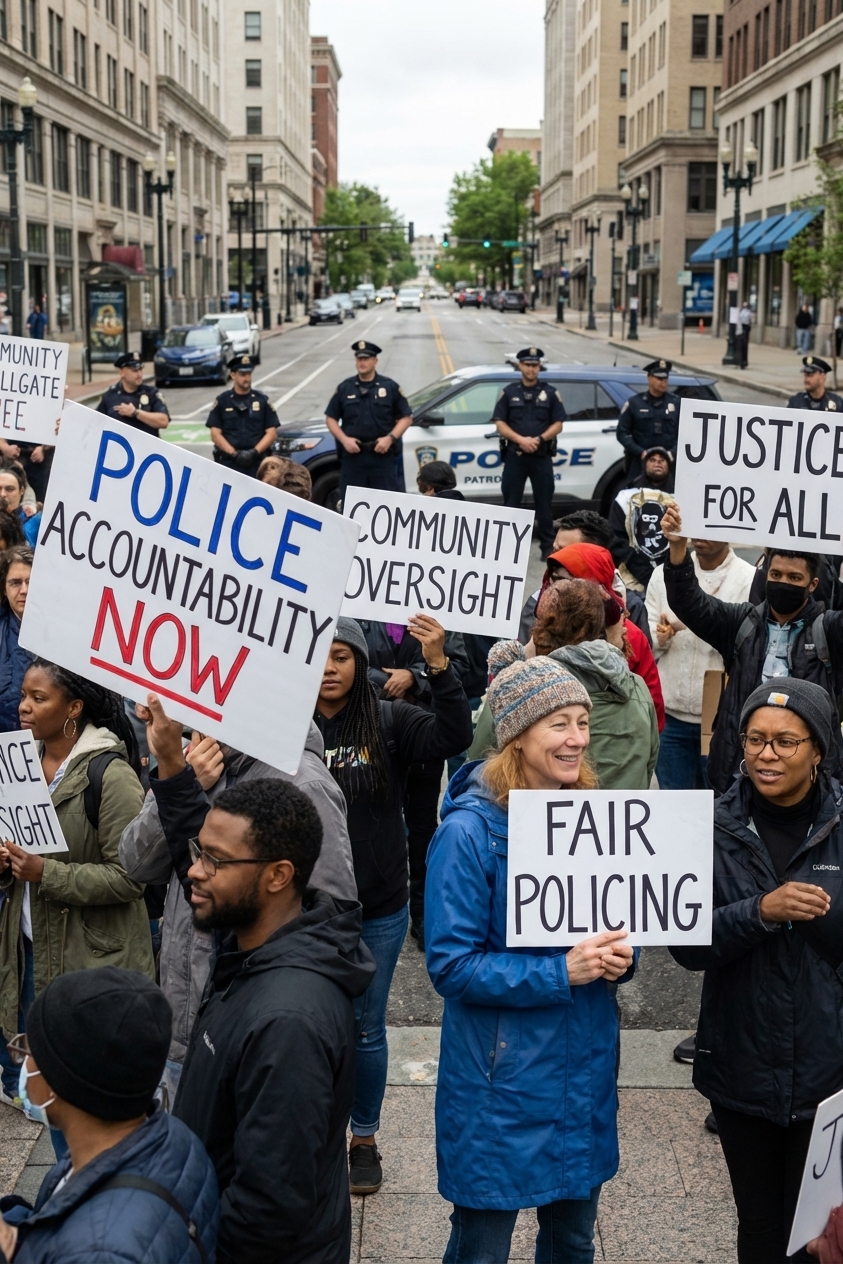
Reform advocates range from civil rights groups to libertarian-leaning critics who view the doctrine as untethered from the statute Congress wrote. Their arguments tend to cluster around a few themes.
1) Weak textual footing
Critics emphasize that § 1983 makes liability turn on whether someone, under color of law, violated federal rights. The statute does not include a “clearly established” carve-out. If Congress wanted that limitation, the argument goes, Congress could have written it.
2) Remedies can be denied even for serious violations
Because courts sometimes demand highly similar precedent, plaintiffs can lose even when the conduct seems plainly unconstitutional in ordinary language. The outcome can feel like this: “Yes, your rights were violated, but no, you cannot recover because there is not an earlier case with these exact facts.”
3) Constitutional clarity can slow down
After Pearson, courts may avoid ruling on whether conduct was unconstitutional, which reduces the number of decisions that can clearly establish the law for the next case. Critics describe this as a self-reinforcing loop.
4) Deterrence and trust
Even when governments indemnify officers, damages liability can push departments to train better and revise policies. Critics argue that qualified immunity weakens deterrence and can fuel public cynicism by making accountability feel inconsistent.
The case for immunity
Law enforcement organizations, many government lawyers, and some judges defend qualified immunity as a practical necessity.
1) Split-second decisions
Policing and other public functions often involve rapidly evolving situations. Supporters argue that fear of personal liability could cause hesitation that endangers the public and officers.
2) Protection for many public roles
Qualified immunity applies to a range of officials who make discretionary decisions: social workers, school administrators, and others. Supporters argue that without immunity, routine decision-making could become litigation bait.
3) Litigation costs and harassment suits
Even if an official ultimately wins, being sued can mean years of stress and expense. Qualified immunity is framed as a gatekeeping device against weak or retaliatory claims.
4) The fair notice idea
Supporters emphasize the fairness of not imposing damages liability unless the rule was already clear. In this view, qualified immunity prevents courts from retroactively penalizing officials for constitutional standards that were not yet settled.

Where reforms have tried to land
Because qualified immunity is tied to federal civil rights litigation, the biggest reforms would come from Congress amending § 1983. Those efforts have surfaced repeatedly and stalled repeatedly.
Federal legislative efforts
- George Floyd Justice in Policing Act (introduced in several Congresses since 2020): a major reform package that included provisions to limit or eliminate qualified immunity for law enforcement in certain contexts. Versions passed the House but did not become law after the Senate process broke down.
- Ending Qualified Immunity Act (introduced in multiple sessions): a more direct approach aimed at removing the defense in § 1983 actions. It has not passed.
These proposals reflect a basic reality: qualified immunity, as it exists now, is not etched into the Constitution. It is embedded in how courts interpret § 1983, which Congress has the power to revise.
State-level workarounds
States cannot rewrite federal qualified immunity for federal claims, but they can create state-law civil rights causes of action and limit immunity defenses under state law. A few notable examples include:
- Colorado (2020): created a state civil rights claim and limited qualified-immunity-style defenses for certain law enforcement misconduct under state law.
- New Mexico (2021): enacted the New Mexico Civil Rights Act, creating a state cause of action for rights violations and restricting certain immunity defenses for public bodies and officials under state law.
The effect is a patchwork. In some places, plaintiffs may have an alternate route in state court under state statutes. In others, qualified immunity remains the main gatekeeper for damages in federal court.
Why it keeps surfacing
The Constitution promises rights. Civil rights statutes promise remedies. Qualified immunity lives in the space between the two, deciding when a right has a practical enforcement mechanism and when it remains mostly theoretical.
That is why the debate does not stay technical for long. It turns into first principles: What does accountability look like in a constitutional republic? How much protection does government need to function? How much protection do citizens need when the government gets it wrong?
If you want a quick way to remember the stakes, try this: qualified immunity is not only about whether an act was lawful in the abstract. It is about whether the law was already spelled out clearly enough for a court to impose damages for that act today.
Key takeaways
- Qualified immunity can shield many government officials from personal liability for money damages unless they violated clearly established law.
- It is closely tied to 42 U.S.C. § 1983, the main federal civil rights lawsuit statute, but it is largely judge-made.
- Harlow v. Fitzgerald (1982) pushed the doctrine toward an objective, early-dismissal framework.
- The clearly established law requirement often turns cases on whether there is precedent with similar facts.
- Reform efforts continue in Congress and in some states, but there is no single national resolution yet.