
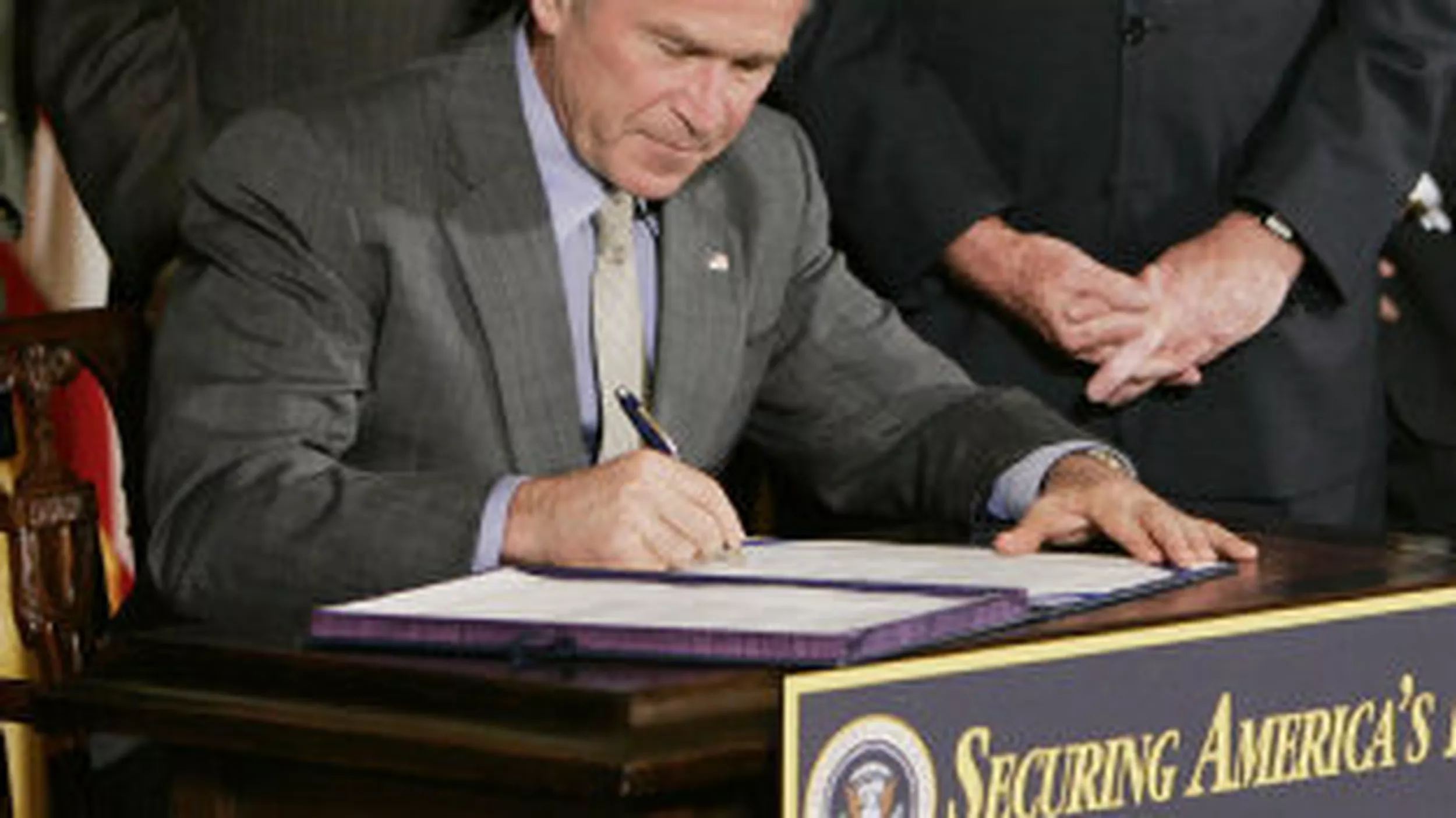
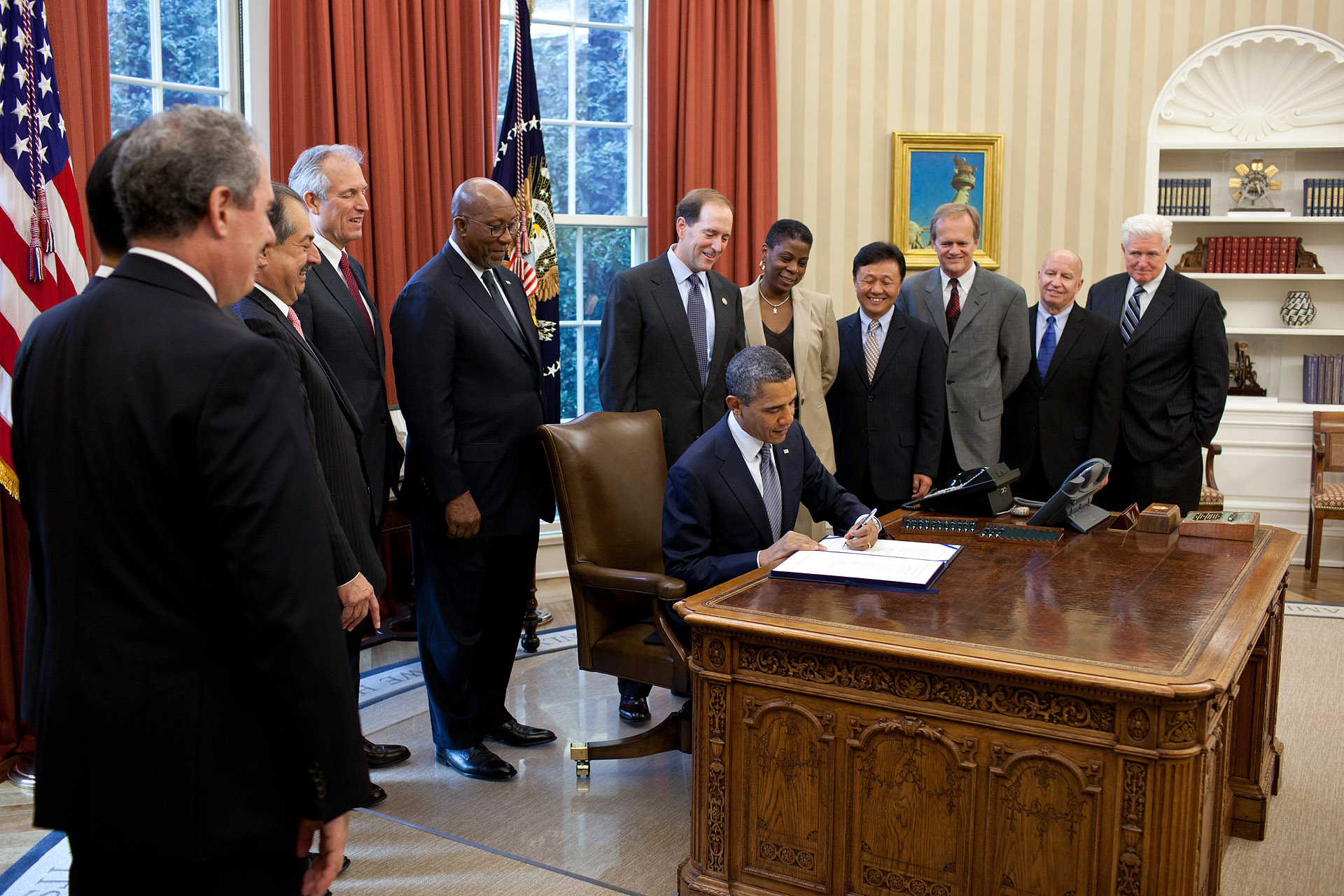
You know the scene: Congress passes a bill, cameras click, pens line up on the desk, and the president signs a new law into existence. Then comes the part most people never see. Alongside the signature, the White House often releases a written statement explaining what the president thinks the law means, how the executive branch will enforce it, or which parts the president believes are constitutionally suspect.
That document is a presidential signing statement, and it sits in a weird constitutional space. It is not a veto. It is not a new law. It is not a court ruling. But it can still shape how the law lives in the real world, because it signals how the executive branch plans to carry it out.
Join the Discussion
What a signing statement is
A signing statement is a written message issued by the president at the time a bill is signed into law. It is typically released by the White House press office and later archived in sources such as the Public Papers of the Presidents and the Compilation of Presidential Documents (and often reposted in government and legal databases).
Most signing statements do one or more of the following:
- Explain the purpose of the law as the president sees it.
- Signal enforcement priorities, including how agencies will interpret ambiguous language.
- Raise constitutional objections and claim the executive will construe or apply parts of the law in a narrower way.
- Signal implementation expectations to executive agencies, usually at a high level.
The key point is this: a signing statement does not change the text Congress passed. But it can influence how the executive branch reads that text when it runs the government.
Where they fit in the Constitution
The Constitution never mentions signing statements. The closest textual anchor is Article II’s instruction that the president must “take Care that the Laws be faithfully executed.” Presidents argue that faithful execution sometimes requires interpretation, especially when a statute is vague or in tension with other legal duties. Congress, by contrast, tends to argue that the president’s job is to enforce the law Congress wrote, not the law the president wishes Congress had written.
This tension is not an accident. The constitutional system is designed to make lawmaking hard and enforcement accountable. Signing statements become controversial when they look less like explanation and more like a unilateral edit made after the vote.
The separation-of-powers worry
Congress writes laws. The president executes them. Courts interpret them in cases and controversies. A signing statement can appear to blur those roles, especially when it announces that the executive branch will treat a statutory requirement as optional or inapplicable.
That is why signing statements are often described as a constitutional pressure point: they test where interpretation ends and rewriting begins.
History in 60 seconds
Presidents have been issuing signing statements since the early republic, but the modern fight over them is newer. Their use and legal framing expanded in the late twentieth century, with sharper emphasis during the Reagan era, and the controversy peaked for many observers during the George W. Bush years, when statements more frequently included constitutional objections tied to national security and executive authority. Subsequent administrations have continued using them, though style and frequency vary.
Types of signing statements
1) Ceremonial statements
These are the least controversial. Presidents praise bipartisan work, name the problem the law addresses, and highlight expected benefits. They function like a press release attached to a signature.
2) Administrative guidance
Some statements provide general implementation guidance, especially when a law creates new programs, deadlines, or interagency responsibilities. These can be mundane but still important, because executive agencies often look to the White House for a unified interpretation.
3) Constitutional or interpretive statements
This is where debates ignite. In these statements, the president asserts that certain provisions should be interpreted to avoid constitutional conflict or that the executive will apply them in a narrower way than Congress appears to have intended.
Common targets include provisions that the executive claims:
- intrude on the president’s role as Commander in Chief
- limit foreign affairs discretion
- require disclosures that implicate executive privilege
- attempt to control appointments or removals
- impose reporting or oversight structures that, in the executive’s view, interfere with Article II
What they do in practice
Signing statements are not just rhetorical. They can affect governance in at least three practical ways.
They shape the executive branch’s default reading
Agencies need to know what to do on Monday morning. If a statute is vague, a presidential statement can nudge agencies toward one plausible reading and away from another. That can matter for everything from environmental enforcement to immigration procedure to military policy.
They preserve a position for later disputes
Presidents sometimes use signing statements to build a record: a formal, contemporaneous claim that a provision is unconstitutional or should be narrowly construed. If a later conflict reaches court, the executive can point back and say, “We flagged this at enactment.”
They can support narrow enforcement
The most contested use is when a statement effectively announces narrow enforcement. Presidents rarely say, “We will ignore this,” in so many words. Instead they often say they will construe a provision “consistent with” executive authority or “in a manner that avoids constitutional infirmities.” The practical effect can be similar: the agency treats the statutory command as conditional.
That is the moment when critics argue the signing statement begins to resemble a line-item veto. And the Constitution does not give the president line-item veto power over ordinary legislation.
Two quick examples
A routine, administrative example
Congress creates a new grant program with multiple deadlines and overlapping agency roles. A signing statement might emphasize coordination, identify a lead agency, or state that implementation will follow existing procurement or civil rights compliance rules. This does not change the statute, but it can influence how agencies organize the work.
A constitutional example
Congress includes a provision directing the executive branch to provide certain sensitive information to lawmakers on a fixed schedule. A signing statement might respond that the executive will comply “consistent with” executive privilege and national security duties. In practice, that can mean disclosures happen in a different form, on a different timeline, or with redactions the administration deems necessary.
Signing statements and the line-item veto issue
Congress passes a bill as a package. Under Article I, Section 7, the president’s core choice is supposed to be sign it or veto it (with special wrinkles like the pocket veto that are not the focus here). That structure is a separation-of-powers safeguard. It forces the president to take political responsibility for rejecting an entire bill, rather than quietly nullifying only the inconvenient parts.
The Supreme Court reinforced that basic architecture in Clinton v. City of New York (1998), striking down the Line Item Veto Act. The Court held that canceling portions of duly enacted statutes violates the Constitution’s lawmaking process.
A signing statement is not the same as statutory cancellation. But when it announces that the executive will treat a provision as inoperative, the resemblance becomes harder to ignore.
How they differ from vetoes
A veto message is the president’s formal objection to a bill returned to Congress without a signature. It is explicitly part of the Article I, Section 7 process. Congress can override a veto with a two-thirds vote in both houses.
A signing statement, by contrast:
- comes after the bill becomes law
- does not trigger an override vote
- does not stop the statute from taking effect
- often operates as an interpretive gloss rather than a direct rejection
That difference is why critics argue signing statements can function as a constitutional workaround in practice. A veto is loud, formal, and contestable. A signing statement can be quiet, technical, and implemented through agency action far from the cameras.
How they differ from executive orders
An executive order is a directive from the president to the executive branch. It is a tool of internal management and policy execution. Executive orders are usually numbered and published, and they tend to be operational: “Do X, set up Y, prioritize Z.”
A signing statement is typically not an operational directive on its face. It is attached to a particular statute and framed as commentary on that statute.
In practice, though, the tools can converge:
- A signing statement can announce an interpretation.
- An agency can implement that interpretation through guidance or regulation.
- An executive order or memorandum can reinforce the same priorities across agencies.
When critics say signing statements expand presidential power, they often mean this combined effect: interpretation plus executive control over enforcement, all without a new vote in Congress.
Are they legally binding?
Not in the way statutes are binding. A signing statement is not law.
But it can still matter:
- Inside the executive branch, agencies take presidential direction seriously, because the president sits at the top of the Article II hierarchy. Signing statements are also often shaped by the broader executive branch legal process, including the Department of Justice’s Office of Legal Counsel and implementation channels like OMB.
- In courts, judges generally prioritize statutory text, structure, and interpretive canons. Some courts may consider legislative history in limited circumstances, but a presidential signing statement is not congressional legislative history. Its persuasive value tends to be limited and context-dependent, though it can appear in litigation as evidence of the executive branch’s contemporaneous interpretation.
The most important enforcement mechanism is not legal magic. It is structural reality: the executive branch is the machinery that enforces federal law. If the machinery is instructed to run a statute in a narrower way, the day-to-day lived meaning of that statute can shrink.
Pushback and limits
Congress can write clearer laws
Ambiguity invites interpretation. Detailed statutory standards, specific deadlines, and clear consequences for noncompliance reduce room for executive “construction.” Congress can also create reporting requirements and oversight mechanisms, though those too can trigger Article II objections if they are drafted aggressively.
Congress can litigate, but standing is hard
Individual members of Congress do not automatically have standing to sue just because they dislike how a law is being enforced. Institutional lawsuits sometimes proceed when authorized by a chamber, but many signing statement disputes never get a clean courtroom resolution. They play out as interbranch negotiation, funding fights, confirmation battles, and public pressure.
GAO and inspectors general can investigate
Even when a signing statement itself is not reviewable, how an agency implements a statute can be audited, criticized, and politically punished. Oversight does not erase the signing statement, but it can raise the cost of ignoring Congress.
Why presidents keep using them
Because they are useful and low-cost.
- They let presidents claim wins while registering constitutional objections.
- They help coordinate a sprawling executive branch around a single interpretive position.
- They preserve arguments for later disputes.
And in a polarized Congress, presidents face a recurring dilemma: vetoing major bills can be politically costly, but signing them without comment can be read as conceding Congress’s interpretation of executive power. Signing statements are a way to sign the bill and still fight about it.
The civic point hiding in plain sight
Signing statements are easy to dismiss as inside baseball. They are not. They are one of the quiet places where the separation of powers becomes real.
If you believe the president is primarily an executor of congressional choices, signing statements can look like an end-run around Article I. If you believe the president must defend the Constitution from congressional overreach while still keeping the government running, signing statements can look like an inevitable tool of constitutional self-defense.
Either way, the important thing is to notice them. Because the signature is not always the end of the lawmaking story. Sometimes it is where the argument about what the law means truly begins.
Quick definitions
- Signing statement: A president’s written commentary issued when signing a bill into law, often describing interpretation or constitutional concerns.
- Veto message: The president’s formal refusal to sign a bill, returning it to Congress for possible override.
- Executive order: A presidential directive to executive agencies about how to manage operations and execute the law.