
Everyone knows what a government shutdown looks like: closed offices, delayed paychecks, a deadline clock on cable news.
Impoundment is quieter. It often looks like nothing. The law says money is available. Congress appropriates for a purpose and expects execution. The executive branch, for any number of reasons, simply does not spend it, or does not spend it on time.
That is why impoundment sits right on the Constitution’s pressure point between Congress’s power of the purse and the president’s duty to execute the laws. Shutdowns are about what happens when Congress does not fund. Impoundment is about what happens when Congress does fund and the executive branch resists carrying it out.
Join the Discussion
What impoundment is, in plain English
Impoundment is when the executive branch withholds, delays, or refuses to spend money that Congress has appropriated.
There are two basic forms, and the distinction matters because Congress built different legal guardrails for each:
- Deferral: a temporary delay in spending.
- Rescission: a proposal to permanently cancel (take back) budget authority that Congress already provided.
Sometimes withholding funds is ordinary administration. Agencies do not spend every dollar on day one, and programs can underspend because fewer people qualify than projected. The constitutional conflict starts when withholding becomes a policy veto: non-spending is used to negate Congress’s choices.
The constitutional fault line
The Constitution splits budget power on purpose.
Congress writes the check
Article I gives Congress control of federal spending, most famously through the Appropriations Clause: “No Money shall be drawn from the Treasury, but in Consequence of Appropriations made by Law.” In other words, the executive branch cannot spend without congressional permission.
The executive executes the spending, lawfully
Article II then assigns the president the job of carrying Congress’s laws into effect. The Take Care Clause requires that the president “shall take Care that the Laws be faithfully executed.”
Put those together and you get a basic constitutional expectation: when Congress has passed a valid law that appropriates money for a program, the executive branch generally must administer that program as Congress designed it, not as the president wishes it had been designed.
Impoundment is what happens when that expectation breaks. In effect, it can start to resemble a line-item veto, with the executive negating enacted spending choices without a new law authorizing that change.
Before 1974: practice to weapon
Presidents have withheld funds in various forms for a long time, but the justification and scale changed over time.
Early justifications
Historically, some impoundments were defended as administrative necessity: a project could not be carried out as written, a cost estimate shifted, or a foreign affairs situation changed. These were not always uncontroversial, but they were easier to frame as implementation judgments rather than policy nullification.
The Nixon era
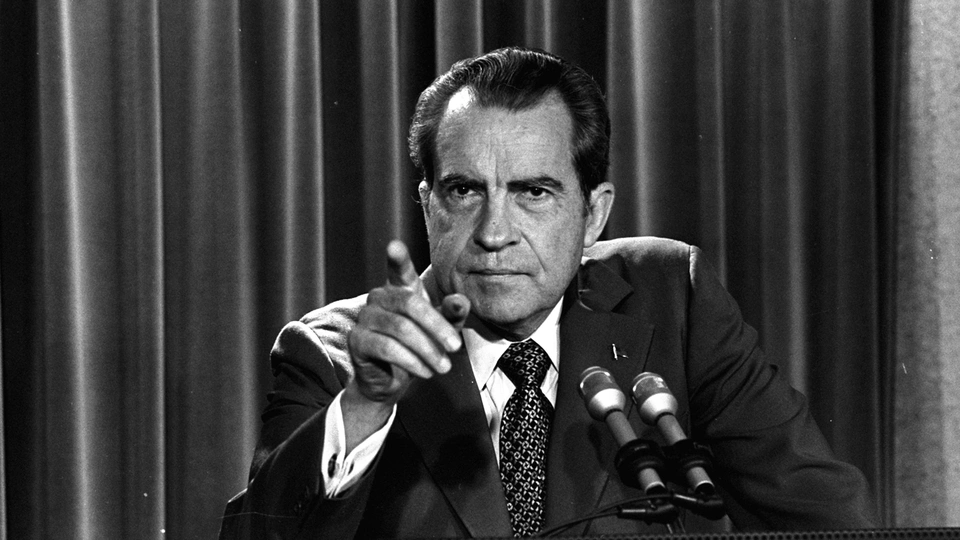
The modern impoundment story is inseparable from President Richard Nixon. Nixon asserted broad authority to withhold appropriated funds, often to restrain domestic spending Congress had enacted. The premise was sweeping: that a president could decline to spend for policy reasons, especially as part of a larger effort to control inflation and reshape federal priorities.
Congress did not simply disagree. It saw the practice as a direct threat to its Article I power. If a president can refuse to spend money after signing the bill, Congress’s appropriation becomes conditional on executive approval. That changes the balance of powers without a constitutional amendment.
The 1974 answer: the ICA
Congress responded with one of the most important separation-of-powers statutes in modern budgeting: the Congressional Budget and Impoundment Control Act of 1974.
The Act did two big things at a high level:
- It created modern congressional budget infrastructure, including the House and Senate Budget Committees and the Congressional Budget Office (CBO).
- It built a legal framework to control presidential impoundment.
This article focuses on that second piece, commonly called the Impoundment Control Act (ICA).
Rescissions: the president can ask, Congress must say yes
Under the ICA, if the president wants to permanently cancel spending, the president sends a rescission message to Congress identifying the funds and the reasons.
Here is the key: the money can only be rescinded if Congress passes a law approving the rescission. In the meantime, the executive branch can withhold the funds only for a limited period while Congress considers the request. As a rule, that clock is 45 legislative days. If Congress does not enact a rescission within that window, the funds must be made available for obligation.
The structure is intentional. It treats cancellation as a legislative decision because it effectively rewrites the appropriation Congress enacted.
Deferrals: narrow and time-limited
Deferrals are treated differently, but they are not an open invitation. The ICA’s original framework included a legislative-veto style mechanism for deferrals. After INS v. Chadha (1983), that mechanism was widely understood to be constitutionally problematic, and Congress later amended the ICA in 1987 to tighten and clarify what deferrals can be.
In today’s terms, the important takeaway is simple: deferrals are generally limited to narrow categories such as contingencies and efficiency-related savings. They are not supposed to be used as a backdoor policy veto. And under the post-1987 rules, a deferral can be blocked if either chamber disapproves, requiring release of the funds.
A concrete gray-zone example
One way to see the line: delaying a grant program because an agency is still finalizing lawful eligibility guidance can be ordinary administration. Holding the money because the administration dislikes the program Congress funded is the kind of delay that starts to look like impoundment.
Why this matters for civic education
It is easy to assume budget power is all about big votes and dramatic deadlines. The ICA is a reminder that budget power is also about execution. Congress can pass an appropriation and still lose the policy fight if the executive branch can sit on the money.
Shutdowns vs impoundment
Shutdown fights revolve around whether Congress will enact funding in time. Impoundment fights assume the opposite: funding has already been enacted, and the conflict is about whether the executive branch will carry it out.
That distinction keeps impoundment out of the headlines, even though it can move just as much money and reshape just as many programs.
There is also a shared theme you will recognize from appropriations showdowns: both are battles over who gets the last word.
- In a shutdown standoff, Congress tries to use the threat of no money to force concessions.
- In an impoundment standoff, a president tries to use the threat of no spending to force concessions, or to unilaterally narrow what Congress funded.
Both are leverage. Both test the same constitutional boundary: Congress’s authority to set national priorities through law versus the president’s authority to administer those laws.
Modern fights
After 1974, impoundment did not vanish. It became more legally structured and more litigated. Modern disputes tend to follow a familiar pattern: the executive branch frames withholding as discretion, while Congress frames it as defiance.
Ukraine security assistance (2019)
One of the most visible modern examples involved a temporary hold on congressionally appropriated security assistance to Ukraine in 2019. Among the legal questions raised was whether the withholding complied with the ICA and other appropriations requirements.
For readers who want a concrete factual anchor: in January 2020, the Government Accountability Office (GAO) concluded that OMB violated the ICA by withholding the funds for a policy reason (GAO decision B-331564, Jan. 16, 2020).
Whatever one thinks of the broader political story, the constitutional lesson is straightforward: when Congress appropriates funds for a specific purpose and the executive branch pauses that spending for reasons unrelated to lawful program administration, the fight quickly becomes one about the separation of powers, not just foreign policy.
Policy disagreements disguised as “review”
In the modern administrative state, impoundment rarely comes packaged as an explicit refusal. It can appear as “review,” “pause,” “reprogramming,” “apportionment,” or “waiting for further guidance.”
Sometimes those are legitimate management tools. Sometimes they are the vocabulary of delay.
That is why Congress and watchdogs pay attention not only to what the law appropriates, but also to whether agencies are issuing grants, signing contracts, and obligating funds on schedule.

Where friction happens
Most impoundment disputes do not turn on a president saying, “I refuse.” They turn on the gray zone where execution involves judgment.
Not every unspent dollar is impoundment
Appropriations often set a maximum, not a command to spend every cent. Some programs have fluctuating demand, and some projects cannot be executed as planned. Underspending can happen without constitutional drama.
But not every “choice” is discretion
At the same time, Congress sometimes drafts appropriations that are clearly mandatory in effect. It can earmark, set formulas, impose deadlines, and specify purposes. When the statute is that specific, executive discretion narrows.
The recurring question is: did Congress leave room to choose, or did Congress direct an outcome? Impoundment fights are often simply that question, translated into money.
Apportionment as a choke point
One recurring flashpoint is apportionment, the process (often led by OMB) that parcels appropriated funds into amounts agencies can obligate over time. Used properly, apportionment is cash and compliance management. Used aggressively, it can function as a bottleneck, slowing obligations even when Congress expected money to move.
Conditions and renegotiation after enactment
Another modern flashpoint is conditions. Congress can condition spending. Agencies must follow those conditions. But the executive branch may argue that additional conditions exist in other statutes, in constitutional constraints, or in administrative requirements.
That is a healthy legal conversation until it becomes an excuse to add new hurdles Congress never authorized, effectively rewriting the deal after the vote.
Why the ICA still matters
The ICA is sometimes described as “budget procedure,” which makes it sound like paperwork. In reality, it is a constitutional guardrail.
- It preserves Congress’s role as the institution that decides whether money is spent in the first place.
- It limits the executive branch’s ability to convert implementation power into a post-enactment veto.
- It creates a record: formal messages, statutory timelines, and accountability points that can be scrutinized.
It also creates oversight hooks. GAO opinions can document violations and clarify norms. Congress can hold hearings, demand documents, adjust future appropriations language, and write riders that tighten timing and reporting requirements. And in some disputes, courts become the arena, especially when delays collide with statutory deadlines or concrete harms.
And it matters precisely because modern governance depends on continuous execution. Congress funds thousands of programs through appropriations. If the executive branch could freely decline to spend whenever it disagreed, Congress’s control over national priorities would become optional.
The civic takeaway
The “power of the purse” is often framed as Congress’s ability to prevent a shutdown by passing appropriations. That is only half the story.
The other half is whether appropriations mean what they say after the cameras leave. Sometimes Congress appropriates permissively, setting a ceiling. Sometimes it appropriates with mandatory force, using deadlines, formulas, and clear directives. Either way, an appropriation is not just symbolism. It is part of the legal architecture Congress uses to steer policy.
Impoundment is the recurring test of whether that architecture binds the executive branch, or whether the executive can treat enacted funding as optional.
And if you want a single question to carry into the next budget fight you hear about, it is this: Is the conflict over whether Congress will fund something, or over whether the executive branch will execute what Congress already funded? Those look similar in politics. Constitutionally, they are different battles.