
There is a reason most Americans get uneasy when they see troops in the streets, even if the troops are calm, disciplined, and “just helping.” In the United States, military power is supposed to face outward. Policing power is supposed to face inward. The Posse Comitatus Act of 1878 is one of the clearest legal lines we have drawn between the two.
It is not a sweeping ban on any military presence inside the country. It is narrower and more practical than that. The Act is about one thing: keeping federal troops from becoming routine domestic law enforcement.
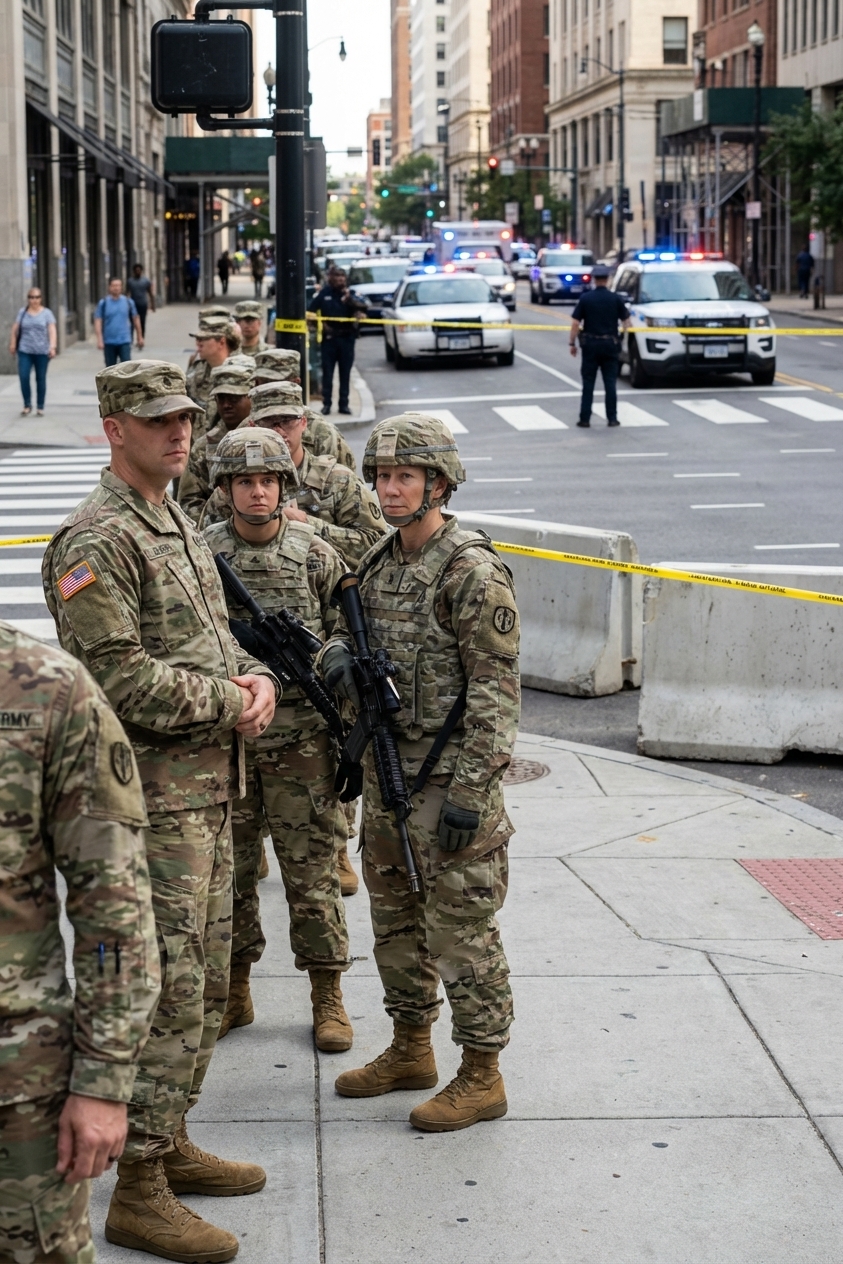
What the Posse Comitatus Act is
The Posse Comitatus Act (often shortened to “PCA”) is a federal law enacted in 1878. Its core rule is simple: the federal military generally cannot be used to execute domestic laws unless Congress or the Constitution clearly authorizes it.
The modern version appears in 18 U.S.C. § 1385. In plain English, it generally makes it a crime to use the Army or Air Force as a domestic police force. By Department of Defense policy and regulation, similar restrictions are applied to the Navy and Marine Corps as well, even though the statute names only the Army and Air Force. Courts often analyze Navy and Marine Corps involvement under those rules and related authorities, so the practical effect is usually similar even when the legal path is more technical.
What “posse comitatus” means
“Posse comitatus” is Latin for “power of the county.” In English common law, a sheriff could summon civilians to help keep the peace or pursue criminals. The American fear after the Civil War was that federal troops would become that kind of ready-made posse for local political control.
The Coast Guard is different
One armed service sits in a different lane: the U.S. Coast Guard. Because it has a statutory law enforcement mission under Title 14, it is not subject to the Posse Comitatus Act in the same way, even though it is a branch of the armed forces. In other words, if you see the Coast Guard stopping a vessel, boarding it, and making arrests, that is not a PCA loophole. It is the Coast Guard doing its job.
Why Congress passed it
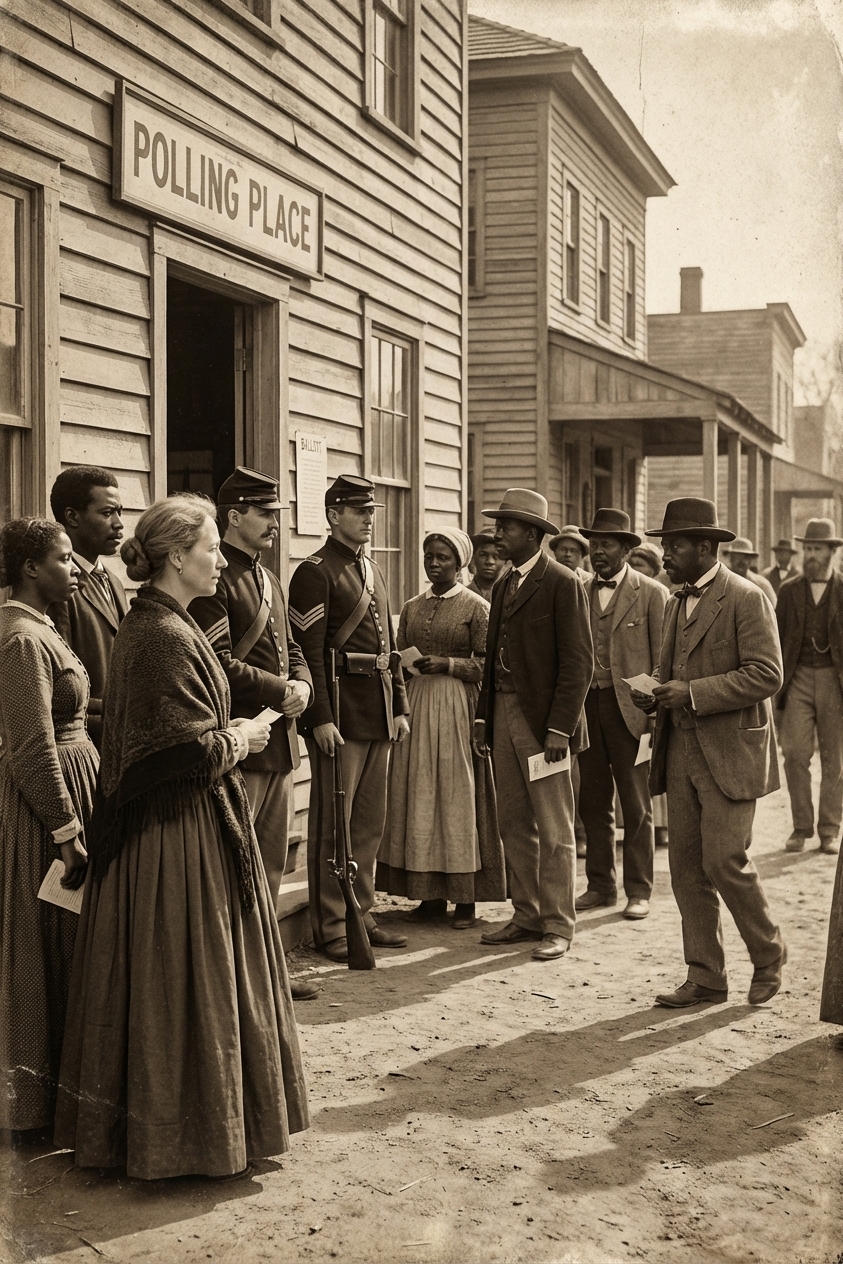
You cannot understand the Posse Comitatus Act without Reconstruction. After the Civil War, federal troops were stationed across the former Confederate states to enforce Reconstruction laws, protect newly freed citizens, and support federal authority in places where local power structures were hostile to it.
That enforcement role became politically explosive. By the late 1870s, “ending Reconstruction” had become a national bargaining chip. The Compromise of 1877 helped resolve the disputed 1876 presidential election, and one practical result was the withdrawal of many federal troops from the South.
The Posse Comitatus Act followed in 1878. It reflected a shift in national mood: a renewed insistence that civilian governance should not be backed by federal bayonets in ordinary life. The law was not an abstract civics lesson. It was Congress trying to prevent a specific pattern from becoming normal.
What it prohibits
The basic rule
The Posse Comitatus Act generally limits federal troops from directly participating in civilian law enforcement. It most clearly targets situations where military personnel themselves exercise the kind of authority we associate with police power.
As a rule, that means federal forces are typically barred from doing things like these as part of enforcing civilian criminal law:
- Arresting civilians
- Conducting searches and seizures
- Running checkpoints aimed at enforcing civilian law
- Interrogating suspects in a policing role
- Directing crowd control as an enforcement authority rather than a protective security role
The line is often described as direct law enforcement versus indirect support. Courts and lawyers frequently ask a blunt question: did military personnel exercise regulatory, proscriptive, or compulsory power over civilians? If yes, you are in PCA territory fast. If no, you may be in a support role that is allowed under other rules.
What is often allowed
The military can often provide help that does not amount to executing the law. Examples that are commonly lawful under other authorities include:
- Logistics and transportation support
- Technical assistance, planning, and training
- Equipment loans or use of certain facilities
- Information sharing in limited, authorized contexts
This is why you may see military aircraft, vehicles, engineering units, or communications teams during a crisis without that automatically violating the Posse Comitatus Act. The key question is whether troops are being used as the ones who enforce the law, or whether they are supporting civilian authorities who keep control of the policing function.
Does it apply to the National Guard?
It depends on who is in control.
- National Guard under state authority (often called “state active duty” or “Title 32”) remains under the governor’s command even when federally funded. In that posture, it is not treated as federal troops for Posse Comitatus purposes, and it can perform law enforcement functions if state law allows and constitutional limits are respected.
- National Guard federalized (“Title 10”) becomes part of the federal armed forces under the President’s command. In that posture, Posse Comitatus restrictions apply much like they do to the Army and Air Force.
This is one reason domestic deployments generate confusion. Two units can wear the same uniform and stand on the same street, but the legal authority changes dramatically based on their command status.
A concrete example: during large demonstrations, a governor may deploy the National Guard in state status to help with security, traffic control, and protecting infrastructure. That is legally and politically different from sending in active-duty federal troops to conduct patrols or make arrests.
The Insurrection Act
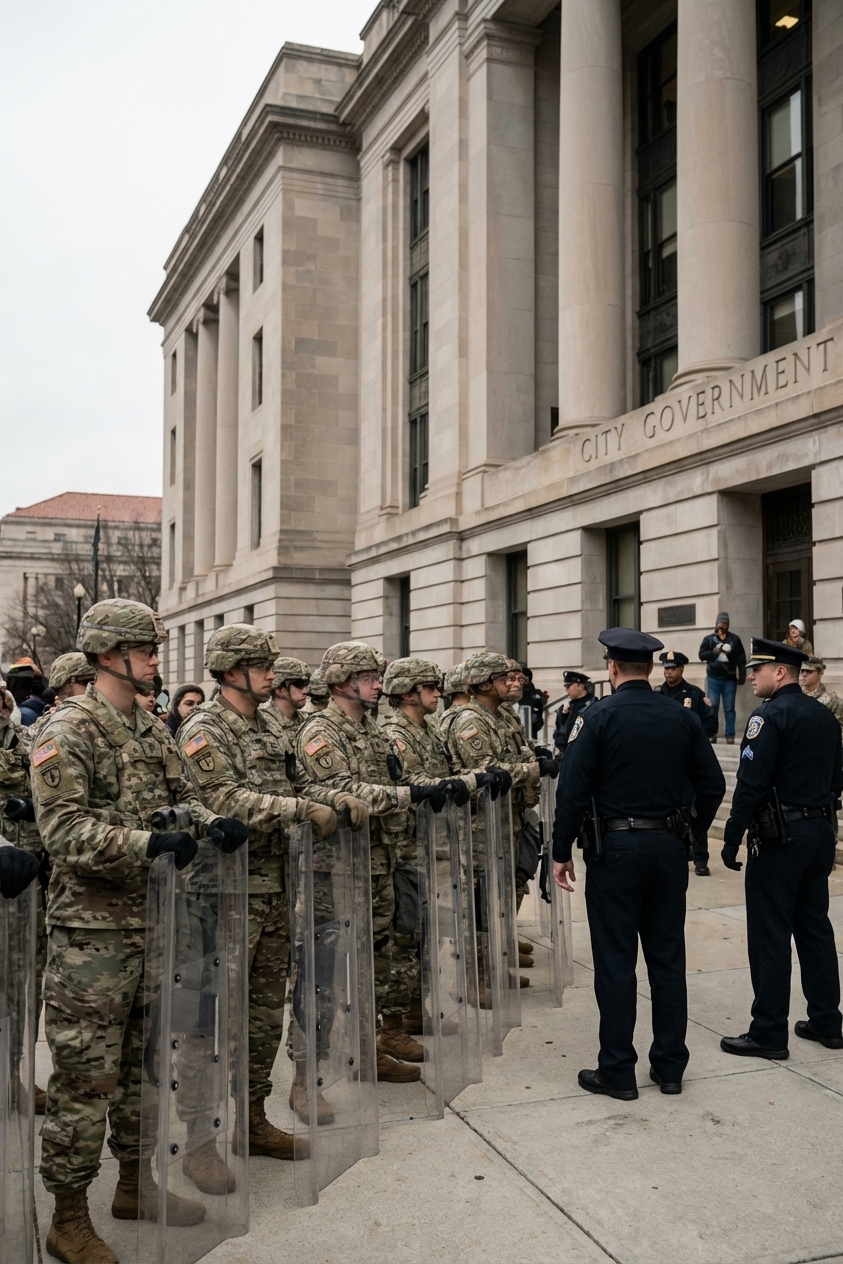
The Posse Comitatus Act is not the final word because Congress has also enacted statutes that authorize domestic use of troops in extreme circumstances. The most famous is the Insurrection Act, which can permit the President to deploy federal troops to suppress insurrection, enforce federal authority, or protect civil rights when states cannot or will not do so.
That means the PCA and the Insurrection Act function like a matched set:
- The Posse Comitatus Act sets the default rule: no federal troops executing domestic law.
- The Insurrection Act is one of the most significant override switches: in defined emergencies, federal troops can be used at home in a law enforcement role.
When modern debates erupt over “sending in the military,” the real question is often not whether the Posse Comitatus Act exists. It is whether an exception has been invoked, and whether the facts actually fit it.
Other exceptions and gray areas
Not every legal pathway runs through the Insurrection Act. A lot of modern controversy lives in narrower authorities, support statutes, and mission definitions.
Disaster response
After hurricanes, wildfires, floods, or pandemics, the military is often involved in support roles. This is usually not “law enforcement” at all. It is logistics, rescue, medical support, engineering, and transportation.
Even when a Stafford Act emergency or disaster declaration is involved, that typically does not turn troops into police. If troops begin enforcing curfews, performing searches, or making arrests, the PCA question comes roaring back unless a clear separate authorization applies.
Support to civilian law enforcement
Congress has authorized certain forms of military assistance to civilian law enforcement under a set of statutes often cited in the 10 U.S.C. §§ 271–284 range. These authorities tend to focus on support like information, equipment, training, and limited operational assistance, while trying to keep the actual coercive police power in civilian hands.
Protection of federal property
There are circumstances where federal forces may protect federal buildings, federal employees, or federal operations. The legal analysis here can turn on a simple practical question: is the mission truly protective, or has it slid into general policing of the surrounding public?
Military purpose
Another recurring concept is the “military purpose” idea. If the activity is aimed at a legitimate military function, it is more likely to be treated as outside the PCA’s core concern, even if it incidentally assists civilian enforcement. This is one of the reasons PCA analysis is so fact-specific. Small changes in who gives orders and what the mission is can change the outcome.
Military justice and base security
The PCA is about domestic civilian law enforcement. It does not prevent the military from enforcing order on military installations or handling military discipline under the Uniform Code of Military Justice.
What it protects
The Posse Comitatus Act is a statute, not a constitutional clause. But it reinforces constitutional design choices that show up throughout the document.
Civilian control
The Constitution makes the President Commander in Chief, but it gives Congress the power to raise and regulate the armed forces. The PCA reflects a congressional insistence that military power should not become an everyday domestic executive tool without explicit authorization.
Federalism
Policing is traditionally a state function. The PCA helps preserve that default by discouraging federal troops from becoming the routine enforcers of local criminal law.
Liberty
Every constitutional right becomes harder to exercise if the ordinary face of law enforcement is the military. The Founders remembered standing armies and general warrants. The PCA is a later-generation attempt to keep the government’s most coercive institution from becoming the one that routinely interacts with civilians in daily life.
How it shows up today
When protests, border surges, election tensions, or urban crime waves hit the headlines, calls for “troops” often follow. The Posse Comitatus Act is why the conversation usually turns quickly to a few concrete questions:
- Which troops? Active-duty federal military, federalized National Guard, or Guard under state control?
- Doing what exactly? Logistics, engineering, and security perimeters look different from arrests and searches.
- Under what authority? Insurrection Act, a support statute, protection of a federal function, or something else?
- For how long? Short-term emergency support is legally and politically different from open-ended domestic deployments.
In practice, the fiercest disputes are rarely about the existence of the Posse Comitatus Act. They are about the edges: whether a mission is really “support,” whether an exception genuinely applies, and how quickly emergency measures become normal.
In one sentence
If the Insurrection Act is the constitutional system’s emergency lever, the Posse Comitatus Act is the sign on the glass case: break only when necessary.
It is a reminder that, in a republic, the military is powerful precisely because it is not supposed to be familiar.
Quick takeaways
- The Posse Comitatus Act (1878) limits use of federal military forces in domestic law enforcement.
- It reflects post-Reconstruction backlash against routine military involvement in civilian governance.
- It generally bars troops from direct policing like arrests and searches, while allowing certain forms of indirect support under other rules.
- The Insurrection Act is a major statutory exception that can authorize domestic troop deployments for law enforcement purposes, but it is not the only relevant authority.
- The National Guard is treated differently depending on whether it is under state command (state active duty or Title 32) or federalized (Title 10).
- The Coast Guard has a statutory law enforcement mission and is uniquely positioned relative to the PCA.