
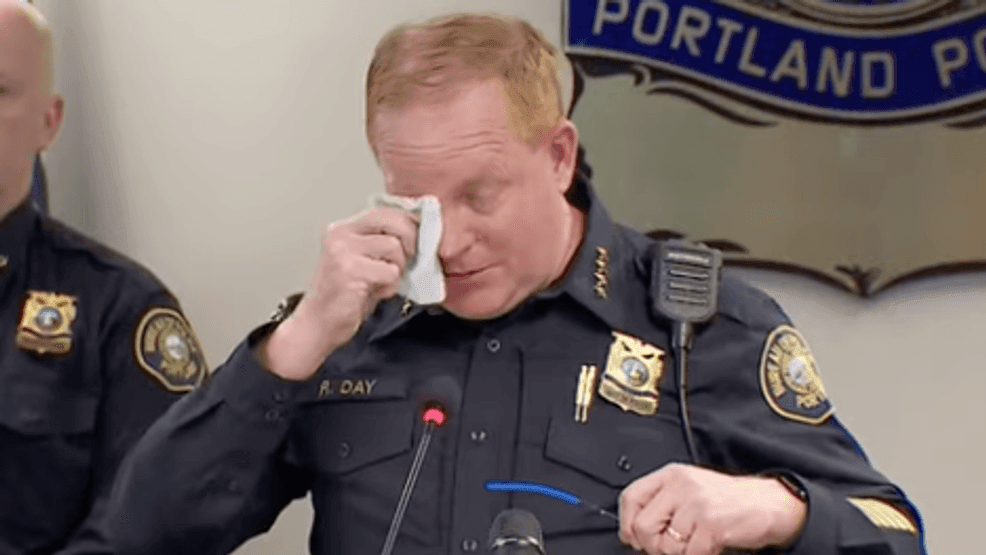
Portland Police Chief Bob Day removed his glasses mid-sentence. His voice cracked. Tears rolled down his face as he confirmed what the Department of Homeland Security had been saying all along.
The two Venezuelan illegal immigrants shot by a federal agent Thursday weren’t innocent victims. They had ties to Tren de Aragua—one of the most violent transnational gangs operating in the United States.
Day’s emotional admission Friday afternoon revealed more than gang connections. It exposed the impossible position sanctuary city police chiefs face when federal immigration enforcement, local political pressure, and criminal reality collide in a single moment.
What Actually Happened Thursday
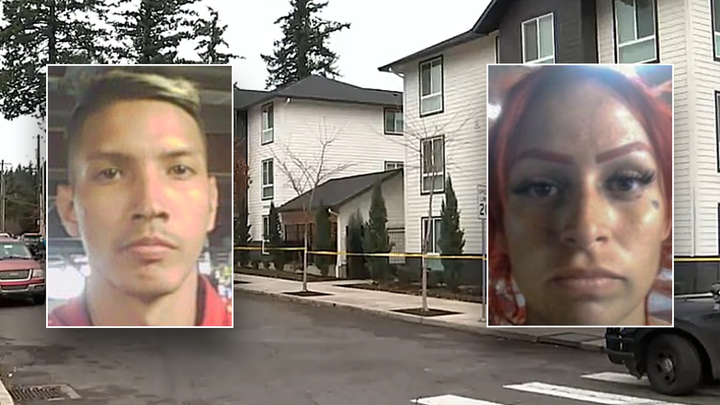
A U.S. Customs and Border Protection agent shot Luis David Nico Moncada and Yorlenys Betzabeth Zambrano-Contreras during an immigration enforcement operation in Portland Thursday morning.
The Department of Homeland Security’s account: Moncada, driving the vehicle, “weaponized” it and attempted to run over federal agents. An agent fired in self-defense. Both suspects were wounded and hospitalized.
DHS immediately identified both as Venezuelan criminal illegal aliens with suspected Tren de Aragua ties. The agency said Moncada was a suspected gang associate. Zambrano-Contreras was allegedly involved in a TdA-linked prostitution operation. DHS rejected early reports calling them a married couple as “revolting lies.”
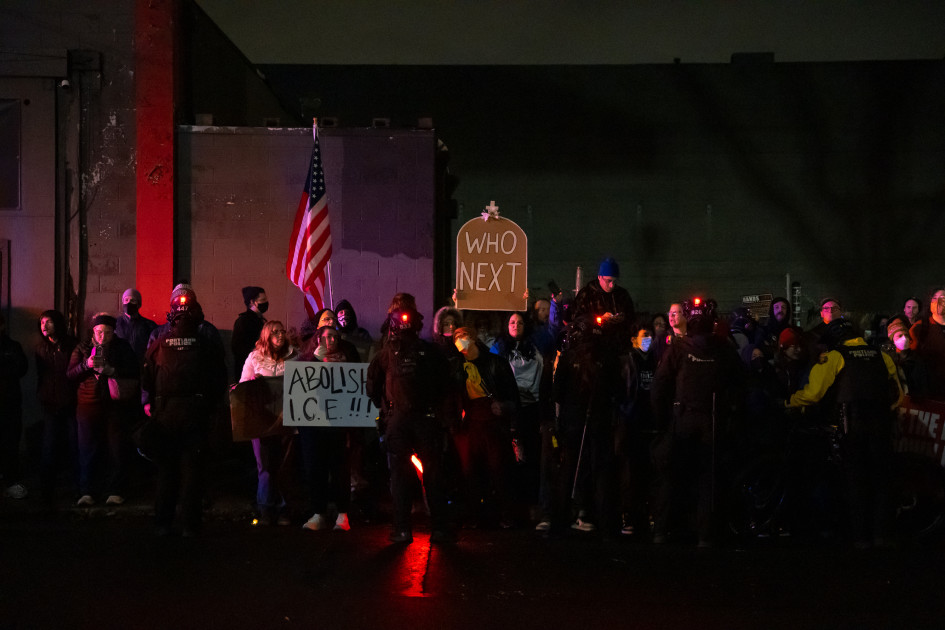
Portland’s initial response was skepticism toward the federal account and sympathy toward the two who were shot. Local protests erupted. Federal agents faced accusations of excessive force. The shooting became another flashpoint in Portland’s long-running conflict with federal immigration enforcement.
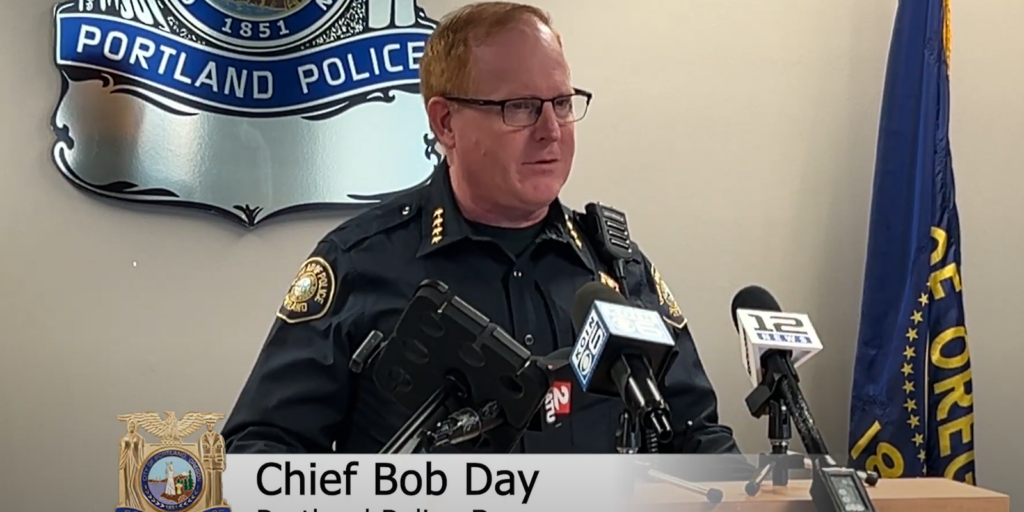
Then Chief Day confirmed Friday what DHS had said from the beginning: “They do have some nexus to involvement with TDA. We can confirm that.”
The Tears That Said Everything
Day paused mid-sentence when confirming the gang ties. He removed his glasses. He wiped tears from his eyes. The emotion wasn’t about the suspects—it was about what the confirmation meant.
“I want to speak for just a moment, specifically to my Latino community,” Day said, his voice breaking. “It saddens me that we even have to qualify these remarks because I understand or at least have attempted to understand your voices, your concern, your fear, your anger.”
The chief was crying because confirming gang ties felt like betrayal. Portland has positioned itself as a sanctuary city protecting immigrants from federal enforcement. Day has previously stated his force won’t assist immigration operations.
Now he was confirming that the people his city defended—the people protesters claimed were victims of federal overreach—were actually suspected members of a violent transnational gang. One allegedly involved in prostitution operations. The other allegedly attempting to run over federal agents with a vehicle.
Day explicitly framed his disclosure as potentially harmful: “This information, in no way, is meant to disparage or to condone or support or agree with any of the actions that occurred yesterday.”
He was confirming facts while apologizing for them. Stating truth while worrying it would be used to justify actions he opposed. Caught between law enforcement reality and political ideology.
Who Tren de Aragua Actually Is
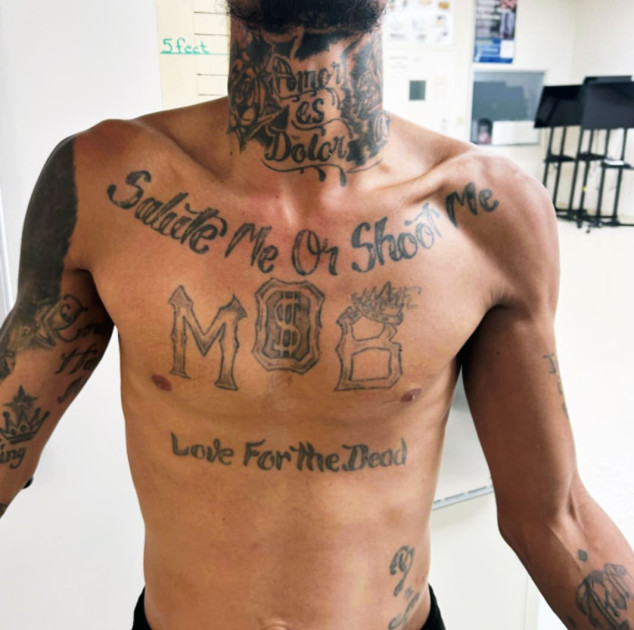
Tren de Aragua started as a prison gang in Venezuela. It evolved into a transnational criminal organization operating across South America and increasingly in the United States.
The gang specializes in human trafficking, prostitution, drug trafficking, extortion, and violent crime. U.S. law enforcement has documented TdA operations in multiple states, particularly in cities with large Venezuelan migrant populations.
The gang exploits migration routes and asylum processes to move members and victims across borders. Women are trafficked for prostitution. Gang members establish territorial control in immigrant communities through violence and intimidation.
DHS has designated Tren de Aragua as a foreign terrorist organization. The designation allows enhanced prosecution and immigration consequences for members. It also makes TdA membership grounds for immediate deportation and bars to reentry.
Portland has seen increased TdA activity as Venezuelan migration surged. Federal agents have conducted multiple operations targeting suspected gang members. Each operation triggers local protests and political backlash—until confirmation of actual gang ties makes the political situation more complicated.
The “Historic Injustice” Day Referenced
Day said he initially hesitated to disclose gang connections, citing “the historic injustice of victim blaming by law enforcement, including within his own agency.”
He was referencing how police historically use suspects’ backgrounds—gang affiliations, criminal records, immigration status—to justify shootings and deflect accountability. The pattern is real: shoot someone, then reveal their criminal history to suggest they deserved it.
That context makes Day’s disclosure ethically complex. Confirming gang ties provides important factual information about who federal agents encountered. But it also risks implying the shooting was justified because the suspects were gang-affiliated.
Day tried to navigate that tension: confirm the facts, emphasize they don’t justify the shooting, maintain that investigation continues. But the tears revealed he knew how the confirmation would be used politically—to validate federal enforcement and undermine sanctuary city critics.
The Federal-Local Split Portland Exemplifies
Portland represents the most extreme version of sanctuary city versus federal enforcement conflict. The city has systematically refused to cooperate with ICE and CBP. Local police don’t assist federal immigration operations. City officials openly oppose federal enforcement priorities.
Camilla Wamsley, director of Portland’s ICE office, has publicly criticized Day and Portland police for being “largely absent” during dozens of nights of violence targeting the federal facility. She says the city directs police not to respond under political pressure from the mayor and city council.
Day confirmed his position Friday: “Portland Police manages public safety in the surrounding neighborhoods during demonstrations” but won’t participate in immigration enforcement itself.
That stance creates operational reality: federal agents conduct enforcement in Portland knowing local police won’t provide backup. When things go wrong—suspects flee, violence erupts, shootings occur—federal agents are alone.
The Thursday shooting happened in that context. Federal agents conducting immigration enforcement without local support. A suspect allegedly weaponizing a vehicle. An agent firing in self-defense. Then local protests against federal agents before facts emerged.
What “Weaponizing” a Vehicle Means
DHS says Moncada “weaponized his vehicle” and attempted to run over agents. That language is specific—not “fled in vehicle” or “drove away” but “weaponized” and “attempted to run over.”
The distinction matters legally and tactically. Fleeing in a vehicle doesn’t typically justify deadly force. Using a vehicle as a weapon to strike officers does.
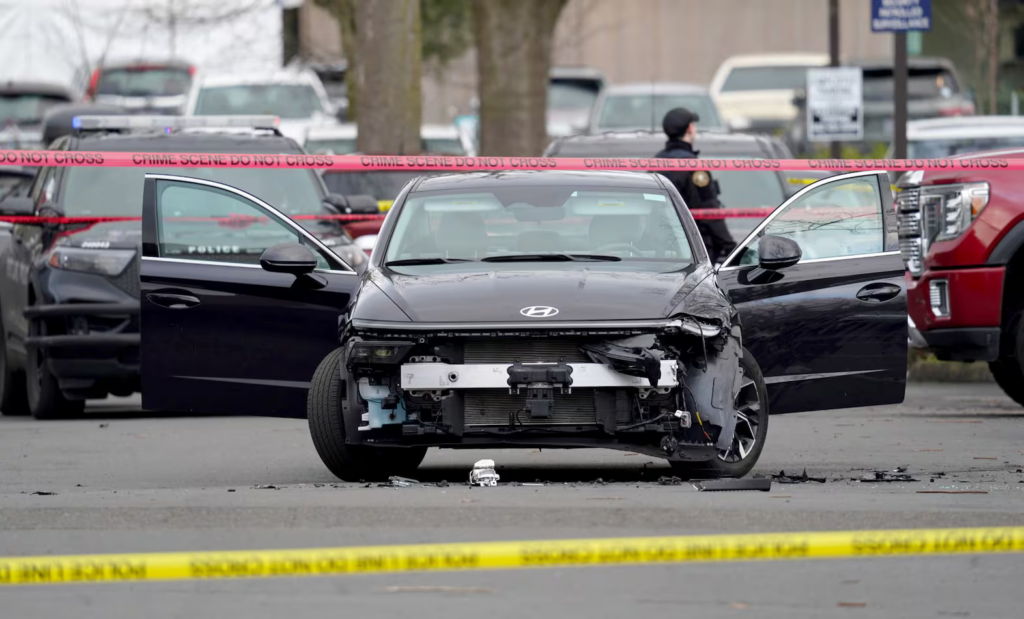
Multiple recent incidents show vehicles being used against federal immigration enforcement agents. Some suspects ram federal vehicles. Others drive directly at agents on foot.
The pattern has become common enough that DHS is tracking what it calls a “wave of car attacks on ICE agents.”
The Portland shooting fits that pattern if DHS’s account is accurate. Driver sees federal agents. Instead of stopping or fleeing, drives at agents. Agent fires to stop the threat. Vehicle-as-weapon justifies deadly force under standard use-of-force doctrine.
But Portland’s initial reaction was skepticism of federal claims and sympathy for suspects. Only after local police confirmed gang ties did the narrative shift.
The Prostitution Operation Detail
DHS says Zambrano-Contreras was involved in a TdA-linked prostitution operation. That detail is specific and devastating.
Tren de Aragua’s human trafficking operations target vulnerable Venezuelan women. The gang recruits or coerces them in South America, moves them through migration routes, and forces them into prostitution in destination countries including the United States.
The operations are brutal. Women who resist face violence. Families in Venezuela face threats. Escape is nearly impossible—victims lack documents, don’t speak English, have no resources, and fear deportation if they seek help.
If Zambrano-Contreras was involved in such an operation, the question becomes: was she perpetrator or victim? DHS framing suggests perpetrator—”involved in” rather than “victim of.” But trafficking situations are often complex, with victims coerced into participating in operations that victimize others.
Day’s tears may have reflected awareness of that complexity. Confirming gang involvement doesn’t resolve whether Zambrano-Contreras was criminal or victim or both.
Why Day’s Admission Matters Constitutionally
The constitutional questions underlying Portland’s sanctuary city policies are complex. States and localities aren’t required to assist federal immigration enforcement—that’s “anti-commandeering” doctrine from Supreme Court precedent.
But they also can’t actively obstruct federal enforcement. They can decline to help. They can’t prevent federal agents from doing their jobs.
Portland has walked that line aggressively. Not assisting federal operations is constitutionally permissible. But creating political environment where federal agents operate in hostile territory without backup creates practical problems.
Day’s admission matters because it validates federal enforcement in a specific case. DHS said these were gang-affiliated criminals. Portland was skeptical. Local investigation confirmed DHS was right.
That confirmation doesn’t resolve larger constitutional questions about sanctuary policies. But it demonstrates that federal immigration enforcement sometimes targets actual criminals, not innocent families swept up in indiscriminate raids.
The Impossible Position of Sanctuary City Chiefs
Day’s tears revealed the impossible political position sanctuary city police chiefs face. They operate in cities with policies protecting immigrants. They lead departments that won’t assist federal immigration enforcement. They serve communities fearful of deportation.
Then federal agents shoot two people during an enforcement operation. Protests erupt. Political leaders demand accountability. The chief defends immigrants and criticizes federal overreach—it’s politically required.
Then investigation reveals the people shot were suspected gang members. One allegedly tried to run over federal agents. The federal account appears accurate. The chief must confirm facts that undermine his city’s political narrative.
Day tried to navigate that impossible position: confirm the truth, apologize for how it sounds, emphasize it doesn’t justify the shooting, maintain trust with Latino community, stay committed to facts.
The tears showed the emotional cost. He was stating facts that would be used against policies he supports, by people he opposes, in ways he couldn’t control.
What’s Happening in Hospitals Now
Both suspects remain hospitalized in stable condition and federal custody. Day said “they appear to be on the road to recovery, and I’m grateful for that.”
The gratitude is genuine—Day doesn’t want anyone killed in his city, regardless of gang affiliation. But both suspects now face federal charges plus potential gang-related prosecution.
TdA membership is now grounds for terrorism-related charges. Both suspects can be prosecuted for the vehicle attack on federal agents. Zambrano-Contreras faces potential human trafficking charges if prostitution operation allegations are proven.
They’re alive and recovering. They’re also facing decades in federal prison followed by deportation. The shooting they survived may be the least of their legal problems.
What Friday’s Press Conference Really Revealed
Chief Day wasn’t crying about two suspected gang members getting shot. He was crying because confirming gang ties felt like betraying his community, validating policies he opposes, and admitting federal agents he won’t support were right about a situation his city initially doubted.
The tears revealed the human cost of serving as law enforcement in politically divided America. You can’t choose your facts. You can only choose whether to state them honestly.
Day chose honesty. He confirmed gang ties while emphasizing they don’t justify the shooting. He disclosed facts while worrying about their misuse. He stayed committed to truth while understanding political consequences.
That’s leadership in impossible circumstances—where every option hurts, where honesty creates problems, where doing right means making everyone unhappy.
The constitutional questions about sanctuary cities remain unresolved. The political battles over immigration enforcement continue. But Friday afternoon in Portland, a police chief cried while telling the truth.
Sometimes that’s all the rule of law can ask.