
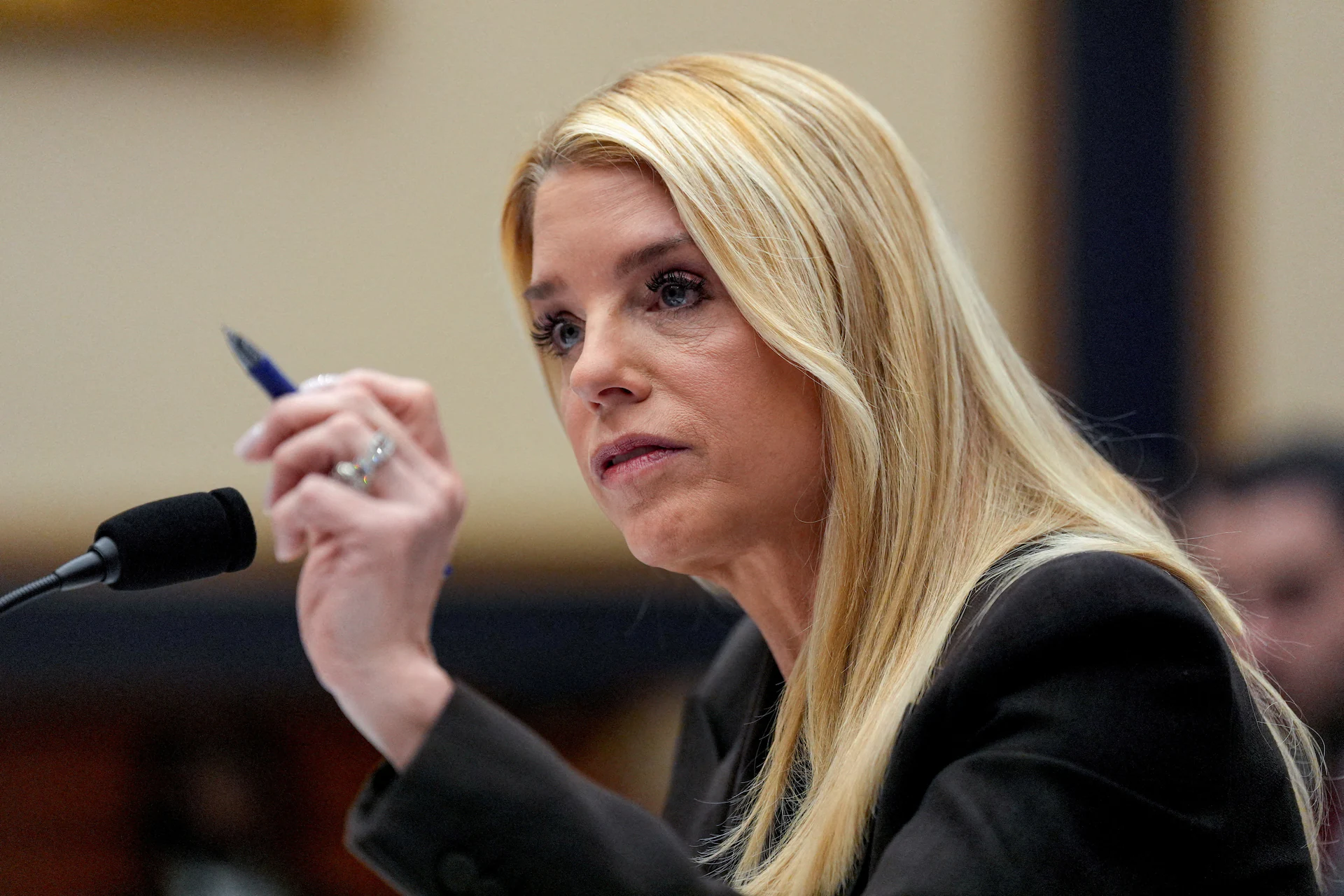
On Thursday, Trump announced the change publicly, praising Bondi while making clear the decision was final. “Pam Bondi is a Great American Patriot and a loyal friend, who faithfully served as my Attorney General over the past year,” Trump wrote. He added that Bondi “did a tremendous job overseeing a massive crackdown in Crime across our Country, with Murders plummeting to their lowest level since 1900.” Trump also said Bondi “will be transitioning to a much needed and important new job in the private sector, to be announced at a date in the near future,” and that Blanche “will step in to serve as Acting Attorney General.”
Join the Discussion
What happened
Behind the scenes, Trump discussed Bondi’s possible termination with senior advisers and told her directly that he intended to replace her before delivering a Wednesday address to the nation focused on the Iran war. The sequence matters, not because foreign policy formally controls personnel decisions at Justice, but because it shows how presidential messaging and executive management now often move in the same tight orbit.
Bondi’s departure makes her the second Cabinet-level figure pushed out in as many months. Earlier, Homeland Security Secretary Kristi Noem was reassigned to a role titled “Special Envoy for The Shield of the Americas” after facing criticism over her management of the department and its funds.
Who takes over
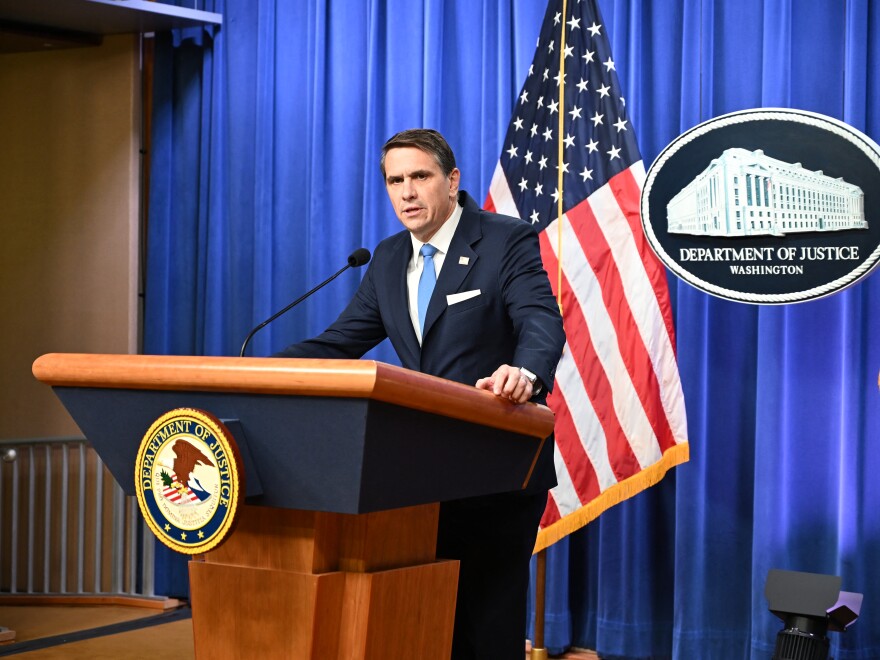
Todd Blanche, the No. 2 official at the Department of Justice, will lead the department on an acting basis. In a public statement, Blanche credited Bondi’s tenure and pledged continuity in enforcement priorities.
“Pam Bondi led this Department with strength and conviction and I’m grateful for her leadership and friendship,” Blanche wrote. “Thank you to President Trump for the trust and the opportunity to serve as Acting Attorney General. We will continue backing the blue, enforcing the law, and doing everything in our power to keep America safe.”
For now, “acting” is the operative word. Multiple outlets reported that Trump’s internal discussions included not only Blanche, but also Environmental Protection Agency Administrator Lee Zeldin as a potential permanent replacement. That detail matters because it signals a familiar Washington reality: the immediate handoff is about continuity, but the longer-term pick is about direction.
Why this matters
The Constitution does not create an “independent Justice Department.” It creates an executive branch, vests executive power in a president, and expects that law will be faithfully executed. Everything else, including how much day-to-day insulation prosecutors have from presidential politics, is mostly structure, norms, and statute.
That is why attorney general turnovers are never just staffing stories. They are separation-of-powers stories. The attorney general is both the president’s chief law officer and the country’s top prosecutor, a dual role that works best when each half restrains the other. When that balance fails, you get enforcement power that looks personal rather than institutional.
Here is the tension in plain language:
- The president can hire and fire executive officers, including an attorney general.
- The public expects prosecution decisions to follow evidence and law, not the emotional weather of political loyalty.
- Congress can investigate and legislate, but it cannot run prosecutions directly.
- Courts can review cases, but they cannot supervise the political motivations behind every charging decision.
So when an attorney general is removed amid frustration about not targeting political opponents aggressively enough, the legal question is not “Is it allowed?” The more serious constitutional question is “What kind of executive branch are we building when enforcement priorities are discussed as a loyalty metric?”
Epstein pressure
Bondi became the administration’s legal face during repeated public flare-ups over releases tied to the Jeffrey Epstein investigative files. Those releases, including versions with significant redactions, angered lawmakers across party lines and fed the perception that powerful people were being protected from scrutiny.
Trump has reportedly grown frustrated with Bondi for failing to target his political opponents enough. Another potential cause is her handling of the Epstein files, with her public claims about the status and handling of the Epstein materials at times contradicting those of other administration officials, including Trump.
Complicating matters further, Bondi is scheduled to give a deposition on Capitol Hill later this month after the House Oversight Committee voted to subpoena her in connection with the Justice Department’s Epstein-related handling.
Blanche’s defense
Even before he was tapped to take the reins on an acting basis, Blanche had been publicly pushing back on the idea that Bondi’s handling of the Epstein controversy had alienated Trump’s base. He said he does not believe Trump’s supporters feel betrayed by Bondi or her department.
“What’s happening now is Democrats in Congress and some senators and a few Republicans … are making this their entire existence,” Blanche said. “That’s not MAGA.”
In other words, Blanche is stepping in while also trying to narrow the political meaning of the dispute. That is not incidental. Acting attorneys general do not just inherit case dockets. They inherit narratives, and sometimes they are tasked with containing them.
Praise and subtext
Trump’s public tone was complimentary. Just a day earlier, the White House provided a statement from Trump calling Bondi “a wonderful person” who was “doing a good job.” Then came the firing and the announcement of her transition to the private sector.
This is a familiar political pattern: praise in public, replacement in practice. Constitutionally, it changes nothing about the president’s authority to remove an attorney general. But institutionally, it changes how Americans interpret the Justice Department’s posture. A department that appears to pivot based on political satisfaction signals a different kind of relationship to the rule of law than one that pivots based on internal findings, professional disagreements, or confirmed misconduct.
What to watch
The immediate question is administrative: how Blanche will manage ongoing litigation, federal enforcement priorities, and the department’s posture toward politically sensitive investigations. The deeper question is civic: whether Americans can still recognize the line between “the president’s Justice Department” and “the United States Department of Justice.” The Constitution depends on that distinction, even when it is enforced more by norms than by text.
- Acting leadership choices: personnel shifts inside DOJ often foreshadow which cases will be emphasized and which will be de-prioritized.
- The permanent pick: whether Trump settles on Blanche, turns to Lee Zeldin, or chooses someone else will shape how the department projects independence, loyalty, or both.
- Congressional oversight: Bondi’s scheduled deposition keeps the Epstein controversy alive even after her exit.
- Long-term precedent: frequent, politically charged turnovers make it harder for DOJ to credibly claim prosecutorial independence, even when its lawyers are acting in good faith.
Presidents have always wanted loyal attorneys general. The constitutional experiment is whether the country can survive that desire without converting law enforcement into a political reward system. Bondi’s firing and Blanche’s elevation is the kind of moment that tests how sturdy our unwritten guardrails really are.