
Palestinian Activist Arrested Amid Deportation Escalation
The Trump administration’s increased deportation of student activists is highlighted by the arrest of Mahmoud Khalil at Columbia University. Khalil, a Palestinian activist with a green card, was targeted by ICE agents acting on an executive order aimed at those engaged in “antisemitic harassment.” Despite his legal permanent resident status, Khalil’s green card was invalidated.
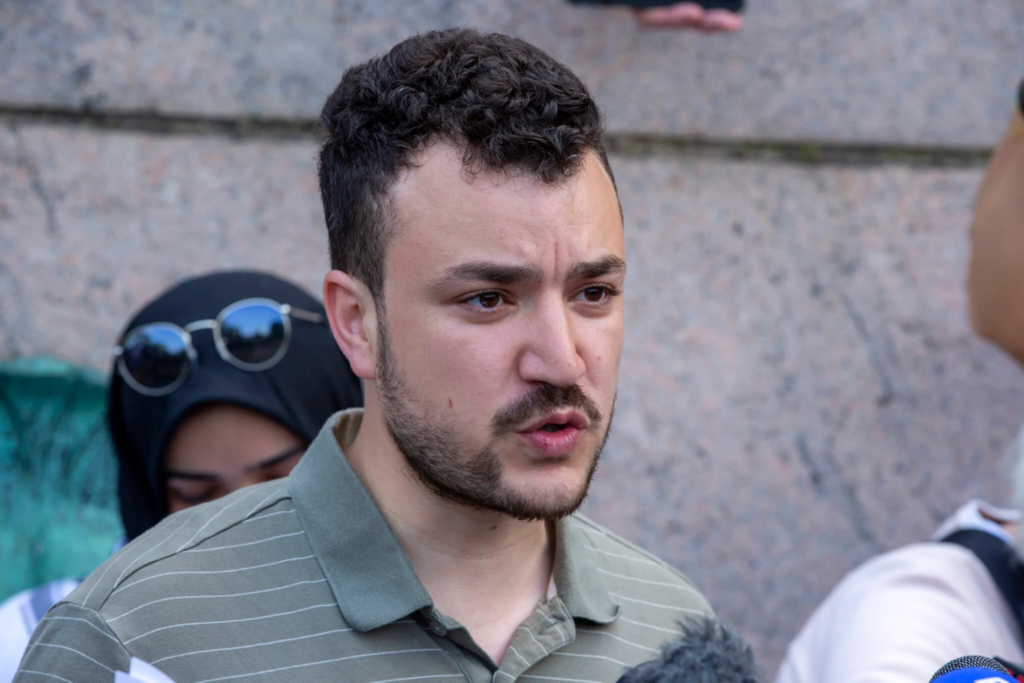
The arrest unfolded as follows:
- ICE agents entered without a warrant
- They ignored attorney Amy Greer’s attempts to intervene
- Khalil’s wife’s efforts to gather documents were unsuccessful
- Initially reported to be in New Jersey, Khalil was later found in a Louisiana detention center
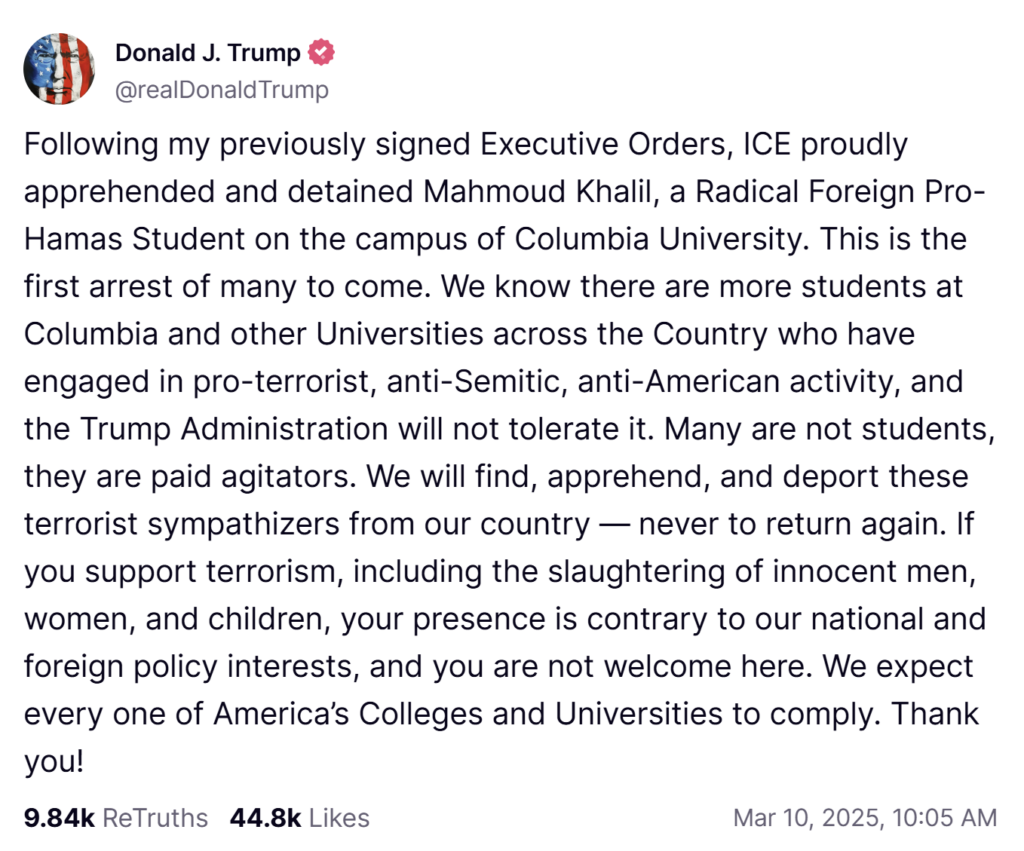
President Trump cited this arrest as the first of many removals to address “terrorist sympathizers.” Advocacy groups have criticized these actions as misuse of immigration law and an infringement on free speech rights.
Columbia officials stated that federal agents require a judicial warrant to access non-public campus areas, noting the unprecedented nature of targeting legal permanent residents without formal charges.
Reactions and Perspectives
Khalil’s detention has sparked diverse reactions, reflecting divisions in American discourse on immigration, free speech, and Middle Eastern conflicts:
- Progressive leaders: Question the constitutionality of the government’s actions
- Democratic Rep. Pramila Jayapal: Emphasized potential threat to First Amendment rights
- Jewish organizations: Offered varied perspectives
- Anti-Defamation League: Praised the administration’s stance on antisemitism while cautioning about maintaining due process
- Pro-Palestinian and progressive groups: View the arrest as an attempt to silence dissent
- Academic figures: Express concern about impact on international students’ trust in the U.S. educational system
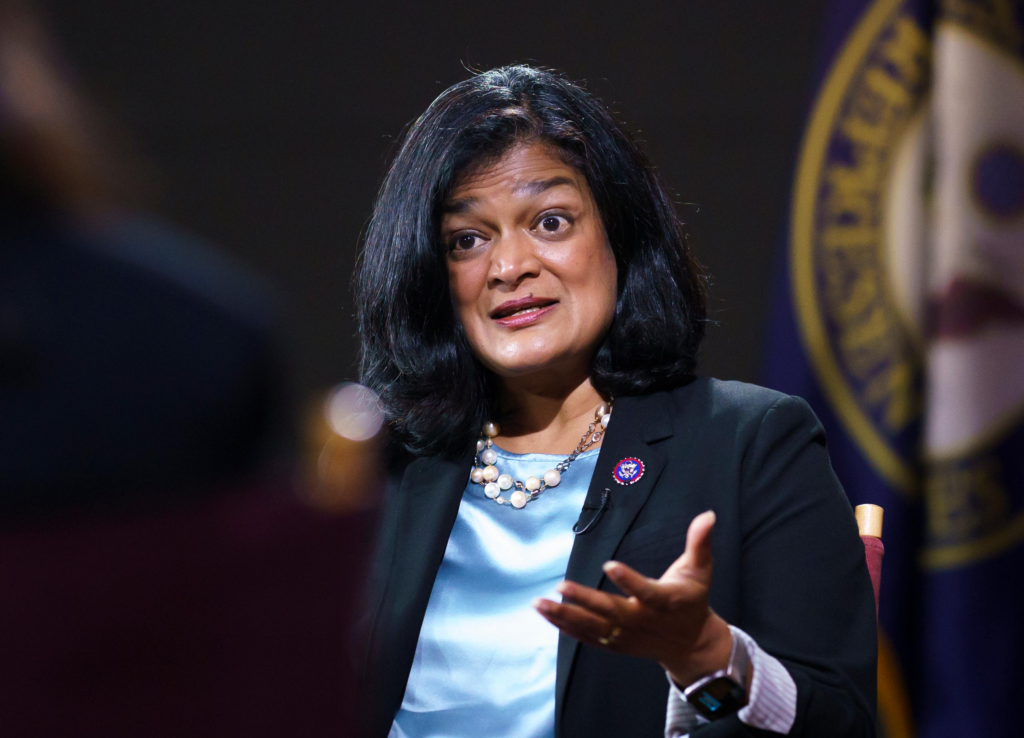
Khalil’s attorney, Amy Greer, continues to challenge the detention’s legality, underscoring the complexities of immigration law intersecting with free expression and political activism. Free speech advocates argue that this case sets a concerning precedent for curtailing participation in democratic processes based on ideological stance.
"This has the appearance of a retaliatory action against someone who expressed an opinion the Trump administration didn't like," said Camille Mackler, founder of Immigrant ARC.
Key questions emerge:
- How might this case influence future discussions on balancing security and liberty in the United States?
- What are the potential long-term effects on academic freedom and political expression on college campuses?
Rep. Alexandria Ocasio-Cortez strongly condemned the arrest of Mahmoud Khalil, calling it a direct assault on constitutional rights. She argued that the government’s actions—detaining a lawful permanent resident without clear justification, denying him access to legal counsel, and allegedly using immigration enforcement as a tool for political retribution—represent a dangerous erosion of due process and civil liberties.
“You are shredding the Constitution,”
she declared, warning that weaponizing immigration laws to silence dissent sets a dangerous precedent. Ocasio-Cortez’s comments underscore growing concerns among progressive lawmakers that the administration’s approach to campus activism and protest is veering into authoritarian overreach.
Trump’s Executive Order and Implications
President Trump’s executive order, which led to Mahmoud Khalil’s arrest, aims to address perceived antisemitism and national security threats. The order is based on federal statutes allowing deportation of foreign nationals allegedly supporting terrorist entities like Hamas.
Authorities have interpreted Khalil’s involvement in Columbia University’s protests against Israel as endorsing such activities. Trump’s social media statements labeling activists as “terrorist sympathizers” broaden the criteria for determining threats and enforcing deportations.
This action impacts educational institutions nationwide, potentially chilling free expression. International students may hesitate to engage in political dialogue due to fear of immigration consequences. The order raises questions about legal and constitutional protections for permanent residents, inviting scrutiny of the balance between security imperatives and civil liberties.
The implications for immigration law are significant, potentially redefining the immigrant experience in the United States. This executive order represents a pivotal moment in immigration jurisprudence, extending beyond individual cases like Khalil’s.
Critical considerations:
- How might this shift in policy affect the fundamental principles of our constitutional republic?
- What safeguards should be in place to ensure that national security measures do not unduly infringe on the rights guaranteed by our Constitution?
- Associated Press. Federal immigration authorities arrest Palestinian activist at Columbia University. 2024.
- Department of Homeland Security. Statement on the arrest of Mahmoud Khalil. 2024.
- Rubio M. Twitter post on revoking visas of Hamas supporters. 2024.
- Mackler C. Interview on implications of Khalil’s arrest. Immigrant ARC. 2024.