
The U.S. Constitution
Archival records, profiles, and educational resources since 1995.
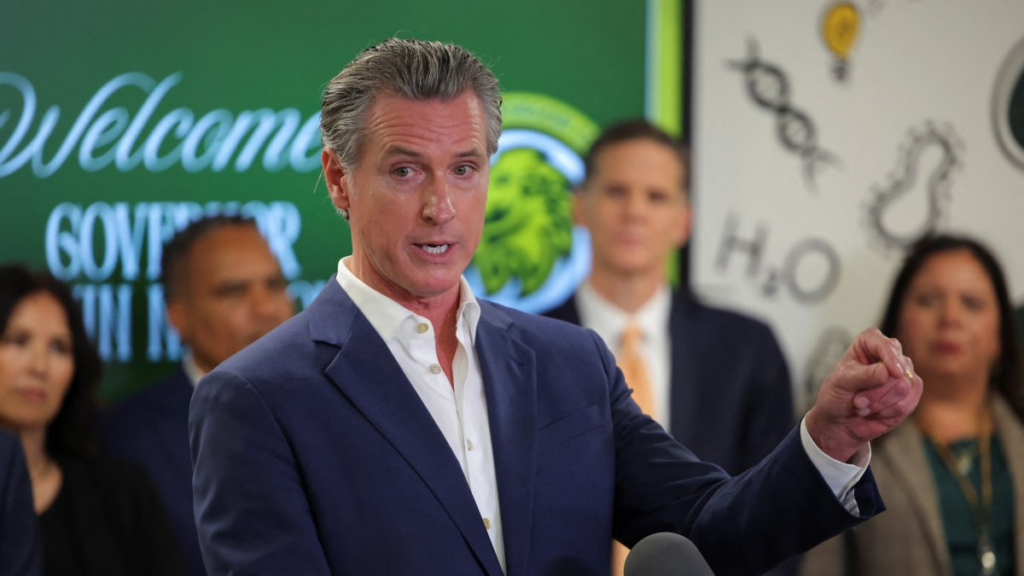
California Sues Trump Over National Guard Deployment Amid L.A. Unrest
California Governor Gavin Newsom and Attorney General Rob Bonta have filed a lawsuit against the Trump administration, challenging the federalization and deployment of the California National Guard to Los Angeles without state consent. The legal action follows President Donald Trump’s decision to...
Read more →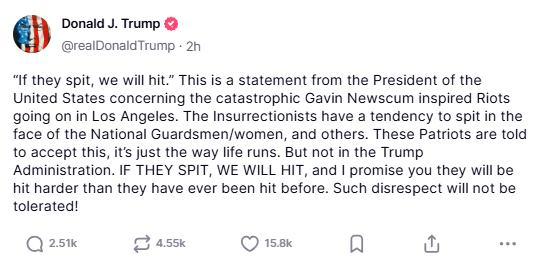
Trump Remark Sparks Constitutional and Ethical Controversy Amid LA Protests
In the wake of escalating protests in Los Angeles against federal immigration raids, President Donald Trump’s recent statement – “They spit; we hit” – has ignited a firestorm of criticism and raised profound questions about the balance between federal authority and civil liberties. On Sunday,...
Read more →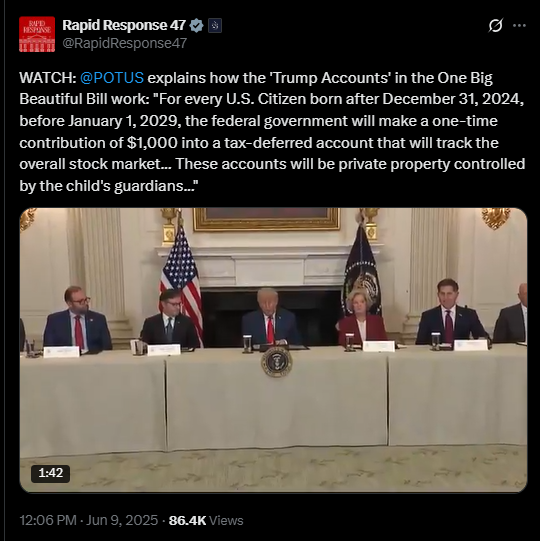
ICYMI: One-Time $1k Contribution For Americans Born 1/1/25
President Donald J. Trump has never been one for small gestures. And the so-called “Trump Accounts” are no exception. Framed as the emotional centerpiece of the “One Big Beautiful Bill,” these newborn investment accounts promise a $1,000 stake in the U.S. stock market for every child born during...
Read more →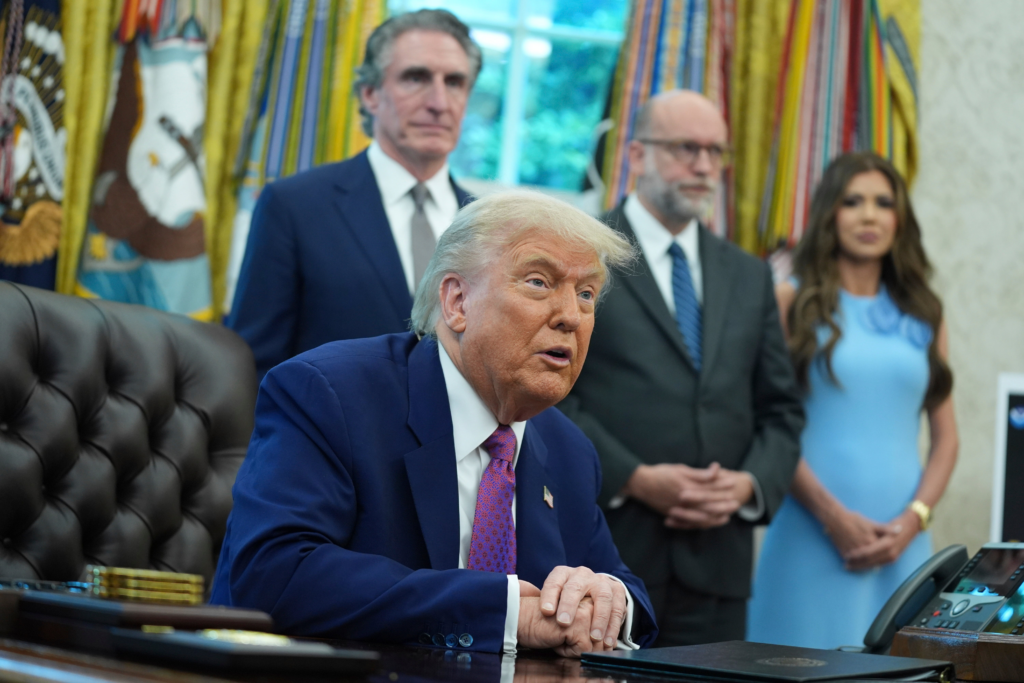
Should you be jailed for burning the American flag?
President Donald Trump’s denunciation of anti-ICE protesters in Los Angeles as “animals” who should face an “automatic” one-year jail sentence for burning the American flag is not merely the heated rhetoric of a president confronting civil unrest. It is a direct and frontal challenge to bedrock...
Read more →
Judge Denies Newsom’s Bid to Block Trump’s Military Deployment to Los Angeles
A federal judge on Tuesday rejected California Governor Gavin Newsom’s emergency motion to halt President Trump’s deployment of U.S. military forces in Los Angeles, escalating a dramatic standoff between state and federal authority over immigration enforcement and public protest response. U.S....
Read more →
How Past Presidents Used the Insurrection Act And What The Constitution Says About It
The recent deployment of National Guard troops to Los Angeles and discussions about potential Marine involvement have brought to the forefront critical questions about the constitutional limits of federal military power within the United States. To grasp the significance of these events, it’s...
Read more →
Marines Ordered to Los Angeles as Anti-Immigration Riots Escalate: A Moment of Force, a Test of Federal Power
In a move that has stunned observers and reignited fierce debate over federal authority, the Pentagon confirmed Monday that 700 U.S. Marines from Twentynine Palms are deploying to Los Angeles to reinforce security amid days of violent protests following mass ICE raids. Their mission: protect...
Read more →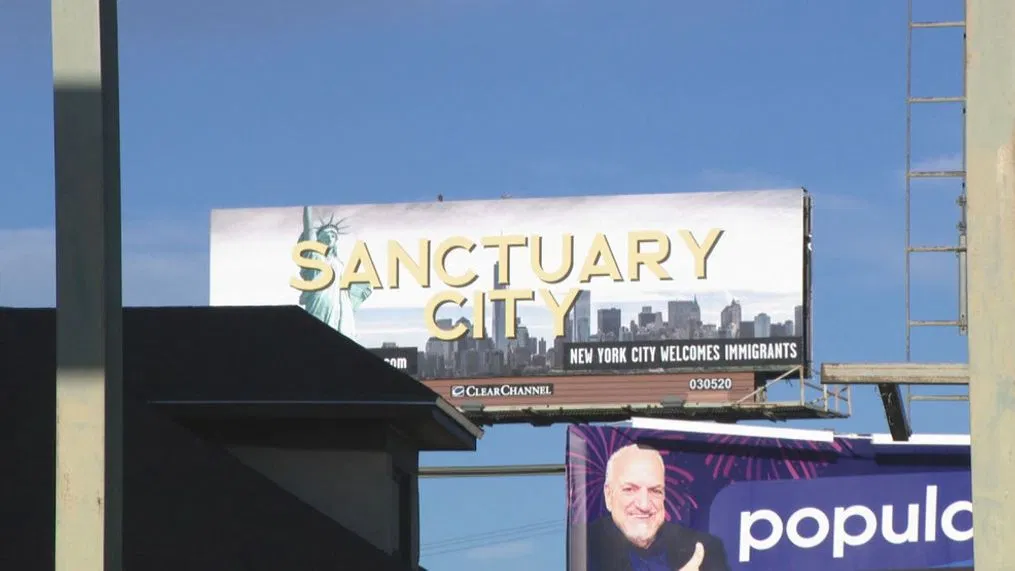
Why Some Democrats Joined Republicans in a Sanctuary City Crackdown
A surprising vote in the House of Representatives has stirred up Washington — and it’s not the usual partisan divide. This week, a handful of Democrats crossed party lines to support two Republican-led bills cracking down on so-called “sanctuary cities,” jurisdictions that limit cooperation with...
Read more →
Both Migrants And ICE Officers In Perilous Condition After Botched Deportation
A startling court filing has Washington buzzing — and it’s raising tough questions about immigration, safety, and the rule of law. The Trump administration’s attempt to deport eight migrants to South Sudan, a nation plagued by violence, has landed both the migrants and U.S. Immigration and Customs...
Read more →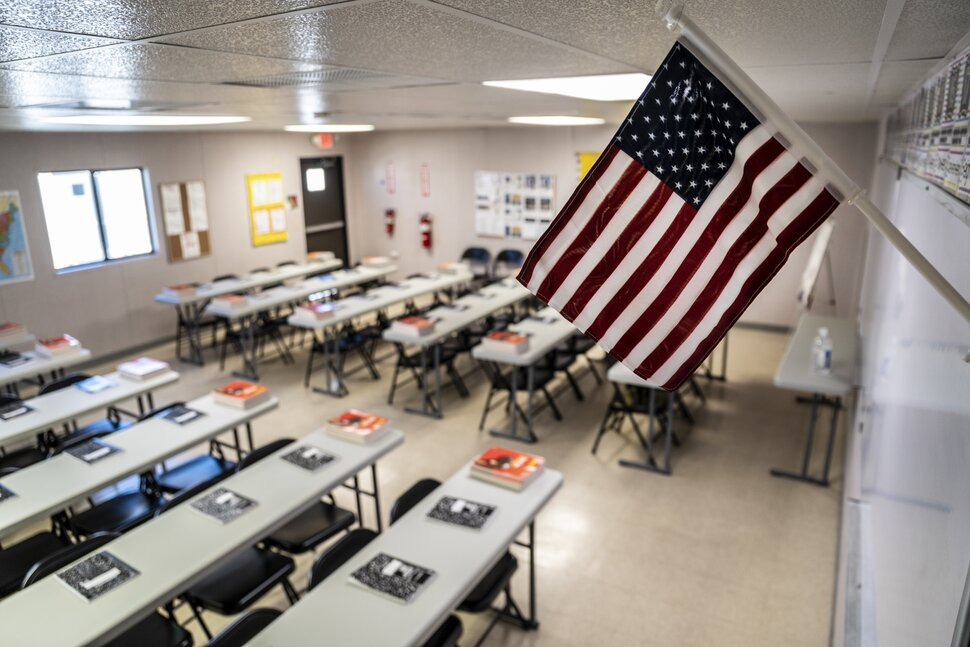
Will SCOTUS Allow Trump’s Push to Dismantle Education?
A surprising clash over the Department of Education is grabbing attention — and it’s not just about schools. The Trump administration is asking the Supreme Court to overturn a judge’s order that’s stopping their plan to drastically cut the agency responsible for student loans, special education,...
Read more →
Back in the U.S., Abrego Garcia faces charges
Kilmar Abrego Garcia’s unlawful deportation to El Salvador’s brutal CECOT prison, followed by his return to face criminal charges in the United States, has exposed a chilling breach of constitutional duty. This case—where a court order was brazenly ignored—demands we ask: If the executive can flout...
Read more →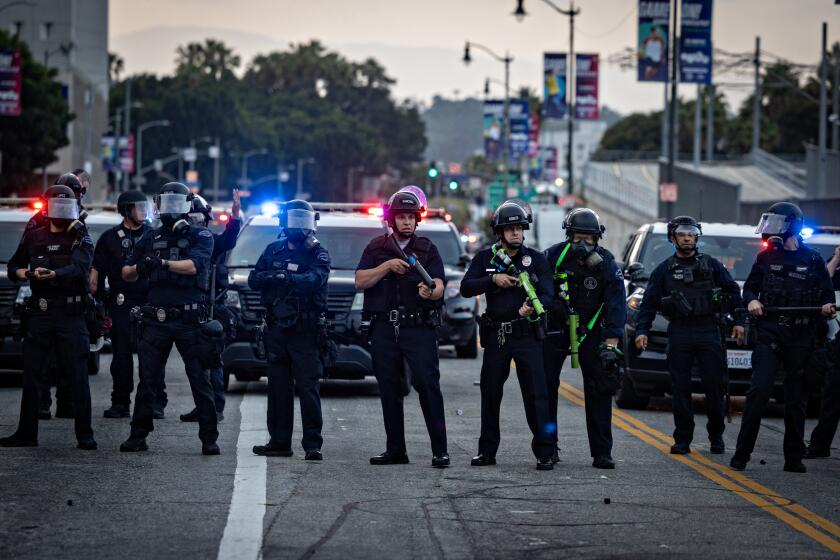
Federal Officials Respond With Arrest Threats And Marine Intervention To LA Protests
Defense Secretary Pete Hegseth’s threat to unleash Marines on Los Angeles streets, paired with border czar Tom Homan’s warning to arrest Governor Gavin Newsom and Mayor Karen Bass, has thrust the Constitution into a perilous spotlight. This isn’t mere posturing—it’s a brazen challenge to the rule...
Read more →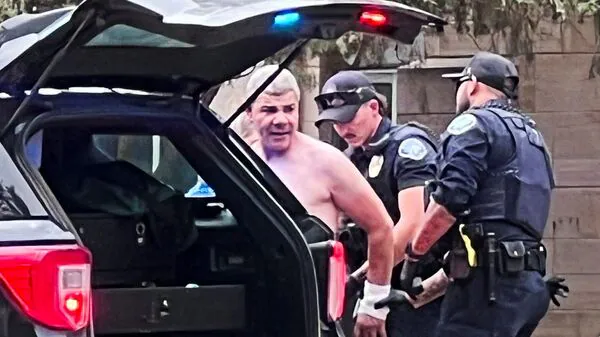
Visa Violations No Bar as Biden-Appointed Judge Shields Suspect’s Family from Deportation
A federal judge’s emergency decree, halting the deportation of the Boulder firebombing suspect’s family, is not merely a procedural interruption. It is a stark illumination—a flashpoint exposing the volatile nexus of judicial discretion, national security anxieties, immigration law’s complexities,...
Read more →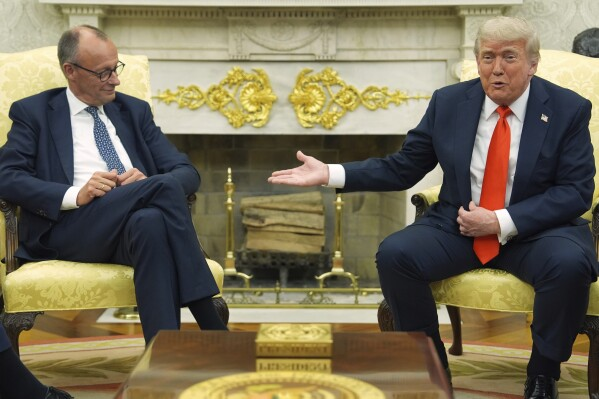
Merz Meets Trump: A Diplomatic Tightrope in the Oval Office
June 5, 2025 — Washington, D.C. In a high-stakes meeting that underscored the complexities of modern transatlantic relations, German Chancellor Friedrich Merz met with U.S. President Donald Trump in the Oval Office. This inaugural visit for Merz since assuming office on May 6 was marked by...
Read more →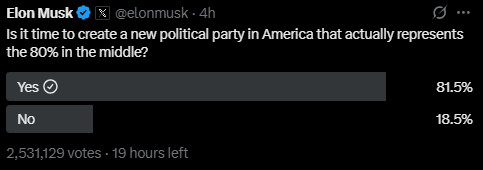
The Middle Rises: Musk Suggests Creating New Political Party
Elon Musk struck a nerve with America when he tweeted a deceptively simple question: “Is it time to create a new political party in America that actually represents the 80% in the middle?” Within hours, over 2.5 million people had voted in his X poll. More than 81% said yes. This wasn’t just a...
Read more →
The Last Time a New Party Won: What Lincoln’s Rise Tells Us About Musk’s Third-Party Moment
In the mid-19th century, the United States stood at a pivotal juncture. The nation’s expansion westward reignited fierce debates over slavery, states’ rights, and federal authority. Amidst this turmoil, a new political force emerged—the Republican Party—rooted in constitutional principles and a...
Read more →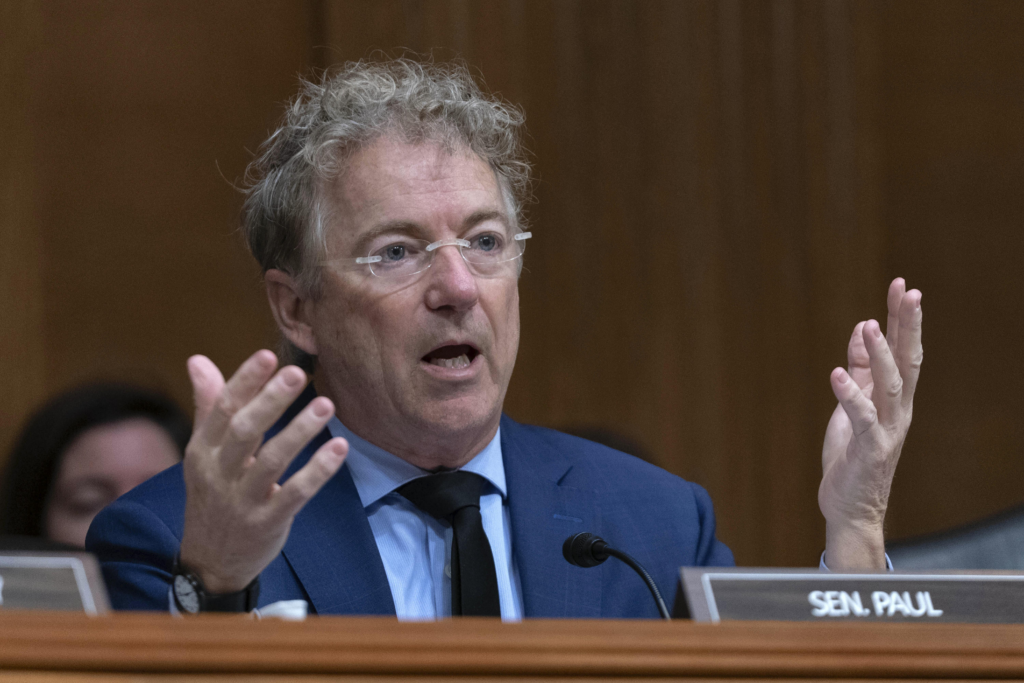
Rand Paul Opposes Debt in Trump’s Bill
Sen. Rand Paul stands firm against the One Big Beautiful Bill Act’s proposed $5 trillion debt ceiling hike. For Paul, this isn’t just another legislative detail; it’s a philosophical battleground. He views it as a departure from core conservative principles. "We have never raised the debt ceiling...
Read more →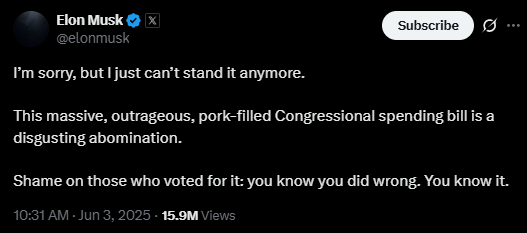
Musk’s Final Salvo: Ex-DOGE Chief Slams Trump’s Spending Bill as ‘Disgusting Abomination’
Just hours after officially stepping down as the head of the Department of Government Efficiency (DOGE), Elon Musk made it clear he wasn’t going quietly. In a blistering Tuesday afternoon post on X, Musk condemned President Trump’s flagship spending bill — dubbed the “big, beautiful bill” — calling...
Read more →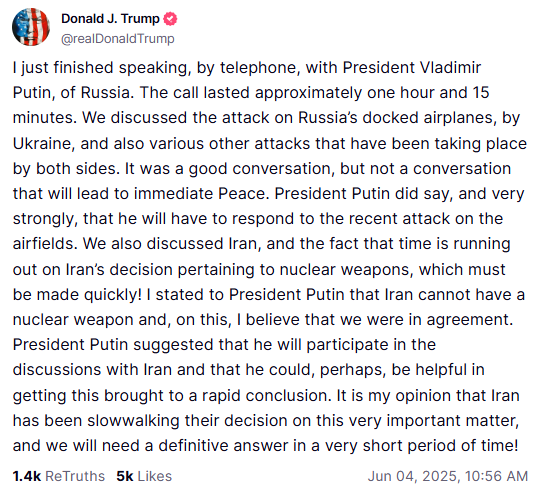
Putin Promises Response to Ukrainian Drones
President Donald Trump and Russian President Vladimir Putin engaged in a 75-minute phone call, focusing primarily on the ongoing situation in Ukraine. Trump shared details of the conversation on Truth Social , stating that while the discussion was thorough, it would not lead to immediate peace. The...
Read more →
Judge Blocks Trump’s Trans Ban in Prisons, Cites Eighth Amendment
U.S. District Judge Royce Lamberth has issued a ruling that mandates the Bureau of Prisons continue providing gender-affirming care to transgender inmates, defying an executive order from President Donald Trump. This decision centers on the continuation of hormone therapy and social accommodations,...
Read more →