
The geopolitical tectonic plates of the Middle East shifted violently on Saturday as a barrage of “heavy and pinpoint” ordnance turned the skyline of Tehran into a tapestry of fire and smoke.
What began as a series of failed diplomatic maneuvers earlier in the week has culminated in “Operation Epic Fury”—a joint U.S.-Israeli military campaign that has reportedly achieved what decades of sanctions could not.
By Saturday afternoon, the highest seat of power in the Islamic Republic sat empty, buried under the rubble of a secure compound that was once thought to be untouchable.
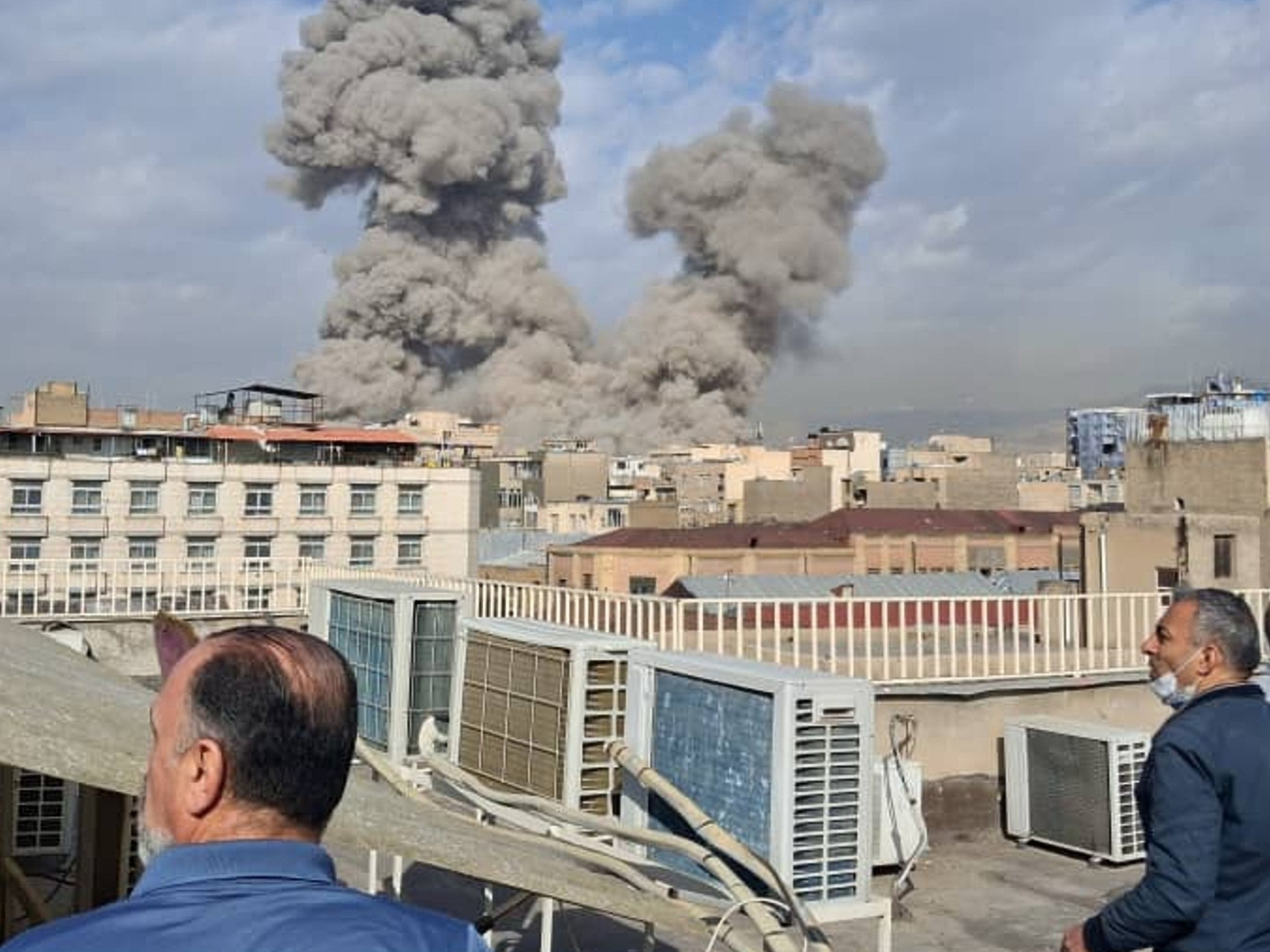
The Midnight Salvo: Operation Epic Fury
The escalation began in the early hours of February 28, 2026. Following a final, unsuccessful round of indirect nuclear negotiations between Trump special envoy Steve Witkoff, Jared Kushner, and Iranian officials, the “America First” administration pivoted from the boardroom to the war room. At approximately 2:30 a.m. ET, President Trump took to social media to announce the commencement of “massive and ongoing” combat operations aimed at “eliminating imminent threats.”
Within minutes, reports of explosions began to pour in from across Iran. Israeli Defense Minister Israel Katz declared a nationwide 48-hour state of emergency as the Israel Defense Forces (IDF) and the U.S. military launched coordinated strikes. While the Pentagon initially characterized the mission as a “neutralization” of missile and drone launch sites, the focus quickly shifted to the nerve centers of the Iranian regime.
By midday, satellite imagery confirmed significant damage to the Supreme Leader’s compound in central Tehran. The strikes did not stop at military infrastructure; they targeted the very architects of the Islamic Republic’s regional influence.
The Proclamation: “Khamenei is Dead”
For hours, the fate of the 86-year-old Ayatollah Ali Khamenei remained a subject of intense global speculation. Iranian state media initially claimed the Supreme Leader was “safe and sound,” but the narrative fractured as Israeli officials began briefing the media that a body had been recovered from the debris of the targeted compound.
The definitive word came at 1:37 p.m. PT, when President Trump issued a blunt proclamation that bypassed traditional diplomatic channels.
“Khamenei, one of the most evil people in History, is dead,” the President wrote. He characterized the death as “Justice for the people of Iran” and for the “Great Americans” harmed by the regime over the last four decades.
The President’s message was not merely an announcement of a casualty; it was an invitation for a national uprising. He urged the Iranian people to “take back their Country,” calling this the “single greatest chance” for the populace to reclaim their destiny.
Most strikingly, the President extended a hand—wrapped in a velvet glove of steel—to the Iranian security forces.
“We are hearing that many of their IRGC, Military, and other Security and Police Forces, no longer want to fight,” Trump claimed, offering a stark ultimatum: “Now they can have Immunity, later they only get Death!”
How We Got Here: Article II and Forever Wars
From a constitutional standpoint, the events of February 28 represent the most aggressive expansion of executive war powers in the 21st century. As a constitutional watchdog, one must look past the smoke of Tehran to the legal framework—or lack thereof—that allowed for “Operation Epic Fury.”
Historically, the War Powers Resolution of 1973 was intended to prevent the President from committing the nation to conflict without a clear congressional mandate. However, the Trump administration appears to be operating under a “preemptive defense” doctrine, asserting that the imminence of an Iranian nuclear breakout or a planned strike on U.S. regional assets grants the President unilateral authority under Article II.
- The 2020 Precedent: Much like the strike on Qasem Soleimani, the 2026 operation targets a high-ranking state official, but on a much larger scale, aiming for the total decapitation of a foreign government.
- The “America First” Paradox: For a leader who campaigned on ending “forever wars,” the transition to “Epic Fury” is a jarring pivot. The administration argues that this is not a new war, but a “decisive conclusion” to a decades-long threat.
- The Sovereign Threshold: By striking the sovereign capital of a recognized state to effect “regime change,” the administration has stepped into uncharted legal territory that traditionally requires a formal Declaration of War from the Legislative Branch.
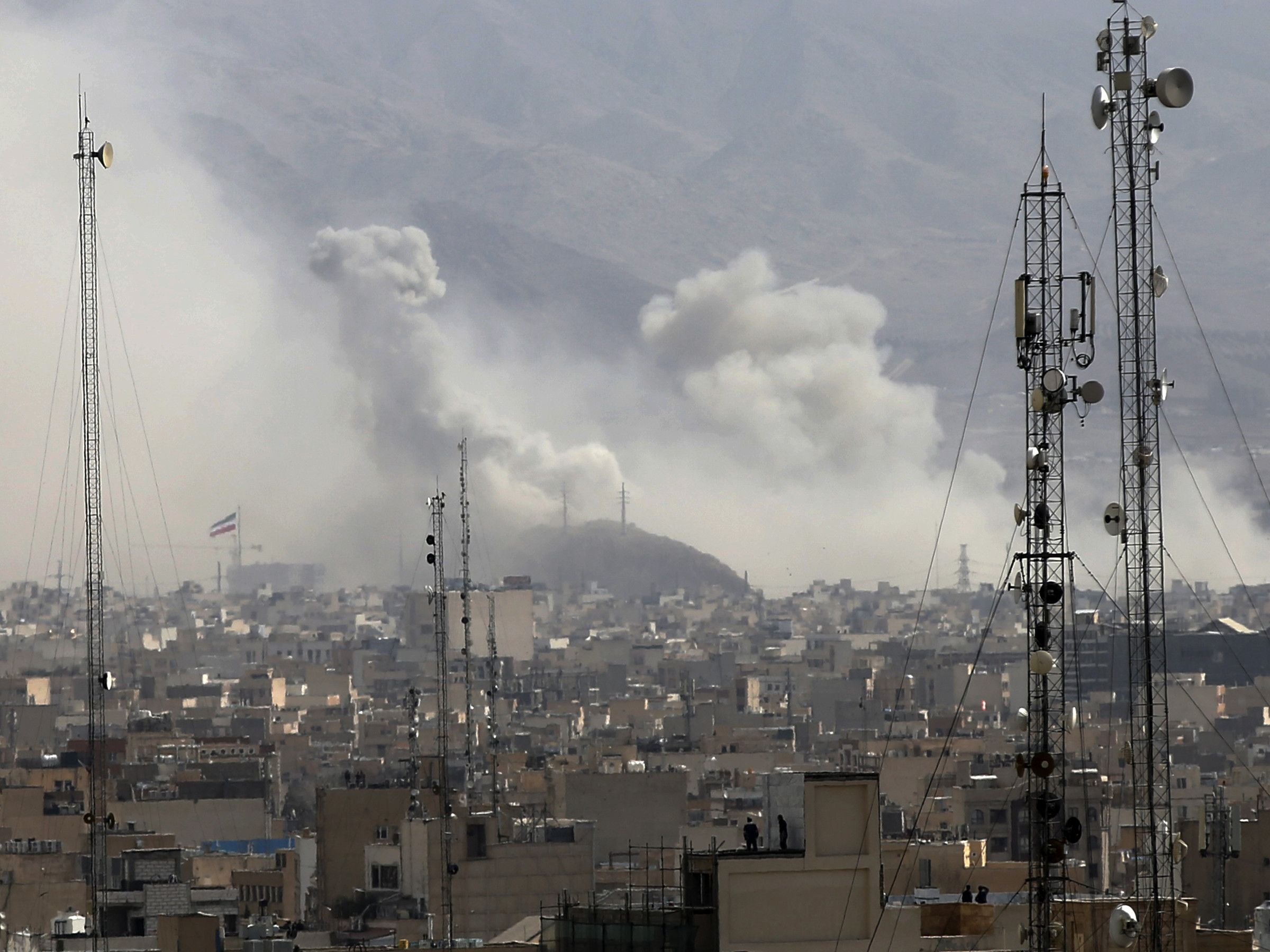
The Chaos of Retaliation and the Humanitarian Cost
The “pinpoint bombing” described by the President has not been without its tragedies. In southern Iran, local officials reported that a girls’ school was struck during the initial barrage, with death tolls ranging from 53 to 85 students. While U.S. Central Command stated they are “looking into” the reports, the incident has already become a rallying cry for the remnants of the Iranian leadership.
Iran’s response was swift and regional. Ballistic missiles and swarms of drones were launched toward Israel and U.S. installations across the Gulf.
- Bahrain: The U.S. Navy’s Fifth Fleet service center in Manama was reportedly hit.
- UAE & Dubai: Blasts were heard over Dubai, with debris from intercepted missiles reportedly killing a migrant worker.
- The Tel Aviv Front: A woman in central Israel was confirmed dead following a heavy barrage of Iranian missiles that bypassed the “Iron Dome” interceptors.
The regional airspace has effectively become a no-fly zone. Thousands of passengers remain stranded in airports from Kuwait to Qatar, and global oil markets are bracing for a catastrophic shock as the Strait of Hormuz—the world’s most vital energy artery—faces the prospect of a total blockade.
The Ghost of 1953 and 1979
History is a heavy presence in the streets of Tehran today. To understand the gravity of the President’s call for an uprising, one must remember the scars of the 20th century.
- 1953 (Operation Ajax): The CIA-backed coup that toppled Mossadegh. This remains the “original sin” in the eyes of Iranian nationalists, fueling the deep-seated distrust of American intervention.
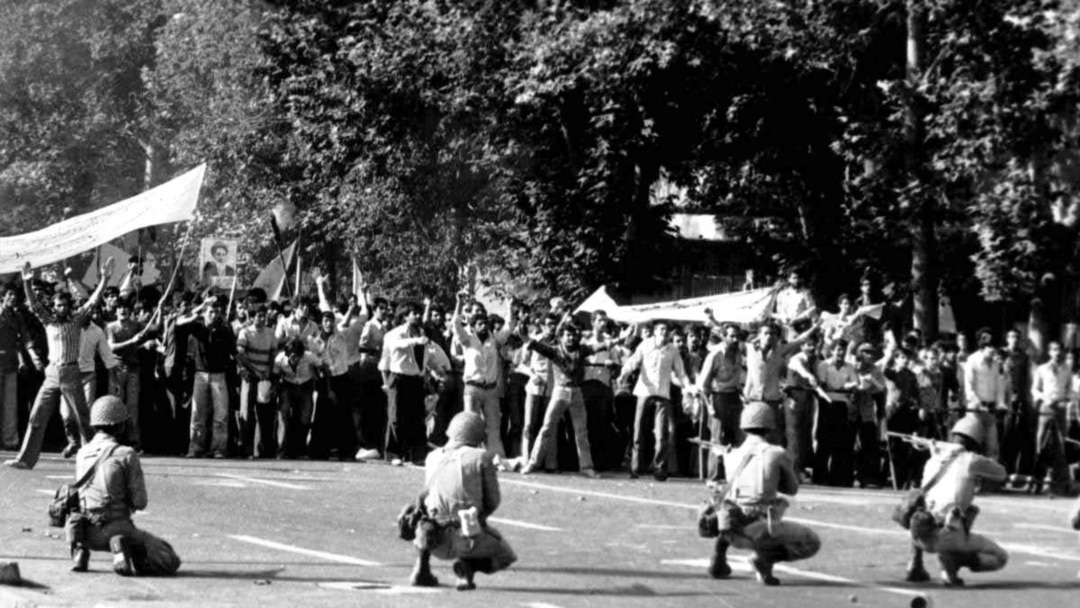
- 1979 (The Islamic Revolution): The birth of the current theocratic structure. Khamenei has been the ultimate arbiter of this vision since 1989. His death removes the literal and symbolic bridge to the original revolution.
- 2026 (Operation Epic Fury): Unlike previous interventions, this is not a covert operation. It is a high-kinetic, overt military campaign.
The administration’s hope that the IRGC will “peacefully merge with the Iranian Patriots” relies on a belief that the regime’s internal foundations have eroded to the point of collapse. However, history warns that a leadership vacuum in a nation as complex as Iran often invites a power struggle between ultraconservative remnants and a fragmented opposition.
Conclusion: A Middle East in Flux
As the sun sets over Tehran, the “uninterrupted” bombing campaign promised by President Trump continues. The objective, he claims, is “PEACE THROUGHOUT THE MIDDLE EAST AND, INDEED, THE WORLD!” But for now, the world is holding its breath.
The death of Khamenei marks only the second leadership transition in the history of the Islamic Republic. If confirmed, the absence of a clear successor—combined with a massive U.S. and Israeli military presence on the border—creates a scenario with no certain outcome.
While the tactical success of the strike is undeniable, the constitutional and regional precedents set today will reverberate for generations. The President has drawn a line in the sand with “heavy and pinpoint” fire. Whether that fire clears the path for a new democracy or ignites a broader regional conflagration is a question that Saturday’s bombardment has yet to answer.