
Americans do not need celebrities to tell them what a monarchy is. We wrote our national origin story by rejecting one. But when famous voices show up at mass rallies, they do something the Constitution cannot do by itself. They make a civics argument loud enough to compete with everything else in modern life.
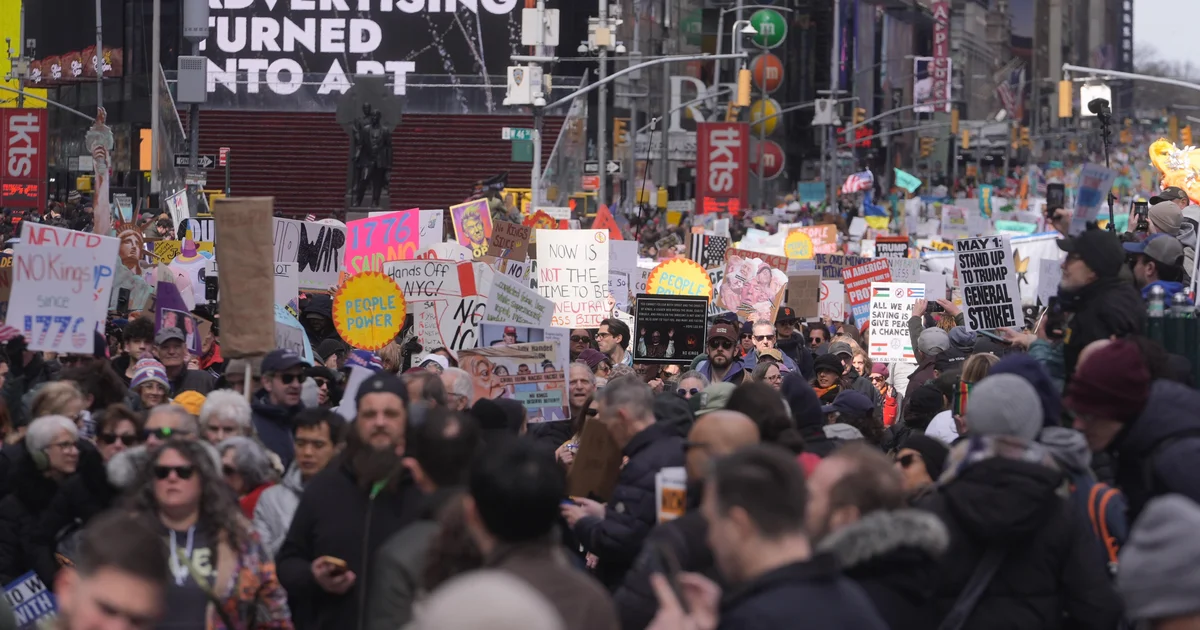
That is what happened in the third round of “No Kings” demonstrations, a nationwide day of marches that pulled public figures into a movement with concrete, current triggers: anger over aggressive ICE tactics, alarm over what many see as a disregard for constitutional norms, and fresh outrage over rising living costs, some of which stem from the recent war against Iran. The message is still simple. The presidency is not a throne, and constitutional limits are not optional.
Join the Discussion
What “No Kings” means
“No kings” is not just a slogan about personality. It is a constitutional thesis statement.
The United States Constitution is designed around the fear of concentrated power. Article I gives Congress the legislative power. Article II gives the president executive power. Article III gives courts judicial power. That separation is not decorative. It is the system.
So when protesters chant against “kings,” they are not invoking medieval history for fun. They are arguing that executive power must remain bounded by law, checked by other branches, and answerable to the people.
And because the Constitution is a structure, not a mood, the target is not merely any one leader’s style. It is the broader fear that a president can:
- treat enforcement agencies as personal instruments
- use emergency claims as permanent governing tools
- pressure institutions to punish critics
- lean on Congress to look away instead of pushing back
Big marches, basic rights
When actors and musicians step onto a rally stage, it is easy to treat the whole thing as cultural theater. But constitutionally, these gatherings are some of the most classic uses of the First Amendment we have: speech, assembly, petition, and association operating in public view.
This round of protests included roughly 3,000 marches scheduled nationwide, with demonstrations in major U.S. cities and even a protest in London. That scale matters, because large-scale assembly is itself a form of political communication. It tells officials, courts, and neighbors, “This is not fringe. This is public.”
Fonda and the artists
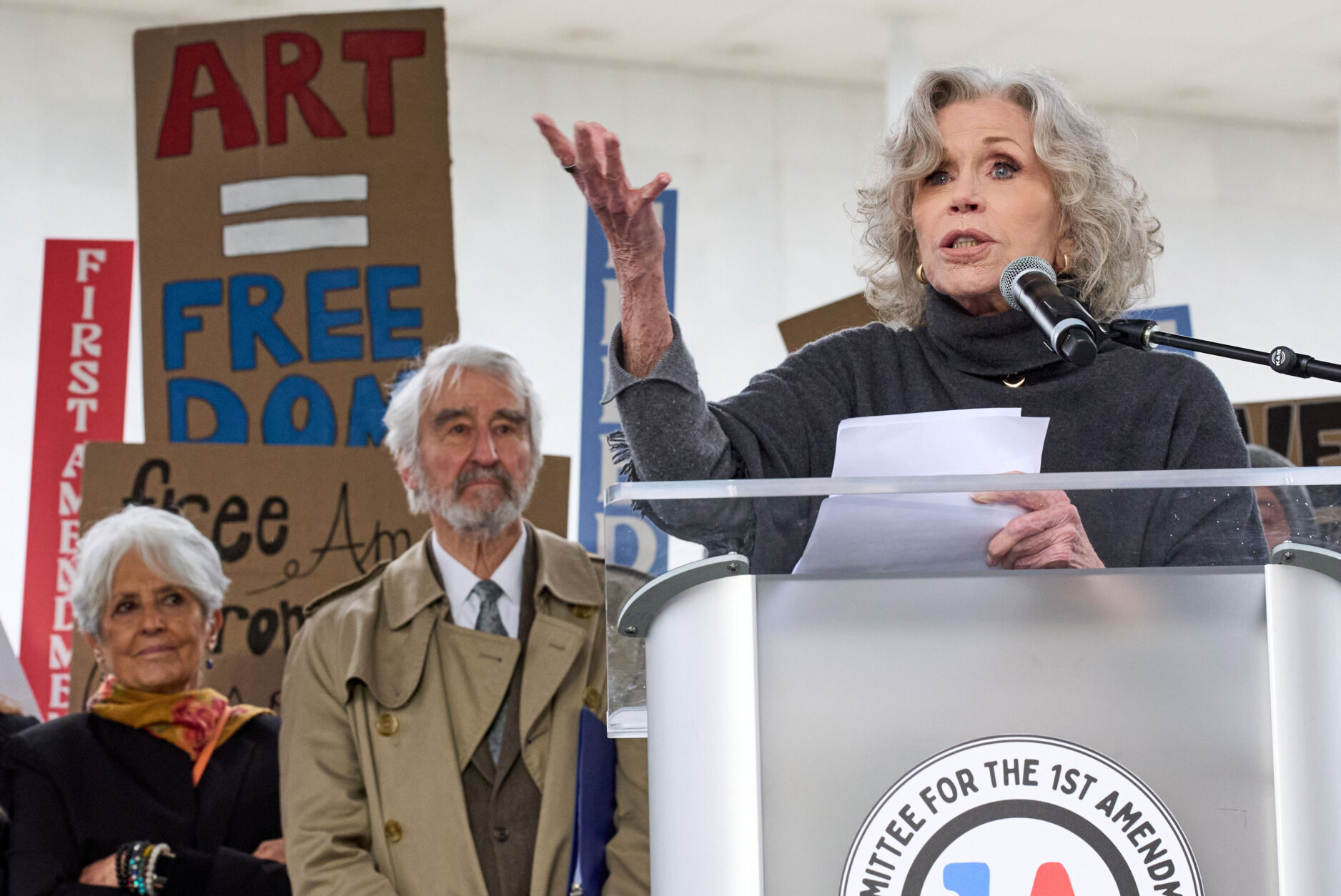
In Washington, D.C., outside the Kennedy Center, an “Artists United for Our Freedom” event brought together performers and speakers under the banner of First Amendment advocacy. It was hosted by Jane Fonda’s Committee for the First Amendment, a detail that matters because it turns celebrity participation into more than attendance. It is organization, infrastructure, and a deliberate claim about what kind of country people are trying to keep.
Joan Baez and singer-songwriter Maggie Rogers performed in front of thousands. Actor Billy Porter and poet Rupi Kaur delivered remarks on stage. Fonda also pushed the rallies into the mainstream through a press blitz the day before, promoting demonstrations that took over cities including San Diego, San Francisco, Philadelphia, Atlanta, Boston, and more.
And the D.C. lineup was not a one-off. Baez, Rogers, and Fonda also appeared at a rally held at the Minnesota State Capitol.
De Niro in New York
In New York City, Robert De Niro appeared among the march leaders alongside Rev. Al Sharpton and New York Attorney General Letitia James. De Niro framed the moment as both civic and urgent, calling the gatherings a “great rallying cry, and hugely successful as millions of us have answered the call.”
Then he made the argument explicit, in language that was not polished for a textbook and was not meant to be.
“It’s time to say no to kings,” he said. “It’s time to say no to Donald Trump. We’ve had enough. No King Trump, no unnecessary wars that rob our resources, sacrifice our brave servicemen and women and slaughter innocents. No corrupt leader enriching himself and the Epstein class buddies. No taking away healthcare from our most vulnerable neighbors, no unaffordable groceries, no unaffordable energy, no unaffordable housing and no inflation at its highest level since COVID. No government masked thugs shooting down our neighbors in the streets. Trump has to be stopped. He can’t do all the fucked up things he’s been doing without the collusion of Congress and the goons in his administration.”
His remarks ran through a list of grievances that blended policy complaints with a deeper fear: that government power is being used in ways that feel untethered from constitutional norms. Whatever one thinks of his politics, his rhetorical move was a distinctly American one. He did not ask for a different king. He asked for no king at all.
Springsteen in Minnesota
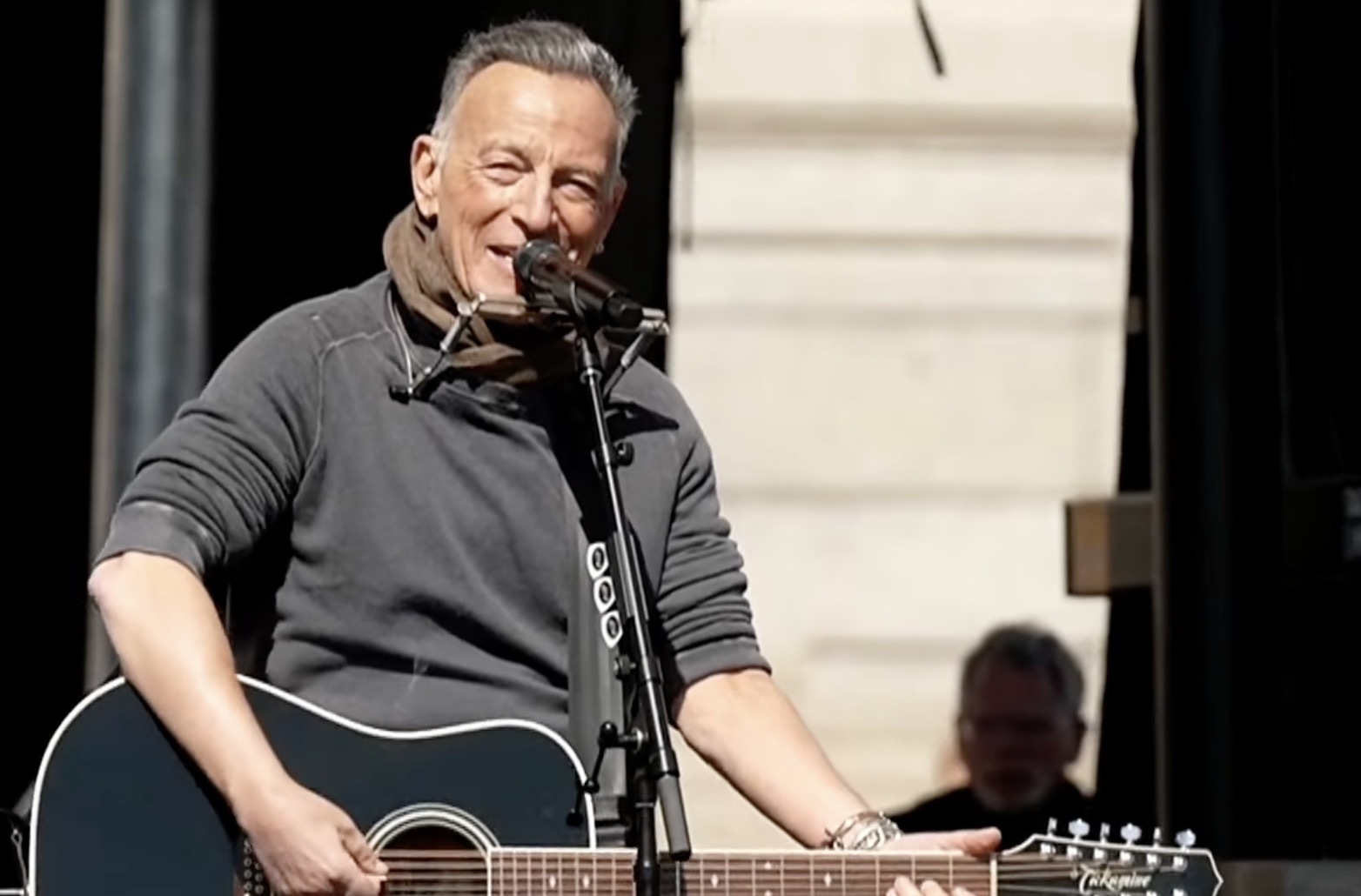
In St. Paul, Minn., Bruce Springsteen performed at one of the country’s largest rallies alongside Sen. Bernie Sanders, Rep. Ilhan Omar, and Gov. Tim Walz. He sang “Streets of Minneapolis,” the song he introduced after the ICE killings of Alex Pretti and Renee Good. That context matters because it makes the rally less abstract. For many people in the crowd, this is not theoretical. It is grief, fear, and memory shaped into public speech.
“This past winter, federal troops brought death and terror to the streets of Minneapolis,” Springsteen told the crowd. “Well, they picked the wrong city. The power and the solidarity of the people of Minneapolis, Minnesota was an inspiration to the entire country. Your strength and commitment told us that this is still America, and this reactionary nightmare and these invasions of American cities will not stand.”
That language flips a familiar accusation on its head. Protesters are often told that dissent is unpatriotic. Springsteen’s claim is the opposite: that protest is part of the American tradition of refusing submission to unaccountable power.
Fonda also appeared at the Minnesota State Capitol rally and read a statement from Becca Good, the wife of Renee Good. “The world now knows that my wife sparkled with sunshine and shone with kindness that is unmatched,” Good said in the statement. “We were robbed of an incredible human. It has made people pause, and take a breath, and have to choose sides. We choose the side of love.”
More than headliners
The celebrity angle can obscure the real point, which is participation. These rallies were not just a stage for a few familiar names. Figures like Bill Nye and M*A*S*H actor Mike Farrell spoke at their respective marches. On social media, Jimmy Kimmel and Jamie Lee Curtis posted about their attendance. The movement’s reach was part of the message: this was not one city’s mood, or one profession’s hobby, or one celebrity’s brand.
Culture as a civic tool
This is where celebrity presence becomes more than a headline. Music and poetry help turn constitutional abstractions into something felt. The Constitution is a legal document, but it survives through culture. People have to believe that rights are worth defending before they will show up to defend them.
Why it resonates now
Millions of Americans attended the previous two iterations of No Kings, the first of which took place in June 2025 and the second in October. Both events were among the largest single-day demonstrations in the country’s history, with people amassing in the streets to voice dissent over aggressive ICE tactics and what they saw as a flagrant disregard of constitutional norms.
Similarly, this round of protests drew on those themes, with people additionally voicing opposition to rising living costs, some of which stem from the recent war against Iran. On paper, those issues do not all live in the same constitutional compartment. But movements are not casebooks. They are coalitions.
People often experience constitutional stress not as a clause being violated, but as a sense that power is being exercised without accountability, transparency, or proportion. The Constitution does not promise that citizens will agree. It promises that the government will be constrained while they disagree. “No kings” is what it sounds like when a portion of the public believes that constraint is slipping.
The celebrity question
Celebrity participation will always provoke skepticism. Are they informed? Are they performative? Are they trying to brand themselves as brave?
Those are fair questions. But the deeper question is more uncomfortable, and more constitutional.
If the only people willing to stand publicly for constitutional norms are entertainers and artists, what does that say about the rest of us, including the institutions designed to check power?
In a republic, the anti-monarchy protest is not a rejection of a crown. It is a reminder that no officeholder is meant to be above the system. The real test is not whether celebrities can draw a crowd. The test is whether the public, Congress, and the courts will insist that the presidency remains what the Constitution created: powerful, yes, but never royal.