
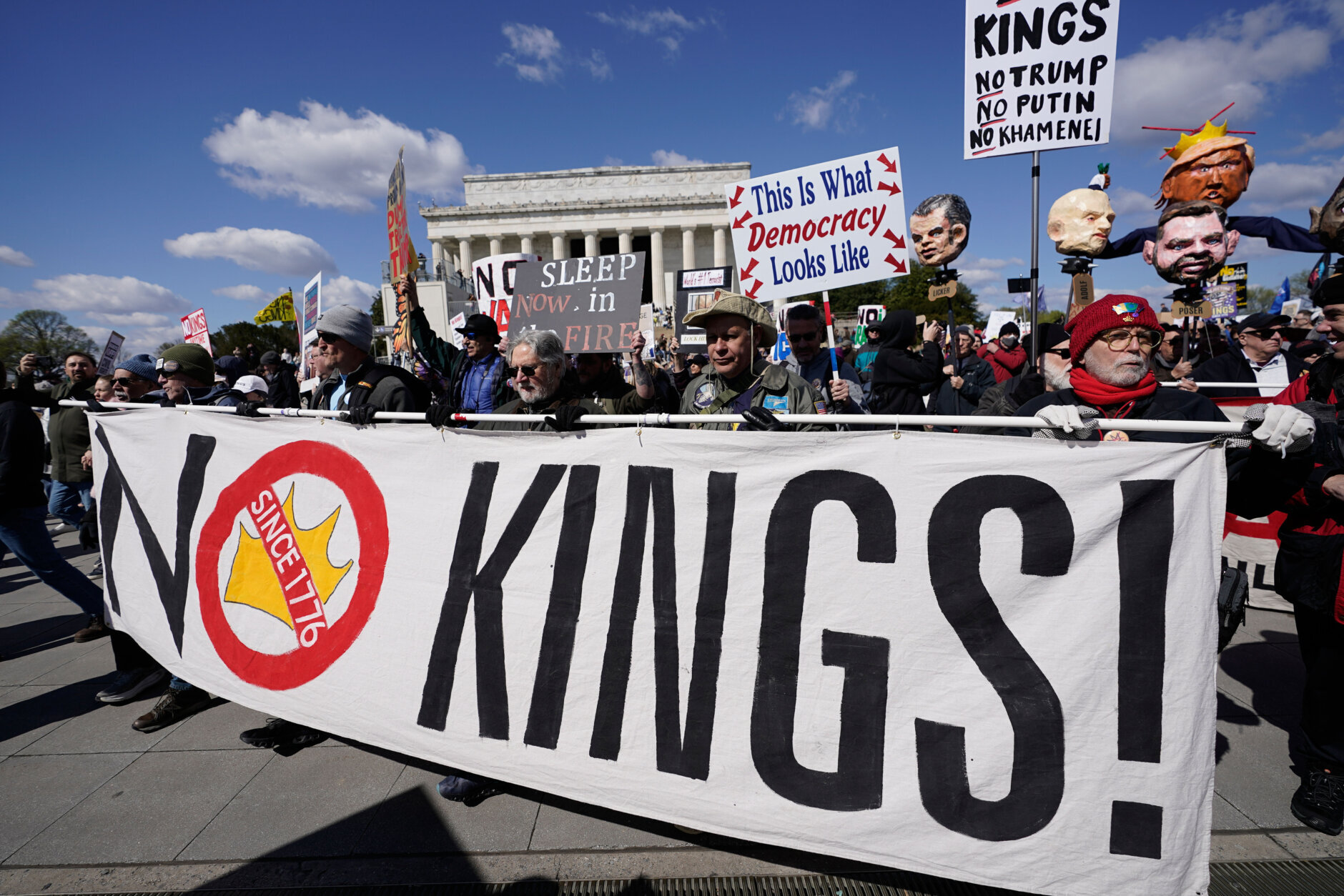
On Saturday, demonstrators gathered in Washington, D.C. as part of the “No Kings” protest movement, rewriting a familiar American hymn to include a striking addition: a verse that inserted the words “thy immigrant.” The rally came as tensions over immigration enforcement and a prolonged partial government shutdown continued to escalate.
The choice of song was not accidental. Patriotic music has always carried a kind of civic shorthand. When people revise it, they are usually trying to make an argument about what the country is, and what it should be, without needing a long speech to do it.
Join the Discussion
The new verse
Video from the scene shows protesters singing the familiar melody and inserting additional lines emphasizing immigration and welcome. The added lyrics included:
“For beautiful, thy immigrant / Who hail from every land / By grace and work and diligence / Like gifts from God’s own hands… America, America… To greet the poor, / And reach the shore / With open arms again,” protesters sang.
In a country where immigration arguments often get reduced to slogans, the verse was a different kind of message. It framed immigration not as an exception to American identity, but as part of it.
What “No Kings” is about
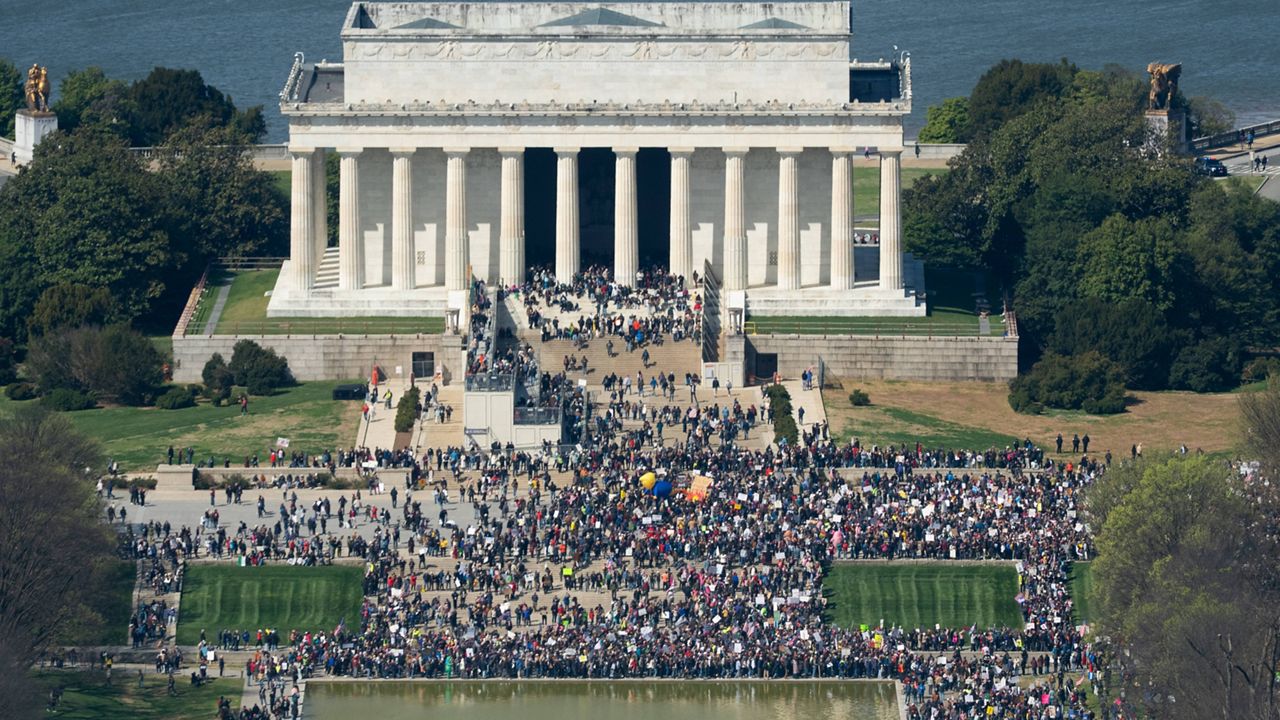
This weekend’s action in Washington was one of many across the country, with protests also reported in cities including Minneapolis, Denver, Portland, and Los Angeles. An estimated crowd of thousands gathered outside the Lincoln Memorial during a march in the nation’s capital.
The protest marked the third nationwide “No Kings” demonstration since President Donald Trump returned to office in January 2025. The movement says on its website that “As President Trump escalates his attempts to control us, it is on us, the people, to show that we will fight to protect one another and our country.”
It is also worth noting how organized this “leaderless” movement can look in practice. The group has provided a highly structured organizing document titled a “March 28 Toolkit,” which lays out guidance on recruiting speakers, delegating roles, registering events, using “No Kings” branded media materials, handling logistics, and even how to avoid permitting and insurance requirements for event-holders.
Why the Constitution is in the subtext
It is worth slowing down here, because “No Kings” language is inherently constitutional language. The U.S. Constitution was designed around a fear of concentrated executive power, and it tries to manage that fear through checks and balances, elections, and the idea that no officeholder is above the law.
At the same time, immigration enforcement is one of the areas where executive power is often felt most sharply in everyday life. Even when immigration rules come from statutes passed by Congress, the practical impact frequently turns on enforcement priorities, agency discretion, and how aggressively the federal government chooses to act.
So when protesters sing about “thy immigrant,” they are not only making a cultural appeal. They are implicitly pointing to a civic question: how should federal power be used at the border and inside the country, and what accountability should exist when that power causes harm?
Shutdown and travel disruption
The demonstrations unfolded alongside a continuing partial government shutdown tied to the Department of Homeland Security. The shutdown has disrupted travel nationwide in visible ways, including long airport security lines during peak travel periods as unpaid TSA agents skipped shifts.
On Capitol Hill, a short-term DHS funding bill passed by House Republicans on Friday was quickly rejected by Senate Democrats. Senate Minority Leader Chuck Schumer called the measure “dead on arrival,” with Democrats pressing for changes connected to immigration enforcement practices and accountability.
Administration officials, including border czar Tom Homan, have urged lawmakers to restore funding. Homan maintained that ICE personnel had helped stabilize conditions, arguing their presence reduced delays, while continuing to press lawmakers to restore funding.
Minneapolis cases and scrutiny
Immigration enforcement has also been under intensified scrutiny following two January 2026 incidents in Minneapolis in which residents Renee Good and Alex Pretti were killed in separate encounters involving federal immigration agents. Those deaths fueled criticism from activists and lawmakers.
Their deaths prompted administrative changes. Homan stepped in to oversee operations in Minneapolis and ended the ICE operation there. Border patrol commander-at-large Greg Bovino was reassigned and later retired. In addition, former DHS Secretary Kristi Noem was replaced by former Oklahoma Sen. Markwayne Mullin.
Why song rewrites matter
In library work, I learned that people often reach for shared language when they feel unheard. Hymns, flags, and founding phrases are shared language in the American civic tradition. That is precisely why they become so contested.
Rewriting America the Beautiful is a kind of claim to belonging. It says, in effect: this is our song too, and the story it tells should include the people we are talking about.
Of course, not everyone will welcome that kind of revision. Some will hear it as a critique of the country. Others will hear it as a reminder that American ideals are aspirational, and that each generation argues about how fully to live them out.
A calm takeaway
Whether you agree with “No Kings” or not, the moment is a useful civics prompt. When political conflict spills into public spaces, it often comes down to two constitutional questions:
- Power: Who has it, how is it used, and what limits apply?
- Membership: Who is included in “We the People,” and how do law and policy reflect that answer?
Protest songs do not resolve those questions. But they can reveal what people are asking of their government, and of one another, right now.