
When gas prices jump, elected officials do what they have done since the first American road trip. They point outward. War, markets, speculators, greedy companies, the other party. This week, California Gov. Gavin Newsom aimed his finger at President Donald Trump and the conflict involving Iran. His critics aimed right back at Sacramento.
In a post on X, Newsom argued that “Americans will pay $1.5 BILLION MORE at the gas pump just this week because of Donald Trump's war with Iran.” He added that California “will continue using the tools we've spent years developing to help fight price spikes and lessen the blow from Trump's recklessness.”
That framing sparked a predictable backlash. But beneath the politics is a real and stubborn fact that keeps surfacing no matter who occupies the White House: California’s gas prices routinely live in a different universe from the rest of the country.
California’s price gap is not new
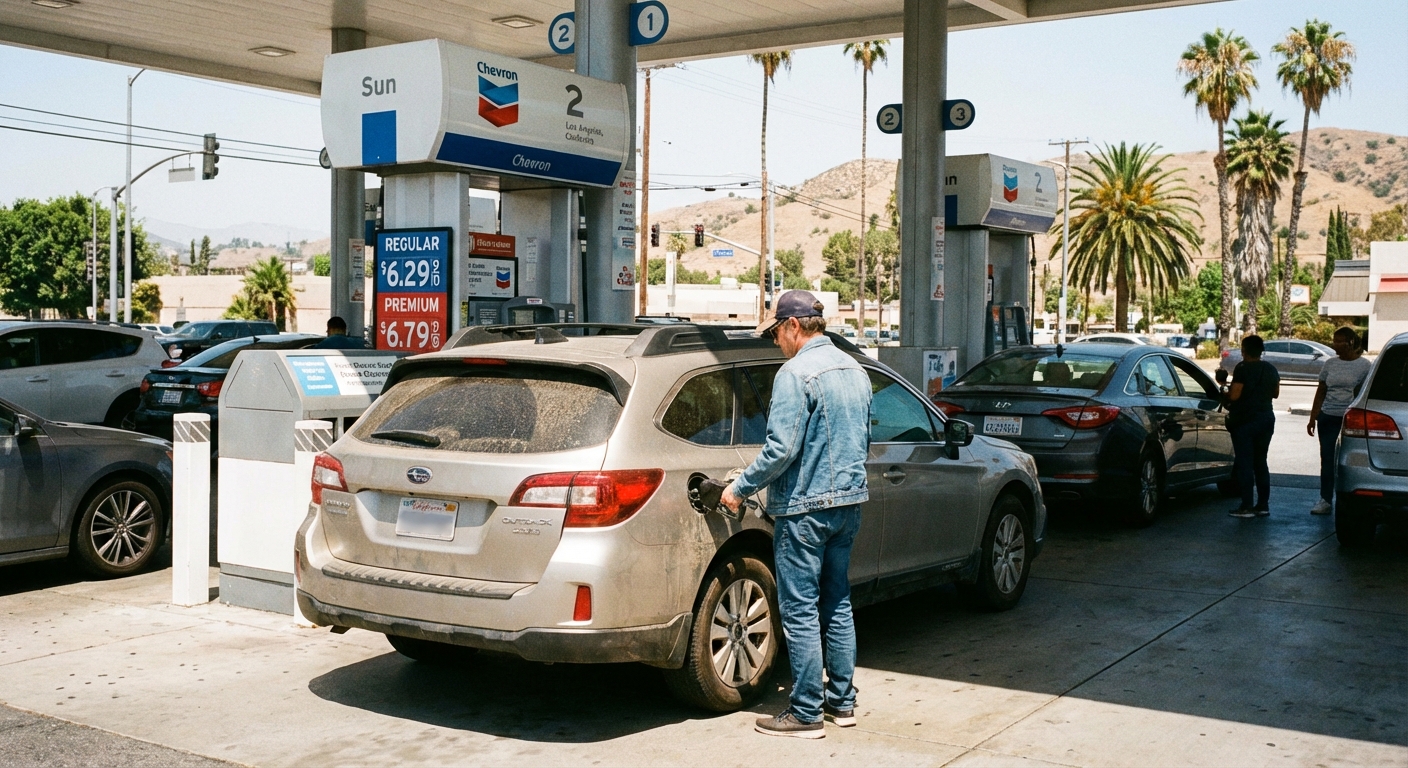
According to AAA, California’s average gas price sits around $5.33 per gallon, the highest in the nation. The next closest states are also outliers, not peers: Washington at $4.72 and Hawaii at $4.69. The national average is roughly $3.57.
That gap matters because it complicates any single-cause explanation. International instability can raise fuel costs everywhere. But when one state is consistently $1.50 to $2.00 higher than the national average, voters naturally ask whether local policy is acting like a permanent surcharge.
Critics target Sacramento
Steve Hilton, a Republican candidate for California governor, responded to Newsom’s post by arguing the governor is trying to deflect responsibility. Hilton pointed to the state’s layered taxes and regulatory costs and said California has “the highest gas taxes and fees in America.”
Hilton also highlighted price points he says drivers are already seeing, calling them “insane” and describing California prices as “$5.49, $5.69, heading to $6,” while noting other parts of the country are closer to $3.
His proposed fix is immediate and simple: suspend the gas tax. Whether that happens is a political question. Whether it would erase the entire price gap is a math question.
The gas tax is easy to quantify
One reason the argument keeps circling back to Sacramento is that some of the state’s cost drivers are not mysteries. The U.S. Energy Information Administration reports that California has the highest state gas tax in the country, at roughly 70 cents per gallon.
A 70-cent tax does not fully explain a $1.50-plus gap by itself, but it does establish an important baseline: even before you get to global oil prices, refinery constraints, or summer blend requirements, California starts from a higher floor.
Climate rules and refinery pressure
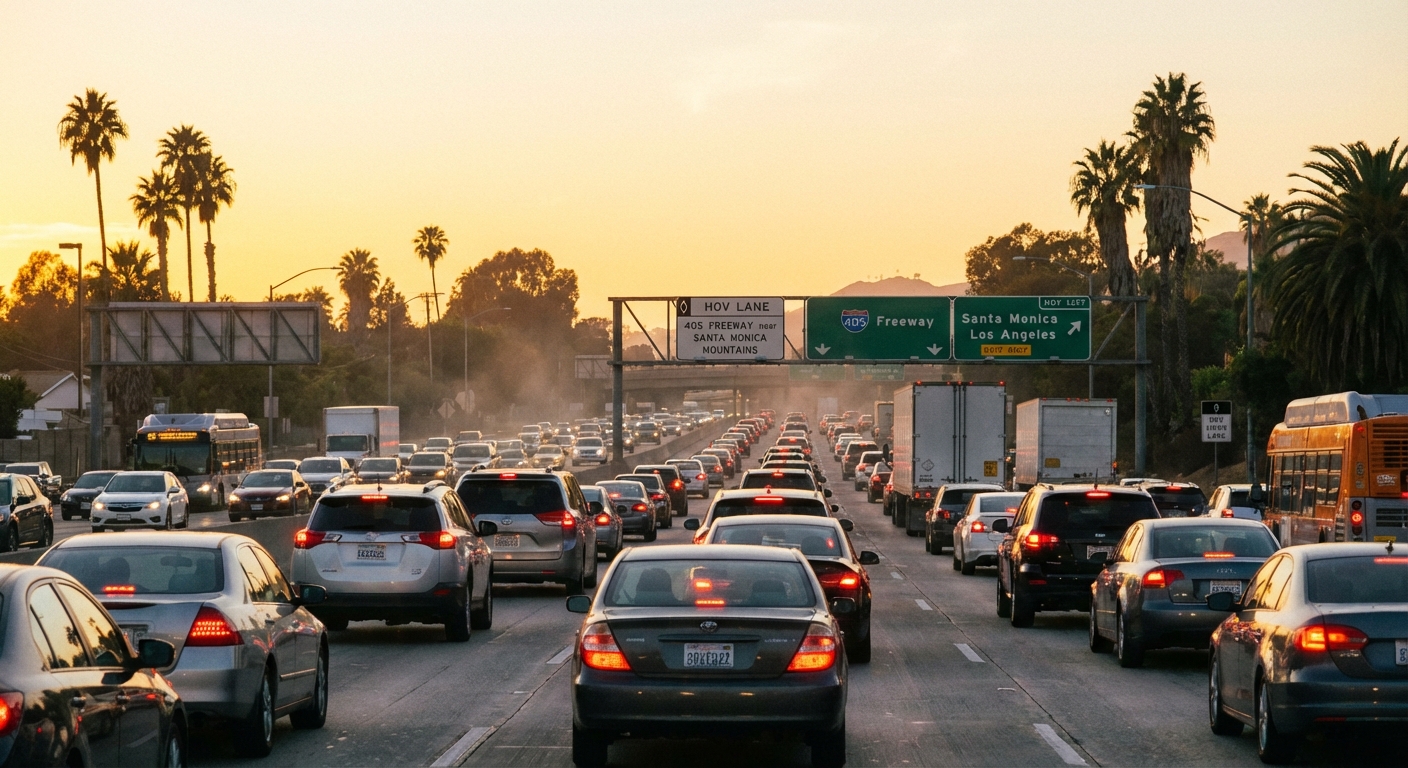
Critics quoted in Fox News’ reporting argue that California’s broader climate program is the bigger driver over time because it increases costs and discourages refining capacity in-state. Roxanne Hoge, chair of the Los Angeles County GOP, described Newsom’s comments as “a textbook case of projection, pointing fingers at others while his own record is riddled with mismanagement and failure.”
“Californians have seen the cost of gas be higher than the rest of the USA for reasons having nothing to do with President Trump. He has driven supply down by banishing producers while not fixing infrastructure with gas tax money as promised,” Hoge told Fox News Digital, adding, “We all know that Gavin Newsom has moved on to campaigning for president in spite of his atrocious record at home.”
Federal officials have also joined the rhetorical pile-on. Interior Secretary Doug Burgum wrote on X that “California is KILLING their economy!” and criticized Newsom for closing refineries while the department approved more than 6,000 drilling permits as part of an “American Energy Dominance Agenda.”
Meanwhile, California’s policy debate is not limited to taxes. The California Air Resources Board has proposed changes that would reduce the total emissions allowances available in the state market by 118.3 million allowances between 2027 and 2030, and it has increased its long-term carbon reduction target to 90% by 2045.
Chevron warns of a new spike
The business community is making a more technical version of the same point. Chevron President Andy Walz warned in a letter addressed to Newsom, obtained by The California Globe and referenced in Fox News’ report, that proposed “cap-and-invest” amendments are a death knell for California’s remaining refineries.
The energy giant warns the move will kill more than half a million jobs, threaten national security and spike gas prices by more than a dollar per gallon, describing the effort as a state-run “shakedown” of the energy sector.
Walz wrote: “The proposed regulation will cripple the survivability of the state’s remaining refineries, which will result in California losing the entire industry to this misguided program.” He continued: “This regulation will increase transportation and aviation fuel prices for consumers. It will risk significant job losses, including many high-paying union jobs, while reducing funding for essential public services,” adding that “it will upend California’s fuels market and threaten critical energy and national security assets.”
Set aside the rhetoric and the underlying concern is straightforward. If refinery capacity shrinks in a state that already uses a specialized fuel blend and sits at the end of long supply lines, prices can become more volatile, and spikes can hit harder and last longer.
Stewart: The fallout spreads
Another line of criticism focuses less on California’s internal politics and more on its regional ripple effects. Tim Stewart, a spokesperson for the U.S. Oil & Gas Association, told Fox News Digital that “California’s energy malaise is beginning to infect the other western states' economies and unless there is a course change immediately, we will all feel the pain of decades of horribly bad California energy policy led by Governor Newsom.”
Stewart also framed the issue in national security terms, saying: “California’s gross mismanagement of its energy production and distribution economy is becoming a national security issue, and it now impacts all of us,” adding that “agriculture, manufacturing, housing, the financial system is all impacted.”
“It doesn’t have to be this way, and Governor Newsom knows it,” Stewart said. “He also knows that no matter how hard he tries – he can’t pin this on Trump or our industry. The public isn’t buying it anymore.”
The politics shift, the gap stays
International conflict can absolutely move prices. Newsom is not inventing that. But the political risk in blaming Washington for California’s pain is that California’s premium is visible even when the rest of the country is comparatively stable.
That is why this debate keeps returning to the same uncomfortable arithmetic: if California wants to convince residents that price spikes are mostly imported from global events, it still has to explain why the state starts every week already so far above everyone else.