
The Constitution sets only a few eligibility rules for the presidency, and one phrase does most of the work: “natural born Citizen.” It is a requirement everyone recognizes and for which almost no one can point to a single, controlling definition. The result is predictable. A short clause becomes a long argument.
This page explains what the Constitution actually says, why the Framers included the requirement, what the mainstream legal debate looks like today, and how the concept differs from other paths to U.S. citizenship discussed elsewhere on this site.
One important translation up front: “natural born” is the Constitution’s term. In modern discussions, people often use “citizen at birth” as the practical proxy. They are not identical phrases, but that shorthand captures the main divide the law tends to emphasize.

Join the Discussion
The Constitution’s rule in plain text
The presidential eligibility clause is in Article II, Section 1, Clause 5:
“No Person except a natural born Citizen, or a Citizen of the United States, at the time of the Adoption of this Constitution, shall be eligible to the Office of President; neither shall any Person be eligible to that Office who shall not have attained to the Age of thirty five Years, and been fourteen Years a Resident within the United States.”
So the Constitution requires three things:
- Citizenship status: natural born (with a one-time exception for citizens at the Founding)
- Age: at least 35
- Residency: 14 years a resident “within the United States”
The clause’s “citizen at the time of the Adoption” language was a transitional bridge for the Founding generation. It is now obsolete, since no one alive today could qualify under it.
Why the Framers added the natural-born requirement
The best historical explanation is not mysterious. The Framers worried about foreign influence, especially in the executive, where a single person commands military and diplomatic power.
In the late 1700s, European powers routinely used marriage alliances, pensions, and patronage to shape politics abroad. The presidency was designed to be independent, but independence is partly about incentives and loyalties. Requiring the President to be a “natural born Citizen” was a way to reduce the risk, however imperfectly, that a foreign national could enter American politics, obtain citizenship, and quickly rise to the highest office.
That purpose shows up repeatedly in early commentary and in the Founding era’s general suspicion of what they called “foreign corruption.” It is also why presidential eligibility constraints extend to the Vice President: the Twelfth Amendment provides that no person constitutionally ineligible to the office of President shall be eligible to that of Vice President.

What natural born is not
The phrase is often treated like a simple synonym for “born in the United States.” That is close to the common intuition, but constitutionally it is not that simple.
Here are the boundaries that matter:
- It is not defined in the Constitution. Article II uses the term but does not explain it.
- It is not the same as “citizen.” Naturalized citizens are unquestionably citizens, but they are generally understood to be excluded from presidential eligibility.
- It is not directly answered by the Fourteenth Amendment’s Citizenship Clause. The Fourteenth Amendment defines who is a citizen at birth for most people born on U.S. soil, but it does not use the phrase “natural born” and does not explicitly resolve every edge case. The text’s “subject to the jurisdiction” language is also doing real work (for example, children of foreign diplomats are the standard textbook exception).
Citizenship at birth is the core
In modern legal practice, the safest way to say it is this: natural born citizen generally refers to people who are citizens at birth, as opposed to people who become citizens later through naturalization.
That “citizen at birth” idea has two major pathways in U.S. law:
- Jus soli (by place of birth): citizenship because you are born on U.S. soil and subject to U.S. jurisdiction. This is the rule most Americans know and the one anchored in the Fourteenth Amendment.
- Jus sanguinis (by parentage): citizenship at birth because you are born abroad to a U.S. citizen parent or parents, if statutory conditions are met. This is set by Congress through immigration and nationality laws.
Many, and arguably most, constitutional scholars and institutional actors treat being a citizen from the moment of birth as the ordinary dividing line that Article II is getting at. The disagreements tend to cluster at the margins, especially when citizenship at birth depends on statutes, territory-specific rules, or unusually complex family circumstances. (Congressional Research Service reports and executive-branch legal opinions are often cited here as persuasive, even though they are not Supreme Court holdings.)
Key Supreme Court cases in the background
United States v. Wong Kim Ark (1898)
This is the foundational case for birthright citizenship on U.S. soil under the Fourteenth Amendment. The Court held that a man born in San Francisco to noncitizen parents who were lawful residents was a U.S. citizen at birth.
Wong Kim Ark is not a presidential eligibility case, and it does not define “natural born citizen” in so many words. But it strongly reinforces the idea that, under American law, most people born in the United States are citizens at birth, which is central to how “natural born” is commonly understood.
Minor v. Happersett (1875)
Minor is sometimes quoted in debates because it observed that there was “no doubt” that children born in the United States to citizen parents were citizens. The Court did not decide the full scope of citizenship for all people born on U.S. soil, and it certainly did not decide presidential eligibility. In modern law, Wong Kim Ark is the far more important citizenship holding.
Taken together, the Supreme Court’s citizenship cases strongly support a simple anchor point: citizenship at birth. What the Court has not done is issue a clean, modern ruling that says: “Here is exactly what Article II’s natural born citizen means for all situations.”
The debates that remain serious
Much of the online controversy about “natural born” is not legal debate. It is political insinuation. Set that aside. The mainstream questions are narrower, and they show up in law review articles, congressional research memos, and occasional litigation.
1) People born abroad who are citizens at birth
Congress has long provided that certain children born outside the United States to U.S. citizen parents are U.S. citizens at birth, assuming statutory requirements are met (such as residency or physical presence of the citizen parent).
The mainstream debate is whether citizenship “at birth” by statute is always enough to make someone “natural born” under Article II. Many scholars and institutions say yes, because the core distinction is citizen at birth versus citizen later. A minority view argues that “natural born” should be limited to birth on U.S. soil, or to birth on U.S. soil plus additional conditions.
Importantly, this is a question about constitutional meaning and statutory citizenship, not about any particular candidate’s paperwork.
2) U.S. territories and outlying possessions
People born in some U.S. territories are citizens at birth under federal law, but the constitutional and statutory details vary by territory and by historical period. The serious issue here is whether being born in a U.S. territory is treated the same as being born in a state for Article II purposes.
Concrete examples help:
- Puerto Rico, Guam, the U.S. Virgin Islands, and the Northern Mariana Islands: people born there are generally U.S. citizens at birth by federal statute (subject to the specific statutory frameworks and effective dates).
- American Samoa: people born there are generally U.S. nationals, not U.S. citizens, at birth under current federal law, unless citizenship is acquired through another route.
In political practice, major-party institutions and election administrators have generally treated territorial birth as consistent with Article II when the person is a citizen at birth. The Supreme Court has not provided a definitive Article II ruling that resolves every territorial scenario.
3) Adoption and citizenship timing
Adoption itself does not make a person a “citizen at birth.” In many cases, adoption can lead to automatic citizenship after birth through federal statutes (often described as derivative citizenship, and in some mechanisms treated as a form of naturalization). The serious Article II question is therefore about timing: whether the person’s U.S. citizenship begins at birth or begins later under a statute tied to adoption.
This area is technical and fact specific, which is one reason it rarely produces clear public answers.
4) Dual citizenship
The Constitution does not forbid a President from having held dual citizenship at birth. The key is whether the person is a natural born citizen of the United States. Dual citizenship can raise political questions, but it is not widely viewed as a constitutional disqualifier by itself.
Why there is no single court test
Several practical realities keep the natural-born clause from getting the kind of Supreme Court treatment people expect:
- Standing and timing are hard. Courts often dismiss eligibility lawsuits because the plaintiff cannot show a concrete injury or because the case is not ripe in the way courts require.
- Justiciability limits apply. Some cases run into political-question and other justiciability concerns, especially when a dispute is intertwined with electoral processes assigned to political actors.
- Political processes resolve most disputes. Parties, voters, state election officials, and Congress itself act as gatekeepers. That reduces the number of cases that reach a final merits decision, even though some state ballot-access disputes have produced more substantive lower-court rulings.
Congress also plays a role on the back end. Under the Twelfth Amendment and the Electoral Count Reform Act framework, Congress counts electoral votes and can adjudicate certain objections. That is not the same thing as a judicial definition of “natural born,” but it is part of the constitutional ecosystem that makes definitive court rulings less common.
Natural born vs. naturalized
If you want one clean dividing line, it is this: naturalization is citizenship acquired after birth. Article II’s natural-born requirement is commonly understood to exclude people whose citizenship begins later through the naturalization process.
Naturalization is covered elsewhere on this site, but the broad outline matters here:
- Natural-born (common understanding): a citizen from the moment of birth, either by birthplace under the Fourteenth Amendment or by parentage under federal statute.
- Naturalized: a person who becomes a citizen later, typically after lawful permanent residence and a formal application, background checks, and an oath.
The difference is not about how “American” someone is in any cultural sense. It is about how the Constitution chooses to structure eligibility for a specific office.
How this connects to other citizenship rules
On this site, you will see citizenship discussed through several constitutional and statutory lenses. Here is how they map onto presidential eligibility:
- Birthright citizenship: Mostly a Fourteenth Amendment topic. It explains who is a citizen at birth when born in the United States and “subject to the jurisdiction” of the United States.
- Citizenship through parents: A statutory topic. Congress sets the rules for when a child born abroad is a citizen at birth.
- Naturalization: A statutory and constitutional-power topic. It explains how a noncitizen becomes a citizen later in life and why that path generally does not satisfy Article II.
Presidential eligibility sits at the intersection of all three. The Constitution provides the requirement, while citizenship law supplies many of the real-world categories that determine whether someone is a citizen at birth.
Common questions
Does “natural born” mean you must be born in a U.S. hospital?
No. The serious legal question is whether you were a U.S. citizen at birth. That can happen through birth on U.S. soil and, in many situations, through U.S. citizen parents even when birth occurs abroad.
Is there a single document that proves someone is natural born?
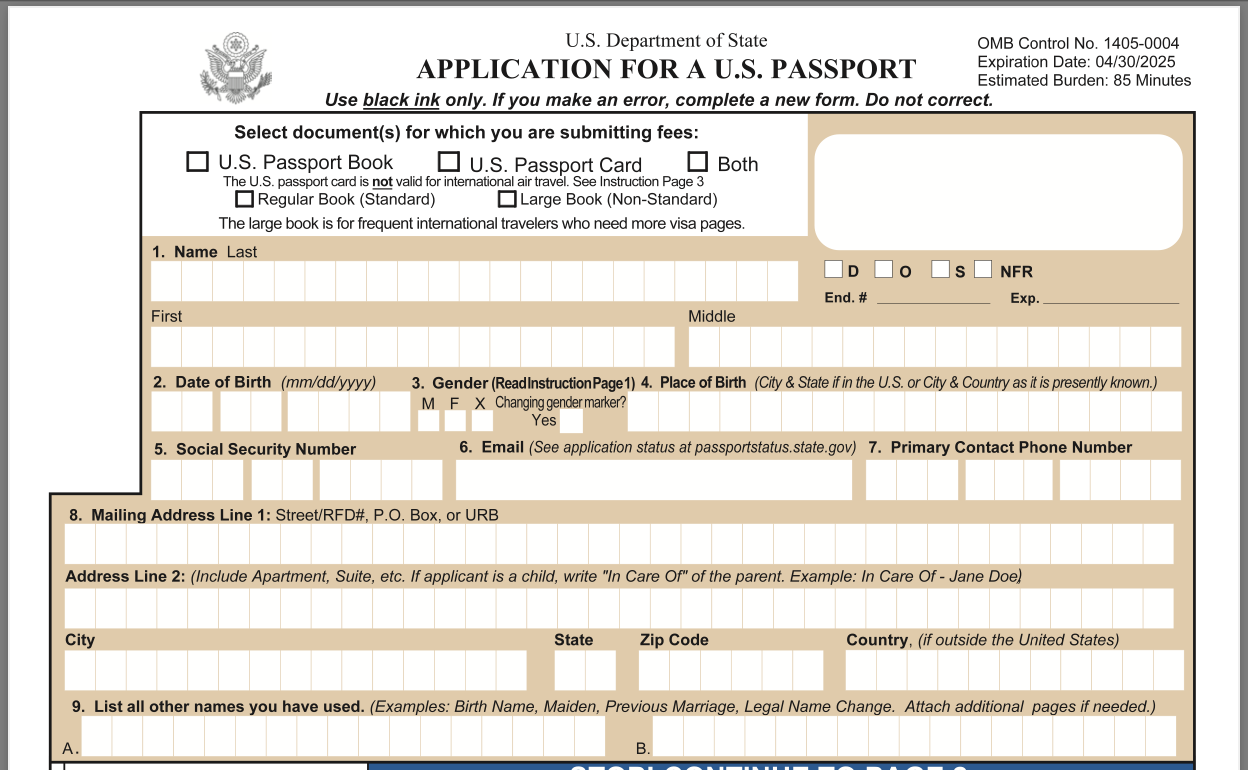
Not in a single, universal way. Birth certificates, Consular Reports of Birth Abroad, passports, and citizenship records can all be relevant depending on the person’s circumstances. The deeper point is that “natural born” is a constitutional eligibility category, not a document type.
Has the Supreme Court definitively defined the phrase?
Not with a modern, one-sentence test that resolves every edge case. The Court’s citizenship cases strongly support citizenship at birth as the central concept, but Article II litigation rarely reaches a final merits ruling.
Why this clause still matters
The “natural born Citizen” requirement is a reminder of how the Constitution often works: it sets a broad structural rule, then leaves generations to argue about its boundaries.
For everyday civic understanding, the most important takeaway is stable and surprisingly modest: the Constitution distinguishes between citizens at birth and citizens later through naturalization, and it reserves the presidency for the first category. The hard cases live at the margins, where citizenship at birth can depend on statutes, territories, and complex family circumstances.
If you want to go deeper, the most productive next step is not a rumor hunt. It is learning the citizenship categories themselves: birthright citizenship, citizenship by parentage, and naturalization. Once you understand those pathways, Article II’s short phrase becomes far less mysterious.