
Americans argue about the Electoral College the way they argue about the weather. Everyone has an opinion, most people think they understand it, and the part that actually controls the outcome tends to be the part nobody sees coming.
The National Popular Vote Interstate Compact, usually shortened to NPVIC, is one of those ideas that sounds like a constitutional amendment but is not. It does not abolish the Electoral College. It does not rewrite a single clause. What it tries to do is simpler and, in practice, potentially disruptive: use the rules we already have to make the national popular vote determine who gets the presidency.
Join the Discussion
What the compact proposes
The compact is an agreement among participating states and the District of Columbia. DC is not a state, but it can participate through its own enabling law and, under the Twenty-Third Amendment, it carries three electoral votes.
Each member jurisdiction promises that, once the compact is in effect, it will award all of its electoral votes to the candidate who wins the national popular vote across all 50 states and DC.
That is a major departure from the way nearly every state does it now. Today, most states use a winner-take-all method based on the state popular vote. If you win Florida by one vote, you usually get all of Florida’s electoral votes.
There are two notable exceptions: Maine and Nebraska allocate some electoral votes by congressional district. Even there, though, the “target” is still state-based. The NPVIC changes the target from “win my state” to “win the country.”
What it is not
- Not an amendment: The Constitution’s text stays the same.
- Not a national election agency: It does not create a single federal authority to run or count the election.
- Not immediate: It only changes outcomes once a specific threshold is met.
The trigger: why 270 matters
The NPVIC is written with a built-in “off switch” until it can actually guarantee the presidency to the national popular vote winner. That guarantee arrives at 270 electoral votes, the number needed to win the Electoral College.
Here is the core logic:
- If jurisdictions totaling at least 270 electoral votes join the compact, those jurisdictions can collectively decide the election outcome.
- Once the compact is in effect, those jurisdictions award their electoral votes to the national popular vote winner.
- Because they control at least 270 votes, the national popular vote winner would also win the Electoral College, even if they lost many non-member states.
Until membership reaches 270, the compact remains on the books in member jurisdictions, but it is not operational. In practice, states keep using their existing allocation method (usually statewide winner-take-all) for presidential electors.
How it works
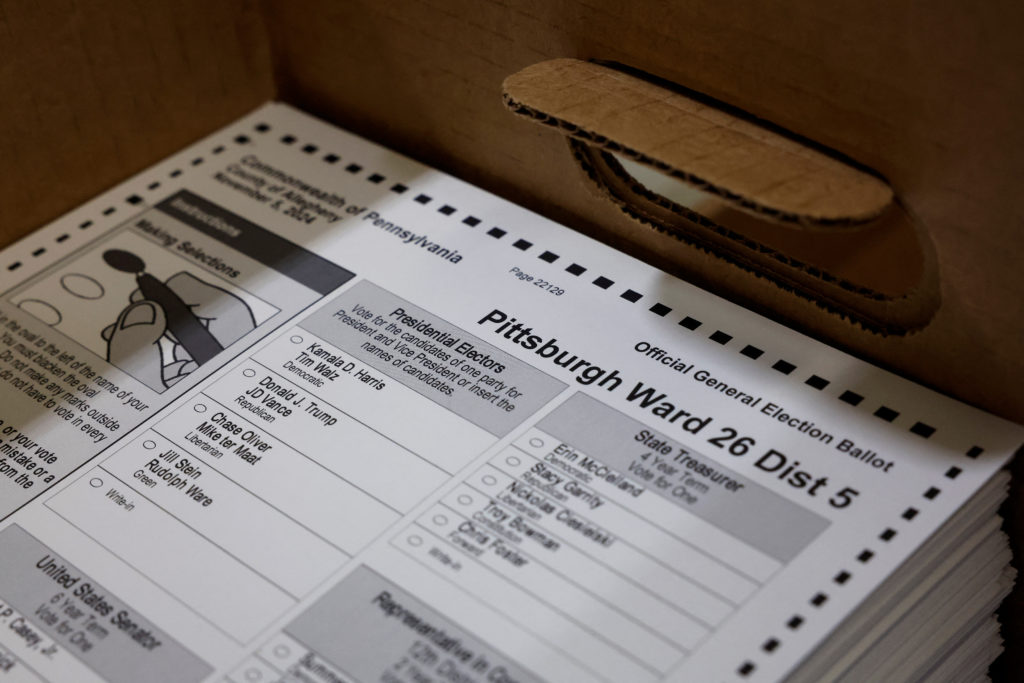
On Election Day, every state still runs its own election. There is no single nationwide ballot, no federal election board that “counts America,” and no constitutional rewrite. The difference is what member jurisdictions do after the votes are counted and certified.
Step by step
- States certify their own results using their own procedures and deadlines.
- The national popular vote total is computed by adding up each state’s and DC’s official, certified vote totals. The compact does not create a new federal tabulator. It relies on the numbers states already produce.
- Member jurisdictions appoint electors pledged to the national popular vote winner, as long as the compact is in effect.
- Electors meet and vote on the federally set December date, and Congress counts those votes under the Constitution’s established process.
This is why it is accurate to say the compact aims to change the outcome the Electoral College produces without removing the Electoral College itself.
Why states can do this
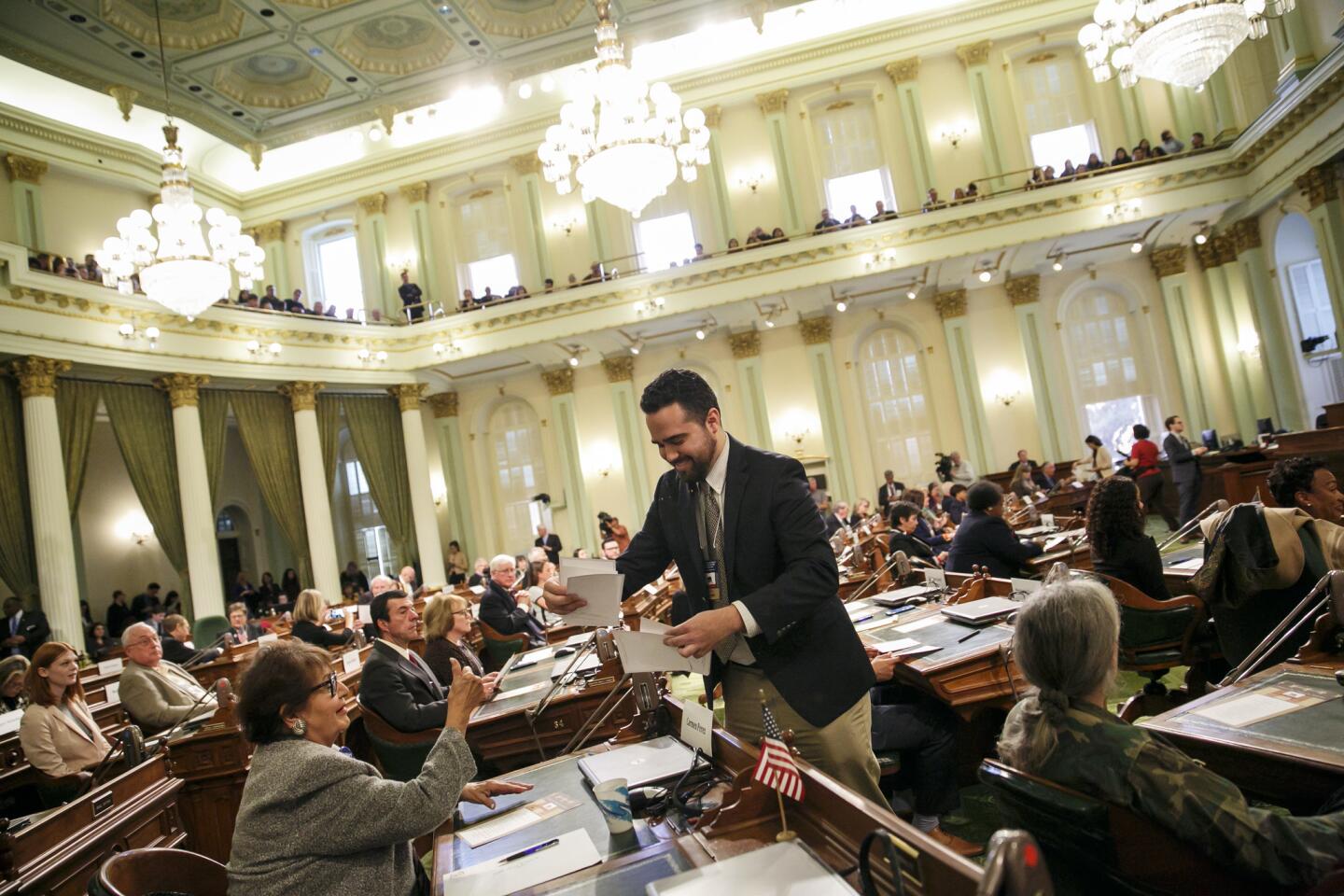
Most of the constitutional argument for the NPVIC begins with one sentence: the Constitution gives state legislatures broad authority over how electors are appointed.
Article II, Section 1 provides that each state shall appoint electors “in such Manner as the Legislature thereof may direct.” Over time, every state moved to popular elections for president, but that is a choice states made, not a requirement the Constitution imposed.
The Supreme Court has described this power as extensive. In McPherson v. Blacker (1892), the Court emphasized that the appointment power belongs to the states and that legislatures may choose the method, subject to other constitutional constraints. In Bush v. Gore (2000), the Court reiterated that a state legislature’s authority over appointing electors is primary, even when a state uses a popular vote. In Chiafalo v. Washington (2020), the Court upheld state authority to enforce elector pledges, reinforcing that states can structure their elector systems and enforce them.
So the compact’s basic premise is not exotic: if a state can choose winner-take-all based on its own statewide vote, it can choose winner-take-all based on a different metric, including the national vote total.
The Compact Clause
The most common constitutional objection is that the compact might require congressional approval under the Constitution’s Compact Clause, which says: “No State shall, without the Consent of Congress… enter into any Agreement or Compact with another State…”
That sentence is not as absolute as it looks. The Supreme Court has long treated it as limited to agreements that increase state power in a way that could encroach on federal authority. The key precedent is Virginia v. Tennessee (1893), which held that not every agreement needs congressional consent, only those that tend to enhance state power at the expense of the federal government.
Why it might not need Congress
- States already possess the elector-appointment power under Article II, so they are not taking a new power from the federal government.
- No federal program is being administered; elections remain state-run.
- Congress still counts electoral votes and the federal constitutional structure remains intact.
Why it might need Congress
- It changes the practical operation of presidential elections nationwide, not just within one state.
- It is a coordinated multi-state strategy designed to shape the outcome of a federal office.
- Some scholars argue consent is required precisely because the compact affects a federal function, even if it uses state-administered pieces to do it.
No Supreme Court decision has squarely answered whether this specific compact requires congressional consent. Congress could also choose to grant consent in advance, which would likely reduce, though not necessarily eliminate, the constitutional uncertainty.
If the compact ever decides a close election, litigation is not a remote possibility. It is highly likely.
It does not replace the Electoral College
This is the point that gets lost most often: the NPVIC is not a parallel election system. It is a plan for how certain jurisdictions will use their existing electoral votes.
Even if the compact is in effect:
- States still appoint electors.
- Electors still vote.
- Congress still counts those votes.
- The presidency is still formally awarded by electoral votes, not by a direct national tally.
The compact is better understood as a strategy for making the Electoral College track the national popular vote, not as a mechanism that removes the Electoral College from the Constitution.
Practical debates
The constitutional questions are only half the story. The other half is what happens in the real world when the margin is razor-thin.
Would this create a national recount?
There is no automatic national recount procedure today. Recounts are governed by state law, and thresholds vary. Under the NPVIC, a close national margin would create enormous pressure to seek recounts in multiple states, especially where state law makes recounts easier.
Supporters respond that we already litigate close elections, and the current system can force intensely local recounts in a single decisive state. The NPVIC could spread the attention across many states, potentially reducing the “one state decides everything” problem. Critics respond that spreading it out does not reduce conflict. It multiplies it.
Different ballots and rules
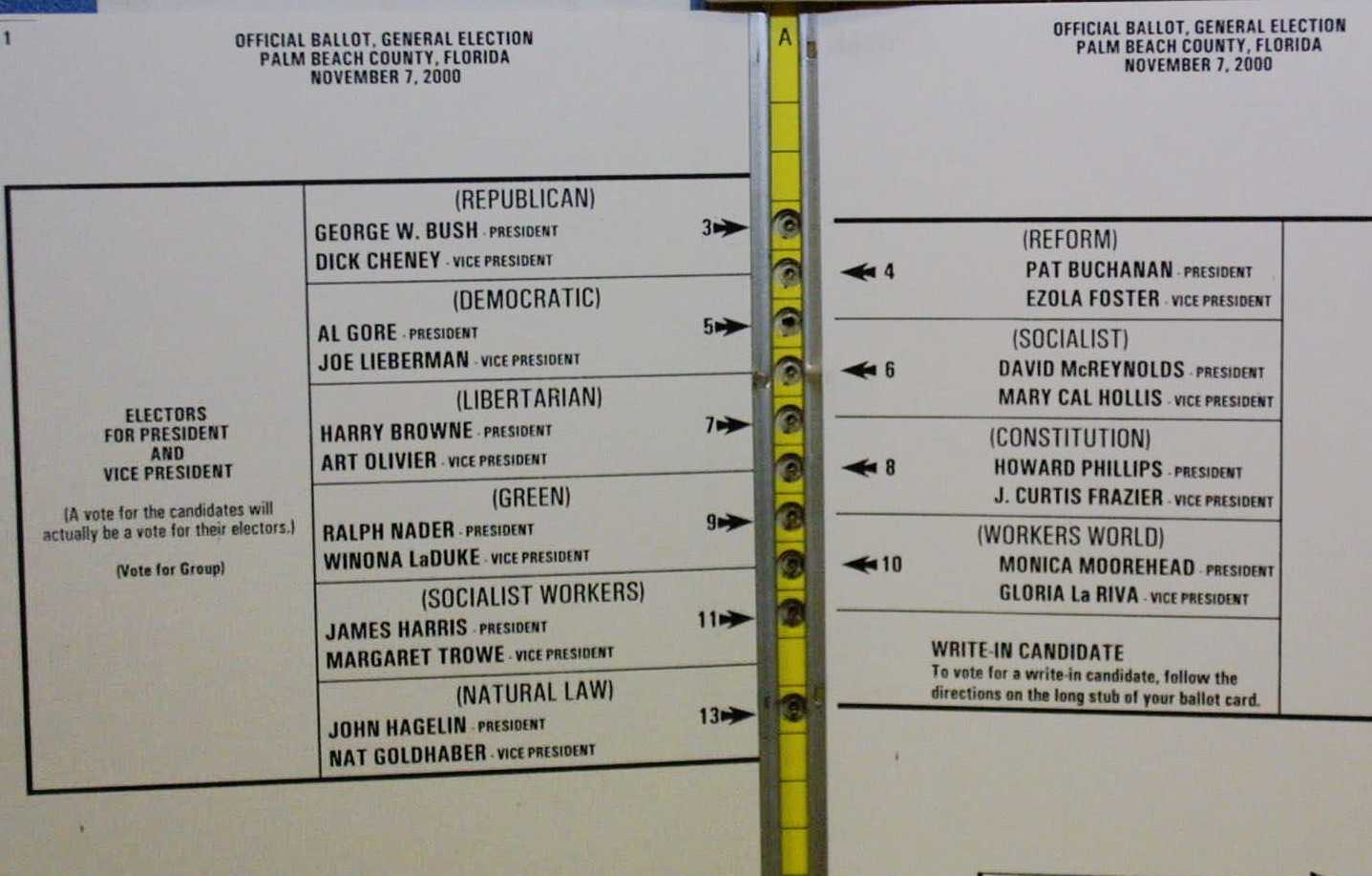
States do not use identical ballots or identical rules for counting and curing ballots. A national popular vote total is still the sum of 51 separate elections. Under the compact, those differences could matter more because every additional vote nationwide helps your candidate everywhere.
Ties and edge cases
The compact’s key input is the official, certified popular vote totals reported by each state and DC. It does not create a new definition of a valid vote, a new set of ballot standards, or a national process for resolving disputes.
What if the national popular vote is tied? The compact anticipates unusual scenarios, but the real-world reality is simpler: a true national tie would be so rare, and so litigation-prone, that the result would almost certainly turn on state certifications, recount rules, and court rulings under existing law rather than on a neat, prepackaged national procedure.
Faithless electors
Chiafalo makes it easier for states to bind electors to the winner the state has chosen, including a winner defined by the national vote. That reduces, but does not entirely erase, anxiety about electors refusing to follow the compact’s allocation.
What supporters say
Supporters tend to make a straightforward democratic claim: in a modern republic, the candidate with the most votes should win.
- Every vote would matter in every state, not just in swing states.
- Candidates would have incentives to campaign nationally, including in states they currently ignore.
- It can be done without an amendment, which is politically close to impossible on this issue.
What critics say
Critics often start with a structural argument: the presidential election system is supposed to be federal, not purely national. They also raise concerns about instability and legitimacy.
- Compact Clause uncertainty could invite a constitutional crisis after an election.
- Disputes about the national vote total could trigger multi-state litigation and recount pressure.
- State leverage and withdrawal could become a partisan weapon, depending on how the compact’s terms and state laws handle exit timing.
- Small-state interests might be diluted, depending on how you understand the purpose of the Electoral College.
Withdrawal and timing
One of the most sensitive questions is not whether jurisdictions can join, but whether they can leave at the worst possible moment.
The compact addresses this directly with a built-in lock-in period. In the NPVIC text, a member state’s withdrawal does not take effect during the six-month window before the end of a president’s term. In practice, that is commonly summarized as a blackout period from July 20 of an election year through January 20 (Inauguration Day). The point is to prevent a state from bolting after seeing late polling trends and changing the rules midstream.
Outside that window, states can still try to repeal their participation through ordinary legislation, and compacts can raise messy questions about when an exit is legally effective. So the legal fight is not just “is the compact valid,” but also “is it locked in for this election cycle.”
How this fits with other reforms
If the country wanted to abolish the Electoral College outright, the clean way would be a constitutional amendment. That is the only approach that truly removes the electors and the constitutional machinery behind them.
The NPVIC is different. It is a workaround that relies on state power already present in Article II. That makes it easier to attempt and easier to implement. It also makes it easier to challenge, because it operates in the narrow space where constitutional text, state legislation, and interstate coordination collide.
One more piece of context: Congress updated the rules for counting electoral votes with the Electoral Count Reform Act of 2022. That law clarifies parts of the post-election counting process and raises thresholds for certain objections, but it does not resolve the NPVIC’s core constitutional question. If the compact ever becomes decisive, the fight would still be about the compact’s validity and how states applied it.
Current status
The NPVIC’s status changes as states join, pause, or repeal it. If you publish this as an evergreen explainer, the safest approach is to date-stamp the numbers and link to the compact’s official tracker.
As of the date on this article, check the current total of enacted member jurisdictions and their combined electoral votes, and note how far that is from 270. That single number tells readers whether the compact is a theoretical framework or an approaching reality.
The bottom line
The National Popular Vote Interstate Compact is a constitutional judo move, in the literal sense that it tries to use the Electoral College’s existing mechanics to produce a different outcome.
If it never reaches 270 electoral votes, it changes nothing in practice. If it does reach 270 and holds together through a close election, it could reshape campaign strategy, voter attention, and the legitimacy narratives that follow every tight race.
But it is not an amendment, not a new national election agency, and not a guarantee of political peace. It is a promise among jurisdictions to use their existing constitutional power in a coordinated way. Whether that promise survives the next contested election is the question that will decide whether the compact becomes history or a footnote.