
When Americans picture “a trial,” they picture a federal judge in a black robe, a jury box, and a courtroom where the Constitution is the rulebook and the referee is independent of the political branches.
Military commissions are what happens when the government argues that picture does not fit the problem.
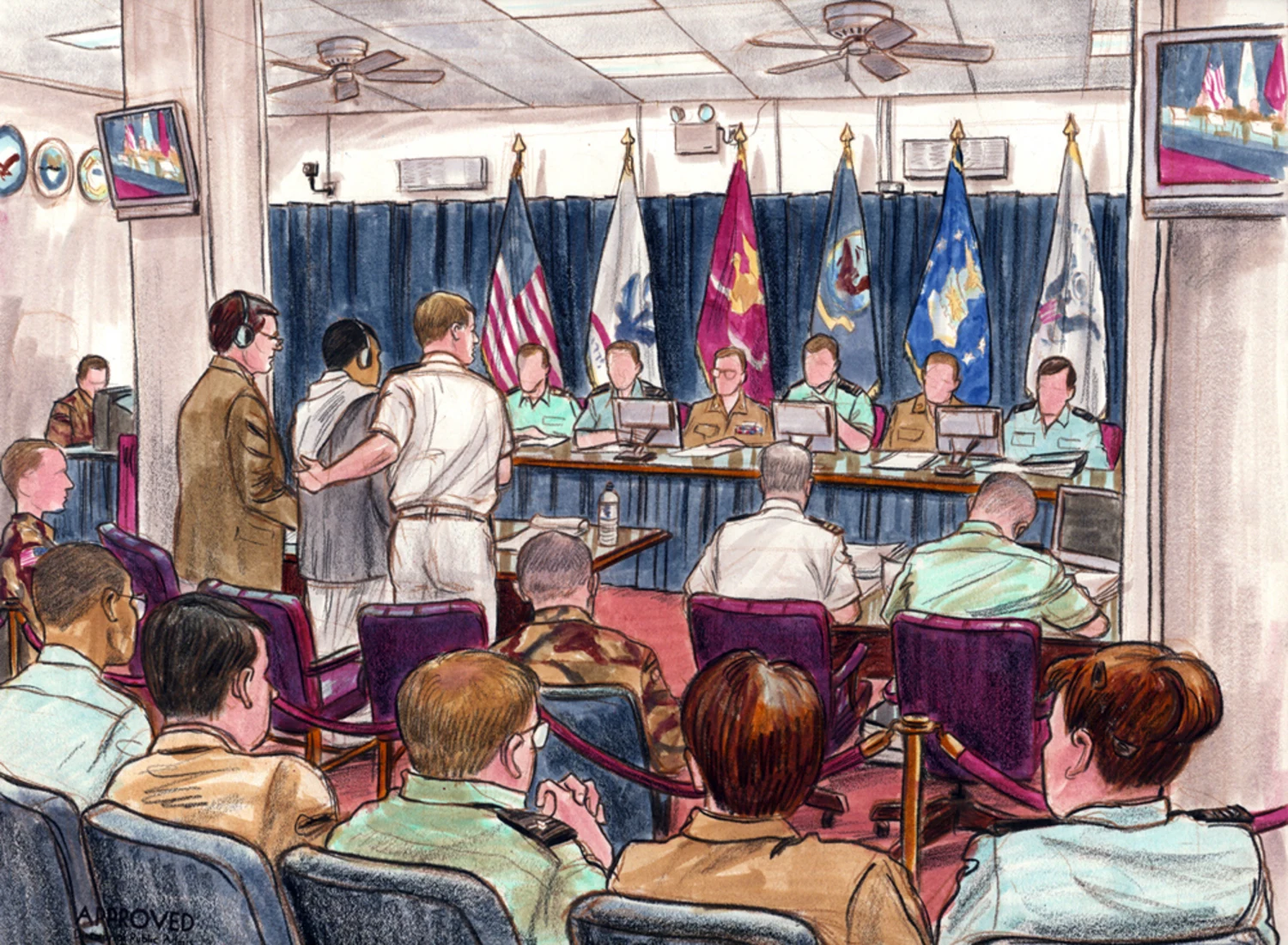
A military commission is a wartime tribunal used to try certain offenses connected to armed conflict, often involving non-citizen enemy fighters and often conducted outside the ordinary civilian court system. Historically, though, commissions have also been used against U.S. citizens in limited settings (Civil War-era proceedings and World War II sabotage cases are the usual reference points). They are not new, and they are not legally free-floating. They exist at the intersection of two forces that constantly rub against each other: the Constitution’s insistence on civilian judicial power and the government’s claim that war creates a different kind of necessity.
Join the Discussion
Why military commissions exist
Military commissions exist because the United States has fought wars where capturing enemy operatives created a practical and legal question that the Founders did not cleanly answer in one sentence: How do you prosecute war-related wrongdoing when the ordinary criminal system is not designed for battlefields?
Federal criminal trials are designed around stable police evidence collection, chain-of-custody procedures, and accessible witnesses. Armed conflict can mean chaos, classified intelligence, foreign-language evidence, and military operations that cannot be fully exposed without compromising sources, methods, or ongoing missions.
Historically, commissions also served a second function: enforcing the “law of war” against people who violated it. That is a different concept than punishing ordinary domestic crime. The government’s core argument is that certain acts are not just crimes against a jurisdiction, they are offenses against the rules of armed conflict itself.
The constitutional tension starts right here: if the executive branch can choose a different forum whenever the case is hard, then “hard” becomes the exception that eats the rule.
The constitutional fight
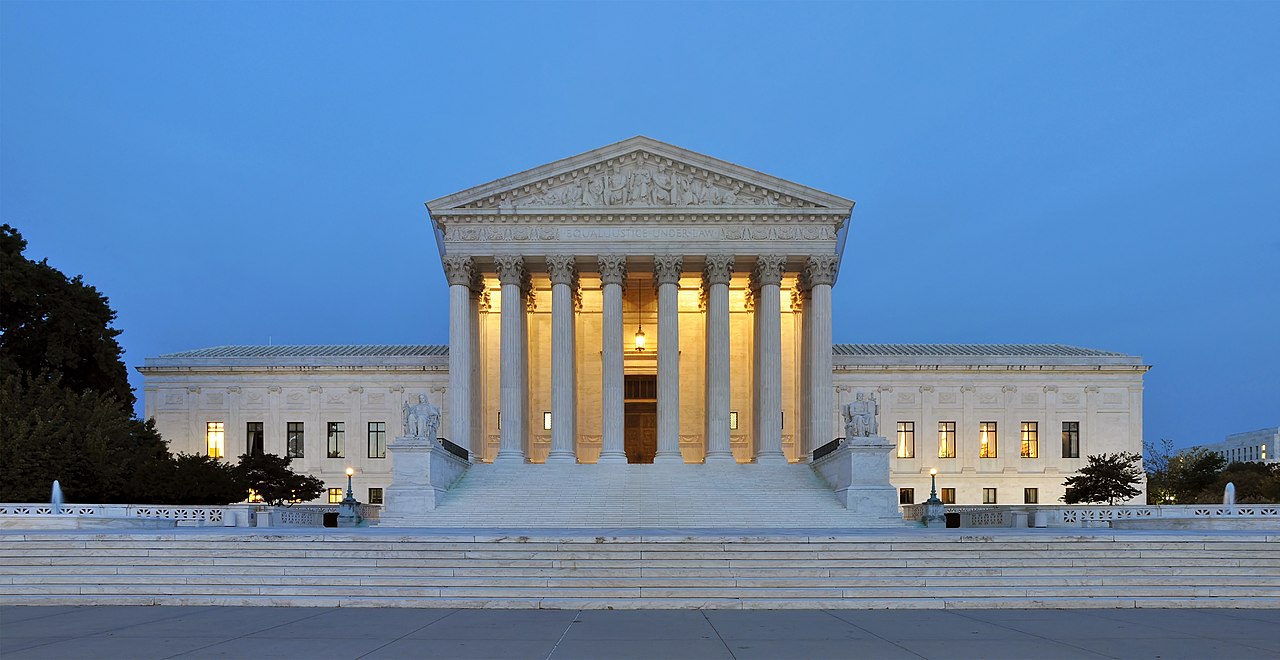
The Constitution places “the judicial Power of the United States” in Article III courts, with life-tenured judges and salary protection. That structure is not decoration. It is a separation-of-powers safeguard. It is meant to ensure that when the government prosecutes someone, the referee is not employed by the same chain of command that captured the defendant.
Military commissions sit outside Article III. They are typically staffed by military officers and operate under rules set by statute and regulation. In the modern era, Congress has supplied the main framework through the Military Commissions Acts, but some of the most contested post-9/11 versions began with presidential orders first and legislation later. That history is part of the controversy, not an accident of it.
That raises an obvious question: When is it constitutional to try someone in a tribunal that is not an Article III court?
The government’s constitutional case
The defense of commissions usually leans on a few connected ideas:
- Commander in Chief authority (Article II) to conduct war and manage captures.
- Congress’s war powers (Article I), including the power to “declare War,” “raise and support Armies,” “provide and maintain a Navy,” and “make Rules for the Government and Regulation of the land and naval Forces.”
- The law of war as a recognized body of international rules that historically permitted military tribunals for certain offenses.
From this view, commissions are not a workaround. They are a wartime tool with a long pedigree that Congress can authorize and structure, particularly for alleged law-of-war offenses by enemy belligerents.
The civil libertarian case
Even critics usually concede the strongest practical point on the other side: battlefields do not produce neat evidence files, and intelligence sources do not come with a subpoena address.
The critique remains simpler and sharper: the Constitution does not stop being the Constitution because the government uses the word “war.”
Opponents argue that if civilian courts are open and functioning, criminal prosecution belongs in Article III courts with full constitutional protections, including robust jury rights and judicial independence. They also warn that commissions can encourage overclassification, reduce transparency, and dilute procedural rights in ways that would never survive in a federal courthouse, especially when the charges start to look like ordinary crimes rather than classic law-of-war violations.
Geneva Conventions, in plain English
The Geneva Conventions are not in the Constitution, but they matter in the commissions debate because they describe baseline rules for how parties to armed conflict must treat detainees and conduct war.
At a high level, Geneva concepts show up in U.S. commissions disputes in two ways:
- Status and protections. Questions about whether a detainee is a prisoner of war, a civilian, or an “unlawful” combatant can affect what protections apply and what kinds of proceedings are permitted.
- Minimum trial guarantees. Common Article 3 sets minimum humane-treatment and fair-trial standards for non-international armed conflicts. In Hamdan v. Rumsfeld (2006), the Supreme Court treated Common Article 3 as applicable to the conflict with al Qaeda, making it a key floor in modern commissions litigation.
In modern U.S. litigation, these treaty and law-of-war principles are often filtered through domestic statutes and Supreme Court decisions. The Constitution shapes who gets to decide (Congress through legislation or the President through military orders) and what limits apply.
Commissions vs courts-martial
Courts-martial and military commissions sound like cousins because both involve the military. Constitutionally, they are more like distant relatives who get invited to the same reunion for different reasons.
Courts-martial
- Who they try: Primarily U.S. service members.
- What law governs: The Uniform Code of Military Justice (UCMJ), a comprehensive statutory system.
- Why they exist: To enforce discipline and order within the armed forces.
- Procedural structure: Highly systematized, with judges, defense counsel, appellate review, and rules of evidence tailored to the military setting.
Military commissions
- Who they try: Typically non-citizens captured in connection with hostilities, for alleged law-of-war offenses and certain related crimes. Historically, that has not been an absolute limit.
- What law governs: Congressional statutes authorizing commissions (most prominently the Military Commissions Acts of 2006 and 2009), executive regulations, and law-of-war concepts as incorporated into U.S. law.
- Why they exist: To address alleged war-related wrongdoing outside the ordinary military discipline system and outside civilian courts.
- Procedural structure: Varies by statute and era, and is often the central point of controversy.
The key difference is purpose. Courts-martial exist because the Constitution allows Congress to regulate the armed forces. Commissions exist because the government claims war creates a category of offenses and defendants that can be tried differently.
Commissions vs federal trials
Federal trials are built around constitutional guarantees that shape the entire process, not just the verdict.
Article III protections
- Independent judges: Life tenure and salary protection reduce political pressure.
- Jury trial: The Sixth Amendment jury right is a defining feature of ordinary criminal prosecution.
- Public proceedings: Courts presume openness, with limited exceptions for sensitive information.
- Rules of evidence: The Federal Rules of Evidence and established discovery norms constrain what can be used at trial and how it is obtained.
What differs in practice
Military commissions are designed to accommodate war realities, which can produce major differences such as:
- Handling classified evidence: Commissions can rely more heavily on protective procedures for intelligence, sometimes limiting what the accused can see directly. (In civilian court, Congress uses the Classified Information Procedures Act as a structured way to handle secrets; commissions use their own statutory and regulatory mechanisms.)
- Overseas evidence and witnesses: Evidence gathered in combat zones may be treated differently than evidence collected by domestic law enforcement.
- Charges tied to armed conflict: The theory of liability can be framed as law-of-war violations rather than ordinary federal crimes.
None of these differences automatically makes a commission unconstitutional. But every difference raises the same underlying question: Is the government adapting a process to war, or downgrading a process to win?

The Supreme Court’s lines
Most Americans encountered military commissions as a legal headline after 9/11, when the executive branch created commission systems to try certain detainees. That move triggered a familiar constitutional cycle: emergency, innovation, litigation, then a Supreme Court decision that draws a line, and Congress rewriting the rules to fit inside it.
In modern cases, the Supreme Court’s message has been that commissions are not per se forbidden, but they must have lawful authorization and must comply with baseline legal constraints, including statutory limits and law-of-war minimums as incorporated into U.S. law.
A few decisions are the usual boundary markers:
- Ex parte Quirin (1942): upheld a World War II military commission for Nazi saboteurs, including at least one U.S. citizen, as a law-of-war type prosecution.
- Rasul v. Bush (2004): recognized that federal courts have jurisdiction to hear habeas petitions from Guantanamo detainees under the relevant statute.
- Hamdan v. Rumsfeld (2006): rejected the executive-created commission system as unauthorized under existing statutes and held it had to comply with Common Article 3 minimums.
- Boumediene v. Bush (2008): held Guantanamo detainees have a constitutional right to seek habeas corpus and that the MCA’s substitute process was not an adequate replacement.
After Hamdan, Congress enacted the Military Commissions Act of 2006 and then revised it in 2009. Those statutes are the core legal architecture for today’s system, but commissions have still faced recurring appellate challenges, including fights over what counts as a valid “law-of-war” offense and whether certain convictions can stand.
What this reveals
Military commissions are often described as a national security tool. Constitutionally, they are also a stress test.
They test whether the President can unilaterally create a judicial forum. They test whether Congress can authorize a different trial system without hollowing out Article III. They test whether courts will defer to wartime claims or insist on a judicial role even when the subject matter is intelligence, foreign battlefields, and armed conflict.
If you want to understand how the Constitution actually works, not as a parchment ideal but as a living structure under pressure, commissions are a revealing place to look. They force every branch to answer a blunt question: Who decides what justice looks like in wartime?
Quick takeaway
Military commissions exist because the government argues that war creates defendants, evidence, and offenses that do not fit neatly into civilian criminal court. The constitutional debate is not whether commissions are “good” or “bad.” It is whether trying people outside Article III courts can be squared with separation of powers, individual rights, and the baseline fairness standards reflected in the law of war and Geneva principles.
And the most important difference to remember is this: Courts-martial are the military’s internal justice system for service members. Commissions are a separate wartime tribunal system for certain conflict-related prosecutions. Federal criminal trials are the constitutional default when the ordinary justice system can do the job.