
When powerful people get mentioned in the orbit of a notorious criminal, the public instinct is simple: Tell us everything.
But the American system was not designed to satisfy curiosity. It was designed to allocate power, constrain government, and protect individual rights, including the rights of victims and the rights of the accused.
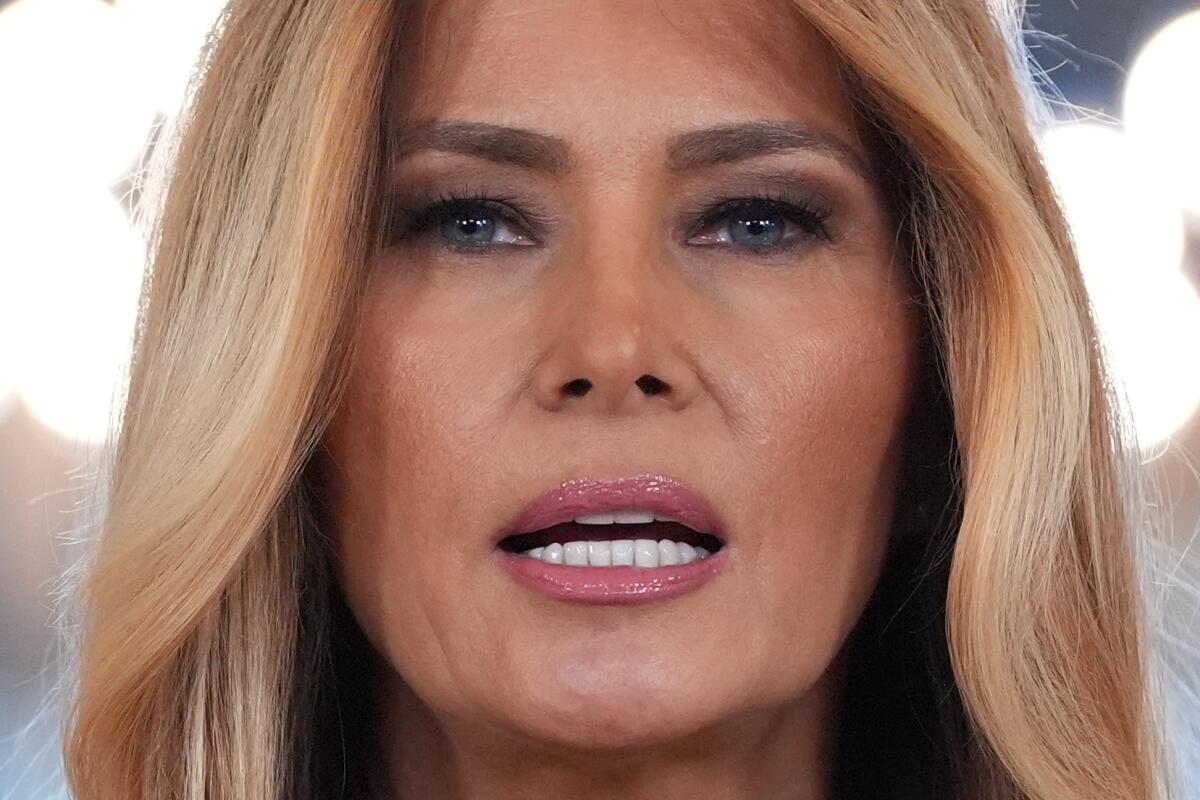
That tension is exactly what surfaced when First Lady Melania Trump made unusually direct remarks from the White House on Thursday, denouncing what she called “lies linking me to the disgraceful Jeffrey Epstein,” while urging Congress to hold public hearings where survivors can testify under oath.
Join the Discussion
The politics around it
This was not a statement dropped into a vacuum. It landed inside a live political effort from the West Wing and the president’s allies to downplay Epstein and his victims, with repeated public messaging that the country is ready to move on.
Melania Trump’s call for action cut against that direction. It also created a strange split-screen: a first lady pushing Congress toward public testimony at the same moment the administration was trying to drain oxygen from the story.
There was also confusion about the timing. Some officials were reportedly stunned, interpreting the moment as an attempt to get out ahead of something. People close to her described a simpler motive: frustration at online chatter, a desire to issue a firm denial on the record, and legal advice that an on-the-record denial could help.
One White House official said there was disagreement among those close to her about whether to proceed, because addressing the matter could bring it back to the forefront.
A person familiar with the matter said President Donald Trump was aware she planned to make the statement. After her remarks, the president said in an interview that he did not “know anything about” it ahead of her appearance. The public is left with a plain discrepancy: awareness described by one account, and ignorance claimed by another.
What she said
The key thing about a public statement is that it is not an internet thread. It is not insinuation. It is a set of claims that can be evaluated.
In her remarks, the first lady made several specific assertions, including:
- “I’ve never been friends with Epstein.”
- She and President Donald Trump were “invited to the same parties as Epstein from time to time,” describing that as a function of overlapping social circles in New York City and Palm Beach.
- “To be clear, I never had a relationship with Epstein or his accomplice, (Ghislaine) Maxwell.”
- “I have never had any knowledge of (Epstein’s) abuse of his victims. I was never involved in any capacity. I was not a participant. I was never on Epstein’s plane, and never visited his private island,” calling his conduct “repulsive.”
Those are denials, and they are also boundaries. They define what she says did not happen: friendship, relationship, knowledge, travel on the plane, and presence on the island.
Why it stood out
She had never spoken publicly on the issue before Thursday’s remarks, and earlier this year she ignored a shouted question about Maxwell during an unrelated event.
She has, however, filed lawsuits over past efforts to tie her to Epstein, countering what she characterized Thursday as “smears” that were “mean-spirited and politically-motivated.” She has successfully received retractions and apologies from HarperCollins Publishers, Democratic strategist James Carville and The Daily Beast.
The call for hearings
If Melania Trump had only denied the allegations, the story would have been about reputation management. Instead, she added a legislative demand that recast it as a public accountability moment.
Her request was explicit:
“I call on Congress to provide the women who have been victimized by Epstein with a public hearing specifically centered around the survivors, give these victims their opportunity to testify under oath in front of Congress with the power of sworn testimony.”
And she went further: “Each and every woman should have her day to tell her story in public, if she wishes, and then her testimony should be permanently entered into the congressional record.”
That matters constitutionally because Congress has broad investigative power tied to legislation and oversight. A hearing is not a criminal trial, but it can still produce sworn testimony, compel documents in many circumstances, and create a public record that becomes politically and institutionally difficult to ignore.
Record vs rumor
Documented: social proximity
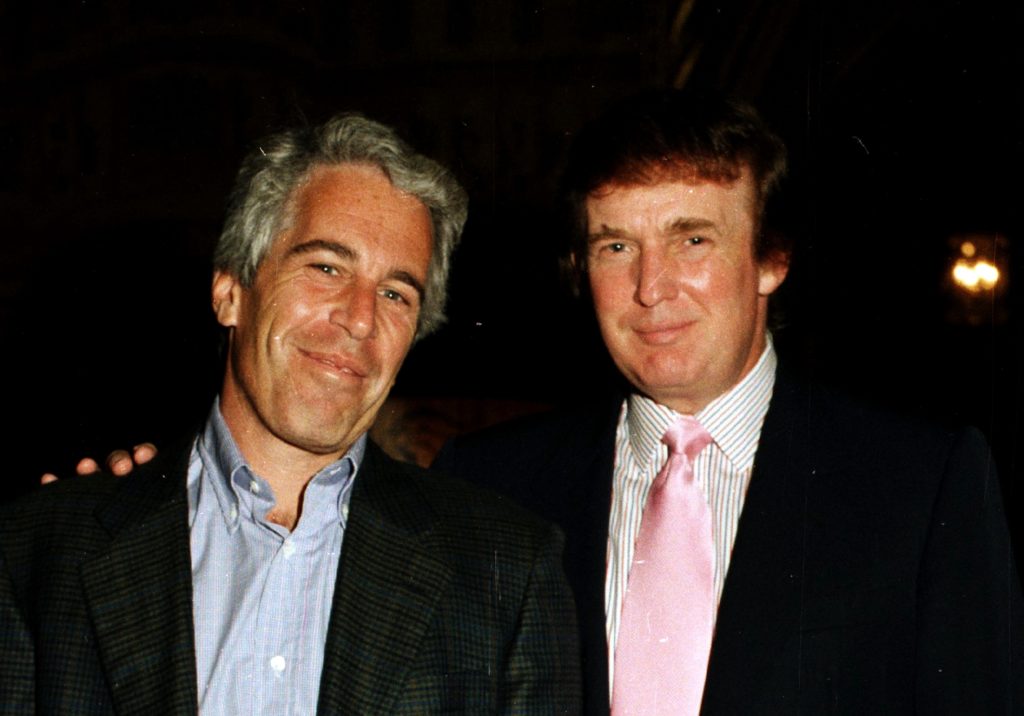
There is a widely circulated photograph from February 2000 at Mar-a-Lago in Palm Beach, Florida, showing Donald Trump, Melania Trump, Jeffrey Epstein, and Ghislaine Maxwell together. A photo is not proof of wrongdoing. But it is evidence of access and proximity, which is why it continues to surface.
Documented: a friendly email exchange
Documents released in connection with the Epstein investigation included a friendly 2002 email exchange between Melania Trump and Ghislaine Maxwell. Melania Trump signed that email, “Love, Melania,” and Maxwell responded, calling her “sweet pea.”
On Thursday, Melania Trump characterized the email as “casual” and a “polite reply.”
Again, a cordial email is not a criminal link. But it is a factual data point that sits between “they never met” and “they were close,” which is why it attracts outsized attention.
What the internet fills in
Online allegation often runs on a simple logic: association equals complicity. Constitutionally, that is exactly backward. In American law, guilt is individual. It requires evidence tied to a specific person and a specific act, proven under a defined standard.
Rumor thrives where records are incomplete and emotions are justified. But in a constitutional republic, the remedy for incomplete records is not collective suspicion. It is lawful process.
Reactions
Her call for hearings did what high-profile calls for hearings tend to do: it restarted the argument, widened the coalition, and hardened the critique.
Congress: bipartisan interest
On Capitol Hill, the response included quick bipartisan encouragement. Rep. Robert Garcia, the top Democrat on the House Oversight Committee, said: “We agree with First Lady Melania Trump’s call for a public hearing with the survivors of Jeffrey Epstein. We encourage Chairman Comer to respond to the First Lady’s request and schedule a public hearing immediately.”
Republicans signaled support as well. Rep. Tim Burchett, who serves on the House Oversight Committee, said he looked “forward to working with the first lady on this very important issue.”
Survivors and advocates: burden and safeguards
Several Epstein survivors were surprised to see, if not totally unaware of, her remarks. And while one advocate described her acknowledgement of harm as a positive step, the advocate also stressed the need for legal mechanisms to pursue truth without harming survivors.
More sharply, a group of survivors and family members of the late Virginia Giuffre said in a statement that asking survivors to do more “is a deflection of responsibility, not justice.” They argued: “First Lady Melania Trump is now shifting the burden onto survivors under politicized conditions that protect those with power: the Department of Justice, law enforcement, prosecutors, and the Trump Administration, which has still not fully complied with the Epstein Files Transparency Act.”
The DOJ question
Other lawmakers who had pushed to release Epstein-related files praised the first lady while insisting that accountability is ultimately a Justice Department job. Rep. Thomas Massie of Kentucky argued it is up to Acting Attorney General Todd Blanche to bring charges, not Congress. Former Rep. Marjorie Taylor Greene similarly said it was up to the DOJ to get justice for victims, though she praised Melania Trump for raising the issue at a moment when it had fallen out of the news cycle.
Institutional accountability
Hearings are often sold as catharsis. In a system built on separated powers, they are supposed to do something harder: force institutions to answer for what they did and did not do.
That is why one detail from recent months matters. Former Attorney General Pamela Bondi, who was fired in part over her handling of the Epstein files, was asked to apologize to Epstein survivors during a February congressional hearing and declined to do so. A refusal like that is not just a headline. It is a signal about how institutions position themselves when confronted with harm.
What Americans are entitled to know
Americans are used to thinking of “the public’s right to know” as an absolute. It is not. The Constitution does not contain a blanket “right to all facts the government possesses,” even when the subject is infamous.
1) Transparency where the law requires it
Some information becomes public because statutes, court rules, and constitutional doctrines push it there. Court filings, trial evidence admitted in open court, final agency actions, and many public records are accessible for a reason: legitimacy depends on visibility.
2) Functioning oversight
Congress has the power to investigate as part of legislating and overseeing the executive branch. If lawmakers conclude that agencies mishandled investigations, protected the powerful, or failed victims, oversight is not a favor. It is a constitutional design feature.
3) Not unredacted investigative files on demand
Investigations involve grand jury material, confidential informants, ongoing leads, and sensitive victim details. Even in cases with immense public interest, legal systems protect some information to prevent witness intimidation, preserve due process, and avoid turning trauma into a spectator event.
The instinct to demand “release everything” may feel like justice. Sometimes it is. Sometimes it is a shortcut around the protections that keep prosecutions lawful and survivors safe.
4) Not accusation as verdict
The Constitution’s baseline is due process. That protection is not reserved for likable defendants or politically convenient targets. The entire theory of the Bill of Rights is that the government’s power must be constrained even when the public is furious.
Hearings: tool or theater
Melania Trump’s proposal is, on paper, survivor-centered. It would also be inherently political because Congress is a political body and public hearings are made for cameras.
That does not mean hearings are worthless. They can do three things the criminal system often fails to do:
- Create a public record that cannot be quietly sealed or settled away.
- Force institutional answers from agencies about what was known, when it was known, and why action was or was not taken.
- Shift incentives by making continued silence costly for officeholders.
But the backlash from survivors and advocates points to the central design problem. A hearing can become a place where the burden of proof, the emotional labor, and the public exposure all fall on the people already harmed, while the institutions that failed them speak in careful, lawyered language.
A constitutional approach asks not just whether a hearing is allowed, but whether it is structured to minimize harm while maximizing truth.
Public interest vs evidence
The Epstein case has become a national Rorschach test. People project onto it their deepest suspicions about elites, institutions, and coverups. Some of that suspicion is earned. Epstein’s crimes were real. So were institutional failures.
But a constitutional culture depends on distinguishing:
- What is documented (photos, filings, sworn testimony, authenticated communications).
- What is alleged (claims that may be true, false, or unprovable).
- What is insinuated (the shadow-world where people are tried by proximity).
Melania Trump’s statement tries to move her from insinuation back into the world of claims that can be tested. Her call for hearings, if acted on responsibly, could also move survivors out of the realm of whispered tragedy and into formal public record. But the survivor critique is a warning label: a public record that costs survivors more than it costs institutions can still be injustice, just televised.
What happens next
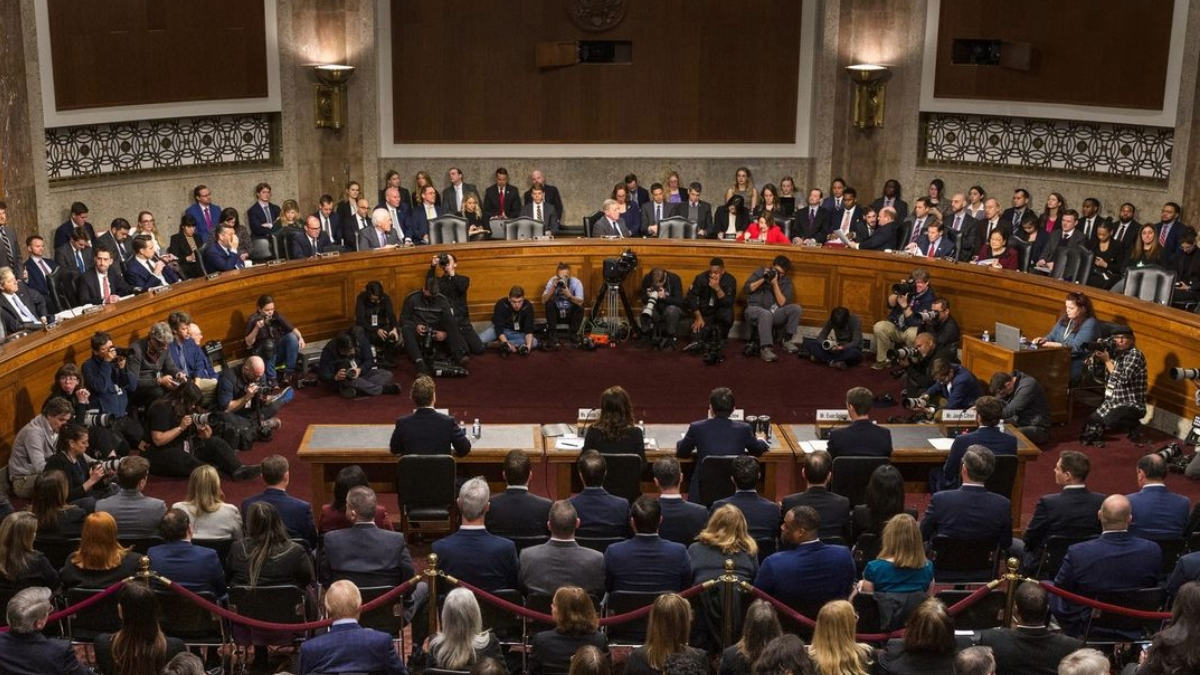
If Congress takes up the first lady’s request, the constitutional question is not whether lawmakers can hold a hearing. They can. The question is what a legitimate hearing looks like in a case defined by exploitation, political incentives, and long-running distrust.
At minimum, that means:
- Survivors must be able to testify voluntarily and safely, with trauma-informed protocols and the option to limit identifying details.
- Lawmakers should focus on institutional accountability: investigative failures, prosecutorial decisions, and systemic reforms, not voyeurism.
- The executive branch should be asked direct, narrow questions about compliance with existing disclosure obligations and the rationale for any redactions, including issues raised by the Epstein Files Transparency Act.
- If members insist the real venue is the Justice Department, they should say what action they want from DOJ, and what timeline and public reporting will follow.
And for the rest of us, the civic assignment is quieter but harder: resist the dopamine of rumor. Demand records. Demand procedure. Demand that truth, when it comes, arrives through mechanisms that can survive scrutiny.
In a republic, justice is not whatever we can get trending. It is what we can prove.