
The morning after Election Day, the losing president does not instantly become powerless. The cameras may pivot to the president-elect, donors may scatter, and party leaders may start talking like the next administration is already here.
But constitutionally, the sitting president remains the president until noon on January 20, when the next presidential term begins and the president-elect takes the oath. That in-between time is what Americans call the lame duck period. It is politically diminished, not legally reduced.
Join the Discussion
What does “lame duck” mean?
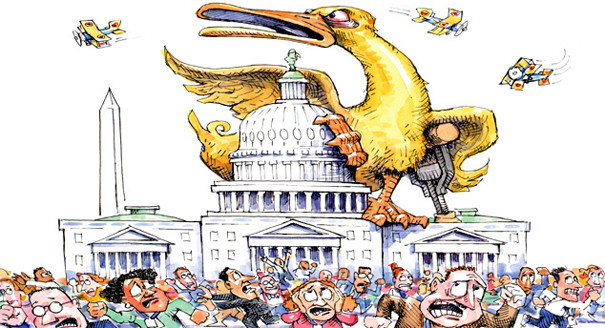
Lame duck is a political label for an officeholder whose successor has been chosen or whose term is ending, meaning their influence is weakened because everyone knows they are leaving.
Lame duck president
A lame duck president is typically a president who has lost reelection or is term-limited and nearing the end of a second term. The term is commonly used for the window between the November election and Inauguration Day, but it can also describe a president who is still in office yet clearly on the way out.
Lame duck Congress
A lame duck Congress is the period after the November election when the current Congress is still meeting even though voters have already chosen at least some of its replacements. Members who lost reelection, retired, or moved on to other offices can still vote on laws until the new Congress is sworn in.
In practical terms, the congressional lame duck window is often late November through December, but it can run up to January 3 if the outgoing Congress meets again before the new one takes over.
In both contexts, “lame duck” is about leverage, not authority.
Full power until noon on January 20
The Constitution does not create a special reduced-power mode for the presidency after an election. Article II vests “the executive Power” in a president for a four-year term, and that term does not end when the votes are counted or even when the Electoral College meets.
The legal handoff happens at a specific time.
- 20th Amendment, Section 1: The terms of the president and vice president end at noon on January 20.
- 20th Amendment, Section 2: The terms of senators and representatives end at noon on January 3, and the new Congress begins then.
So a lame duck president remains commander in chief, remains the nation’s chief diplomat, and remains the head of the executive branch, with access to the lawful tools of the office until noon on January 20.
(Edge case worth knowing: even if an inauguration ceremony or oath were delayed, the old term still ends at noon. If a president leaves office early due to death, resignation, or removal, succession rules apply and the vice president becomes president.)
Why the 20th Amendment matters
Before the 20th Amendment, the Constitution set the presidential inauguration on March 4. That created a long lame duck stretch: four months in which a defeated president and an outgoing Congress still held power after voters had clearly chosen a new direction.
The 20th Amendment, ratified in 1933, is sometimes called the “Lame Duck Amendment” because it shortened the transition period:
- It moved the start of the new Congress to January 3, reducing the time an outgoing Congress could legislate after an election.
- It moved inauguration to January 20, reducing the time a defeated or departing president would remain in office.
The amendment did not eliminate lame duck power. It reduced the number of days that power could be exercised.
What can a lame duck president still do?
Almost everything a president can do on any other day of the term, as long as they do it through lawful channels. Here are the biggest categories that show up in real transitions.
1) Issue pardons and commutations
Article II gives the president power to grant clemency for federal offenses, with one major limit: it does not apply to impeachment.
Clemency is a classic late-term tool because it is largely insulated from reversal by the next administration. Once granted, it is done.
2) Sign or veto legislation
If Congress passes a bill during the lame duck period, the president can sign it into law or veto it. That includes must-pass spending bills, extensions of expiring programs, emergency aid, and occasionally major policy compromises that were politically impossible before the election.
One quirk is the pocket veto. It can occur when Congress adjourns in a way that prevents the bill’s return, and the president does not sign within the Constitution’s 10-day window (excluding Sundays). Lame duck calendars make these timing fights more likely.
3) Issue executive orders and other directives
Executive orders, presidential memoranda, and agency directives can set priorities, change enforcement posture, and steer how the executive branch uses discretion.
Some of these actions are durable, especially when they build on existing statutory authority. Others are easily reversed by the next president with a signature and a new set of instructions.
4) Make appointments, including judges (with Senate confirmation)
The president can nominate officials and judges up to the final day. Whether those nominees are confirmed depends on the Senate, and timing matters.
Judicial appointments can be especially significant because Article III federal judges have life tenure. A late-term confirmation can shape constitutional law long after the president is gone.
5) Conduct foreign policy and use commander in chief authority
The president remains the commander in chief and the central day-to-day actor in diplomacy. That means a lame duck president can still negotiate, recognize governments, direct military operations within existing legal constraints, and manage ongoing crises.
Other institutions still matter here, too. Treaties require Senate advice and consent, and many foreign policy choices are shaped by statutes and appropriations.
What can stop a lame duck president?
The same checks that exist during any other part of a term still apply.
- Congress controls funding, can legislate limits, can conduct oversight, and can refuse to confirm nominees.
- The courts can block executive actions that exceed statutory or constitutional authority.
- Procedure and time limit what can realistically be implemented before January 20. Many late-term regulations must comply with the Administrative Procedure Act, which requires notice-and-comment steps that take time and can be challenged in court.
- Congress and the next administration can also target late-term rules through the Congressional Review Act, which allows Congress to nullify certain recent regulations with a joint resolution and the new president’s signature.
- The next president can reverse many policy directives on day one, though they cannot erase pardons or unilaterally undo confirmed lifetime judicial appointments.
In other words: lame duck does not mean lawless, and it does not mean powerless. It means constrained by politics, institutions, and the clock.
Why lame duck periods get intense
Lame duck periods compress incentives. Outgoing presidents may want to cement a legacy, settle unfinished business, or take actions they avoided when reelection pressures still mattered. Lawmakers who are retiring or who lost reelection may vote differently than they did before November.
That is why transitions often produce spikes in:
- high-profile pardons
- final regulatory pushes
- urgent legislative bargains
- confirmation fights
- foreign policy moves designed to lock in strategy
The Constitution permits this. The political system argues about whether it is wise.
Quick facts: notable lame duck actions
- John Adams (1801): In his final days, Adams made the famous “midnight appointments.” The resulting dispute, including questions about the delivery of judicial commissions, fed into Marbury v. Madison (1803), the case that cemented judicial review.
- James Buchanan (1860 to 1861): Buchanan’s lame duck months unfolded during secession, illustrating a different kind of limitation: a president can have full formal power and still be boxed in by a national crisis and political collapse.
- Herbert Hoover (1932 to 1933): The long pre-20th Amendment transition left Hoover and Roosevelt in a tense standoff during the Great Depression, a major reason reformers pushed to shorten the lame duck period.
- Jimmy Carter (1980 to 1981): Carter’s final hours were dominated by negotiations tied to the Iran hostage crisis, showing how foreign policy can consume a lame duck presidency right up to inauguration.
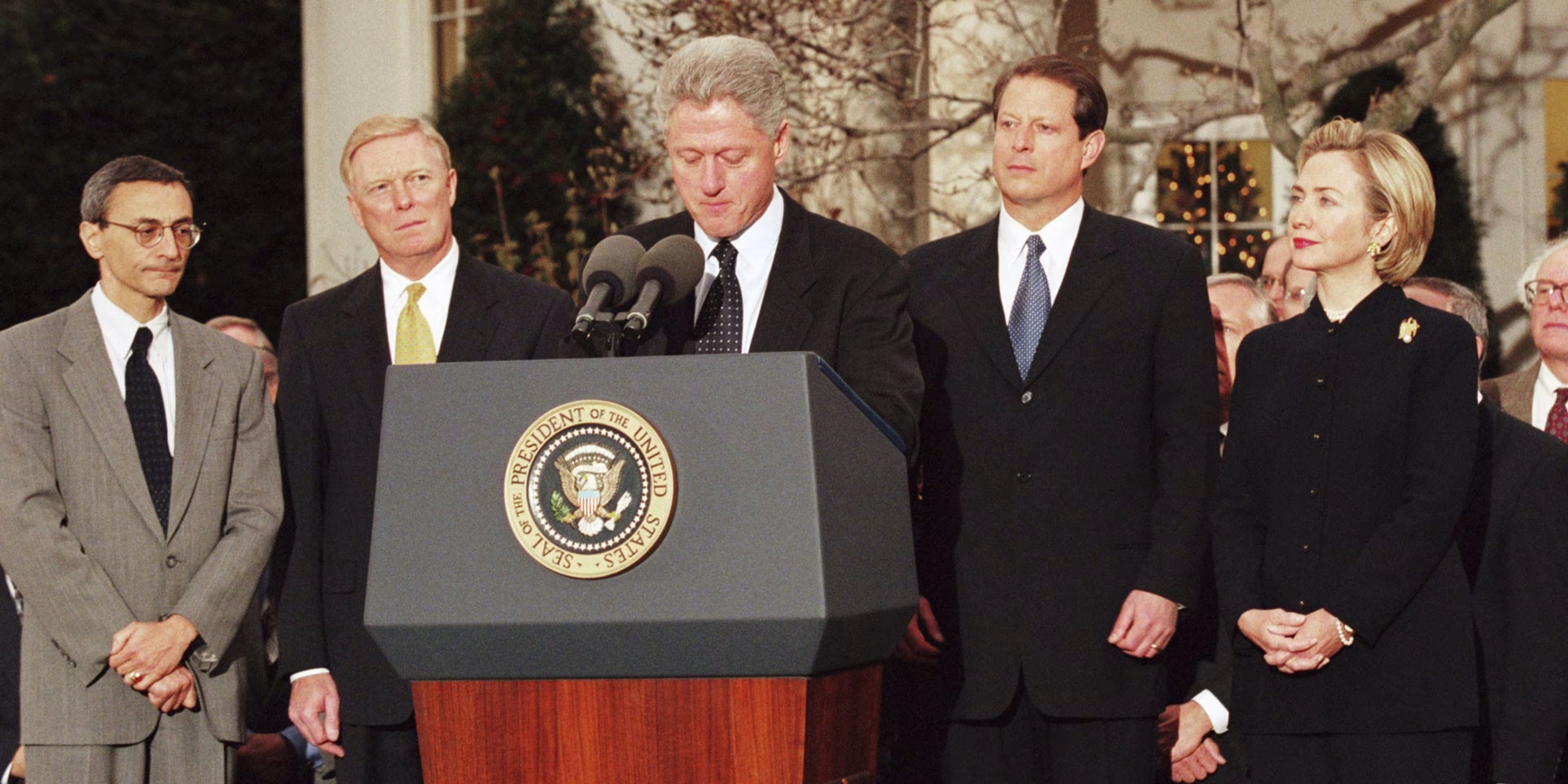
- Bill Clinton (2001): Clinton issued a large number of last-minute pardons and commutations, reinforcing why clemency is often treated as the quintessential lame duck power.
If you take one point from this list, take this: the lame duck period is not a constitutional pause button. It is a countdown clock.
So what is a lame duck president?
A lame duck president is a president who is still fully in office but politically weakened because their term is ending and a successor is coming. The Constitution does not strip their powers after Election Day. The clock runs until noon on January 20, and within that window the president can still sign laws, veto bills, issue executive orders, make nominations, direct foreign policy, and grant pardons.
The term “lame duck” is about politics. The power is about the Constitution.