
Sometimes a Supreme Court argument turns on a constitutional principle so grand it feels like it belongs on marble. Other times it turns on a word so ordinary you could miss the stakes entirely.
This week, the justices wrestled with one of those ordinary words: day. Not “liberty.” Not “equal protection.” Just day, as in Election Day.
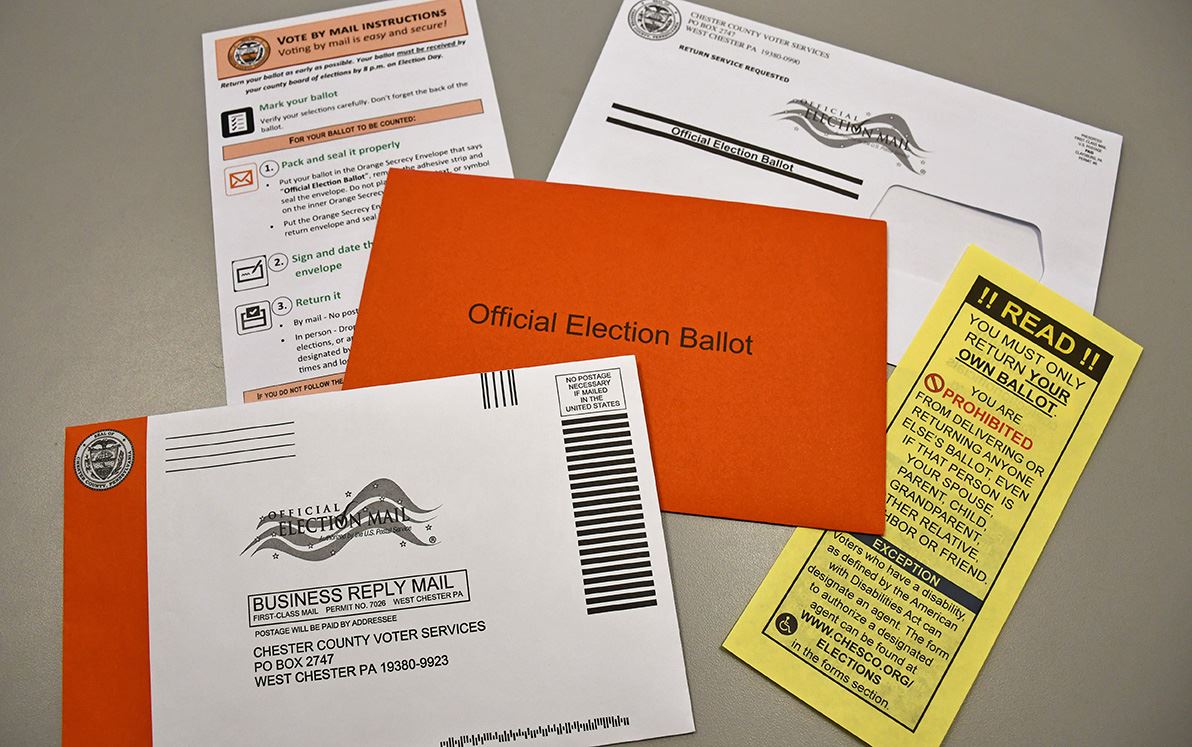
At issue is a tight, statutory question with sprawling consequences: whether states may count mail ballots that arrive after Election Day so long as they are postmarked by that day. The case comes out of Mississippi, which allows ballots to be counted if they arrive up to five days after Election Day, so long as they were timely postmarked.
Join the Discussion
Mississippi’s five-day rule
The lawsuit was brought by the Republican National Committee, which argues that federal law sets a single national deadline for federal elections: the day Congress designates as Election Day. The U.S. Court of Appeals for the 5th Circuit sided with the RNC in 2024, leading Mississippi to ask the Supreme Court to weigh in.
The dispute arrives at the Court under a name that captures the unusual posture: Watson v. RNC.
A ruling that affirms the 5th Circuit would not stay confined to Mississippi. At least 14 states and Washington, D.C. count some ballots that arrive after Election Day if they are postmarked on time. If the Court reads federal law to require receipt by Election Day, those policies could be forced to change before major upcoming federal elections, including the 2026 midterms.
Alito’s plain-English point
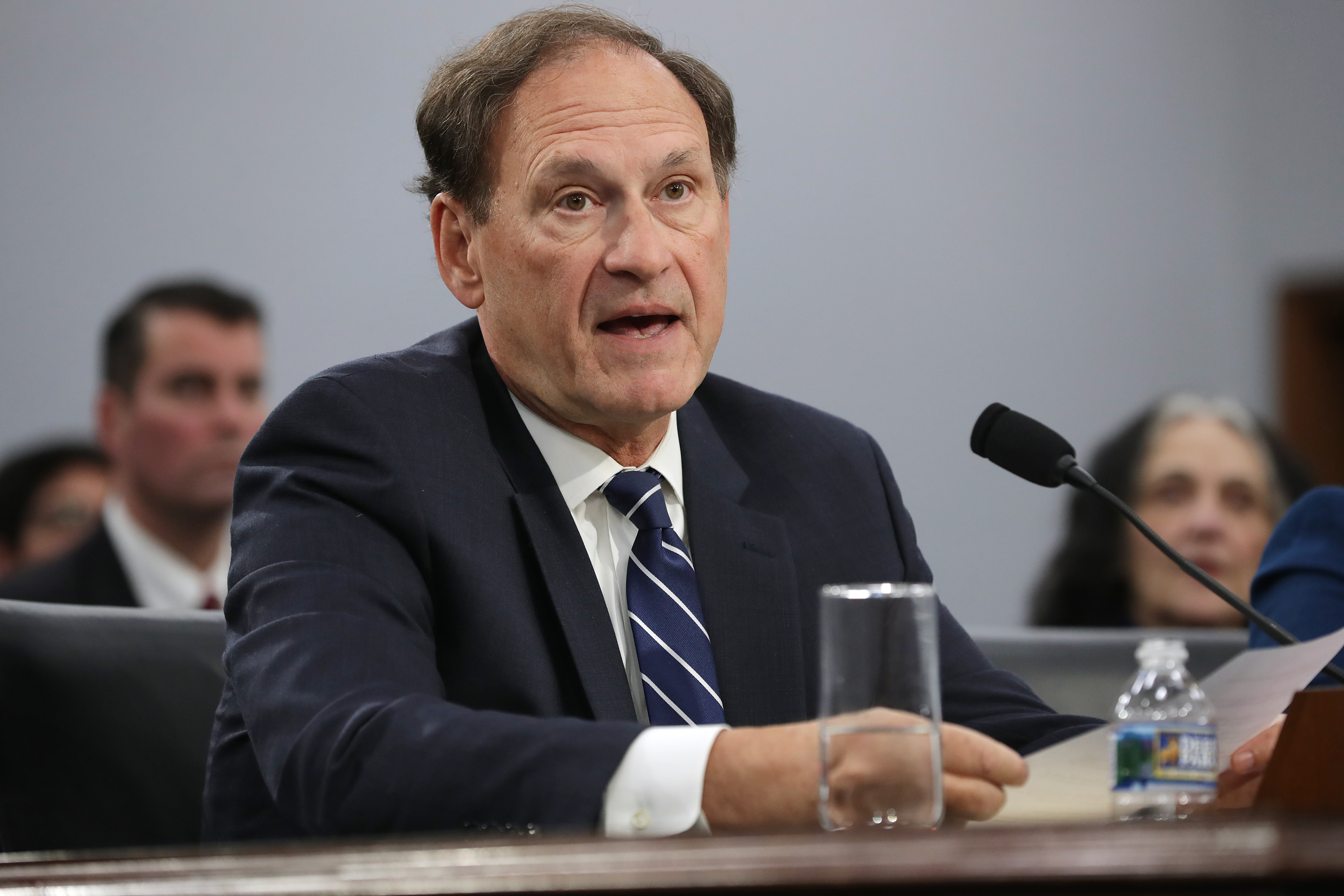
Justice Samuel Alito offered the most stripped-down version of the argument. In everyday English, he suggested, we use “day” to mean a specific calendar day, not a rolling period whose boundaries depend on mail delivery schedules.
As he put it: “We have lots of phrases that involve two words, the last of which, the second of which is ‘day,’ Labor Day, Memorial Day, George Washington's birthday, Independence Day, birthday and Election Day, and they're all particular days.”
Then he pushed the implication: “If we start with that, if I have nothing more to look at than the phrase ‘Election Day,’ I think this is the day in which everything is going to take place, or almost everything.”
That is not just semantics. It is a theory of legal interpretation. If Congress chose the phrase “Election Day,” the argument goes, the judiciary should not turn it into “Election Days,” plural, without a clear textual signal.
Alito was among multiple conservative justices on Monday who appeared skeptical of Mississippi’s law and intent on striking it down.
What Congress can set
This fight is less about constitutional fireworks than about statutory wiring: what federal law means when it sets a single day for federal elections, and how far that choice can displace state election rules.
- States run elections in practice: they design ballots, administer polling places, manage mail voting, and set many procedural rules.
- Congress can set the time of federal elections, and when it does, that national rule can override conflicting state timelines.
The legal question becomes: what exactly did Congress set when it chose a single “day” for federal elections? A day for voters to act? Or a day by which the core act of voting, including receipt by election officials, must be completed?
Former U.S. Solicitor General Paul Clement, arguing in support of the RNC, framed elections historically as a combined act: the voter offers the ballot and an authorized official receives it. As he told the Court: “All agree that elections for federal office have to end on the day of the election specified by Congress, and all agree that you can't have an election unless you receive ballots, and there must be some deadline for ballot receipt,” and, “Nonetheless, Mississippi insists that ballots can trickle in days or even weeks after Election Day. That position is wrong as a matter of text, precedent, history and common sense.”
Roberts and Kagan’s worry
Not every justice seemed comfortable with an interpretation of “Election Day” that could be read broadly enough to threaten other common election practices, including early voting.
Chief Justice John Roberts pressed the point directly, asking Mississippi Solicitor General Scott Stewart: “If ‘day’ includes a period after a particular day of the election, does it include a particular day before the day of the election?” He added, “Or does your logic require a different consideration?”
Justice Elena Kagan also raised concerns along the same line: once the Court announces a hard-edged definition of “day,” litigants may try to stretch it into new contexts.
Why it matters beyond Mississippi
One point easily gets lost: requiring ballots to be received by Election Day would not necessarily mean results are known on Election Night. Critics note election officials could still be counting mail ballots in some states even if all ballots are received by Election Day, because of states’ individual tabulating processes.
The case also lands in a political moment in which President Donald Trump has made election security a top focus. The RNC and several election integrity groups backing its position argue the Supreme Court should ban late-arriving ballots, with an exception for military ballots, because they sow distrust in elections.
Jason Snead, executive director of the Honest Elections Project, put it this way in a statement provided to Fox News Digital: “Today’s oral arguments in Watson v. RNC clearly show where the Supreme Court should come down: state laws that count ballots received after Election Day violate federal law, expose elections to delays, invite fraud, and fuel public doubt in the democratic process,”
A decision is expected by the summer. If it upholds the 5th Circuit’s approach, it would likely affect more than a dozen states that accept postmarked ballots after Election Day, and it is expected to affect the 2026 midterms.
Military and overseas ballots
Even if the Court tightens the deadline for most voters, military and overseas ballots are usually treated differently under federal law. Ballots covered by the Uniformed and Overseas Citizens Absentee Voting Act would likely remain unaffected.
That carve-out matters because it highlights the deeper issue the justices are circling: if Congress wants exceptions, it can write exceptions. The harder question is whether courts should create exceptions by stretching the meaning of “day.”
States are already moving
The argument is not happening in a vacuum. Since the 2024 midterm elections, four Republican-controlled states, Kansas, Ohio, Utah and North Dakota, have moved to require receipt by Election Day.
The bigger lesson
Americans tend to talk about elections as if every rule is dictated by the Constitution itself. In reality, much of the machinery runs on statutes: deadlines, postmarks, receipt rules, and administrative procedures.
That is why a single word in a federal law can matter as much as a lofty constitutional phrase. By the summer, the justices are expected to tell the country whether “Election Day” is a hard stop for ballots, or a marker that states can treat as the beginning of a short postmarked grace period.
And if Justice Alito gets his way, the answer may come down to a civic-education fact so basic it feels almost too simple for a courtroom argument.
A day is a day.