
Every criminal trial ends with the same ritual: the judge explains the law, the jury “finds the facts,” and everyone pretends those roles never overlap.
Then a jury walks into the deliberation room and does something the system is built to discourage, but cannot completely prevent: it refuses to convict, even though the jury believes the government proved the case under the judge’s instructions.
That is jury nullification. It is not a myth. It is not a magic phrase. It is a real outcome that sits in the strange space between what juries are told they may do and what, in practice, they are able to do.

What it is
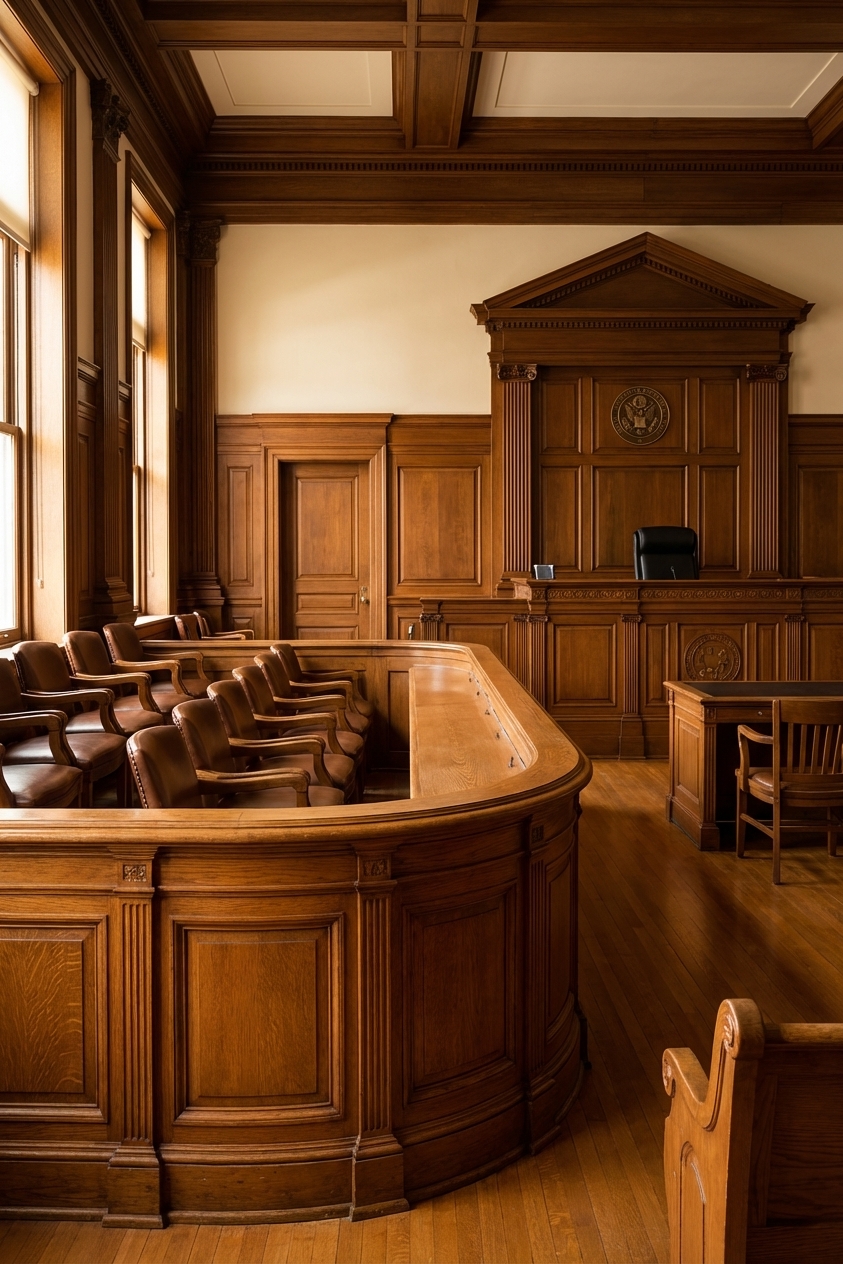
Jury nullification happens when a jury returns a not guilty verdict even though the jurors believe the elements were proven beyond a reasonable doubt under the law as the judge explained it. The jury is, in effect, deciding that the law should not be applied in this case.
This can take a few forms:
- Moral rejection: the jurors think the law is unjust (or unjust as applied).
- Fairness rejection: the jurors think the punishment would be excessive, or the prosecution is overreaching.
- Legitimacy rejection: the jurors distrust the government’s conduct, even if the underlying charge is technically proven.
Important boundary: nullification is mostly discussed in the context of acquittals, because acquittals are generally final. In theory, juries can also disregard instructions in the other direction, by convicting despite a legal defense or despite the judge’s view of the law. But convictions are reviewable in ways acquittals are not, and can be reversed for legal error or (in rare cases) for insufficient evidence.
Is it legal?
“Legal” is the trap word here. The cleanest way to say it is:
- A juror has a practical power to nullify because an acquittal is final.
- A juror does not have a clearly protected right to be instructed about nullification or to announce it in court.
Courts have long recognized the practical reality behind the first point, even when they refuse to endorse it as a legitimate doctrine. They also work hard to prevent the second point from becoming a courtroom strategy. The result is a system where nullification is possible, but explicit advocacy for it inside the trial is usually restricted, and a juror who announces an intent to ignore the law may be removed depending on the jurisdiction and the judge’s findings.
Constitution links
Sixth Amendment (criminal cases)
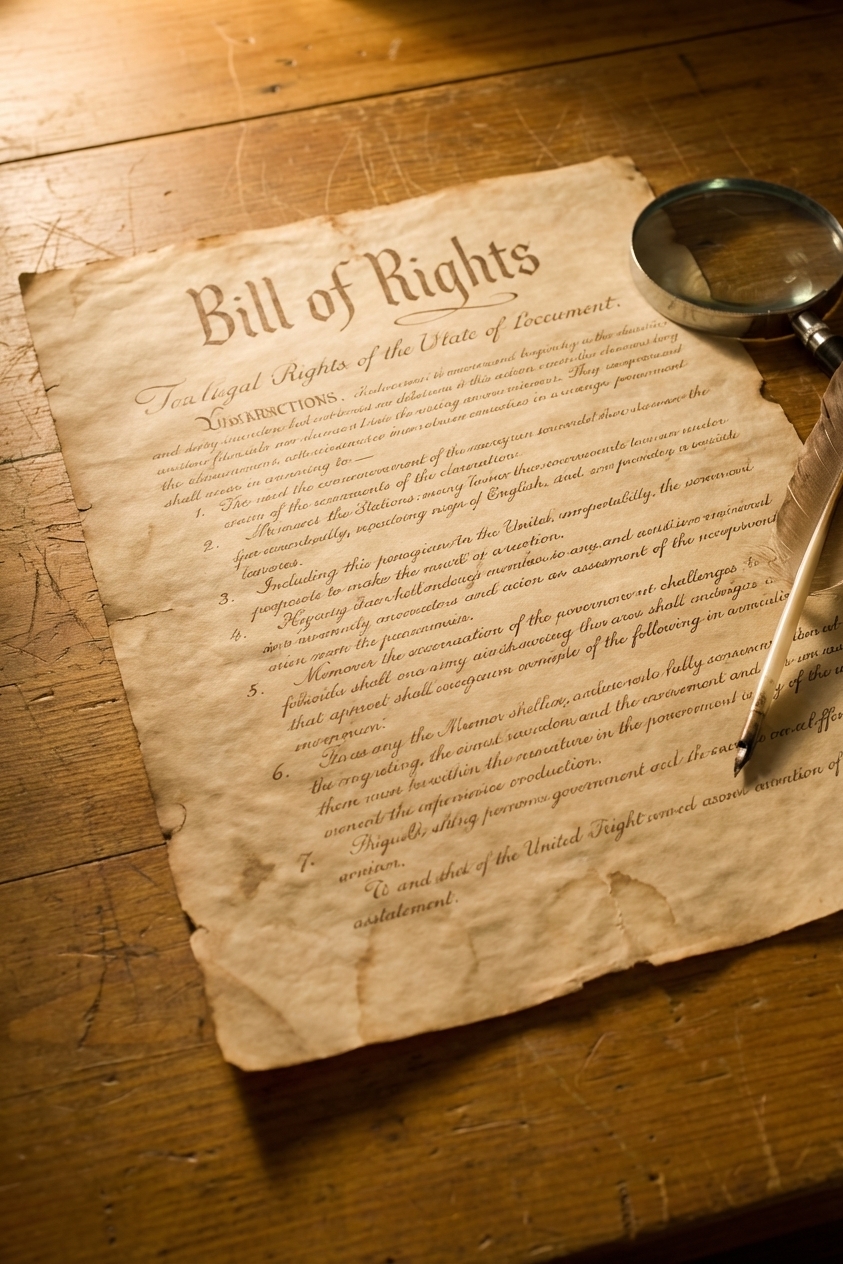
The Sixth Amendment guarantees, among other things, the right to a speedy and public trial by an impartial jury in criminal prosecutions. Jury nullification is not named. But the argument is that the jury’s presence is not decorative. It is a structural check.
Historically, juries were seen as a barrier between the accused and the state. That barrier is strongest when jurors can refuse to be the government’s rubber stamp.
Seventh Amendment (civil cases)
The Seventh Amendment preserves the right to a jury trial in certain civil cases and limits reexamination of facts found by a jury. It is sometimes invoked in nullification discussions because it reflects the same Founding-era belief: juries are not simply fact calculators. They are community participation in judgment.
Still, modern “nullification” controversy overwhelmingly lives in the criminal arena. Civil verdicts are generally reviewable and can be remanded, reduced, or retried in ways criminal acquittals cannot. Appellate courts still defer heavily to juries on factual questions, but the finality regime is simply different.
What the Court says
The most cited federal case is Sparf v. United States (1895). The Supreme Court rejected the idea that juries must be told they can judge the law itself. The Court’s posture has generally been: juries must follow the law as instructed, and judges need not invite jurors to do otherwise.
At the same time, the system cannot fully erase the jury’s final say on guilt. Add the Constitution’s protection against double jeopardy in the Fifth Amendment, and the acquittal becomes functionally unreviewable. That finality is the oxygen that keeps nullification alive.
So the doctrine that emerges is almost paradoxical:
- Jurors are instructed that they must follow the law.
- But if they acquit anyway, the government almost always cannot undo it.
How it shows up
Nullification is easiest to see in hindsight, when the law looks obviously wrong. In the moment, it usually looks like controversy, defiance, or “a jury going rogue,” depending on who is speaking.
Also, it does not always end with a clean acquittal. In the real world, this dynamic often appears as a hung jury, where one or more jurors refuse to vote guilty and the case ends in a mistrial. Prosecutors can retry hung cases, so a hang has less constitutional finality than an acquittal. Still, it can function as a community veto in practice, especially when repeated retrials are politically or financially costly.
1) Fugitive Slave Act cases
After Congress passed harsher fugitive slave laws, including the Fugitive Slave Act of 1850, Northern communities faced a brutal test of federal power: would local citizens help enforce slavery’s reach?
In some cases, juries refused to convict people charged with violating these laws, especially where defendants were accused of assisting escapees or interfering with capture. A commonly cited example is the aftermath of the Jerry Rescue in Syracuse (1851), where abolitionists freed a detained fugitive. Several participants were prosecuted in federal court, and at least one trial ended without conviction after a jury failed to convict, illustrating the enforcement limits when local jurors would not cooperate.
Nullification here functioned as a pressure valve in a system that had legalized injustice. It also intensified sectional conflict because it looked, to slaveholding states, like the North refusing to honor federal law.
2) Prohibition cases
During Prohibition, enforcement depended on public cooperation. In many jurisdictions, juries simply would not convict otherwise ordinary defendants for alcohol possession or sale. Historians and legal commentators routinely describe Prohibition-era juries as reluctant enforcers, with acquittals and hung juries common enough to weaken consistent enforcement and contribute to the sense that the law had outpaced public consent.
This is a classic “rule without legitimacy” problem. When the law outpaces public consent, juries can become a quiet referendum.

3) Zenger and the mythology
American civic memory often points to juries resisting government prosecutions for speech and press, including seditious libel traditions that predate the Constitution. The most famous pre-Founding symbol is the 1735 trial of John Peter Zenger in colonial New York, where a jury acquitted a printer accused of libeling the governor.
The legal rules of the time did not favor him. The jury did anyway. Zenger is also frequently mythologized, and scholars debate how directly it shaped later doctrine. But as a civic story, it captures the idea people keep returning to: the jury as a check when the law feels morally or politically illegitimate.
Why judges avoid it
If jurors have the power, why not be honest about it?
The mainstream legal answer is that nullification is a byproduct of the system, not a permission slip. Courts fear that openly instructing jurors about nullification would:
- Invite inconsistency: the law would vary case by case based on jurors’ personal beliefs.
- Increase bias: jurors could selectively “forgive” defendants they like and punish those they dislike.
- Undermine democratic lawmaking: legislatures write laws; juries would become mini-legislatures with no accountability.
- Encourage strategic jury selection: lawyers would try to seat jurors based on ideological willingness to nullify.
Many courts therefore prohibit defense attorneys from explicitly arguing “you should nullify,” and they often restrict the topic in voir dire and closing arguments. At the same time, lawyers can usually make adjacent arguments about fairness, proportionality, credibility, and reasonable doubt.
The counterargument, made by nullification advocates, is equally blunt: the jury is supposed to be a check on state power, and checks are meaningless if citizens are kept unaware of them. They see silence as a kind of managed democracy inside the courtroom.
If a juror refuses
There are two different moments to consider: before the verdict and after the verdict.
Before: removal can happen
If a juror tells the judge, during trial or deliberations, that they plan to ignore the law, the judge may remove that juror in many jurisdictions. Removal typically requires a finding that the juror is unwilling to follow the court’s instructions, unwilling to deliberate, or otherwise unable to perform the juror’s role. Standards vary by jurisdiction and the facts of the record.
This can come up if:
- a juror openly declares an intent to acquit regardless of evidence,
- a juror refuses to deliberate,
- other jurors report that someone is not following instructions.
Once removed, an alternate juror can be seated, or the case may move toward a mistrial depending on timing and local rules.
After: acquittal usually ends it
If the jury returns a not guilty verdict, the legal system is built to accept it even if everyone suspects nullification. The Fifth Amendment’s protection against double jeopardy generally prevents the government from retrying the defendant for the same offense.
That is the heart of the controversy. Nullification is powerful not because judges approve of it, but because the Constitution makes acquittals extraordinarily hard to disturb.
Can a juror be punished?
Jurors can be sanctioned for misconduct like refusing to appear, lying during jury selection, independently investigating the case, or violating court orders. But punishing a juror simply for the reasoning behind a verdict runs into deep constitutional and institutional resistance. Courts are cautious about probing deliberations, and rules of evidence in many jurisdictions sharply limit post-verdict inquiry into jurors’ mental processes.
The practical reality: if a juror wants to nullify, the safest place to do it is quietly, through the vote, without turning it into a declaration.
Safeguard or sabotage?
Nullification attracts people who rarely agree on anything, because it can look like two opposite virtues depending on the case.
The case for it
- Last-resort justice: It can prevent punishment under laws that are widely seen as immoral or abusive.
- Community conscience: It keeps criminal law connected to local legitimacy, not just statutory text.
- Structural check: It limits prosecutorial overreach in individual cases, especially where the law is broad and penalties are severe.
The case against it
- Unequal application: Two defendants accused of the same act can receive different outcomes based on who gets sympathetic jurors.
- Bias laundering: A jury can refuse to convict because of prejudice, and the acquittal is final.
- Democratic bypass: Legislatures can be voted out; juries cannot.
The Constitution does not resolve this tension for us. It builds a jury into the machinery of criminal justice, then leaves the country to argue over what that jury is supposed to be: a fact-finding instrument, or a moral actor.
Sidebar poll
Should jurors be told about jury nullification?
What to remember
- Jury nullification is the refusal to convict despite the jury’s belief that the case was proven under the law as instructed.
- Its “basis” is not a clause that says you may ignore the law. It is the Constitution’s decision to put ordinary citizens between the defendant and the state, plus the near-finality of acquittals.
- In practice it can appear as an acquittal or, just as often, as a hung jury.
- Historically, it is most visible when juries resist laws that lose moral legitimacy, including fugitive slave enforcement and Prohibition prosecutions, and in famous civic stories like Zenger.
- Courts generally do not allow lawyers or judges to invite nullification explicitly, and jurors who announce an intent to ignore the law can sometimes be removed before a verdict depending on the jurisdiction and findings.
The deeper question is not whether nullification exists. It does. The question is whether we want a system that depends on an unspoken power to correct injustice, or a system that forces that argument out into the open where it belongs: legislatures, elections, and constitutional change.