
A criminal sentence can feel like the end of a story. But sometimes it is the beginning of a much harder civic question: what did the justice system decide, and what risks did that decision leave behind?
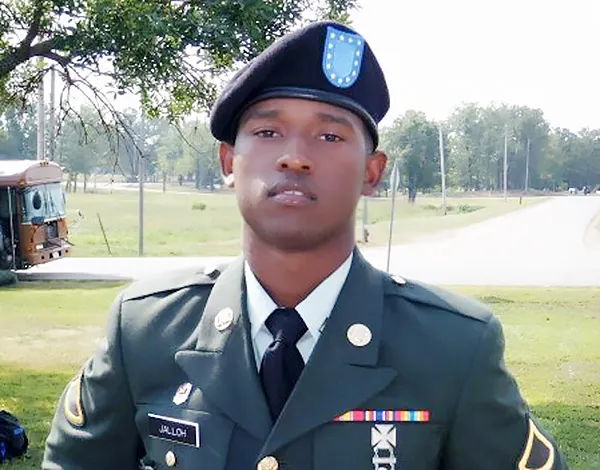
That question is at the center of renewed attention on the federal case of Mohamed Jalloh, a naturalized U.S. citizen originally from Sierra Leone who was convicted in 2017 of providing material support to ISIS. According to court records described in reporting that cited Associated Press details, prosecutors asked for a 20-year sentence, but the judge imposed 132 months, roughly 11 years. Jalloh was later released in 2024.

Join the Discussion
What the sentence difference was
In federal court, judges sentence within a framework shaped by Congress, the U.S. Sentencing Guidelines, and the facts proven in court. But within that structure, judges still have discretion, and that discretion is exactly what is being debated here.
In Jalloh’s case, federal prosecutors sought the statutory maximum of 240 months, or 20 years. Senior U.S. District Judge Liam O’Grady sentenced him to 132 months instead, and the sentence included mental health treatment and substance abuse testing, according to the wire-service details cited in the reporting.
Years later, that decision is being reexamined in the harshest possible light. Authorities say Jalloh entered a classroom at Old Dominion University and opened fire after confirming it was an ROTC class, killing Lt. Col. Brandon Shah. The FBI’s Norfolk Field Office said ROTC cadets physically subdued him and that their actions “rendered [him] no longer alive.”
The ISIS case, in plain terms
The conviction that led to Jalloh’s prison term was for providing material support to ISIS, a federal terrorism offense that often involves facilitation rather than direct violence.
According to prosecutors’ description quoted in the reporting, an overseas ISIS member, now deceased, helped arrange contact between Jalloh and someone Jalloh believed was a fellow supporter but who was actually an FBI confidential human source. Investigators also said Jalloh traveled to Nigeria as part of the plot.
The reporting adds another detail that helps explain how prosecutors described Jalloh’s path toward extremism: the overseas terrorist wanted an attack carried out, while Jalloh told the FBI source he decided not to renew his enlistment with the Virginia Army National Guard after listening to lectures from al Qaeda terrorist Anwar al-Awlaki, a New Mexico native against whom President Barack Obama ordered a fatal drone strike in 2011.
Prosecutors argued Jalloh understood what he was doing and the consequences, writing in a sentencing memo: “The defendant was fully aware of what he was doing and the consequences of those actions. His only misgivings seemed to be a fear that he would waver at the critical moment.”
Release conditions and limits
When someone convicted of a federal offense returns to the community, release typically comes with conditions, and terrorism cases often add strict monitoring. Here, the reported terms required that Jalloh have no contact with any terrorist organizations and that he be subject to computer monitoring during probation.
Those conditions matter. They are part of the government’s attempt to lower risk after incarceration. But they also have limits. Supervision can restrict behavior and increase the chance of detection, yet it cannot guarantee prevention, especially when an individual is determined to act quickly.
Why this is constitutional
On usconstitution.net, we often return to a basic tension built into American government: liberty and security, individual rights and public safety, judicial independence and democratic accountability.
Discretion is part of judging
Federal judges are not supposed to simply ratify what prosecutors request. Sentencing is one of the moments when an independent judiciary is most visible. Even in emotionally charged cases, the judge’s role is to apply the law to the record and explain the result.
That said, judicial discretion also means outcomes can differ sharply from what the public expects, especially in cases involving terrorism. When tragedy follows, people understandably ask whether the system’s risk assessment was realistic.
Congress sets caps, courts choose within them
Prosecutors sought the statutory maximum. That phrase is important: Congress sets maximum penalties by law, but it does not require judges to impose the maximum in every case. If lawmakers want different default outcomes in terrorism cases, the constitutional route is legislative change, not pressure on courts to treat every defendant the same.
Public reaction and policy debate
The case has become part of a larger argument about how the United States should handle people convicted of terrorism-related crimes once they have served their sentences.
Rep. Jennifer Kiggans, R-Va., reacted to the ODU shooting by saying: “The horrific tragedy that occurred today on ODU’s campus never should have happened.”
Former federal prosecutor William Shipley summarized the sentencing dispute on X: “Jalloh was sentenced in 2017 to 132 months in prison for providing material support to ISIS. The [government] had asked for a sentence of 240 months, the statutory maximum.”
Other public commentary has focused on citizenship consequences. In a Fox News segment referenced in the same coverage, former FBI Deputy Director Dan Bongino argued: “Anyone convicted of a terrorism charge should face mandatory denaturalization.”
That proposal raises its own complicated legal questions, including due process requirements and the long history of courts treating citizenship as a status the government cannot take away casually. Even when denaturalization is legally available, it is typically tied to fraud or illegality in the naturalization process rather than the mere fact of later criminal conduct. In other words, the constitutional and statutory details matter, and blanket rules are rarely as simple as they sound.
In the same reporting, a spokesperson for National Counterterrorism Center Director Joe Kent pointed to recent comments about tracking developments and assessing risk to the homeland, and the official emphasized “constant vigilance.” Separately, a DOJ spokesperson said there are “no known or credible threats to the homeland” at this time and that federal agents are “maintaining a constant state of vigilance to keep Americans safe.”
What to watch next
- Sentencing proposals: Lawmakers may push for tighter rules around terrorism-related sentencing or supervised release.
- Risk prediction: Sentencing decisions often involve judging future risk, which is one of the hardest things any legal system tries to do.
- Public explanation: After high-profile cases, the public often demands clearer explanations of why a sentence was lower than requested and what safeguards were in place upon release.
Whatever changes come next, the constitutional baseline remains the same: punishment must follow law, courts must be independent, and the public has every right to ask how those principles are being applied when the stakes are so high.