

A basic promise sits underneath every court ruling, especially the ones that land in a political spotlight: the judge has to be more than fair. The judge has to look fair.
That is why a new fight in federal court in Minnesota is not just about immigration enforcement tactics. It is also about judicial ethics, public confidence, and the reality that the justice system runs on credibility as much as it runs on precedent.
Join the Discussion
What this is about
U.S. District Judge Jeffrey Bryan has declined to step aside from an immigration-related case in his courtroom, even after the U.S. Department of Justice mounted a conflict-of-interest challenge and asked him to disqualify himself based on an alleged connection to his wife’s role in separate state litigation.
According to the DOJ’s motion, Bryan’s spouse is Minnesota’s solicitor general, serving under Attorney General Keith Ellison, and she is leading a separate state lawsuit against federal immigration enforcement actions also at issue in Bryan’s courtroom. The government argued that the relationship, combined with overlap between the matters, could cause a reasonable member of the public to question the judge’s neutrality.
Bryan rejected the request. In his order, he called the motion “improper, untimely, and lacking merit.” The Department of Justice has said it plans to appeal.
Operation at the center

The dispute sits inside a broader legal battle over Operation Metro Surge, a large-scale federal immigration enforcement effort. The DOJ’s filing pointed to significant overlap between the habeas case before Bryan and the state’s lawsuit led by his spouse, with both challenging the legality of Operation Metro Surge.
According to the filing, both cases allege that federal agents conducted “warrantless arrests,” engaged in “racial profiling,” and “terrorized, assaulted, and harassed” individuals.
On the state side, Ellison’s lawsuit targets Operation Metro Surge for what it alleges were unlawful and unconstitutional actions and it names outgoing Department of Homeland Security Secretary Kristi Noem.
Recusal and perception
Recusal law is built around a simple idea: it is not enough for a judge to be impartial in fact if the public has reason to doubt the process.
The Department of Justice leaned on the standard commonly summarized this way: a judge must step aside when “a judge’s impartiality might reasonably be questioned.” The government emphasized that the point is to prevent even “the appearance of partiality,” because “public perceptions of partiality can undermine confidence in the courts.”
DOJ also stressed that the issue is not whether Bryan is personally biased, but whether a reasonable observer could question his neutrality given the circumstances. As U.S. Attorney Daniel Rosen wrote: “The Court must consider whether the public might reasonably question Judge Bryan’s impartiality.”
The disclosure issue
Another layer of the government’s motion focused on disclosure. The DOJ argued that Bryan “did not disclose his marriage relationship” to the parties and said disclosure is a prerequisite for any waiver of potential conflicts under federal law.
Even when a judge denies a recusal motion, disclosure disputes can take on a life of their own. To outsiders, a missing disclosure can look like something important was not fully aired, which is exactly what recusal rules try to avoid in the first place.
Why it matters
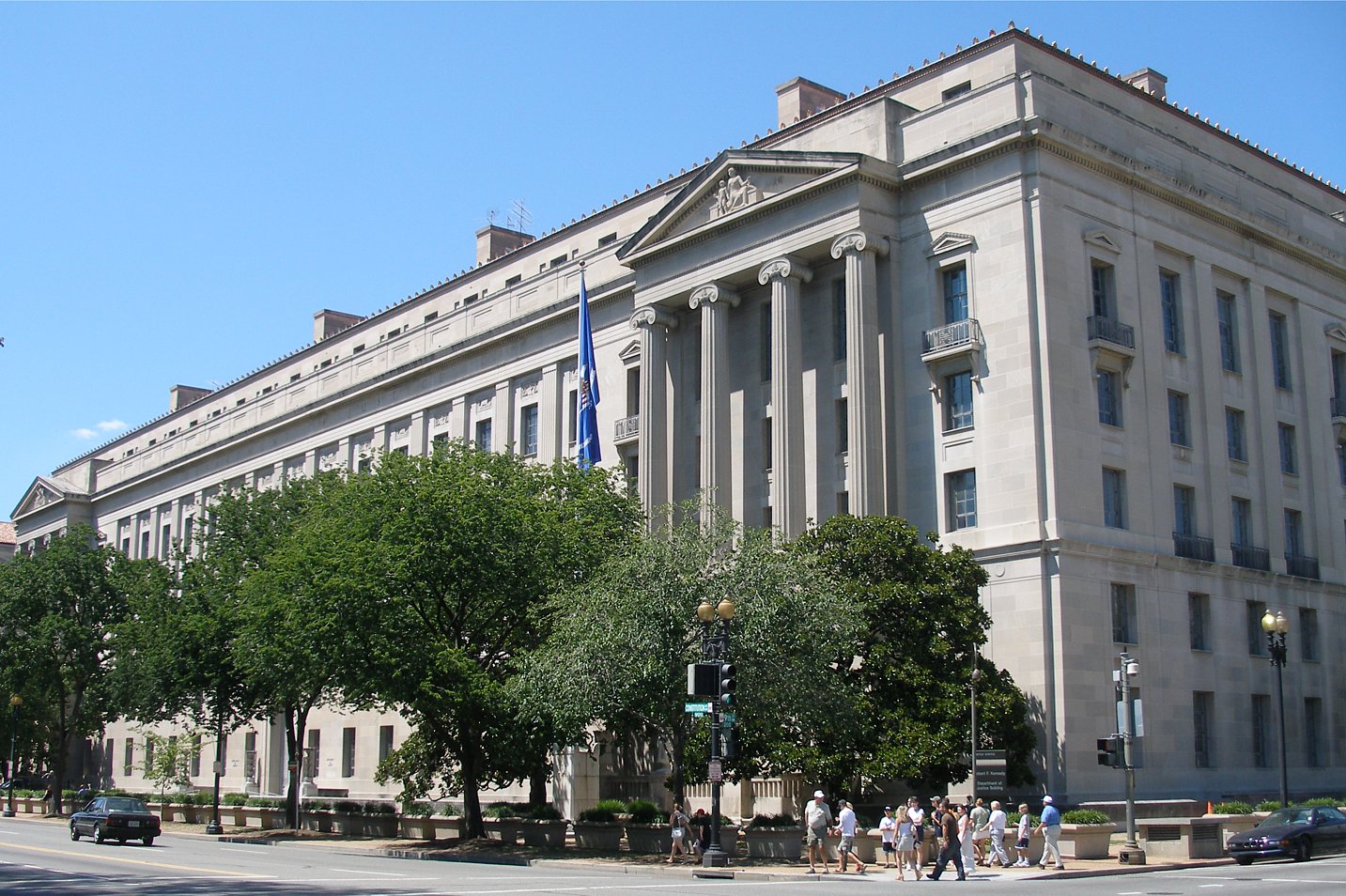
Immigration cases have become a recurring stress test for the separation of powers. States sue the federal government. The federal government sues states. Judges are asked to weigh in on major programs. The public reads each ruling through its own assumptions about politics and power.
In that environment, recusal disputes carry extra weight. The DOJ’s argument is explicitly about protecting confidence in the courts by applying a standard designed to prevent the appearance of partiality before it hardens into public distrust.
That is why the Justice Department’s planned appeal is significant. An appellate review could provide higher-court guidance on how recusal standards should be applied when a judge’s immediate family member is litigating closely related issues in a separate case, particularly in politically charged immigration litigation.
The takeaway
The Constitution does not spell out a neat code of judicial ethics. What it gives is the structure: an independent judiciary (Article III), due process (Fifth and Fourteenth Amendments), and a system that depends on legitimacy rather than force.
Recusal disputes live in the space between written law and public trust. When courts insist on impartiality in fact and in appearance, they are defending the premise that legal outcomes are determined by rules, not relationships.
The Minnesota case will continue on its merits, and Operation Metro Surge will remain contested. But the recusal question is its own civics lesson: sometimes the most important courtroom battles are over who gets to decide.