
The fate of over a million people from Haiti and Venezuela, who have built lives in the United States for years under a legal program called Temporary Protected Status, now hangs in the balance. A federal judge has just blocked the Trump administration’s attempt to terminate their legal status, a move the Department of Homeland Security immediately blasted as the work of an “unelected activist judge.”
This is not a lesson in the quiet but essential laws that govern the government itself. This is a story about the Administrative Procedure Act, and it is a test of whether a president’s administration must provide a rational, evidence-based reason for its actions, or if it can simply act on political will alone.

A Program Born of Crisis
To understand this conflict, one must first understand Temporary Protected Status (TPS). Created by Congress with bipartisan support in 1990, TPS is a humanitarian tool. It gives the Secretary of Homeland Security the discretion to grant temporary legal status and work permits to nationals of a country that is suffering from a war, natural disaster, or other extraordinary crisis that makes a safe return impossible.
The TPS designations for Haiti and Venezuela, granted by the prior administration, were based on the chaos, violence, and public health collapses in those nations. The Trump administration, under DHS Secretary Kristi Noem, has now moved to terminate those protections, arguing the program has become a “de facto amnesty” and that conditions have improved enough for people to return.
A Judge’s Rebuke: The Duty to Give a Reason
In his ruling, U.S. District Judge Edward Chen directly challenged the administration’s rationale. He found that the decision to end TPS was likely an “unprecedented” and unlawful act, a “preordained decision” that was not based on a good-faith analysis of the facts on the ground.

The judge highlighted a glaring contradiction. The administration is claiming it is “safe for Haitian citizens to return home,” while at the same time, its own State Department maintains a “Level 4: Do Not Travel” advisory for Haiti due to “kidnapping, crime, civil unrest, and poor health care infrastructure.”
The “Constitution” of the Bureaucracy
This is where the story becomes a crucial constitutional lesson. Judge Chen’s ruling is based on a foundational law called the Administrative Procedure Act (APA). The APA acts as a sort of “constitution” for the entire federal bureaucracy, and it forbids federal agencies from making decisions that are “arbitrary, capricious, an abuse of discretion, or otherwise not in accordance with law.”
This exact standard was at the heart of the 2020 Supreme Court ruling that blocked the Trump administration’s first attempt to end DACA. In that case, the Court did not say the president couldn’t end the DACA program.
It said that the administration had failed to provide a reasoned, non-pretextual, and legally sound explanation for why it was ending it. Judge Chen’s ruling on TPS is operating on this exact same constitutional principle: the government must show its work.
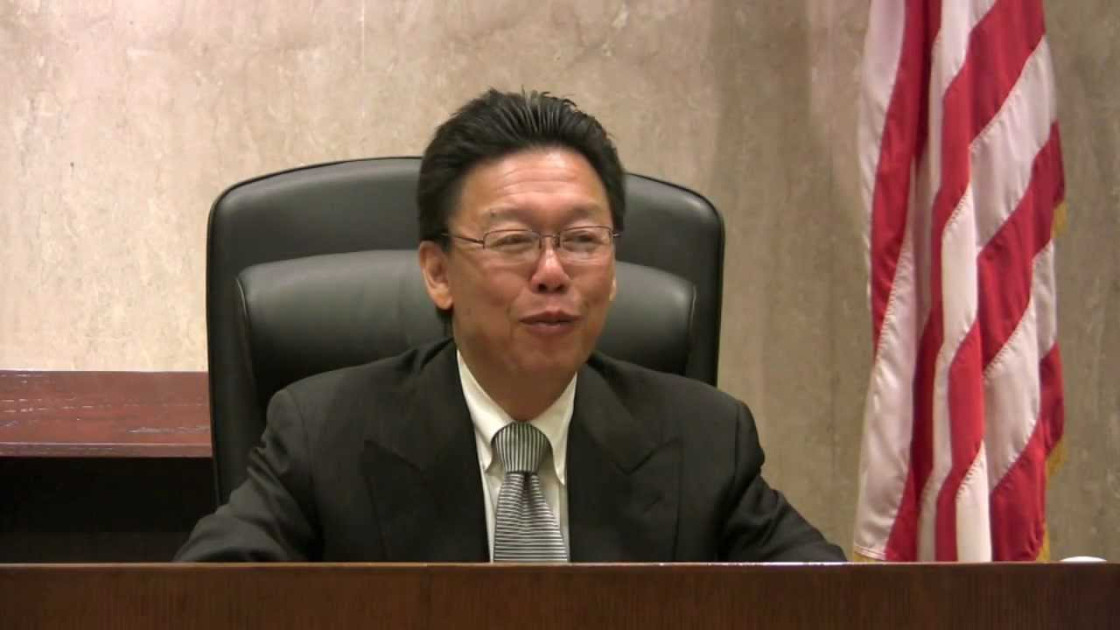
The DHS’s fiery statement that “Unelected activist judges cannot stop the will of the American people” is a direct assault on this principle and on the role of the judiciary. In our constitutional republic, that is precisely the job of a federal judge. Their sworn duty is to stop any government official, elected or unelected, from violating the procedural laws that ensure our government is one of reason and law, not of arbitrary will. This ruling is not an act of judicial activism; it is a profound defense of the constitutional order.