
For years, Americans have argued about whether public broadcasting deserves taxpayer support. That is a policy fight. On March 31, a federal court said the Trump White House tried to turn it into something else entirely: a constitutional violation.
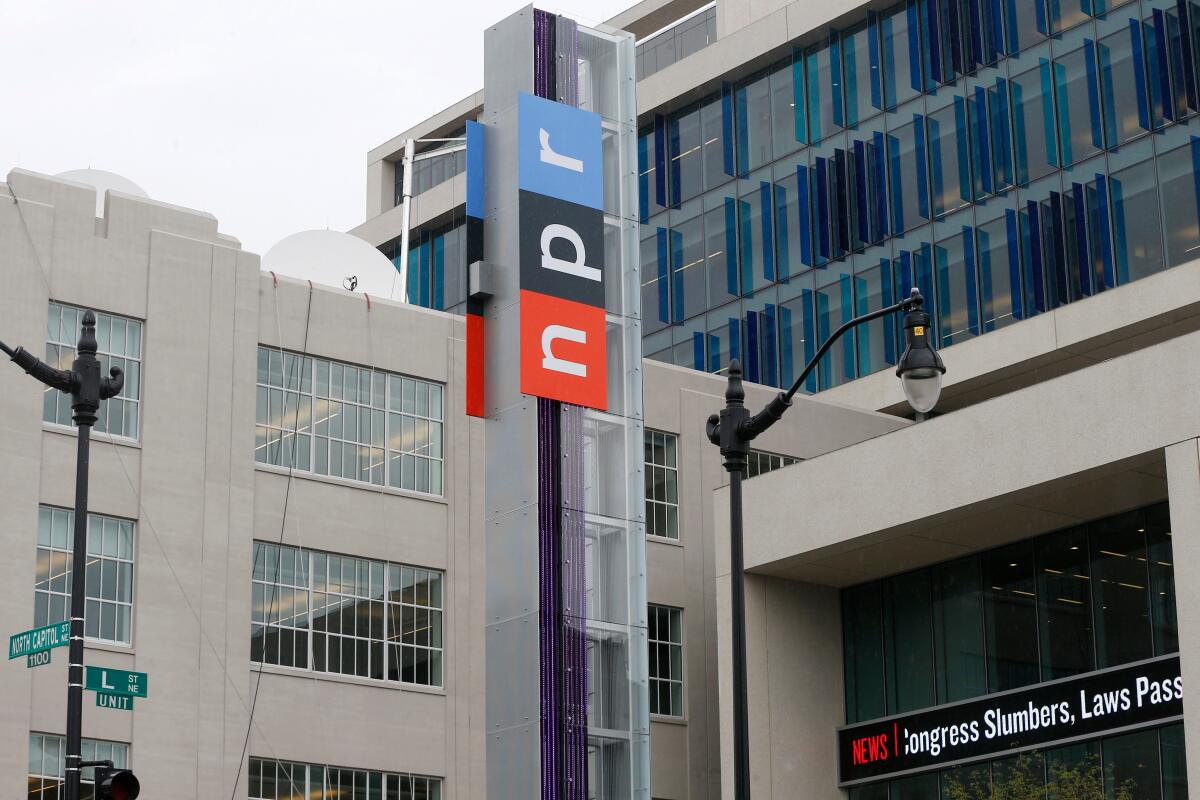
In a ruling that goes straight to the First Amendment’s core purpose, U.S. District Judge Randolph D. Moss held that President Trump’s executive order seeking to cut off federal funding to NPR and PBS was unconstitutional on its face. The order, Judge Moss wrote, is “unlawful and unenforceable.”
Here is the hard question underneath the headlines: Can the government use federal dollars as a leash, tightening it when it dislikes what a speaker says? The court’s answer was no, not like this.
Join the Discussion
The order was not neutral
The executive order at the center of the case carried a telling title: “Ending Taxpayer Subsidies for Bias Media.” It did not merely propose restructuring public media or narrowing a program. It aimed at two named institutions.
President Trump’s order declared: “Which viewpoints NPR and PBS promote does not matter. What does matter is that neither entity presents a fair, accurate, or unbiased portrayal of current events to taxpaying citizens.” That is not the language of budget housekeeping. It is the language of a grievance.
Judge Moss concluded the order “singles out two speakers and, on the basis of their speech, bars them from all federally funded programs.” In other words, the alleged sin was the content of their programming. And in First Amendment law, that is the kind of motive that sets off alarms.
What the First Amendment blocks
In plain English, the First Amendment does not just protect the right to speak. It also blocks the government from using its power to penalize speech it dislikes. Judge Moss put it crisply: “the First Amendment draws a line, which the government may not cross, at efforts to use government power – including the power of the purse – ‘to punish or suppress disfavored expression’ by others.”
This is where many citizens get tangled up. People will say: “No one has a right to funding.” That sentence is true in the abstract, but incomplete in practice. The constitutional problem is not simply whether funding exists. The problem is whether the government is cutting funding because of viewpoint or in retaliation for protected expression.
Congress can debate public broadcasting’s budget. Agencies can set neutral grant standards. But when the government points at specific speakers and says, essentially, your coverage displeases the President, so you are cut off, the dispute stops being about fiscal restraint and starts being about censorship by subtraction.
Why the ruling focused on breadth
Judge Moss also stressed how broadly the order would have operated, regardless of what federal funds were actually supporting. The decision notes that the order would have barred funding even when dollars were used for things far removed from political commentary, such as the nationwide interconnection systems that make public radio and television work, safety and security for journalists in war zones, support tied to the emergency broadcast system, and the production or distribution of music, children’s or other educational programming, or documentaries.
That breadth matters. A narrower, program-specific funding rule can sometimes be defended as ordinary policymaking. A blanket prohibition aimed at particular speakers looks less like a budget choice and more like an attempt to squelch expression.
As the court put it: “It is difficult to conceive of clearer evidence that a government action is targeted at viewpoints that the President does not like and seeks to squelch.”
Who sued and what changed
The lawsuit was brought by NPR along with Aspen Public Radio, Colorado Public Radio, and KSUT Public Radio in Ignacio, Colorado. The court’s ruling invalidated the core of the executive order and declared it unenforceable.
The administration can appeal. It was not immediately clear what the decision would mean for the future of federal funding of public broadcasting.
The fallout for CPB and Congress
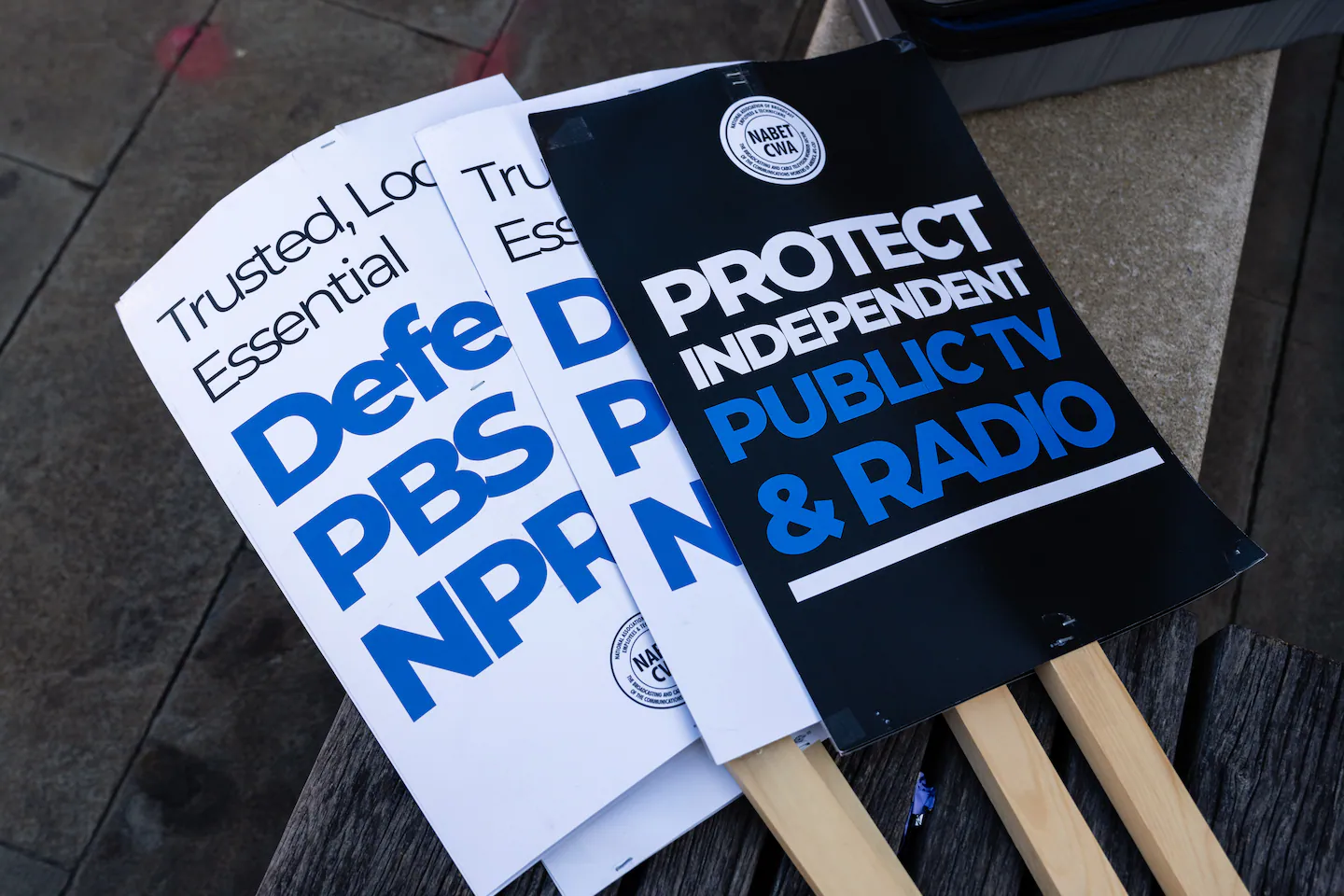
The order did not exist in a vacuum. It set in motion a series of events that ultimately knocked the Corporation for Public Broadcasting, the congressionally chartered entity through which federal dollars flowed to public media outlets, out of business. For more than a half-century, most federal money for public media had been funneled through CPB. Last August, CPB said it would close its doors after serving as a conduit for federal funding to public broadcasting for decades.
The president insisted that all of the $1.1 billion that he and Congress had earlier agreed to set aside for public media outlets be clawed back, and the Republican-led Congress acquiesced. Judge Moss’s ruling, however, would enable a future Congress to resume funding public media if it chose to do so.
The decision also establishes the right of local public media stations that take federal subsidies to make their own programming decisions without government pressure, including on whether to take NPR or PBS shows.
Beyond this dispute, the warning light is obvious: appropriations are political, but viewpoint-based retaliation is not made lawful just because it is routed through a budget process. If leaders can condition public money on ideological compliance, then the First Amendment shrinks every time a funding deadline arrives.
What the parties said
The White House condemned the decision. Spokesperson Abigail Jackson said: “This is a ridiculous ruling by an activist judge attempting to undermine the law. NPR and PBS have no right to receive taxpayer funds, and Congress already voted to defund them. The Trump Administration looks forward to ultimate victory on the issue.”
NPR called the ruling “a decisive affirmation of the rights of a free and independent press” and said it would continue “delivering independent, fact-based, high-quality reporting” regardless of the administration of the day.
NPR attorney Theodore Boutrous framed the dispute as retaliation: “The Court's decision bars the government from enforcing its unconstitutional Executive Order targeting NPR and PBS because the President dislikes their news reporting and other programming.”
PBS said it was “thrilled” with the decision and described the order as “a textbook unconstitutional viewpoint discrimination and retaliation” under longstanding First Amendment principles.
The civics lesson
This case is not really about whether you like NPR, or whether you watch PBS, or whether public broadcasting should be publicly funded. Those are legitimate arguments. But they are not constitutional trump cards.
The constitutional question is sharper and more uncomfortable: Do we want a system where presidents can financially punish speakers for the content of their speech, as long as the punishment is routed through the budget?
Judge Moss’s ruling insists that the First Amendment was written precisely to prevent that kind of end-run. In a country that claims to protect a free press, the government cannot treat “disfavored expression” as a line item to be deleted.