
When Americans hear the word reparations, they usually think of historic wrongdoing and a national attempt to make amends. That framing matters, because it quietly answers a prior question: who, exactly, is owed what by whom?
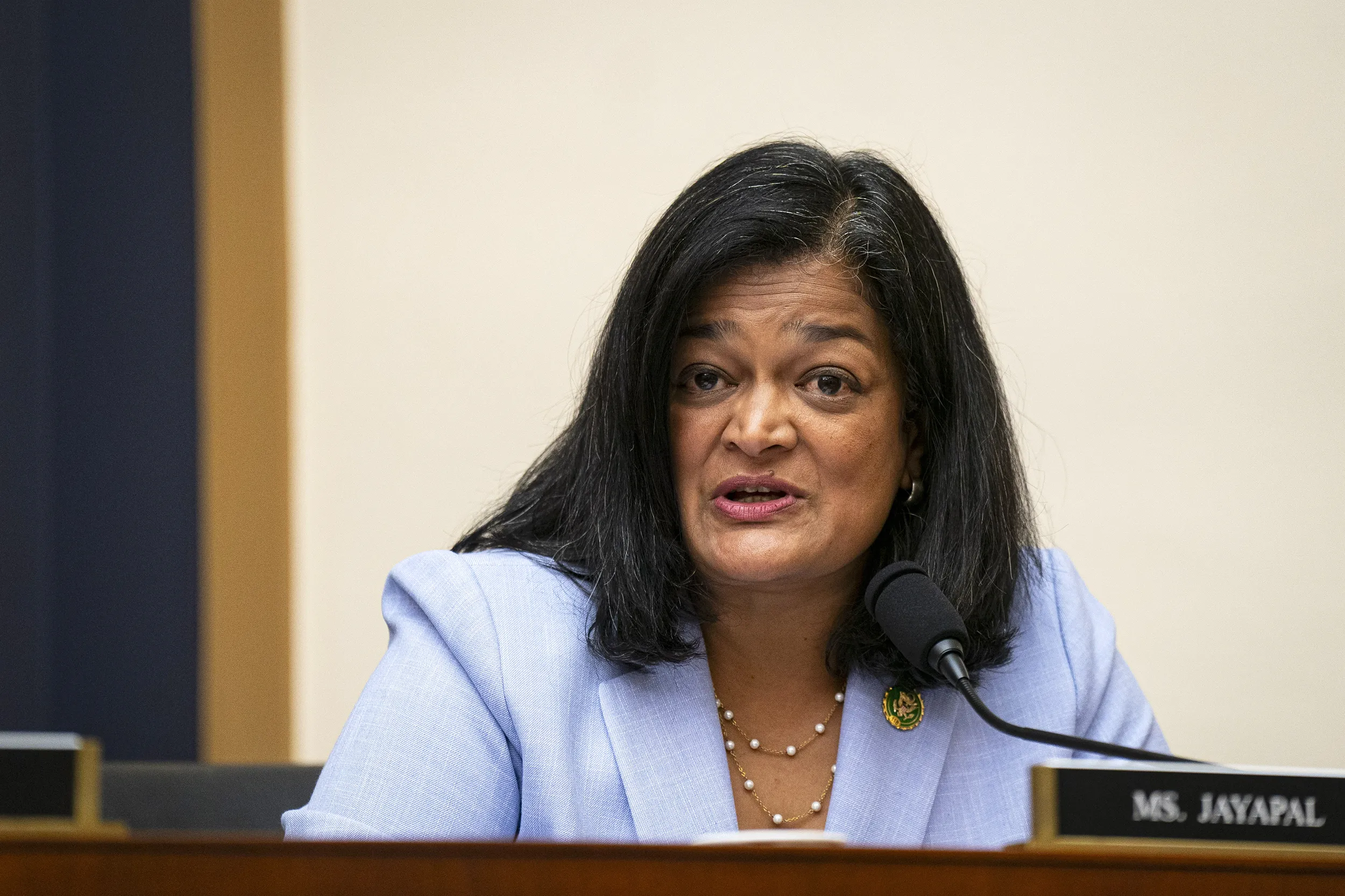
At a March 27 “shadow hearing” focused on immigration enforcement, Rep. Pramila Jayapal of Washington, the senior Democrat on the House immigration subcommittee, argued that the federal government should go beyond policy changes and move into compensation and criminal accountability.
Join the Discussion
What Jayapal said
Jayapal’s comments were not limited to criticizing enforcement tactics. She explicitly called for prosecution of those she views as responsible for harm to migrants and suggested financial redress for families affected by government actions.
“The people that have been inflicting this harm [on migrants] need to be prosecuted,” Jayapal said. “They need to be brought before us, and they need to be held account [sic] for the trauma that they have created, and we are going to have to have some form of reparation for the kids and the families that have been traumatized through all of this.”
The bigger shift
The argument underneath the rhetoric is not only about which tactics are humane. It is about the direction of civic empathy and public obligation. In this view, progressive concern for illegal migrants, including criminal migrants, has largely replaced the left-wing concern once aimed more squarely at poorer citizens.
That shift shows up not merely in slogans, but in lived consequences. The debate is no longer just about whether enforcement is too harsh. It is about whether enforcement is treated as a kind of moral offense that requires compensation, and whether the harms borne by citizens are treated as background noise.
Costs and victims
Immigration policy is not abstract. The federal government’s choices change wages, housing pressure, school enrollment, policing, and welfare spending. In one prominent example raised by critics of current policy, the Department of Homeland Security under border chief Alejandro Mayorkas welcomed at least 8 million “inadmissible” migrants into Americans’ communities, workplaces, and welfare programs, which they argue caused immense economic harm to ordinary citizens.
Critics also argue the deliberate welcome for millions of migrants by Mayorkas, Jayapal, and other progressives has in effect killed many Americans, including Laken Riley, while also causing the deaths of thousands of migrants.
There is also the question of who is protected when sanctuary policies collide with violent crime. Sheridan Gorman, an 18-year-old student, was killed in Chicago by a migrant described by critics as “Democrat-protected.” House Speaker Mike Johnson framed the political accountability question starkly on March 25, saying:
“The system did not fail Sheridan, that worked exactly as the Democrats intended,” Johnson said, adding: “You had Democrats in charge of the White House and in charge in the city of Chicago. Open borders policies, sanctuary cities policies, they coddled the criminal illegal alien. They empowered, they allowed this to happen and that’s why we’re so angry about it.”
And the same moral lens appears in more local stories. In Fairfax County, Virginia, a local Democratic prosecutor urged the release of an adult migrant accused of sexually groping teenage girls at a high school. The migrant had been allowed to enroll in the school because local progressives were trying to welcome him into American society.
These examples do not settle every legal argument, but they do change the moral accounting. If empathy is redirected toward those who violate immigration rules, the reciprocal duties among citizens start to look optional, and the costs borne by citizens start to look politically unmentionable.
The constitutional issue
Congress has broad authority over immigration. That is not a culture-war slogan. It is constitutional structure. Article I gives Congress power to “establish an uniform Rule of Naturalization.” Over time, the federal government has asserted additional immigration authority through inherent sovereign powers and statutes that regulate admission, exclusion, detention, and removal.
So when lawmakers talk about “prosecuting” officials for enforcing immigration laws passed by Congress, the question is not just moral. It is constitutional. Who set the rule? Who is charged with carrying it out? And what happens to the separation of powers when executing statutes is treated as criminal wrongdoing?
What reparations implies
There is a reason “reparations” is a loaded term. It implies a duty, and duty implies membership. In American constitutional culture, the strongest reciprocal obligations run between citizens and their government. That is why citizenship is not merely an identity. It is the legal status that carries voting rights, eligibility for office, and the deepest claims on political representation.
Jayapal’s framing shifts the center of gravity. It suggests that the nation’s most urgent obligation is not first to the people who make up the polity, but to those who entered or remained in the country unlawfully and were then subjected to enforcement.
That does not mean migrants cannot be mistreated. They can be. Due process applies to “persons,” not just citizens. But turning enforcement itself into a compensable injury is a different proposition. It risks recasting a lawful government function as presumptively illegitimate, while the downstream harm to citizens is treated as secondary.
What others said
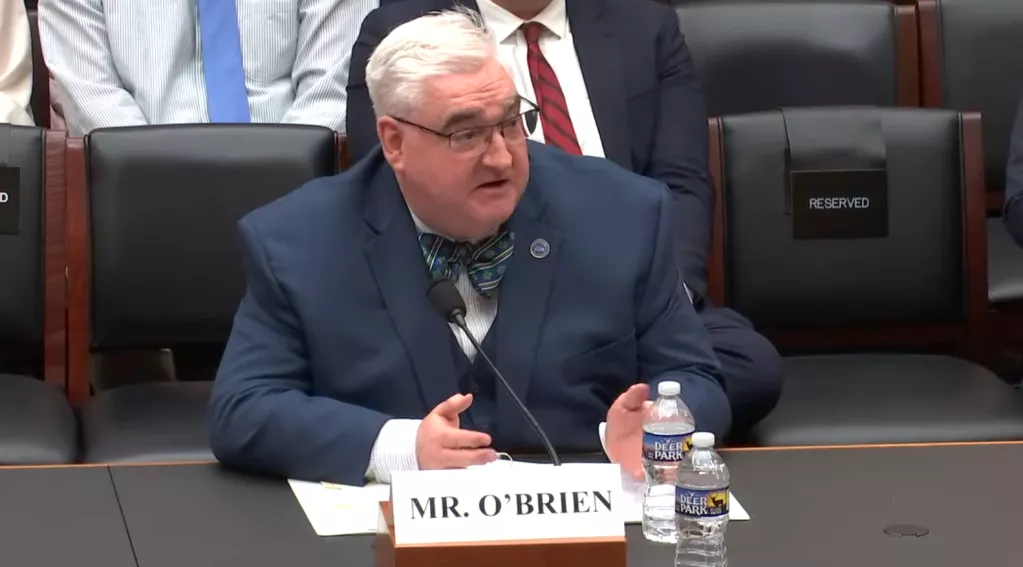
The hearing featured other Democratic members who described immigration enforcement as a form of community harm.
- Rep. Kelly Morrison said, “We have to always keep fighting for an end to this cruelty and threat to the health of our children and communities.”
- Rep. Maxine Dexter said, “The administration has terrorized our communities and mine in the Willamette Valley.”
- Rep. Christian Menefee described undocumented residents as “our neighbors” and argued, “They do the jobs that keep our city running.”
- Rep. Deborah Ross said she had “a constituent in my district who actually came here as an unaccompanied minor ended up getting caught up in the system,” adding, “We finally got her out of detention.”
- Rep. Chuy Garcia said, “This issue is personal for me as well. I was an immigrant child myself, learning how to navigate a new country and depending on the grace and kindness of relatives and, of course, on complete strangers toward my family and myself.”
Due process and limits
In constitutional law, there is a vital difference between procedural safeguards and substantive entitlement.
Procedural due process asks whether the government followed fair steps before depriving someone of liberty. In immigration, that can mean notice, a hearing, and the opportunity to contest removal in the manner statutes require. Substantive entitlement would mean something much larger, like a right to remain, a right to compensation for lawful detention, or a presumption that enforcement itself is an injury.
Jayapal’s “reparations” rhetoric leans toward the second category. It is a political argument, but it would have constitutional consequences if turned into law. It would effectively treat the execution of federal statutes as a tort, and potentially a crime, when performed by the very officials Congress empowered to act.
Who is “we”
At one point Jayapal framed her critique in constitutional terms, arguing that Congress should check presidential overreach: “When the founders put into the Constitution the idea that Congress would have power, they assumed that the party that was in control of Congress would stand up to a dictatorial, authoritarian president.”
That instinct, legislative oversight, is healthy in a system built on ambition counteracting ambition. But oversight is not the same as inversion. Congress can demand transparency, set statutory limits, fund or defund programs, and rewrite immigration law. What it cannot do, without warping its own design, is treat the enforcement of existing law as presumptively prosecutable simply because the current enforcement priorities offend a political coalition.
The Constitution is not just a list of rights. It is a blueprint for loyalty and responsibility. The civic “we” begins with citizens, because only citizens are the authors of the government through the franchise. You can extend humane treatment to noncitizens without denying that ordering principle. The trouble starts when compassion is converted into a theory that citizenship is morally irrelevant, and when the harms borne by citizens are treated as morally inconvenient.
The debate to have
Immigration enforcement raises real questions: How long can the government detain families? What processes are owed? What remedies exist when officials violate statutory or constitutional limits?
Those are the questions that fit our constitutional framework. “Reparations” for people whose underlying legal status is unlawful is a different conversation. It is not merely about procedure. It is about redefining obligation, membership, and the role of law itself.
And in a republic that depends on consent of the governed, redefining who the government is primarily obligated to protect is never just rhetoric.