
You can support a union without joining it. You can also reject it entirely. The hard constitutional question is whether the government can still require you to help pay for it.
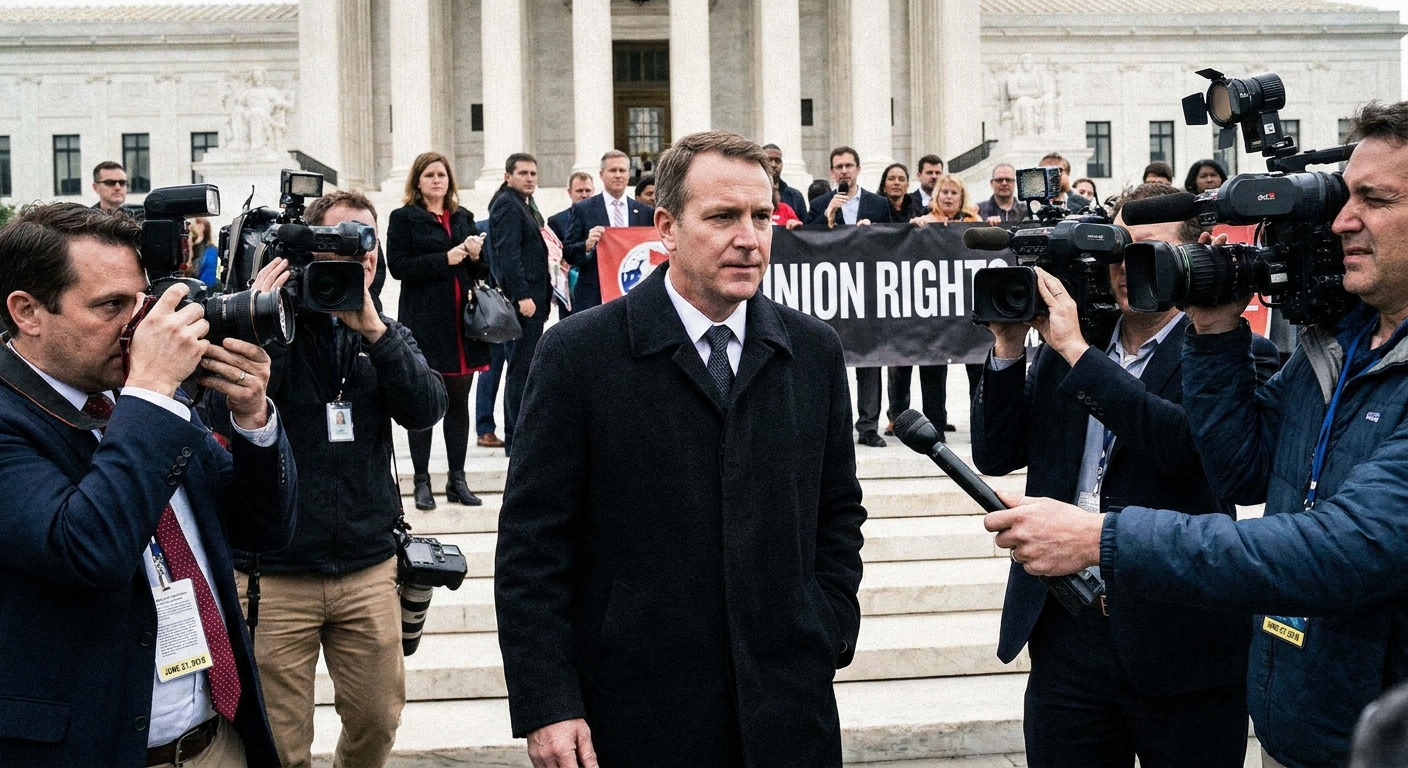
In Janus v. American Federation of State, County, and Municipal Employees (AFSCME) (2018), the Supreme Court answered that question with a narrow majority and a bright line: in the public sector, non-members cannot be compelled to pay union “agency” fees. The reason was not labor policy. It was the First Amendment’s rule against compelled subsidization of speech.
Join the Discussion
What is an agency fee (or fair-share fee)?
Public-sector unions often bargain on behalf of all employees in a bargaining unit, including workers who choose not to join the union. That creates a built-in tension:
- The union’s argument: Non-members still benefit from negotiated wages, benefits, and workplace protections, so it is unfair if they pay nothing.
- The non-member’s argument: Being forced to pay a union at all means being forced to support an organization that takes positions they may oppose.
An agency fee, sometimes called a fair-share fee, was the compromise many states used for decades. Non-members did not pay full dues. Instead, they paid a fee meant to cover the union’s costs of collective bargaining and contract administration, not the union’s overt political activities like campaign donations.
In practice, the system depended on a line that sounds clean in theory but gets blurry in real life: what counts as “bargaining” versus “politics,” especially when the employer across the table is the government. Bargaining over pension contributions, staffing levels, or health benefits can quickly become a dispute about budgets, taxes, and public priorities.
The old rule: Abood allowed agency fees
Before Janus, the controlling precedent was Abood v. Detroit Board of Education (1977). Abood held that public employees could be required to pay agency fees for bargaining-related expenses, so long as they were not forced to fund the union’s partisan political work.
Abood’s logic leaned on two ideas:
- Labor peace: Avoiding multiple unions competing for the same workers, which could lead to instability and conflict in public workplaces.
- Preventing free riders: If the union must represent everyone, requiring non-members to pay a limited fee was seen as a way to keep the system from collapsing under its own incentives.
For decades, that framework shaped public-sector labor law across many states. Then the Court began signaling discomfort with it, repeatedly questioning whether the Abood line between chargeable “bargaining” and nonchargeable “politics” made sense when the employer is a state agency or a school district.
Why Janus revisited Abood
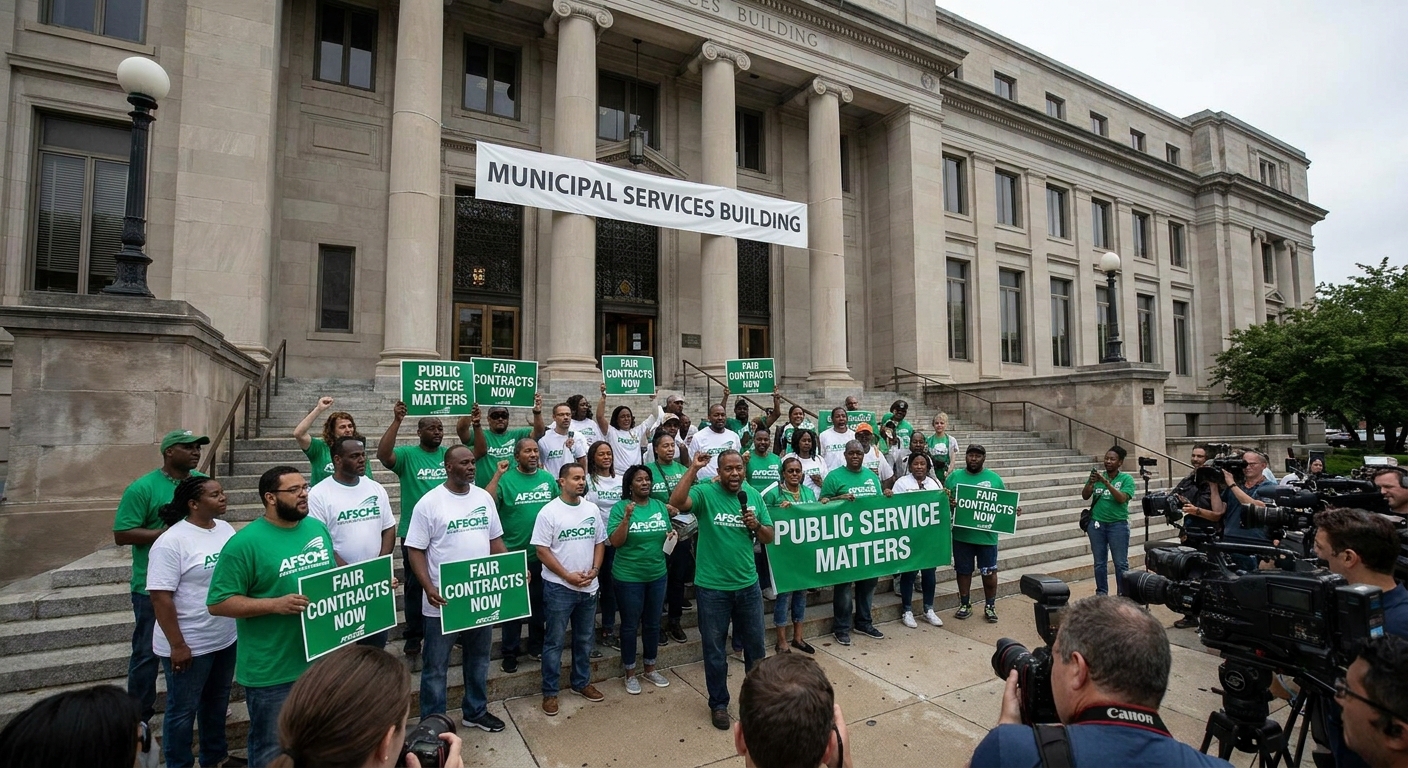
The dispute in Janus came out of Illinois. Mark Janus, a state employee, objected to paying an agency fee to AFSCME while declining union membership. He argued that even “bargaining” in the public sector is inherently political because it pressures the government on questions like wages, budgets, staffing levels, pensions, and public priorities.
That framing mattered because the First Amendment does not just protect your right to speak. It also protects your right not to speak and, in certain contexts, your right not to be made to support speech you disagree with.
In other words, Janus pushed the Court to treat agency fees less like a workplace financing mechanism and more like a constitutional problem of compelled expression.
The holding: 5–4, no mandatory fees for non-members
The Supreme Court ruled 5–4 that public-sector agency fees violate the First Amendment. States and public employers cannot require non-members to pay these fees to a union. The Court overruled Abood.
Justice Samuel Alito wrote the majority opinion. Justice Elena Kagan wrote the principal dissent.
The Court also required affirmative consent before money can be taken from a non-member for union support. Payment cannot be presumed from silence or inertia.
This is why Janus is often discussed as a free speech case as much as a labor case. The constitutional rule is not that unions are illegal, or that collective bargaining is unconstitutional. The rule is narrower: you cannot be compelled to subsidize union speech in the public sector as a condition of keeping your job. Voluntary dues and member-approved payroll deductions remain lawful.
The First Amendment theory
Janus turns on a deceptively simple premise: when the government forces you to financially support speech you disagree with, it can act like forcing you to speak.
The majority treated public-sector collective bargaining as speech about public matters because it is bargaining with the government itself. Negotiating over wages and benefits affects:
- How taxpayer money is spent
- How public services are staffed and delivered
- What tradeoffs governments make between compensation, programs, and priorities
If those negotiations are “speech,” then making dissenting employees pay into that speech raises a First Amendment problem. The Court concluded that Abood underestimated that problem and that the administrative burden of separating “chargeable” from “political” expenses was not enough to justify compelled payments.
The dissent, by contrast, emphasized reliance interests and the practical consequences for public-sector labor systems built on Abood. But Janus is the rule now, and the constitutional framing is what gives it staying power.
What changed on the ground
After Janus, public-sector unions in states that previously allowed agency fees could no longer collect money from non-members by default. That had real operational consequences:
- Unions had to rely more heavily on voluntary membership dues.
- Public employees gained a clearer legal right to opt out of payments entirely if they did not want to support the union.
- States and public employers had to adjust payroll and authorization procedures to reflect affirmative-consent rules for non-members.
In the years since, additional disputes have often centered on what counts as valid authorization for dues deductions in different settings, especially where employees previously signed membership or payroll forms. Janus itself squarely addressed compelled payments from non-members.

Who was affected, and who was not
It is easy to overread Janus as a sweeping attack on all unions. It was not. Janus applies to public-sector unions, meaning unions that represent workers employed by government entities.
Private-sector union arrangements operate under different laws, mainly the federal National Labor Relations Act (NLRA). On top of that, many states have right-to-work laws that restrict or prohibit certain union-security arrangements in the private sector. Janus did not rewrite those statutory rules. It addressed a specific constitutional problem: when the employer is the government, compelling payments to a union raises First Amendment concerns that do not map neatly onto private employment.
One more common point of confusion: Janus did not eliminate unions or collective bargaining, and it did not ban voluntary dues. In most public-sector systems, the union can still be the exclusive bargaining representative for the unit. Janus changed the financing rule for non-members, not the existence of representation itself.
That is the sober takeaway. Janus was a major shift, but it was a targeted one. It reshaped the balance between union financing and individual rights for public employees, while leaving the broader architecture of private-sector collective bargaining to statutory law rather than constitutional command.