
In a significant revelation that challenges the narrative of the January 6th Committee, former special counsel Jack Smith has admitted that star witness Cassidy Hutchinson offered testimony that was largely “secondhand hearsay” and conflicted with the accounts of eyewitnesses.
During a closed-door deposition with the House Judiciary Committee earlier this month, Smith undercut the reliability of Hutchinson’s most explosive claims against President Trump – including the infamous “steering wheel” incident – stating that if he were a defense attorney, he would have moved to block her testimony from court.
At a Glance: The Jack Smith Deposition
- The Witness: Former Special Counsel Jack Smith testified for over eight hours before the House Judiciary Committee regarding his investigation into President Trump.
- The Revelation: Smith stated that key parts of Cassidy Hutchinson’s testimony were “secondhand hearsay” and “less powerful” than firsthand accounts.
- The “Steering Wheel” Incident: Smith confirmed that his team interviewed the Secret Service officer actually in the car, whose version of events “was not the same” as Hutchinson’s dramatic account.
- The Legal Take: Smith admitted that if he were opposing counsel, his “first move” would be to preclude her testimony as inadmissible hearsay.
- The Context: Hutchinson was the star witness of the Democrat-led Jan. 6 Committee in 2022, but her credibility has long been questioned by Republicans who argued the committee lacked adversarial cross-examination.
“Second or Thirdhand Witness”
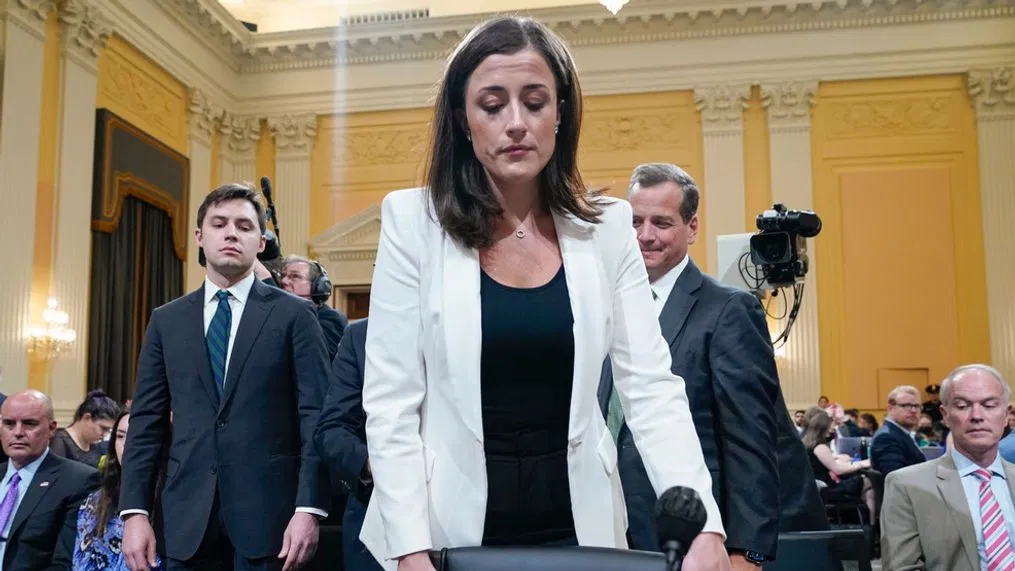
Cassidy Hutchinson, a former top aide to Chief of Staff Mark Meadows, captivated the nation in June 2022 with testimony that painted a picture of an erratic President Trump demanding to be driven to the Capitol on January 6th.
However, according to the transcript released Wednesday, Jack Smith’s own investigation found her account wanting.
“Hutchinson was a second or even thirdhand witness… A number of the things that she gave evidence on were secondhand hearsay… and it certainly wouldn’t be as powerful as firsthand testimony.” — Jack Smith
Smith explained that federal investigators went straight to the source—interviewing the people Hutchinson claimed to have heard stories from. In key instances, those direct witnesses provided “different perspectives.”
The Steering Wheel Myth?
The most memorable anecdote from Hutchinson’s testimony was her claim that she was told President Trump tried to grab the steering wheel of “The Beast” and lunged at a Secret Service agent when told he couldn’t go to the Capitol.
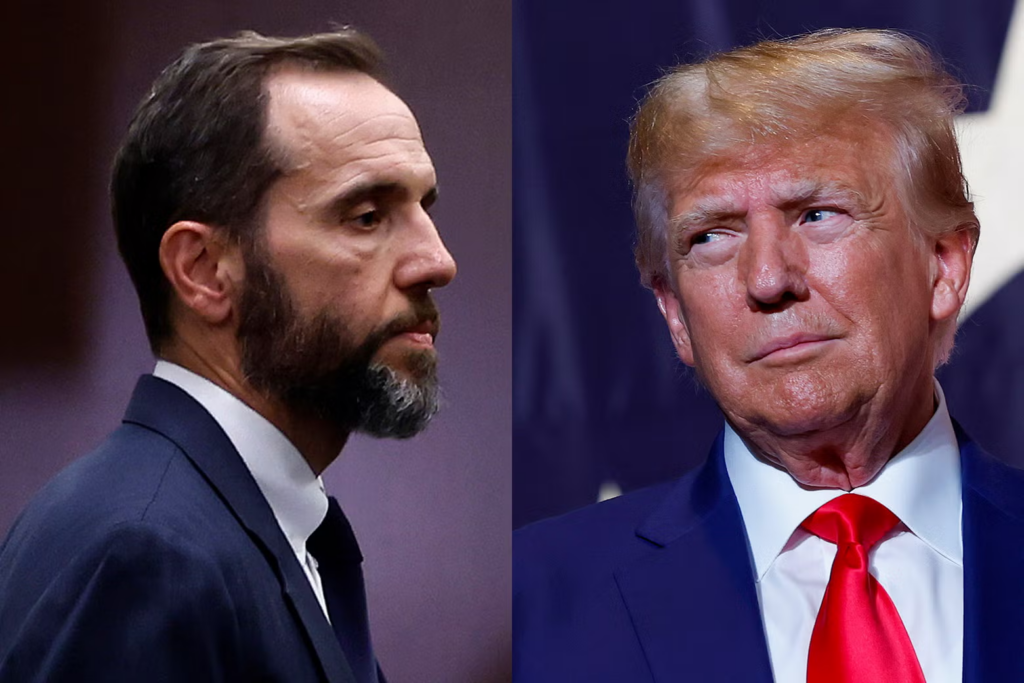
Smith told Congress that his team interviewed the actual officer in the car. While the officer confirmed the President was “very angry” and wanted to go to the Capitol, the physical altercation described by Hutchinson did not match reality.
“The version of events that he explained was not the same as what Cassidy Hutchinson said she heard from somebody secondhand.” — Jack Smith
[Image: Cassidy Hutchinson testifying at the January 6th Committee hearing]
A Blow to the J6 Committee’s Legacy
Smith’s testimony provides powerful ammunition to Republicans who have long argued that the January 6th Committee was a partisan exercise that prioritized sensational headlines over verified facts.
Because the committee effectively excluded Republican-appointed members (save for anti-Trump Reps. Liz Cheney and Adam Kinzinger), Hutchinson’s testimony was never subjected to cross-examination in real-time. Smith’s admission suggests that had she been put on the stand in a real court of law, her most damaging claims likely would have been thrown out.
“If I were a defense attorney… the first thing I would do was seek to preclude some of her testimony because it was hearsay.” — Jack Smith
Smith Defends His Probe
While undercutting Hutchinson, Smith spent the bulk of his eight-hour deposition defending the integrity of his own investigation. He denied that politics played any role in his decision to prosecute Trump, defended his use of subpoenas for congressional phone data, and justified his pursuit of gag orders.
However, the headline emerging from the transcript is not his defense of the prosecution, but his candid assessment of the witness who once seemed poised to bring down a presidency.