When most Americans hear the phrase sleeper agent, they picture a spy novel: a quiet figure living an ordinary life, waiting for a coded message that flips a switch. But the constitutional question raised by a recent allegation is not cinematic. It is practical and unsettling.
A claim attributed to a government official alleges that Iran may have operatives in Canada, possibly on a significant scale. If that allegation is even partly accurate, what does it mean for the United States, for our shared border, and for the way democratic governments respond when fear starts steering policy?
Join the Discussion
The claim
The number being cited is stark: up to 1,000 Iranian sleeper agents allegedly operating in Canada, according to a government official. Treat that figure for what it is right now: an allegation and, at most, an estimate. Without public evidence, it should not be handled like settled fact.
There is also a basic ambiguity worth saying out loud. “Embedded” can mean broadly present in the country, or it can imply placement inside institutions. Publicly available details about the allegation do not specify what is meant, which government the official represents, or how the estimate was produced.
One more point of posture: this piece cannot assess the underlying evidence. It focuses on the policy and constitutional implications if the official’s estimate is accurate or if governments act as though it is.
Still, allegations like this can change the atmosphere fast. They raise the public temperature, and they pressure governments to act first and explain later.
That is where democracies can start to lose their footing. Constitutional limits are not designed to evaporate simply because a threat is invoked. In theory, our system is supposed to force officials to justify extraordinary measures with law, evidence, and oversight.
What “sleeper” can mean
In the real world, “sleeper” is often a misleading label. In general, many foreign intelligence services do not park agents indefinitely and wait for a dramatic activation. They build relationships, access, and infrastructure over time.
- Influence work: often cultivating community leaders, academics, business ties, or online personalities.
- Logistics: often arranging travel, documents, money transfers, and secure communications.
- Target development: often identifying people with access to technology, government processes, or diaspora communities.
- Contingency planning: sometimes positioning assets for intimidation, retaliation, or other actions if a crisis erupts.
Those are generic counterintelligence patterns, not a description of what any alleged network in Canada is known to be doing. They do, however, help explain why the label can be politicized. They also show how lines can blur between speech, association, and illicit foreign direction. Those lines matter in constitutional democracies because they shape what government may punish and what it must tolerate.
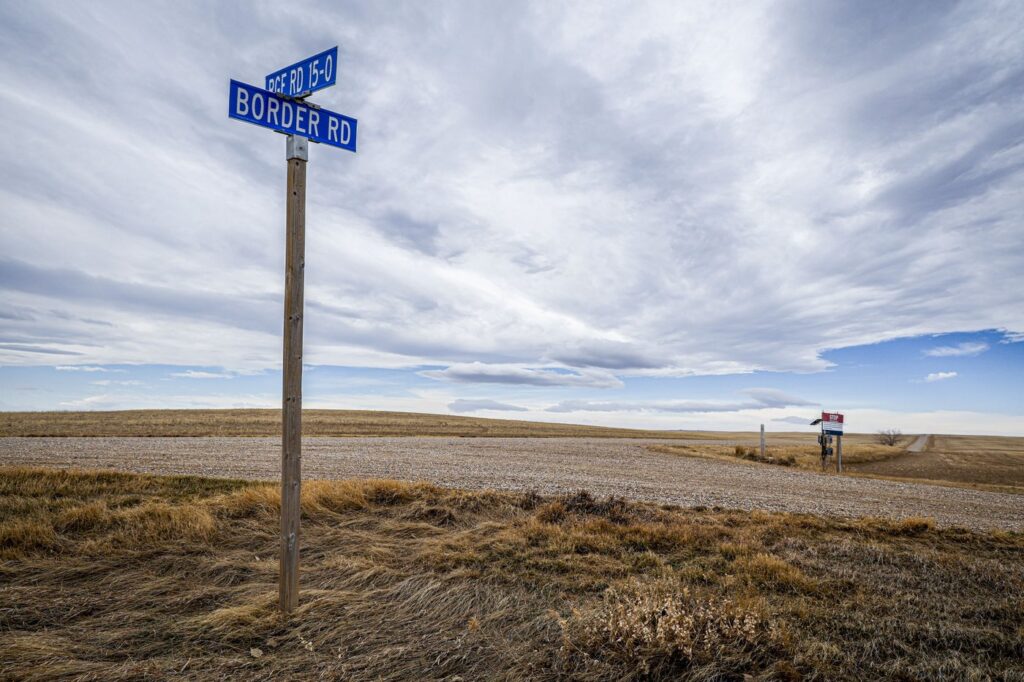
Canada is close
Americans sometimes treat allegations like this in Canada as someone else’s problem until they are not. We share the longest international border on earth, deep trade integration, joint air defense, and constant cross-border travel. If a foreign network were operating in one country as alleged, it could potentially exploit the frictionless normalcy of the other.
If the government official’s claim is taken seriously by policymakers, it could increase pressure for closer coordination between law enforcement and intelligence services on both sides. Coordination can be sensible. But it carries predictable temptations: information sharing without clear legal process, watchlists without transparency, and quiet restrictions that never get tested in court because the affected person never learns why they were flagged.
US pressure points
Even if the alleged network is primarily in Canada, the United States could feel the pull along several constitutional fault lines if the official’s allegation is treated as credible. These are risk patterns, not predictions. They illustrate where shortcuts tend to appear when officials feel cornered by claims of foreign infiltration.
1) The border and the Fourth Amendment
The Supreme Court has long permitted broader searches at the border than in the interior. But “border” powers have a way of expanding. If the official’s allegation becomes the justification for more device searches, longer detentions, or wider data collection, Americans should ask a simple question: What is the limiting principle?
2) Surveillance and the gap between intelligence and law
Foreign intelligence investigations can operate under different rules than ordinary criminal cases. That difference exists for reasons, but it can create a recurring democratic hazard: building a surveillance machine justified by foreign threats, then reusing it for domestic purposes when the political winds change.
3) Speech, association, and the First Amendment
Iran is a real adversary of the United States. That does not mean Iranian Americans or Iranian Canadian communities are presumptively suspect. A democracy survives by insisting on a distinction between protected political activity and foreign directed covert action. The government must prove the latter. The public should not be trained to assume it based on an official’s unsubstantiated estimate, even if that estimate later proves partly right.
4) Due process in quiet cases
National security restrictions often happen through administrative decisions: visa cancellations, no-fly lists, denials of entry, or closed proceedings. The constitutional question is not whether government can protect the country. It can. The question is whether the person affected gets a meaningful chance to contest the evidence, or whether “security” becomes a magic word that erases accountability.
The civic trap
A familiar move in politics is to take a frightening allegation and convert it into a demand for speed: “We cannot wait for procedures.” That is exactly when procedures matter most.
If the alleged scale is anywhere near 1,000, the appropriate response is not theatrical crackdowns. It is disciplined counterintelligence work, careful prosecutions where warranted, and hard scrutiny of whether existing tools are being used competently.
Americans should also watch for a common rhetorical pattern: using Canada as a staging ground. “Look what is happening up there,” officials may say, “so we need to do this down here.” Maybe, if the allegation is substantiated and the measures are lawful. But constitutional government is supposed to run on more than maybe. It should run on evidence, clear authority, and review.
Three questions
- What is the evidence standard? Is the number an intelligence estimate, a worst-case scenario, or something else?
- What is the remedy? Counterintelligence targeting actual foreign direction, or broad measures justified by the allegation that sweep up innocent people?
- Who audits the response? Courts, legislatures, inspectors general, and independent review are not inconveniences. They are the democratic immune system.
We can take foreign threats seriously without turning constitutional rights into a luxury item. That balance is not automatic. It is a choice, made anew every time the word “sleeper” hits the headlines, and every time an official’s allegation becomes an argument for doing more in the dark.