
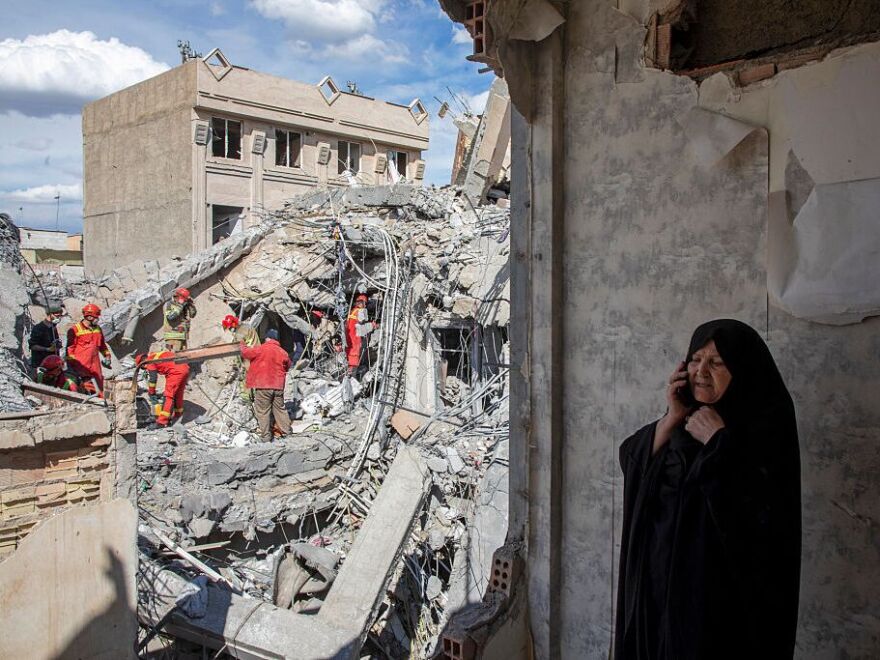
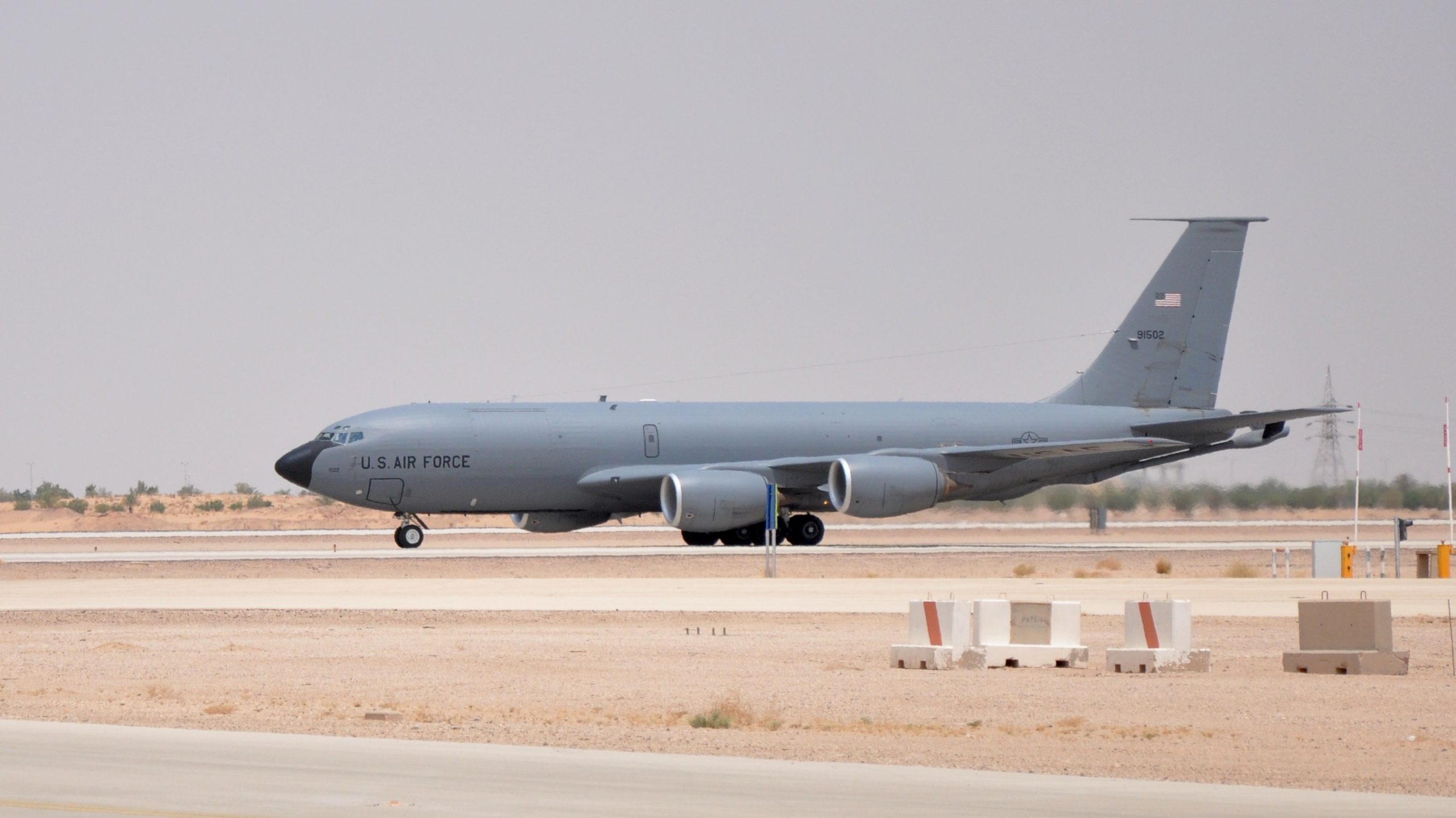
Twelve American service members were injured on Friday when Iran hit Prince Sultan Air Base in Saudi Arabia with a combined missile and drone strike. Two of those troops were reported seriously hurt. U.S. officials said at least two KC-135 aerial refueling aircraft also suffered significant damage.
That is the military headline. The constitutional headline is harder, and more important: when an overseas strike breaks through U.S. defenses and Americans bleed, who gets to decide what happens next and by what legal authority?
What happened
Officials described the assault as one of the most serious penetrations of American air defenses during the monthlong war. That detail matters because it changes the political arithmetic.
When defenses hold, leaders can sell restraint. When defenses fail, restraint starts to read as weakness. Most voters do not begin with a separation-of-powers quiz. They begin with a blunt demand: why has the President not answered yet?
This war has already forced that question. Early in the conflict, an Iranian drone strike destroyed an Army tactical operations center at Shuaiba port in Kuwait and killed six U.S. Army reservists. Another American service member died after an attack at Prince Sultan Air Base on March 1. The American death toll stands at 13 service members.
War powers
The Constitution divides war authority in a way that looks clean on paper and chaotic in practice. Congress declares war. The President commands the military. The design was meant to demand deliberation before a nation chose a war, while still allowing speed when defense was necessary.
Modern wars rarely arrive with a formal declaration attached. They arrive as escalations, reprisals, and deadlines. In that environment, presidents tend to move first and dare Congress to catch up later with funding votes, classified briefings, and authorizations that are narrow enough to be politically survivable and broad enough to be functionally permanent.
The strike on Prince Sultan triggers that old reflex. A direct attack on U.S. forces is the kind of event that pulls any White House toward immediate action. It is also the kind of event that reveals whether Congress intends to act like a co-equal branch on war, or like a spectator with a microphone.
Mixed signals
The administration has projected two messages at once: negotiations are progressing, and pressure will increase if Iran does not concede by a deadline that now runs to the evening of April 6. The president has said talks are underway and going well, a claim Iranian officials have disputed. Those tracks are not inherently incompatible, but together they create a basic accountability problem.
The pressure track is not theoretical. Earlier this week, President Trump vowed to bomb power plants in Iran if Tehran did not quickly capitulate. If the United States expands attacks to include critical civilian infrastructure, that is not just a tactical choice. It is national policy at its most consequential, and it is exactly the kind of decision the Constitution expects Congress to debate in public.
Here is the question a civics class would ask, and the public should too: if we are contemplating steps that predictably widen a war, why is that treated as executive management rather than a constitutional choice requiring legislative consent?
Drones and leverage
Across the Middle East, Iran has repeatedly targeted U.S. bases during the war, using a large mix of ballistic missiles and drones to retaliate and to complicate the American bombing campaign. The cumulative effect has included damaged facilities and a force protection scramble.
Most incoming strikes have been stopped by U.S. and allied defenses. But the war has shown what happens when the volume or timing overwhelms those networks: Americans can be killed or injured even without a decisive battlefield defeat. That is the grim context behind the six reservists killed at Shuaiba and the death at Prince Sultan on March 1.
There is also an economic asymmetry driving the cycle. Systems like Iran’s Shahed drones are cheap enough to use in volume, while many interceptors and other defensive tools are far more sophisticated and harder to replace.
That imbalance is not only a Pentagon problem. It is a political accelerant. The longer the cycle continues, the more “protect our troops” becomes a blank check, and the more Congress drifts into reacting to events instead of shaping the boundaries of the war.
The consequence is one we rarely name: repeated emergency can function like a quiet constitutional rewrite. Not through amendment, but through habit.
The toll
U.S. Central Command has said nearly 300 American troops have been injured since the war began, including about 225 who suffered traumatic brain injuries from missile blasts. All but about 35 service members have since returned to duty.
Those numbers matter because they puncture the tidy vocabulary Washington prefers. “Limited.” “Targeted.” “Proportional.” The language is built to keep conflict inside the box of executive discretion. But traumatic brain injuries and funerals have a way of breaking the box.
Any honest accounting also has to widen the lens. The worst of the reported casualties have been in Iran, under relentless attack by U.S. and Israeli forces, and in Lebanon, where Israel is conducting heavy bombardment after rocket attacks by Hezbollah.
The Human Rights Activists News Agency has reported that Iran’s death count has passed 3,300 people, including more than 1,492 civilians. In Lebanon, the health ministry said Thursday that more than 1,110 people have been killed. Officials also reported more than 50 deaths in Gulf countries, and at least 16 people killed in Iranian attacks on Israel.
Authority matters
The strike lands during a broader shift into a war-footing reality, even as officials keep using the language of near-term peace. More warships and thousands of troops have been sent to reinforce U.S. forces in the region, even as the White House continues to talk about a deal.
After an attack like this, Congress often follows a familiar script: praise the troops, condemn the enemy, demand briefings, and let the President keep operating on momentum. That is politics. It is also constitutional abdication.
If the United States is engaged in sustained war, the country deserves clarity about the legal foundation, the objectives, and the limits. Not because clarity is comforting, but because clarity is the only thing that makes democratic consent real.
The Constitution does not promise safety. It promises process. When process disappears, “national security” becomes an all-purpose solvent that dissolves checks and balances right when they are most needed.
What to watch
- Escalation decisions: whether retaliation expands into strikes aimed at critical civilian infrastructure, and what legal rationale is offered.
- Congressional posture: whether lawmakers pursue a specific authorization with scope and time limits, or default to open-ended support.
- Force posture: continued dispersal and reinforcement of U.S. troops across the region, which can quietly lock in a long war even when leaders speak the language of near-term peace.
- Casualty trajectory: whether the next month looks like a contained cycle or a widening toll across Iran, Lebanon, Gulf countries, Israel, and U.S. forces.
The strike on Prince Sultan is not just a battlefield event. It is a constitutional stress test. And like most stress tests, it tells you less about your ideals and more about your habits.