
The judicial bench in Minnesota has become a high-stakes arena where the legacy of conservative jurisprudence is clashing with the modern realities of federal immigration enforcement. As “Operation Metro Surge” continues to draw fire from local leaders, a prominent federal judge’s financial history has suddenly become the center of a brewing conflict over impartiality and the rule of law.
The Contempt Threat and the Donor List
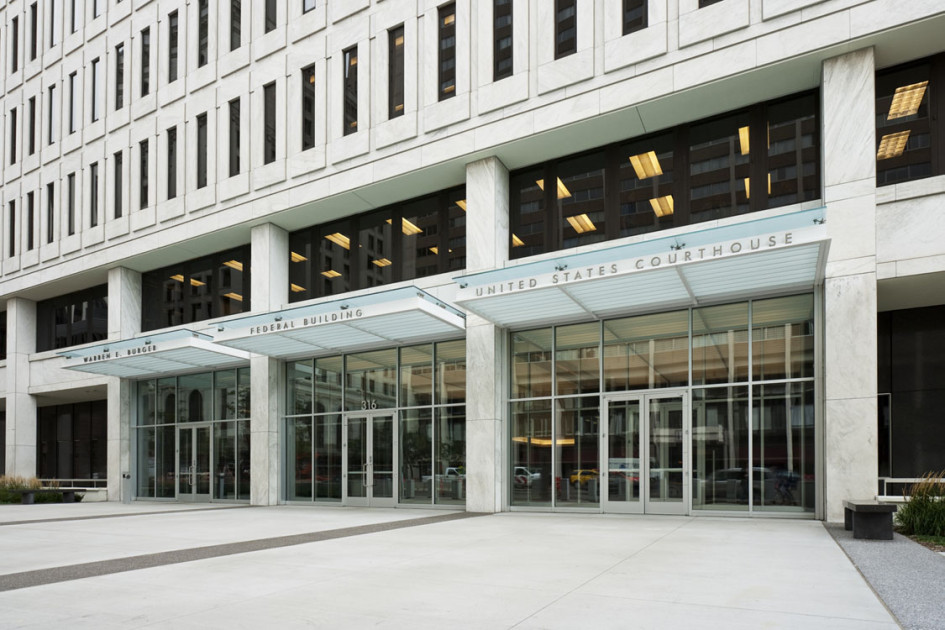
Chief Judge Patrick Schiltz, a George W. Bush appointee with deep conservative roots, has moved to the center of a constitutional firestorm after threatening to hold acting ICE Director Todd Lyons in contempt of court. The threat stems from what Schiltz describes as a systemic failure by the Department of Homeland Security (DHS) to comply with court orders regarding the detention of non-citizens. Specifically, Schiltz cited the case of an Ecuadorian national who was allegedly held without a bond hearing in violation of a seven-day judicial deadline.
However, the judge’s “patience is at an end” stance has triggered a counter-scrutiny of his own record. Public records from 2019 reveal that Schiltz and his wife were listed as donors in an annual report for the Immigrant Law Center of Minnesota. This nonprofit group has been a vocal critic of the current administration, offering free legal aid to those detained by ICE and celebrating legislative wins for undocumented residents, such as the right to obtain driver’s licenses.
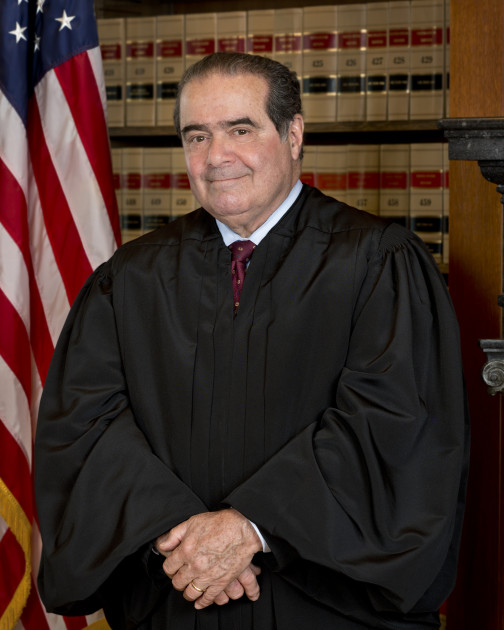
Schiltz, who famously clerked for the late Justice Antonin Scalia, defended his contributions in a statement to Fox News Digital. He noted that he has donated to both the Immigrant Law Center and Mid-Minnesota Legal Aid for many years, stating his belief that “poor people should be able to get legal representation.” While the judge views this as a matter of civic duty and equal access to justice, critics see a potential conflict of interest that could cloud his rulings on federal enforcement operations.
How We Got Here: The Scalia Legacy and Judicial Recusal
To understand why a Scalia protégé is now at odds with a Republican administration, one must look at the strict, formalist interpretation of the law that Schiltz likely inherited from his mentor. Justice Scalia was a champion of Originalism, but he was also a fierce defender of the court’s procedural authority over the executive branch.
- 1986: Antonin Scalia is appointed to the Supreme Court; Patrick Schiltz serves as one of his first clerks.
- The Judicial Philosophy: Scalia believed the executive branch must follow the “letter of the law” as written by Congress – and as interpreted by the courts – without exception.
- Recusal Standards: Under 28 U.S.C. § 455, a judge must disqualify themselves in any proceeding in which their “impartiality might reasonably be questioned.”
- The Precedent: Historically, simple charitable donations to legal aid groups are not considered grounds for recusal, but the “James” perspective notes that when a group’s core mission is to obstruct the specific agency appearing before the judge, the appearance of bias becomes a constitutional hazard.
The Don Lemon Conflict and the 8th Circuit
The tension between Judge Schiltz and the Department of Justice reached a boiling point over the potential prosecution of several high-profile individuals, including former CNN anchor Don Lemon. The DOJ attempted to bring charges against Lemon and four others after they allegedly stormed a Minnesota church to protest ICE’s presence in the state.
Schiltz forcefully rejected a DOJ request to reverse a magistrate’s decision to block those charges. When the federal government appealed to the 8th Circuit Court of Appeals, a three-judge panel denied the request in a 2-1 split. While the DOJ still has avenues to pursue the case, the rejection by Schiltz has been framed by administration allies as a sign of a “resistant” judiciary in Minnesota.
- The Charge: The DOJ alleges “interference with federal operations” and “disorderly conduct.”
- The Ruling: Judges have cited a lack of evidence or procedural errors by the government in bringing the charges.
- The Outcome: The standoff has left the DOJ feeling “hamstrung” in its attempt to project a “law and order” image amidst the chaos of the Minneapolis surge.

Sovereignty, Habeas Corpus, and the Power of the Gavel
The “James” analysis suggests that Judge Schiltz is leaning heavily on the principle of Habeas Corpus – the fundamental right of a person to challenge their detention before a judge. By demanding that ICE release detainees within seven days or provide a bond hearing, Schiltz is asserting that even during an “enforcement surge,” the executive branch cannot suspend the basic procedural rights of individuals on American soil.
The administration’s “Operation Metro Surge” has already resulted in the deaths of two citizens, Renee Good and Alex Pretti, which has significantly lowered the court’s tolerance for federal “improvisation.” Schiltz noted that his court has seen “dozens” of instances where federal agents have failed to comply with orders. This suggests a breakdown in the Separation of Powers, where the “Power of the Sword” (the Executive) is no longer listening to the “Power of Judgment” (the Judiciary).
The Recusal Debate: A Test of Judicial Integrity
Conservative legal watchdogs, including Judicial Watch’s Tom Fitton, have raised the alarm regarding Schiltz’s donor history. They argue that because the Immigrant Law Center specifically targets its advocacy against ICE, Schiltz’s financial support creates a perceptual bias.
However, legal experts note that judges are encouraged to support legal aid as part of their “pro bono” responsibility to the legal profession. If a judge were forced to recuse from every case involving a group they had supported philanthropically, the bench would be perpetually empty. The question is: Does a donation to “poor people’s legal aid” translate to a bias against the “faithful execution” of immigration law?
- Argument for Recusal: The judge’s money supports a group actively fighting the defendant (ICE) in his courtroom.
- Argument against Recusal: A judge’s personal charity does not dictate their legal rulings, especially for a jurist with Schiltz’s “law and order” pedigree.
- Constitutional Stake: If the public loses faith in the impartiality of the Chief Judge, the rulings themselves – regardless of their legal merit – become political ammunition.

A Bench Under Pressure
As “Border Czar” Tom Homan meets with local leaders and the Twin Cities remain a site of protest and federal surge, the judiciary remains the final arbiter of what is “lawful.” Judge Schiltz’s background – as both a conservative Scalia clerk and a donor to immigrant legal aid – makes him a uniquely complicated figure in this struggle.
The administration’s attempt to use the “rogue judge” label against those who block its agenda is now colliding with a Chief Judge who was appointed by a Republican president. This indicates that the friction in Minnesota is not merely a partisan spat, but a fundamental disagreement over the limits of federal power and the sanctity of court orders.
“The court’s patience is at an end,” Schiltz wrote, a statement that could serve as a motto for a judiciary that feels increasingly sidelined by an aggressive executive branch.
Whether Schiltz eventually recuses or proceeds with the contempt hearing on Friday, the case of Juan Hugo Tobay Robles has become a symbol of a larger struggle. It is a struggle between an administration that demands “results” and a judge who demands “process.” In a constitutional republic, the process is often the only thing standing between order and an unchecked surge of force.