
When federal immigration agents start showing up where ordinary civic life happens, the question is rarely just why they are there. The question is what we are being trained to accept.
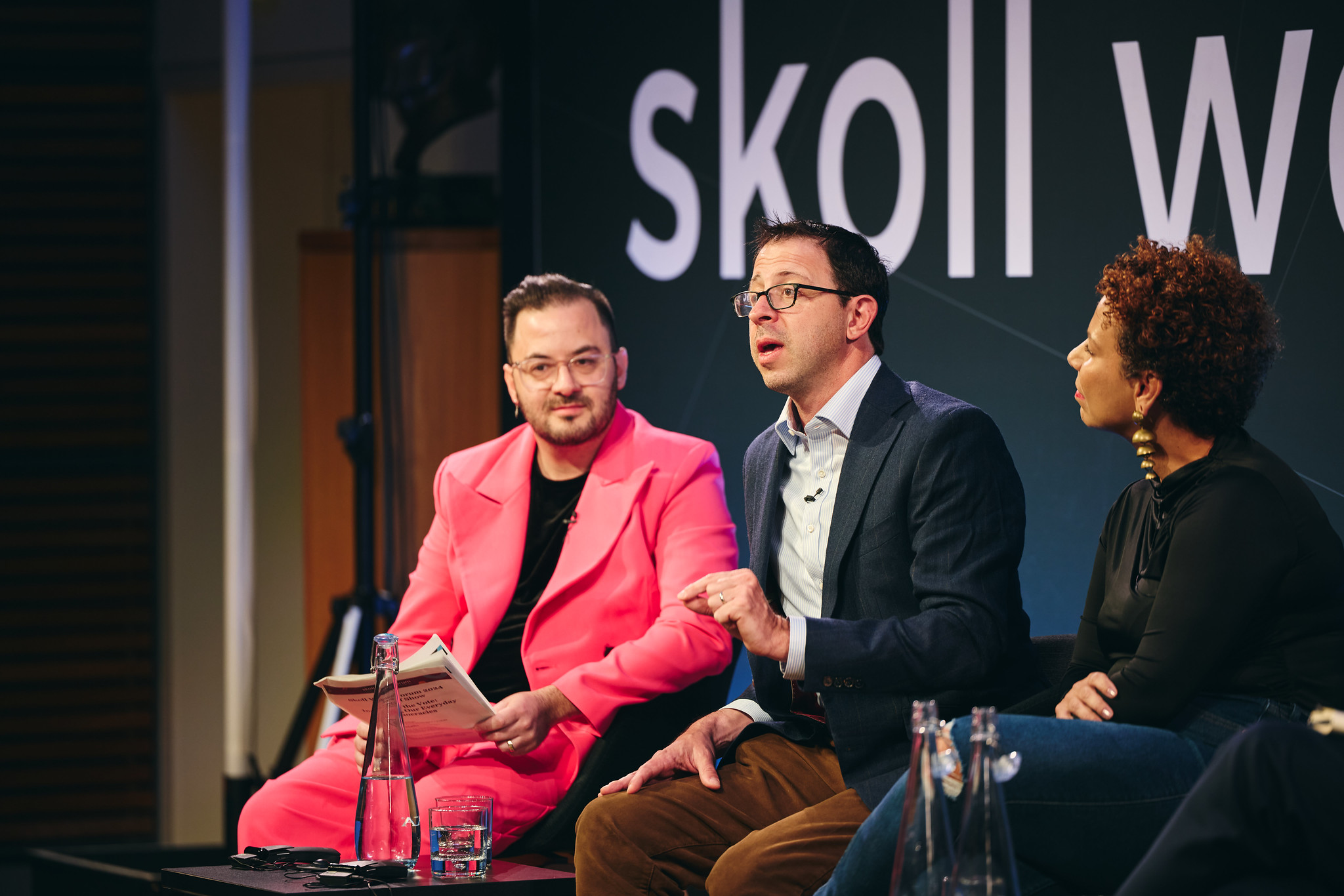
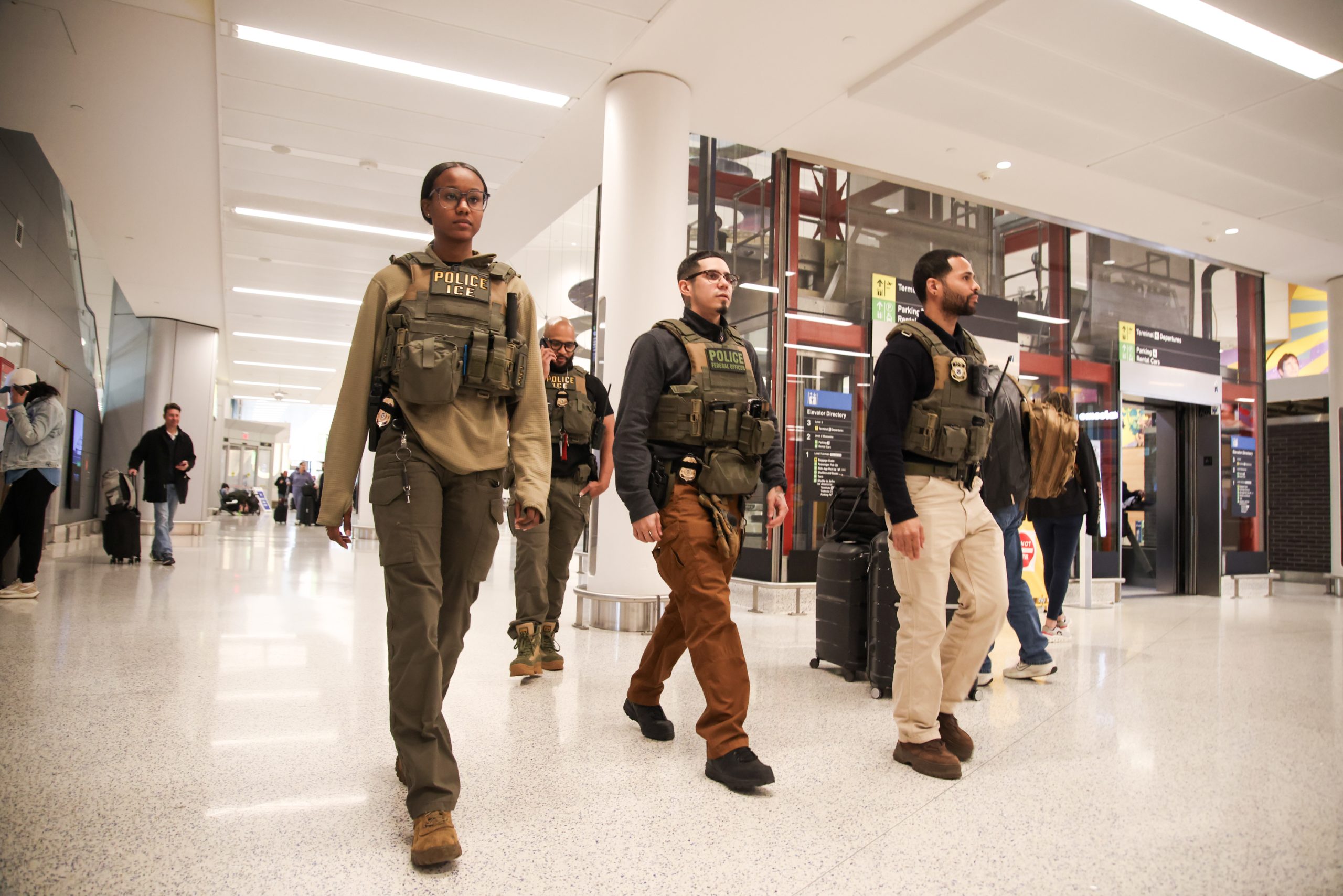
Democracy lawyer Ian Bassin, a co-founder of Protect Democracy, has been blunt about what he thinks is happening: the visible deployment of Immigration and Customs Enforcement personnel in airports is not merely about enforcement optics. It is about normalization. A rehearsal for what it looks like when armed federal power loiters at the edges of public participation. And with 2026 midterms ahead, Bassin warns that the point is to make that presence feel routine before it appears somewhere far more constitutionally sensitive than a baggage claim: the voting line.
At the same time, Bassin argues something else that is easy to miss if you only track the scary part: this authoritarian velocity can be potentially self-defeating. The president’s historic unpopularity, he says, is growing faster than his ability to consolidate power. In other words, the push toward intimidation and control is real, but it is not guaranteed to succeed if the public response is overwhelming participation rather than retreat.
Join the Discussion
The Constitution Does Not Require a Guard
Americans absorb a civic reflex early: voting should be calm, ordinary, and free from intimidation. That instinct is not sentimental. It is structural.
The Constitution gives states primary responsibility for administering elections, but it layers that decentralization with restraints. The Fifteenth, Nineteenth, Twenty-Fourth, and Twenty-Sixth Amendments are anti-discrimination guardrails. The Fourteenth Amendment supplies the broad command that states may not deny equal protection of the laws. Federal statutes fill in the rest, including protections against coercion and intimidation around the ballot.
What the Constitution does not do is bless the idea that citizens should have to pass through a corridor of uniformed federal authority to participate in self-government.
That is why Bassin’s warning lands. It treats visible federal enforcement not as a one-off stunt, but as a psychological condition-setting for November: if the public can be acclimated to ICE “standing around” airports, the next step is to make it less shocking when similar bodies appear “standing around” polling places.
Deceive, Disrupt, Deny
Bassin describes the threats to the 2026 elections with three verbs: “deceive, disrupt, deny.” Those words matter because they outline a strategy that does not require winning more votes. It requires undermining the public’s ability to cast them, count them, and accept the outcome.
Deceive
Deception is the oldest tool in the anti-democratic kit because it is cheap and deniable. Confuse voters about where to vote. Mislead them about eligibility. Flood social media with procedural nonsense that looks official. The goal is not persuasion. It is friction.
And it can be made “official” through legislation that reads like administrative housekeeping but functions like exclusion. Bassin points to efforts like the SAVE Act as part of this landscape, a policy route that can turn voting into a paperwork trap and then blame voters for failing it.
Disrupt
Disruption targets the mechanics. Longer lines. Fewer polling sites. Administrative chaos. A public atmosphere where people feel watched, questioned, or unsafe.
This is where visible enforcement presence becomes a multiplier. You do not need to arrest anyone to change behavior. You only need enough people to believe they might be questioned, detained, or targeted.
Deny
Denial is the endgame: if the outcome is unfavorable, attack legitimacy. Demand “audits” untethered from evidence. Treat routine administrative errors as proof of conspiracy. Push theories that justify overriding voters under the guise of “integrity.”
In Bassin’s framing, the airport posture fits into this chain because it trains the public to see federal enforcement as a normal background presence in spaces where people are just trying to move through their day. Elections, too, are supposed to be a day you “just move through.” The whole point is that voting is not supposed to feel like a high-risk activity.
Why Airports
Airports are uniquely useful for a normalization campaign.
- They are civic choke points. Everyone passes through the same corridors and lines.
- They already feel policed. The post-9/11 security environment makes it easier to claim that any additional presence is simply “how it works.”
- They are diverse. Travelers include citizens, lawful residents, visitors, and mixed-status families. If the goal is to trigger self-censorship and self-exclusion, airports are a broad net.
So if you want to test how Americans react to a conspicuous enforcement presence, airports offer a controlled stage.
The Line Is the Point
Election intimidation does not always look like a shouted threat. In modern America, it often looks like “just being there.”
A uniform can do the work that explicit coercion used to do. A visible badge can turn a constitutional right into a calculation: Do I risk it today? Do I bring my spouse? Do I stand in line if I have an accent, a prior record, or a family member with shaky paperwork? Do I leave if someone starts asking questions?
This is not abstract. The United States has a long history of using the appearance of official power to thin out the electorate. The names and uniforms change, but the mechanism is familiar: manufacture fear, then call the resulting lower turnout “public choice.”
Courts and Permission
Bassin’s larger concern is not only executive behavior. It is the possibility that courts, including the Supreme Court, will create what you might call permission structures, legal doctrines that give anti-democratic tactics room to operate while remaining formally “lawful.”
That can happen in at least three ways:
- By narrowing standing. If voters and civic groups cannot get into court quickly, the election happens first and the damage becomes “moot.”
- By deferring to state legislatures and executive officials. Courts can treat election administration choices as political questions, even when they functionally burden access.
- By accepting post-election theories of override. When courts entertain claims that officials can disregard results based on speculative fraud narratives, they weaken the basic premise that elections decide power.
Democracy does not die only from a single coup attempt. It can also be hollowed out by technical rulings that make it harder to stop the hollowing in time.
What Stops It
One of the most important points in Bassin’s warning is also the least comfortable for lawyers: litigation is necessary, but it is not sufficient.
Some courts can be speed bumps. Others can wave things through. The constitutional backstop that remains when institutions wobble is public participation, organization, and overwhelming turnout that leaves less room for plausible denial.
That is not romantic. It is practical. Large margins are harder to litigate away. High engagement makes intimidation tactics more visible. Coalitions across communities make it harder to isolate targets.
And if Bassin is right that the president’s historic unpopularity is rising faster than his ability to lock in control, then this is the hinge. A strategy built on fear depends on people shrinking. It can misfire when people show up anyway, in numbers that are too big to bully and too obvious to dismiss.

The Real Test
It is tempting to treat ICE at airports as a niche controversy. But Bassin’s warning asks a sharper question: what are we being conditioned to accept as normal in public life?
Because once intimidation becomes atmosphere, it no longer needs orders. It runs on habit.
If the midterms arrive and voters see federal enforcement near civic participation spaces, the central constitutional issue will not just be whether a particular deployment violated a statute. It will be whether we still understand voting as the opposite of coercion: the act that grants the government legitimacy, not the act that requires the government’s permission.