
Airports are one of the few public spaces where Americans already accept a heavy federal footprint as the price of safety. Metal detectors, ID checks, pat downs, no liquids, no jokes about bombs. We have lived inside that bargain for a generation.
Now comes a new question, sharpened by a government shutdown and dulled by our growing habit of treating “temporary” security measures as permanent: when immigration agents take on routine airport functions, are we witnessing an emergency fix or the quiet expansion of enforcement into everyday civic life?
Join the Discussion
What Homan said
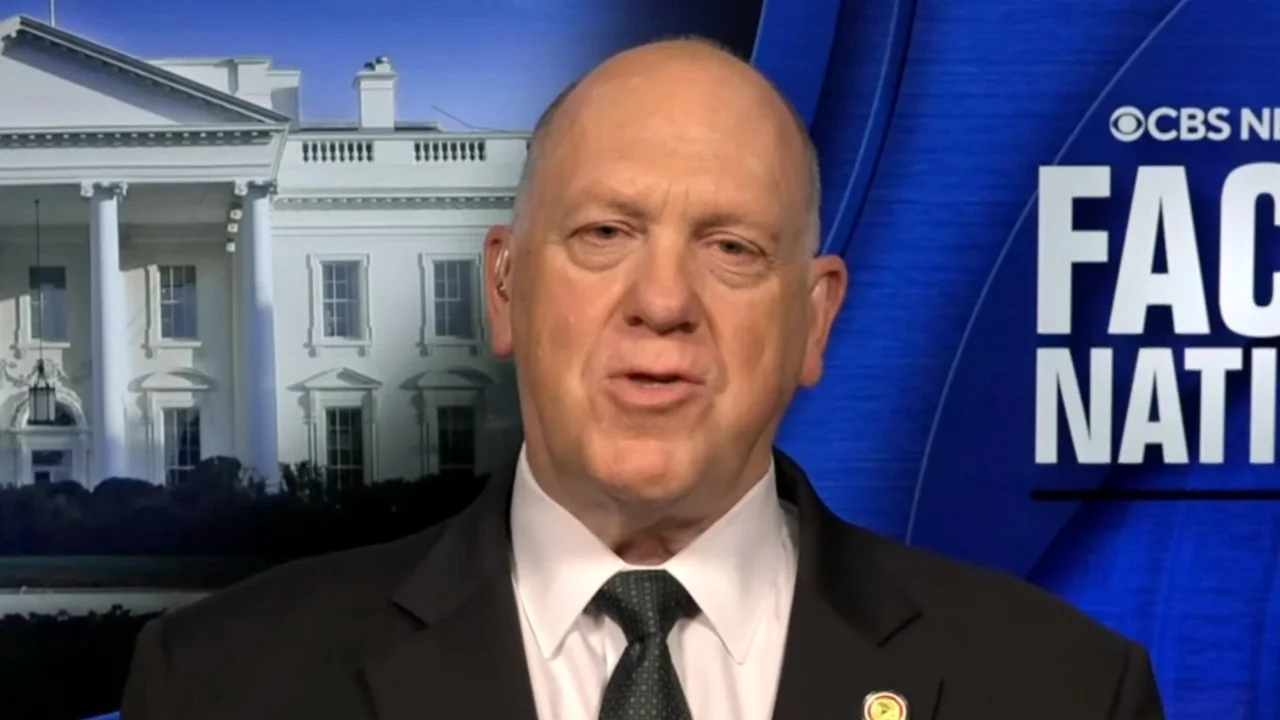
Tom Homan, the White House border czar, says Immigration and Customs Enforcement agents will remain at airports until Transportation Security Administration officers are back in a posture where airports can resume normal operations.
In a Sunday television interview, Homan described the plan this way: “We’re going to continue an ICE presence there, and until the airports feel like they’re in 100%, you know, in a posture where they can do normal operations. So if less TSA agents come back, that means we’ll keep more ICE agents there.”
In a separate Sunday television interview, he was asked the obvious follow up: will ICE leave once TSA officers begin receiving pay again? His answer was a phrase that ought to make any constitutionalist sit up straight: “We’ll see.”
That is the language of discretion, not the language of limits. And in a republic, discretion is where power tends to grow.
The shutdown opening
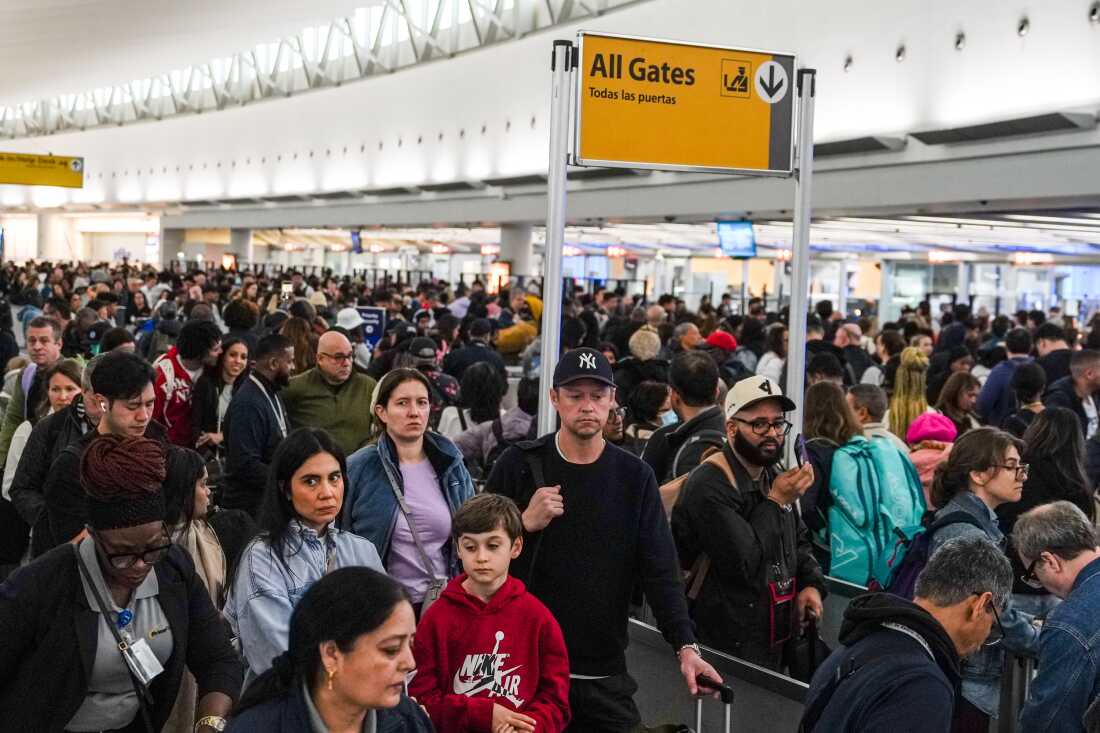
The immediate cause is practical. The Department of Homeland Security remains in a partial shutdown, and TSA has been strained to the point of visible failure in some places. The department has said approximately 500 TSA workers have quit since the shutdown began. Thousands more have called out as the lapse continued without paychecks, leading to long security lines, including hourslong waits at some airports.
A top TSA official testified to Congress last week that it takes roughly four to six months to train transportation security officers. In other words, you cannot quickly “hire your way” out of a staffing crisis. You improvise.
And the improvisation now on display is this: immigration agents performing pieces of what the public thinks of as ordinary travel screening, including identification checks and guarding exit lanes, as Homan put it.
The constitutional tension
There is a familiar American pattern: emergency first, normalization second, accountability never. The pattern does not require villainy. It requires stress, bureaucracy, and public fatigue.
Start with the fact that airports sit at the junction of two very different government powers:
- Security screening, which travelers usually associate with aviation safety and administrative regulation.
- Immigration enforcement, which carries the weight of arrest authority, detention, removal proceedings, and the machinery of federal policing.
When those functions blur, the public’s mental model blurs with them. The ID check becomes not just a step toward your gate, but a potential gateway into immigration scrutiny. That shift matters because the Constitution treats government power differently when it looks like regulation versus when it looks like policing.
When ICE becomes routine
Homan framed the ICE presence as “plugging those holes” and asked for gratitude: “God bless the men women of ICE.” But the constitutional question is not whether agents work hard. The question is what it does to civic expectations when enforcement becomes routine infrastructure.
1) Mission creep hides in plain sight
At the start, the rationale is narrow: TSA shortages, long lines, operational gaps. Over time, the justification can broaden: deterrence, intelligence, “force multiplier,” officer safety, general order. The public rarely sees the moment the purpose changes, because the uniforms are already there.
2) Travel meets discretion
Americans do not have an explicit constitutional “right to fly,” but they do have constitutional protections that travel with them into public spaces. The more travel becomes a daily interaction with enforcement personnel rather than administrative screeners, the more those protections will be tested in real time by real people who are not constitutional litigators.
3) Federalism gets bypassed
Airports are already heavily federalized environments, which makes them a convenient place for new enforcement norms to take root. States and localities have limited leverage there. If a new pattern of immigration enforcement becomes standard procedure at airports, it spreads nationwide with far less political friction than street level policing.
Congress built the incentive
Congress holds the power of the purse. When funding collapses, the executive branch hunts for substitutes. That is not a partisan observation. It is a structural one.
Here is the political setup as of this weekend: House Republicans passed a short term funding bill for DHS that does not appear to have enough Senate support to become law. The Senate had advanced a different approach that would fund DHS broadly while excluding immigration enforcement and deportation operations, and House leadership rejected it. The result is that the DHS shutdown has become the longest partial government shutdown in U.S. history, with no clear end in sight and Congress heading into a two week recess.
When legislators refuse to fund normal operations, they should not be surprised when the executive branch builds “normal operations” out of whatever parts are still funded, staffed, and deployable.
The traveler’s question
If you are a traveler, the immediate concern is practical: will the line move?
If you are a citizen, the better question is this: what role do we want immigration enforcement to play in the ordinary routines of American life?
Homan’s “We’ll see” is the right place to focus, because it signals an open ended timeline. The longer an emergency measure persists, the more it becomes a precedent. And once it is a precedent, it becomes the baseline from which future expansions are justified.
The Constitution does not stop working at the airport. But civic attention spans often do. That is how a republic trades temporary fixes for permanent power.
What accountability is
There are a few simple markers of whether this is truly an emergency bridge or a lasting change:
- A clear end point, written down, not implied. If the standard is “until the airports feel like they’re in 100%,” then the public deserves to know who defines 100% and what data triggers the drawdown.
- Defined duties. Are immigration agents doing tasks narrowly tied to throughput and physical security, or are they conducting enforcement activity that travelers never consented to as part of “routine screening”?
- Transparency. If ICE is checking IDs, guarding exit lanes, or performing other roles, the government should publish where, when, and under what authority those assignments occur.
- Congressional ownership. If lawmakers want a different balance between aviation screening and immigration enforcement at airports, they have to fund it and legislate it, not outsource the decision to executive improvisation.
In a healthy constitutional culture, “temporary” does not mean “indefinite,” and “security” does not automatically mean “enforcement.” If that distinction cannot be maintained at the airport, it will be difficult to maintain it anywhere.