
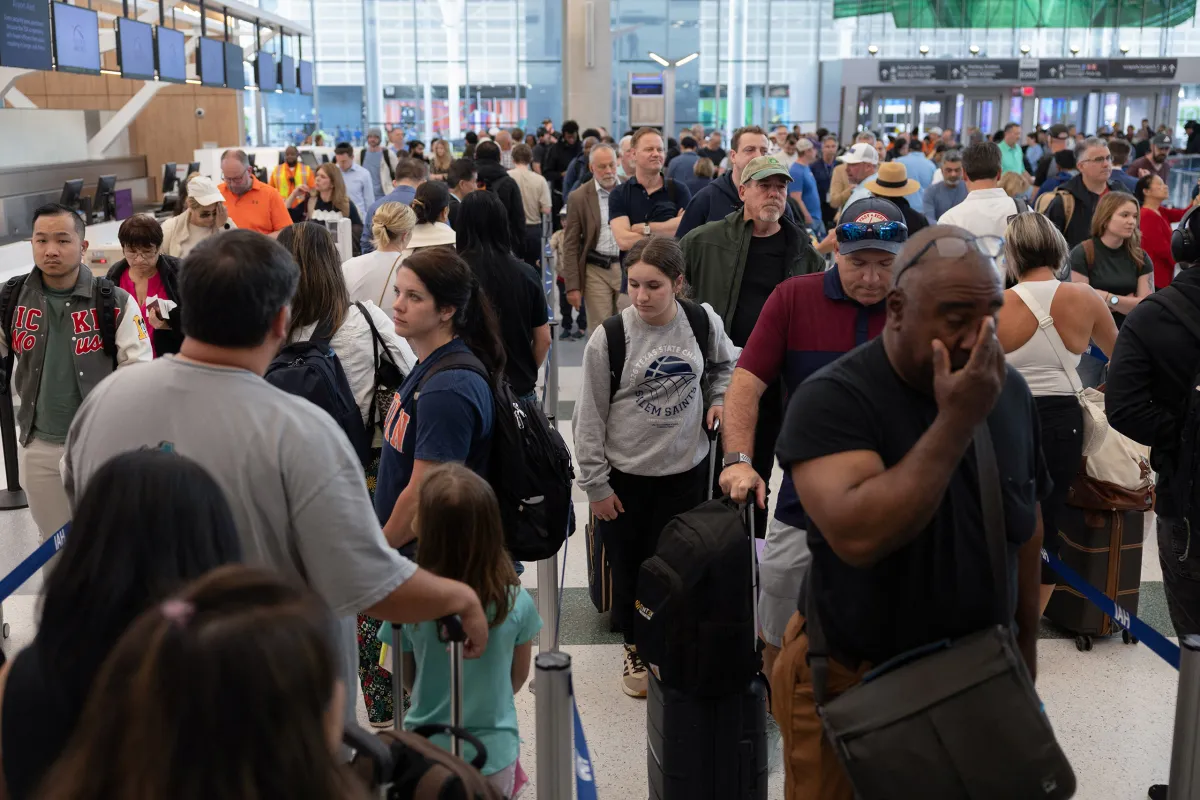
Airport security lines have been the most visible sign of the ongoing Department of Homeland Security funding breakdown. But a quieter change may outlast the paycheck crisis: federal immigration agents were brought into airports to help cover staffing gaps, and the administration is now signaling they could remain even after Transportation Security Administration workers are paid again.
That possibility raises a civic question worth pausing over. When an immigration agency becomes a regular presence in everyday travel, what changes about how we move through public life, and what constitutional guardrails are supposed to apply?
Join the Discussion
Why ICE showed up
The immediate trigger was operational, not ideological: TSA officers continued reporting to work without pay during the DHS shutdown, and staffing levels dropped at some airports. According to TSA’s acting administrator, about 50,000 transportation security workers were affected, more than 480 quit, and absences reached as high as 40% at certain airports.
The timing matters too. It has been a week since the President ordered Immigration and Customs Enforcement to send agents to airports around the country to help TSA, and the DHS shutdown had entered a sixth week.
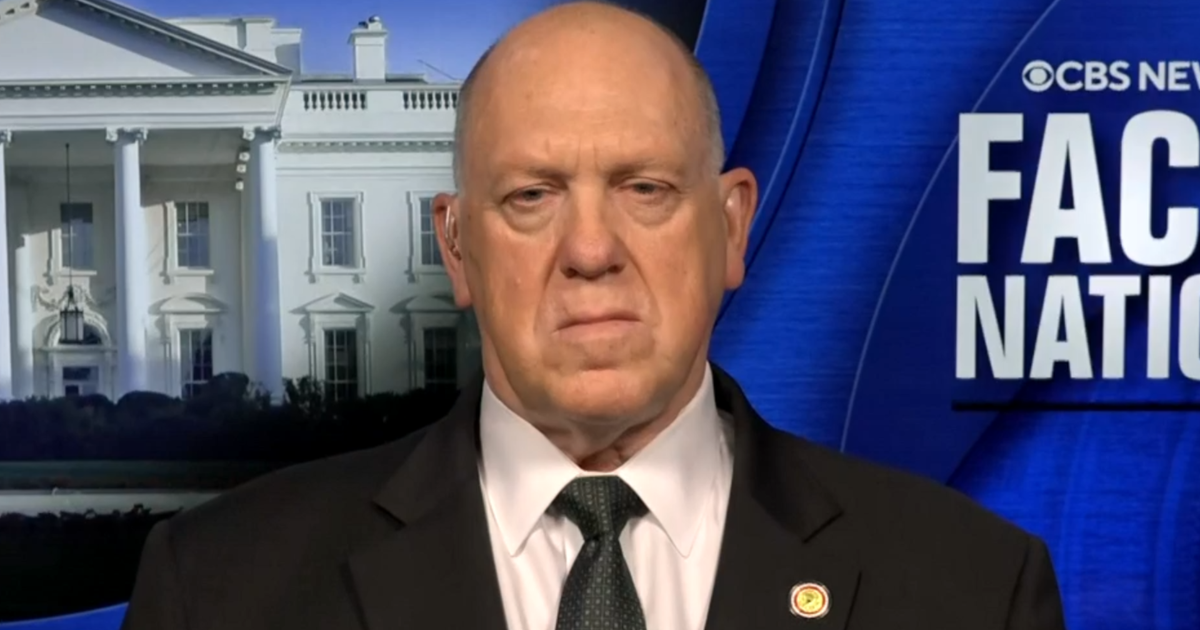
With security checkpoints backing up, ICE personnel were sent in to assist. Border czar Tom Homan said ICE personnel have been helping by “checking identification” and “plugging other security holes,” while remaining TSA staff focus on specialized tasks like operating and monitoring screening equipment.
On the ground, the bottlenecks are still real. In Houston, security wait times were under two hours on Sunday, even as the airport warned travelers that “TSA lines could exceed four hours.” At Baltimore/Washington International Thurgood Marshall Airport, the airport said wait times had improved since Saturday but remained longer than normal.
Homan also pointed to quicker lines as a practical result, saying he was in Houston as wait lines decreased about half and that additional agents were sent to Baltimore to help bring lines down.
Could it last?
The key development is not that ICE helped during a staffing emergency. It is the open-ended nature of when that help ends.
Asked whether ICE would leave airports once TSA workers start receiving pay again, Homan’s answer was: “we’ll see.” He added that it would depend on how many TSA employees return and how many have quit with no plan to come back.
It is important to say plainly what is not known: no formal decision, duration, or written policy has been publicly announced that ICE will remain at checkpoints long term.
Separately, the administration has indicated TSA paychecks could arrive as early as Monday after a memo directed that workers be paid from existing funds, even though Congress has not appropriated the money tied to the shutdown. Homan said there is a plan to get TSA workers paid “hopefully by tomorrow or Tuesday.” The department did not respond to a request for additional comment on timing.
What changes if it feels normal
For many Americans, TSA already represents a major shift in post-9/11 civic life: a daily reminder that certain kinds of searches and delays are built into transportation. Adding ICE to that environment, even in a limited support role, can create a different kind of normalization because it places two distinct missions in the same space:
- Aviation security, which focuses on keeping weapons and dangerous items off planes.
- Immigration enforcement, which involves investigating and apprehending people based on status, removability, or related federal violations.
What is known from officials is narrow: ICE is assisting TSA by checking IDs and addressing other security gaps. What is not established is whether a checkpoint support role expands into immigration enforcement activity. Still, when an immigration agency is visibly embedded in a routine travel chokepoint, some travelers may reasonably wonder what an ID check is “for” in practice, and whether a process designed for boarding and safety could also become a pathway into unrelated enforcement questions.
Even without any change in formal policy, that uncertainty can shape behavior. Some people who are fully entitled to travel, including U.S. citizens in mixed-status families, lawful permanent residents, refugees, and visa holders, might choose to avoid travel or limit where they go to reduce the risk of a confusing encounter with enforcement authority.
Constitutional basics
From a constitutional perspective, the concern is less about one agency helping another and more about scope creep, when an emergency measure becomes the new baseline without clear public limits.
Fourth Amendment, in plain terms
The Fourth Amendment is the Constitution’s central rule about searches and seizures. Airports have long been treated as a special context where administrative screening is allowed because the purpose is safety and the procedures are standardized. But that logic is tied to the rationale of aviation security, not general law enforcement.
If an immigration agency becomes a regular part of airport screening, courts and the public may eventually be asked to sort out where the security screening rationale ends and where investigative enforcement begins. Those lines can be blurry for travelers in the moment, especially when the same checkpoint space involves different uniforms and different authorities.
Due process in everyday encounters
Even brief encounters can have real consequences if information is collected, recorded, or referred. In a system that increasingly relies on databases and interagency information sharing, the presence of an enforcement agency at a choke point like an airport can magnify small errors. Due process concerns often start here: what happens if a person is delayed, questioned, or flagged, and what realistic path exists to correct a mistake?
Congress is still stuck
All of this is unfolding against a larger backdrop: Congress still has not resolved long-term DHS funding. Negotiations remain stalled, and lawmakers left Washington for a planned recess. The Senate is scheduled to return April 13, and the House April 14.
Paychecks arriving would ease the immediate strain on families, but it does not answer the structural question: who decides, and under what rules, whether ICE becomes a standing presence at airport checkpoints?
What to watch next
In civic life, small operational decisions can quietly reshape expectations. If ICE remains at airports after TSA staffing stabilizes, the public should expect clearer answers to a few basic questions:
- Role clarity: Are ICE agents strictly filling a narrow support function, or are they being asked to do more than ID checks and gap coverage?
- Training and standards: What rules govern interactions with travelers, and are those rules public?
- Oversight and a timeline: Is there an end date or measurable threshold for withdrawal once TSA staffing recovers?
In a constitutional democracy, emergencies happen. The test is whether temporary measures remain temporary, and whether the public is told plainly when the government is redefining what “normal” looks like in ordinary spaces like an airport terminal.