
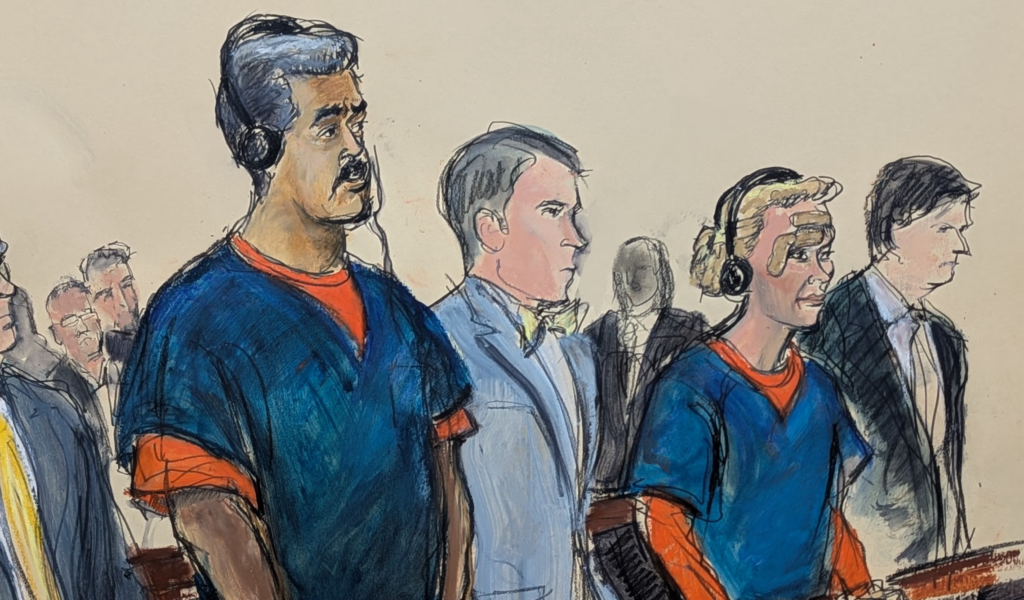
The image is surreal, yet historic: Nicolas Maduro, the man who ruled Venezuela with an iron fist for over a decade, sitting in a Manhattan courtroom in tan jail garb, complaining to a federal judge that he has been kidnapped.
On Monday, the dethroned dictator and his wife, Cilia Flores, were arraigned in the Southern District of New York following a stunning U.S. military operation that plucked them from the presidential palace in Caracas. The hearing was tense, punctuated by Maduro’s defiance and the judge’s gavel, marking the beginning of what promises to be the most significant international trial since Manuel Noriega faced American justice in 1989.
The Outburst: “I Am Still President”
Judge Alvin Hellerstein wasted no time in establishing control over his courtroom. When asked to state his name, Maduro attempted to use the moment to delegitimize the proceedings.
“I am Nicolas Maduro Moros,” he declared through a translator. “My name is President Nicolas Maduro Moros, President of Venezuela. I am here, kidnapped… I was captured at my home in Caracas.”
Judge Hellerstein immediately cut him off, informing the defendant that this was an arraignment, not a political rally. When asked for his plea to the four counts – including narco-terrorism and cocaine importation—Maduro remained defiant:
“I am innocent. I am not guilty. I am a decent man. I am still president of my country.”
His wife, Cilia Flores, facing similar charges, entered her plea ten minutes later: “Not guilty, completely innocent.”
How We Got Here: The Long Road to the Raid
To understand the gravity of this moment, one must trace the timeline of escalation that led U.S. forces to the Miraflores Palace.
- 2020 Indictment: The U.S. Department of Justice unsealed charges against Maduro, accusing him of leading the Cartel de los Soles (Cartel of the Suns), a drug trafficking organization comprised of high-ranking Venezuelan officials.
- The “Maximum Pressure” Campaign: For years, the U.S. imposed crippling sanctions on Venezuela’s oil sector and recognized opposition leaders like Juan Guaidó as the legitimate heads of state.
- The Bounty: The State Department placed a $15 million (later raised to $50 million) reward for information leading to Maduro’s arrest.
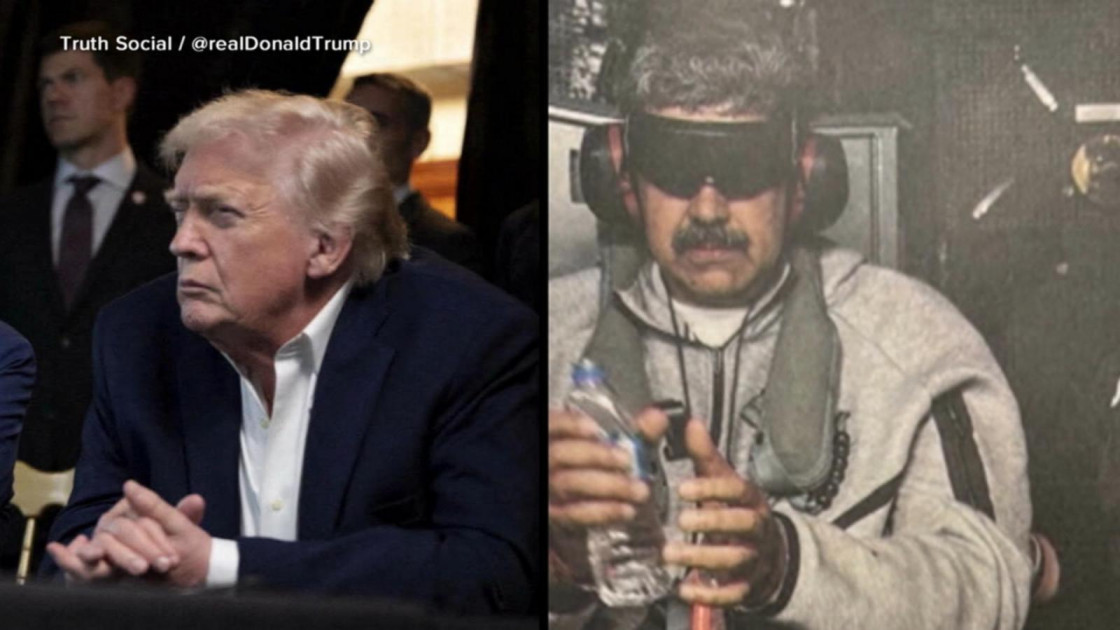
- The Capture (Jan. 3, 2026): In a lightning raid reminiscent of Operation Just Cause in Panama, U.S. forces infiltrated Caracas and detained Maduro and Flores without American casualties. President Trump confirmed the operation with a photo of the captured dictator aboard the USS Iwo Jima.
The Charges: A “Narco-State” on Trial
The indictment paints a picture of a state completely captured by organized crime. Prosecutors allege that for over 25 years, Maduro and his inner circle “abused their positions of public trust” to flood the United States with cocaine.
The specific charges are heavy:
- Narco-terrorism conspiracy: Punishable by up to life in prison.
- Cocaine importation conspiracy: Alleging the transport of tons of narcotics.
- Possession of machine guns and destructive devices: Related to the weaponry used to protect the drug trade.
Legal experts, including former Attorney General Bill Barr, suggest that if convicted, Maduro could face a “Noriega-level sentence”—effectively spending the rest of his life in a U.S. federal prison.
The Constitutional Question: War or Law Enforcement?
The operation raises profound questions about the limits of presidential power. Did President Trump need Congressional approval to launch a raid into a sovereign nation to capture a head of state?
Legal analyst Jonathan Turley argues that the capture falls under the President’s Article II powers as Commander-in-Chief and the statutory authority to enforce drug laws extraterritorially. However, Maduro’s defense team, led by Barry Pollack, has already framed the arrest as an illegal “abduction” and a violation of international law. They are expected to file extensive motions challenging the court’s jurisdiction over a sitting (in his view) foreign president.
[Image: USS Iwo Jima or US military operation graphic]
What Comes Next?
Maduro and Flores are currently being held in the Metropolitan Detention Center in Brooklyn—the same facility housing accused assassin Luigi Mangione. They were denied bail, a decision experts say was inevitable given the immense flight risk.
The next court date is set for March 17. Between now and then, the Southern District of New York will become the epicenter of a geopolitical earthquake. The trial will not just determine the fate of one man; it will put the entire recent history of Venezuela—and the reach of American justice—under the microscope.
Quick Fact: Manuel Noriega, the dictator of Panama captured by U.S. forces in 1989, also claimed “prisoner of war” status. He was ultimately convicted on eight counts of drug trafficking and racketeering, serving 17 years in U.S. federal prison before being extradited to France and then Panama.