
Imagine a future where a prescription from your pharmacy is delivered to your doorstep in 20 minutes, where a lost hiker is found in record time, and where critical infrastructure is inspected safely and efficiently from the air.
This future, powered by commercial drone technology, has been stalled for years in the United States, caught in a web of federal regulations designed for a different era of aviation.
Now, a new legislative push in Congress aims to cut through that red tape. But it has also ignited a crucial debate about how to balance explosive innovation with the safety of our increasingly crowded skies.
Join the Discussion
Unleashing the Drones
The groundbreaking legislation, known as the LIFT Act, was introduced by Representative Jen Kiggans, a Virginia Republican and former Navy helicopter pilot. Her bill takes direct aim at what many innovators see as the single biggest obstacle to a drone-powered economy: the federal government’s restrictions on flying drones “Beyond Visual Line of Sight” (BVLOS).
Currently, the Federal Aviation Administration (FAA) forces most commercial drone operators into a bureaucratic maze to get permission to fly a drone beyond the operator’s physical eyesight.
The LIFT Act would mandate that the Department of Transportation create a clear and modern set of safety and performance rules for these extended-range operations, replacing the current case-by-case waiver system.
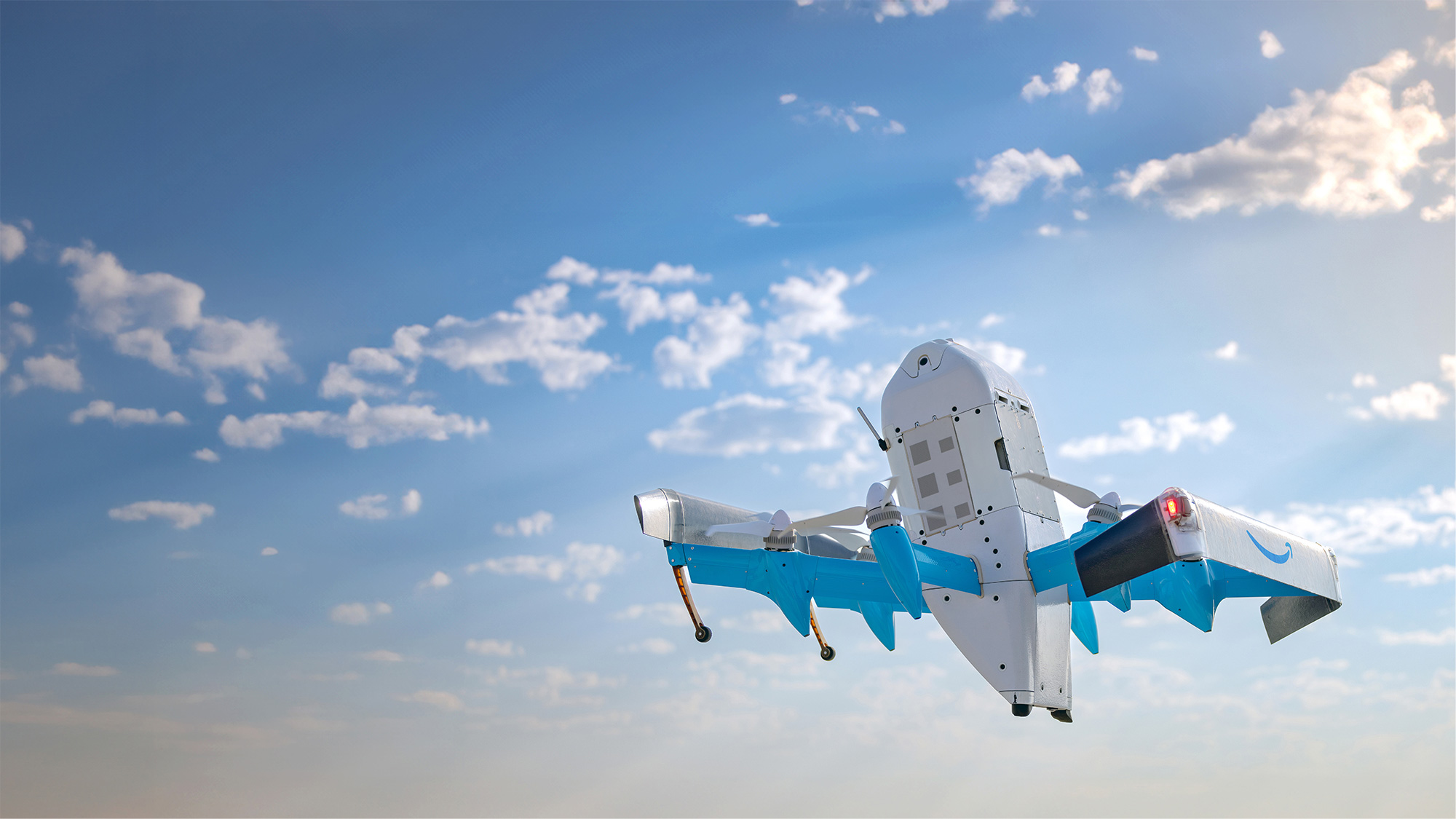
From Rescue Missions to Retail
The potential applications of this technology are immense, touching nearly every aspect of American life.
Proponents argue that BVLOS drones can be a powerful tool for the public good. They can be used for search and rescue missions in difficult terrain, for farmers to monitor crops and livestock over vast ranches, and for utility companies to safely inspect hundreds of miles of power lines.
But the most visible change for most Americans would come in the form of retail and medical delivery. Companies like Amazon, Walmart, and Google have invested billions in developing drone delivery systems, promising to revolutionize how we receive everything from consumer goods to life-saving medications.
“This isn’t just about faster package delivery. It’s about finding a lost child faster, inspecting a failing bridge safer, and helping a farmer manage their crops more efficiently.”
The Constitutional Power to Rule the Skies
This entire debate is governed by a core constitutional principle: the federal government’s authority to regulate the nation’s airspace. This power comes from the Commerce Clause of the Constitution, which gives Congress the power to regulate commerce among the states.
The LIFT Act is a powerful example of the legislative branch reasserting that authority. For years, Congress has given the FAA – an agency within the executive branch – a broad mandate to ensure aviation safety.
But lawmakers like Rep. Kiggans now argue that the agency has become a bottleneck, moving too slowly and stifling American innovation while competitors in countries like China race ahead.
“This bill is a powerful example of the legislative branch reasserting its authority, telling an executive agency that the era of slow, cautious regulation must give way to a new mandate for innovation.”
The bill is also directly aligned with a recent executive order from President Trump titled “Unleashing American Drone Dominance,” signaling a coordinated effort between the White House and Congress to prioritize this technology.
Balancing Innovation and Safety
Even the bill’s most ardent supporters acknowledge the legitimate public safety concerns. An increasingly complex airspace, with commercial airliners, military jets, private planes, and now thousands of drones, requires sophisticated management.
Rep. Kiggans, drawing on her own experience as a pilot, stressed that the goal is not to eliminate rules, but to create smarter rules.
“It’s something that we need to be regulating… but I think there’s a way that we can all coexist. There needs to be some clear laws in place, and they need to be educated to drone users and aviators.” – Rep. Jen Kiggans
The LIFT Act aims to create clear, performance-based safety standards that all operators must meet, rather than forcing them to ask for permission for every flight.
A High-Tech Transformation
The LIFT Act is more than just a piece of technology legislation; it is a bet on America’s ability to lead in a new technological era. It seeks to replace a regulatory system based on prohibition and permission with one based on clear standards and trust in innovation.
The debate in Congress will determine whether the United States catches up to its global competitors or remains grounded by an abundance of caution. The outcome will shape not only the future of our economy and supply chains, but the very look and sound of the skies above us.